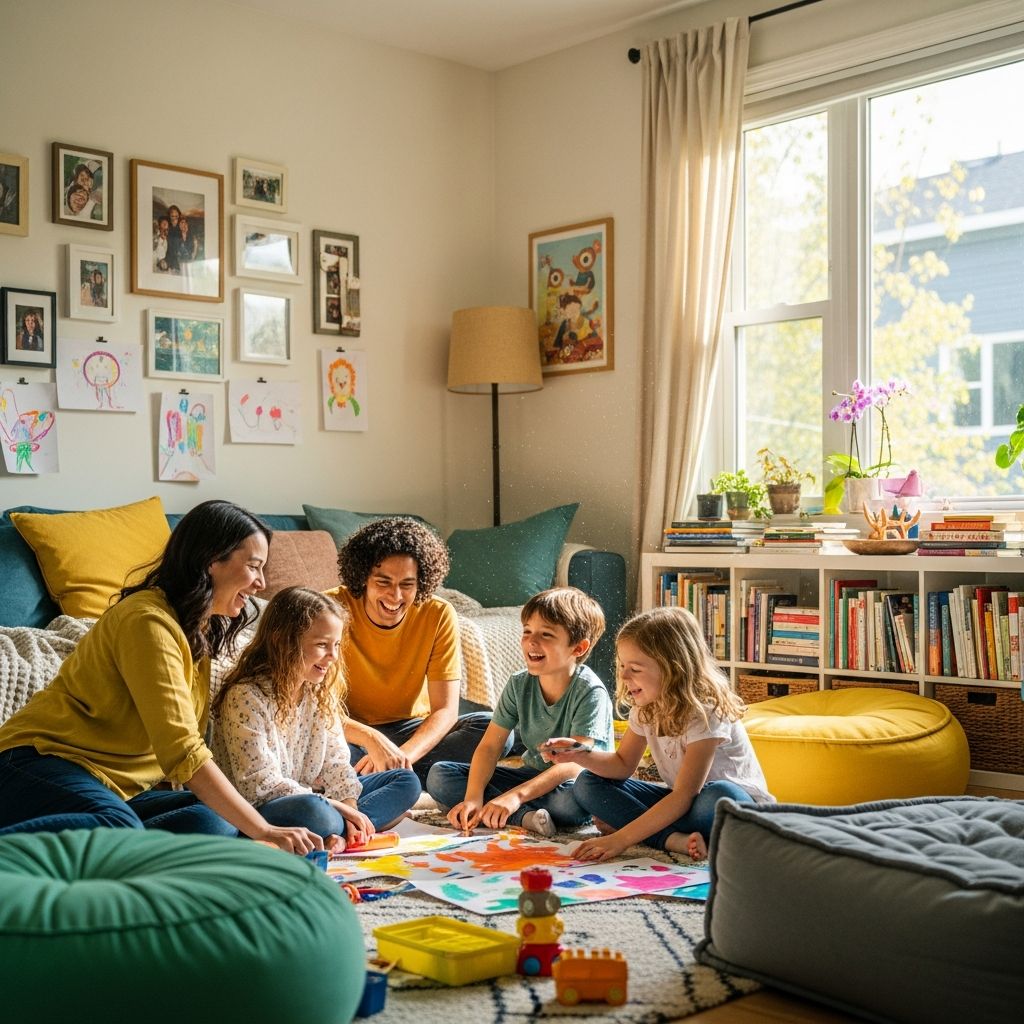
Engaging in play with children offers parents unexpected advantages, including improved emotional control, heightened joy, and stronger family connections, as supported by developmental research.
Understanding the Dual Rewards of Family Play
Play serves as a cornerstone of child development, but recent studies reveal it equally nourishes parents. When adults join in unstructured or guided play, they experience reduced anxiety and enhanced mood, mirroring the cognitive boosts seen in kids. This mutual enrichment stems from play’s ability to activate brain reward centers, promoting dopamine release that combats daily stressors.
Research indicates that parents who prioritize playtime report higher life satisfaction. For instance, interactive sessions help caregivers reconnect with their inner child, fostering creativity and spontaneity often lost in adult routines. This shift not only models healthy behaviors for children but also equips parents with tools for better self-regulation.
The Science Behind Play’s Impact on Parental Brain Health
Neuroscientific findings highlight how play rewires adult brains for resilience. Physical games like tag or building forts trigger endorphin production, lowering cortisol levels associated with chronic stress. A study from the University of Cambridge notes that father-child play correlates with improved emotional control in participants, suggesting bidirectional benefits where parents gain as much as children.
Mothers and fathers alike benefit, though styles differ. Fathers often lean toward rough-and-tumble activities, which build problem-solving skills, while mothers may favor nurturing play. Both approaches enhance parental empathy and patience, key to long-term mental health.
- Emotional Regulation: Play provides a low-stakes arena to practice responses to frustration.
- Cognitive Sharpness: Puzzles and imaginative scenarios keep parental minds agile.
- Physical Fitness: Active play counts as light exercise, improving cardiovascular health.
Emotional Uplift: Joy and Connection in Everyday Moments
One of the most profound parental gains is emotional rejuvenation. Laughter during play sessions releases oxytocin, the ‘bonding hormone,’ strengthening attachment beyond infancy. Parents describe feeling more present and less overwhelmed, with play acting as a natural antidepressant.
Quantitative data supports this: Children’s well-being rises with parental time investment, but parents’ happiness metrics improve similarly, creating a virtuous cycle. In China-based research, increased leisure time with kids positively affected adult emotional states, underscoring play’s role in family harmony.
| Play Type | Parental Benefit | Child Benefit |
|---|---|---|
| Physical Play | Stress reduction, energy boost | Motor skills, aggression control |
| Imaginative Play | Creativity spark, empathy growth | Social skills, language development |
| Educational Play | Cognitive engagement, patience | Problem-solving, school readiness |
Building Resilience: Play as Parental Stress Relief
In high-pressure modern life, play emerges as a vital stress buffer for parents. Johns Hopkins Medicine emphasizes that reciprocal play promotes adult emotional intelligence, helping caregivers model coping strategies. When parents let children lead, it reduces over-control tendencies, fostering trust and flexibility.
Stanford research warns against excessive intervention, showing that allowing kid-led play improves parental observation skills and diminishes anxiety over perfectionism. This hands-off approach teaches adults to tolerate uncertainty, a skill transferable to work and relationships.
Fathers’ Unique Role: Rough Play and Lasting Gains
Fathers’ engagement in vigorous play yields specific advantages. University of Cambridge analysis of 40 years of data links early dad-child play to better behavioral outcomes in kids and implied emotional steadiness in fathers. The Gottman Institute highlights how such interactions build cognitive pathways, with dads’ problem-focused style complementing maternal nurturing.
This division isn’t rigid—any parent can adapt. Starting early establishes routines, with benefits compounding over time. Even single mothers can incorporate physical elements, ensuring diverse play exposure.
Mothers’ Perspectives: Nurturing Play for Mutual Growth
Mothers often excel in cooperative play, which enhances their sense of purpose and reduces isolation. Studies show this time investment boosts children’s well-being while providing mothers with affirming feedback loops—kids’ delight reinforces parental efficacy.
Parental awareness of play’s value predicts more dedicated time, per NIH findings. Valuing play intellectually or physically leads to tailored activities that satisfy both parties.
Practical Strategies to Maximize Playtime Benefits
Incorporate play without overhauling schedules. Dedicate 15-20 minutes daily to child-led activities, resisting the urge to direct. Outdoor play amplifies gains, combining nature’s calming effects with movement[Michigan Medicine, implied from context].
- Observe first: Let kids initiate to build your patience.
- Vary activities: Mix quiet and active to suit energy levels.
- Reflect post-play: Note mood shifts to reinforce habits.
- Involve siblings: Group play distributes energy, benefiting all.
Unstructured play, as APA advocates, hones creativity and peer skills in kids while giving parents downtime[10].
Long-Term Family Outcomes from Consistent Play
Sustained play fosters resilient family units. Kids develop executive functions like impulse control, while parents gain tools for work-life balance. Research from diverse sources converges: Playtime investment pays dividends in well-adjusted children and fulfilled adults.
Challenges like fatigue exist, but short bursts yield results. Track progress via journals to see evolving bonds.
Frequently Asked Questions (FAQs)
What are the main benefits for parents from playing with kids?
Parents gain stress relief, emotional regulation, stronger bonds, and cognitive boosts through play, enhancing overall well-being.
Does play benefit fathers differently than mothers?
Fathers’ physical play styles uniquely aid aggression control and problem-solving, but both parents experience joy and connection gains.
How much playtime is ideal for parental benefits?
Even 15-30 minutes daily of quality engagement suffices, with early and consistent sessions maximizing long-term rewards.
Can single parents replicate two-parent play benefits?
Yes, by varying play types—physical, imaginative, educational—single parents provide comprehensive development.
What if I’m too tired for play?
Start small with low-energy options like reading or drawing; benefits accrue quickly, energizing you over time.
Overcoming Barriers to Regular Playtime
Time constraints and guilt plague busy parents, yet evidence shows play trumps structured activities for holistic growth. Reframe play as self-care: It recharges you for other duties. Community programs or playdates share the load, amplifying benefits.
For working parents, evenings or weekends suffice. Digital detox during play heightens immersion, per resilience studies.
Play Across Ages: Adapting for Maximum Impact
Toddlers thrive on sensory play, teaching parents mindfulness. School-age kids’ games build strategic thinking, sharpening adult focus. Teens benefit from low-key activities like board games, bridging generational gaps.
Age-tailored play ensures relevance, sustaining motivation.
References
- Playtime with Dad may improve children’s self-control — University of Cambridge. 2023-approx. https://www.cam.ac.uk/research/news/playtime-with-dad-may-improve-childrens-self-control
- The Power of Playtime with Dad — The Gottman Institute. 2023-approx. https://www.gottman.com/blog/the-power-of-playtime-with-dad/
- The effect of the time parents spend with children on children’s well-being — PMC / NIH. 2023-04-25. https://pmc.ncbi.nlm.nih.gov/articles/PMC10106685/
- Parents’ awareness, knowledge, and experiences of play — PMC / NIH. 2022-approx. https://pmc.ncbi.nlm.nih.gov/articles/PMC9462721/
- The Benefits of Playing with your Child — Johns Hopkins Medicine. Recent. https://www.hopkinsmedicine.org/health/wellness-and-prevention/the-benefits-of-playing-with-your-child
- Stanford-led study highlights the importance of letting kids take the lead — Stanford University. Recent. https://ed.stanford.edu/news/stanford-led-study-highlights-importance-letting-kids-take-lead