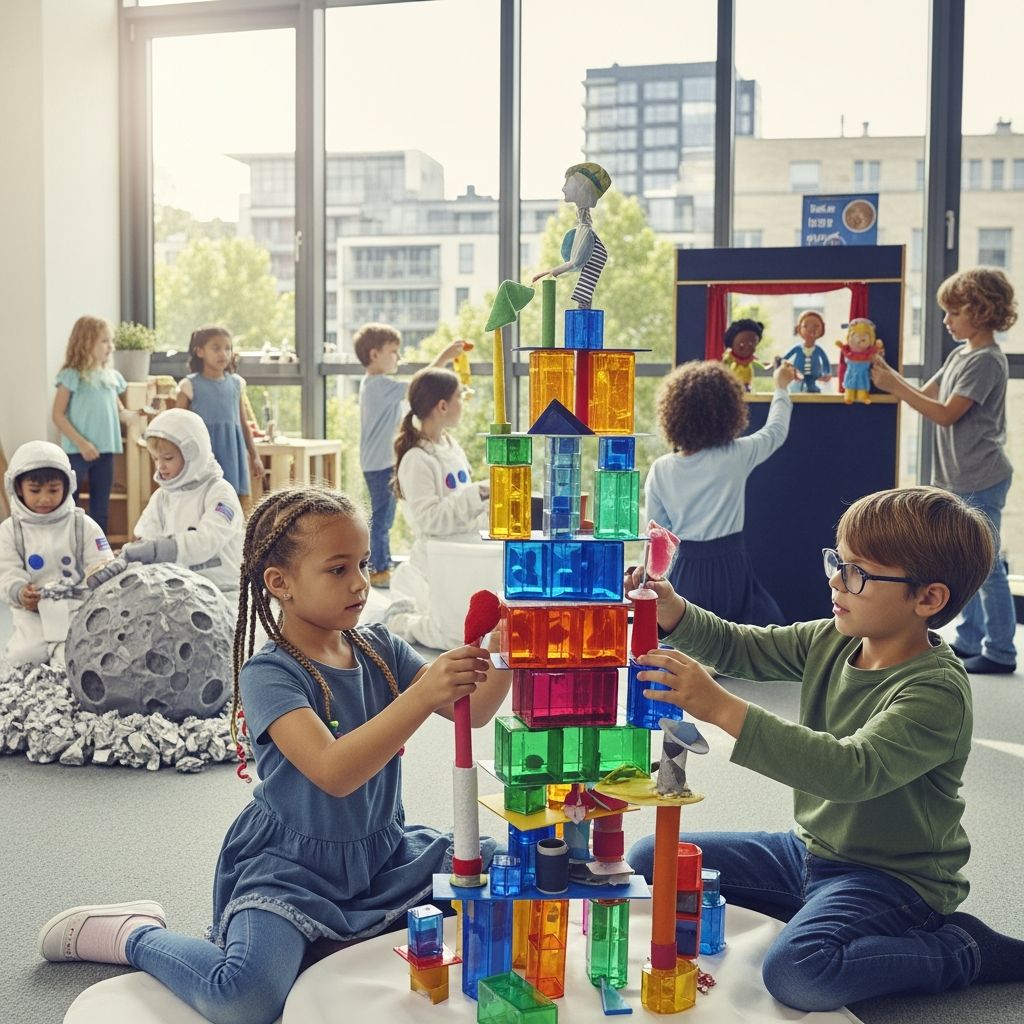
The Foundation of Leadership: Why Play Matters in Early Childhood
Leadership is often viewed as something that emerges in adulthood through formal training and professional experience. However, research increasingly demonstrates that the roots of effective leadership are planted much earlier—during childhood, through the simple act of play. When children engage in creative, imaginative activities, they are simultaneously building the cognitive and emotional foundations necessary for leadership roles later in life.
The relationship between childhood play and future leadership success is not coincidental. Rather, it reflects how children naturally acquire and practice the soft skills that define great leaders. Through unstructured and guided play experiences, children develop decision-making capabilities, learn to navigate social dynamics, build resilience in the face of challenges, and discover their ability to influence and inspire peers. These competencies, often taken for granted in discussions about adult leadership, are precisely what make leadership meaningful and effective.
Understanding this connection empowers parents, educators, and caregivers to view playtime not as mere entertainment or a break from learning, but as one of the most valuable investments in a child’s future success.
Developing Core Leadership Competencies Through Play
Leadership encompasses a diverse range of competencies, and creative play serves as an ideal laboratory for developing each one. The beauty of play-based learning is that children develop these skills organically, without the pressure or artificiality of formal instruction.
Strategic Decision-Making and Consequence Management
Every moment of play requires children to make decisions. Whether choosing which character to portray in a game, determining how to build a structure with blocks, or deciding how to resolve a dispute with playmates, children continuously exercise their decision-making faculties. As they make choices and observe the outcomes, they begin to understand the relationship between their decisions and consequences. A tower built with a weak foundation collapses, teaching them about structural planning. A rule enforced unfairly during a game leads to peer resistance, teaching them about fairness and persuasion. These real-time learning experiences shape children’s ability to weigh options thoughtfully and anticipate potential outcomes—skills that remain invaluable throughout leadership journeys.
Creative Problem-Solving and Adaptive Thinking
Play inherently presents obstacles. A game’s rules may create a puzzle to solve, materials may not cooperate as expected, or peer disagreements may emerge requiring novel solutions. Rather than viewing these obstacles as problems, children learn to perceive them as opportunities for creative thinking. When a tower keeps collapsing, children experiment with different building techniques. When two children want the same toy, they negotiate compromises or invent games where both can participate. This capacity to adapt, improvise, and find creative solutions is the hallmark of innovative leadership. Leaders who have practiced problem-solving from childhood are more likely to approach workplace challenges with flexibility and resourcefulness.
Empathy and Perspective-Taking
Imaginative play demands that children step into different roles and perspectives. A child playing a parent, a doctor, a teacher, or an animal must temporarily inhabit that role’s mindset and motivations. This consistent practice of perspective-taking cultivates genuine empathy. Children begin to understand that different people have different needs, fears, and desires. Effective leadership in any context—whether managing teams, leading projects, or influencing communities—requires this empathetic foundation. Leaders who understand and can genuinely connect with the perspectives of those they lead foster loyalty, motivation, and collaboration. Play essentially trains children’s capacity for the emotional intelligence that defines transformational leaders.
Communication and Narrative Influence
Play frequently involves storytelling, role-play scenarios, and collaborative narrative creation. Through these activities, children practice articulating ideas, listening to others’ contributions, and negotiating shared narratives. They learn that clear communication is essential for others to understand their vision. They discover that listening to others’ ideas can enhance their own plans. They experience how tone, enthusiasm, and clarity affect whether peers engage with their proposals. These communication skills—the ability to articulate vision, listen actively, and inspire through words—form the bedrock of leadership influence. Adults who communicate hesitantly or unclearly struggle to lead effectively, while those who practiced verbal articulation and persuasion throughout childhood often emerge as natural communicators in leadership roles.
Social Dynamics: Conflict Resolution and Collaborative Leadership
Group play inevitably produces conflicts. Children disagree about rules, roles, resource allocation, and game direction. Rather than viewing these conflicts as problems to suppress, progressive educators recognize them as invaluable leadership training grounds.
When children navigate disagreements through negotiation and compromise, they develop conflict resolution skills that remain applicable throughout life. A child who successfully negotiates a compromise in a game—perhaps agreeing that both children get turns being the leader, or that they’ll play by one set of rules in the first round and another in the second—learns that conflicts need not end in victory for one party and defeat for another. This understanding of win-win solutions and collaborative problem-solving forms the foundation for effective team leadership.
Moreover, group play reveals and develops different leadership styles. Some children naturally emerge as organizers, taking charge and delegating tasks. Others lead through creativity and inspiration, suggesting ideas that capture peers’ enthusiasm. Still others lead through mediation, helping resolve disputes and keeping the group harmonious. Exposure to these diverse leadership approaches during childhood helps children recognize and develop their authentic leadership style rather than forcing themselves into a mold that doesn’t fit.
Initiative and Agency: The Confidence to Lead
One of the most crucial outcomes of play-based leadership development is the cultivation of personal agency—the sense that one’s actions matter and can produce desired outcomes. When children take initiative in games—organizing peers, suggesting rule modifications, or stepping into leadership roles—they experience firsthand that their ideas have value and their actions create impact.
This sense of agency is foundational to leadership confidence. Adults who doubt their ability to influence situations make timid leaders. Conversely, those who developed agency through childhood experiences of successfully organizing activities, inspiring peers, or solving group problems carry that confidence into adulthood. They approach leadership roles with the belief that their contributions matter, which paradoxically makes their contributions more likely to succeed.
The freedom to take initiative in play is particularly important. When children are over-directed by adults or confined to highly structured activities, they have fewer opportunities to practice self-initiated leadership. In contrast, environments that allow children autonomy within appropriate boundaries—such as an outdoor play area where children can choose activities and set their own rules, or craft materials available for self-directed creation—provide optimal conditions for agency development.
Executive Function and Self-Regulation
Beyond interpersonal skills, play develops the cognitive self-regulation abilities that enable effective leadership. When children engage in rule-based games, they practice impulse control, waiting for turns, and adhering to agreements. When they pursue extended projects like building an elaborate structure or acting out a complex narrative, they practice sustained focus and delayed gratification. These executive function skills—the ability to manage impulses, maintain focus, and regulate behavior—are essential for leaders who must model appropriate conduct and maintain composure under pressure.
Children who engage regularly in play develop greater flexibility in thinking, better ability to shift between different rules or contexts, and stronger capacity to evaluate whether current strategies are working or require adjustment. These cognitive abilities translate directly to adaptive leadership in complex, changing environments.
The Role of Different Play Types in Leadership Development
Different categories of play contribute distinct elements to leadership development:
Imaginative and Pretend Play
Imaginative play—where children create scenarios, assign roles, and develop narratives—particularly cultivates creative thinking, empathy, and communication. Children become comfortable articulating visions and persuading others to participate in their ideas.
Cooperative Games and Group Activities
Games designed around cooperation rather than competition build teamwork and conflict resolution skills. These experiences teach children that leadership often means facilitating others’ success rather than achieving personal victory.
Construction and Building Play
Activities involving blocks, art supplies, or building sets develop planning, spatial reasoning, and persistence. Children learn that complex projects require vision, planning, and adaptation when initial attempts fail.
Unstructured Free Play
Perhaps most valuable is unstructured play where children themselves determine activities, rules, and outcomes. This autonomy provides maximum opportunity for children to exercise initiative, make mistakes, learn from consequences, and develop genuine agency.
Creating Environments That Foster Leadership Through Play
To maximize the leadership development potential of play, certain environmental conditions prove essential:
- Minimal Adult Direction: While supervision is necessary for safety, excessive adult guidance limits children’s opportunity to exercise initiative and make decisions. The most powerful learning occurs when children face actual consequences of their choices within safe parameters.
- Rich Material Resources: Access to diverse materials—blocks, art supplies, dramatic play props, outdoor elements—expands the range of activities children can create and pursue.
- Adequate Time: Leadership skills develop through extended engagement, not rushed 10-minute intervals. Blocks of uninterrupted time allow children to develop complex games, navigate challenges, and iterate on ideas.
- Diverse Social Groups: Playing with peers of varying abilities, personalities, and backgrounds exposes children to diverse leadership styles and perspectives, broadening their understanding of how leadership can manifest.
- Emotional Safety: Children take greater initiative and take productive risks when they feel safe from shame or ridicule. Environments that treat mistakes as learning opportunities rather than failures encourage the experimentation central to leadership development.
Long-Term Implications for Future Success
The leadership skills developed through childhood play have profound long-term implications. Research indicates that children who engage regularly in play develop stronger social-emotional capabilities, superior executive function, enhanced language abilities, and greater sense of personal agency. These early advantages compound over time. Children who feel capable, connected to peers, and confident in their ability to influence situations are more likely to pursue challenging goals, persist through setbacks, and ultimately achieve success across life domains.
Moreover, the specific leadership competencies practiced through play remain relevant across contexts and career paths. Whether a child becomes a corporate executive, community organizer, entrepreneur, artist, educator, or parent, the ability to make thoughtful decisions, solve problems creatively, understand others’ perspectives, communicate clearly, and take initiative remains valuable. Play essentially provides training for leadership across every possible life domain.
Bridging Play and Formal Leadership Development
While childhood play provides foundational leadership competencies, these benefits are enhanced when carried forward. Educational environments that preserve and extend play-based learning—through guided play activities, project-based learning, and continued emphasis on collaborative problem-solving—help children maintain and deepen leadership skills rather than experiencing discontinuity when transitioning to more formal instruction.
Similarly, families that continue supporting play-based learning, maintaining spaces for creativity and imagination, and valuing children’s initiative and decision-making create conditions where leadership development continues and strengthens throughout childhood.
Frequently Asked Questions About Play and Leadership Development
Q: At what age should leadership development through play begin?
A: Leadership development begins in infancy and continues throughout childhood. Even toddlers benefit from opportunities to make simple choices and experience agency. However, the complexity and sophistication of leadership skills increases with age and cognitive development.
Q: Can children develop leadership skills through structured activities like sports or music lessons?
A: While structured activities offer certain benefits, they typically provide less opportunity for the autonomy and initiative central to leadership development. The most powerful leadership learning occurs through unstructured play where children make their own decisions and determine outcomes.
Q: How can parents encourage leadership development through play at home?
A: Parents can provide diverse materials, allow extended uninterrupted play time, minimize directing the play, and create emotionally safe environments where children feel comfortable taking initiative and experimenting with different roles and ideas.
Q: Does all play develop leadership skills equally?
A: No. Play involving social interaction, problem-solving, and role-taking develops leadership skills most effectively. Passive activities like watching screens develop fewer leadership competencies than active, creative, or collaborative play.
Q: How do educators balance play with academic instruction?
A: The most effective approach integrates play and academic learning rather than viewing them as competing priorities. Play-based curricula, guided play activities, and project-based learning allow children to develop both academic competencies and leadership skills simultaneously.
References
- Early Years Play: Key to Developing Future Leaders — Yellow Kite Nursery. 2024. https://yellowkitenursery.com/the-link-between-early-years-play-and-future-leadership/
- 10 Leadership Games and Activities for Kids — Mental Health Center Kids. 2024. https://mentalhealthcenterkids.com/blogs/articles/leadership-games-and-activities-for-kids
- Evidence of How Play Can Make Your Child a Leader — Playful Work Design. 2024. https://playfulworkdesign.com/solve-learn-play-blog/dy6zelt3uxad3errnj1lgszs5udw3z
- Leadership Is Child’s Play: Leading Early Learning Through Play-Based Literacy — Education Northwest. 2024. https://educationnorthwest.org/insights/leadership-childs-play-leading-early-learning-through-play-based-literacy
- Leadership Behaviours: Lessons from Children on Playful Leadership — InfoPro Learning. 2024. https://www.infoprolearning.com/blog/leadership-behaviours-what-children-teach-us-about-leading-with-playfulness-and-curiosity/
- What Can Kids Teach Us About Creative Leadership? — Psychology Today. 2018. https://www.psychologytoday.com/gb/blog/working-creativity/201804/what-can-kids-teach-us-about-creative-leadership