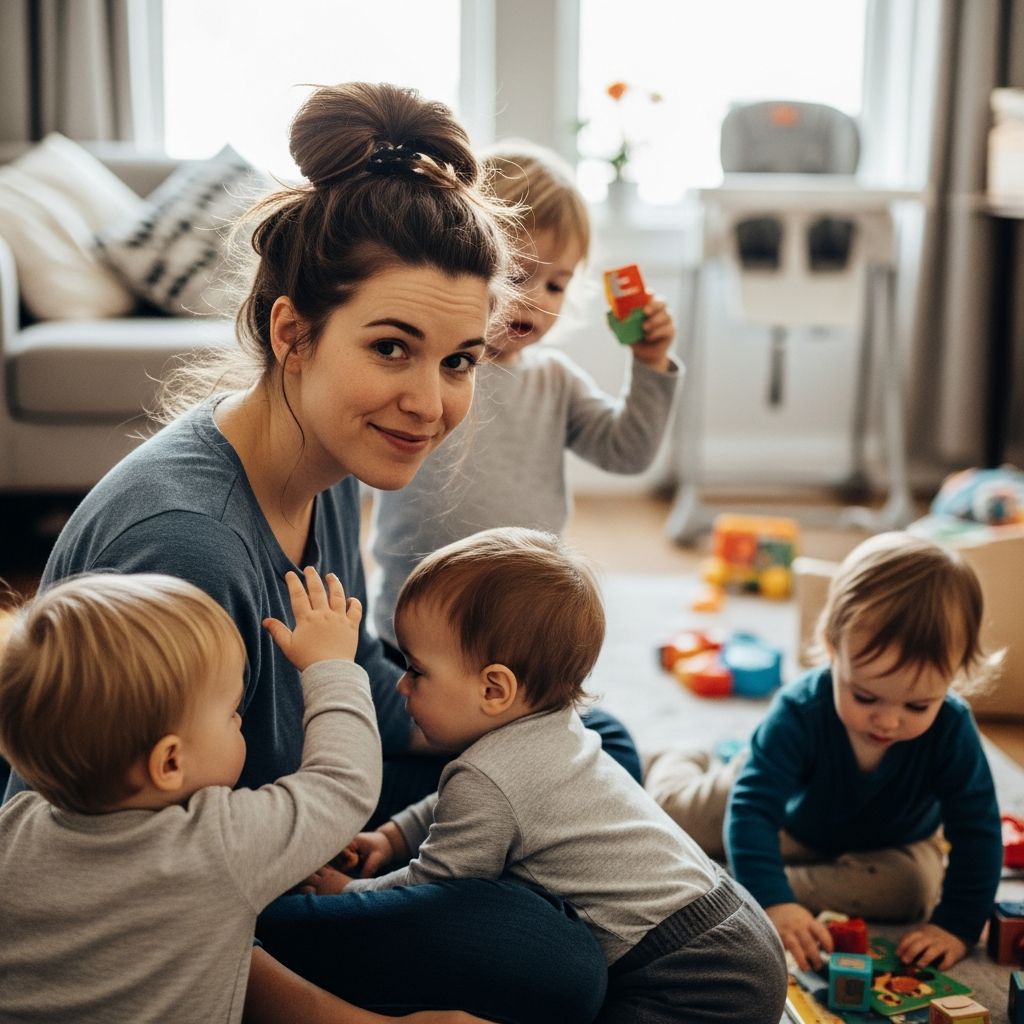
The Weight of Self-Doubt in Parenting
Every parent knows the feeling. You’re navigating the complex landscape of raising children, making countless decisions each day, and wondering if you’re getting any of it right. The internal monologue becomes a constant companion: Are the kids eating enough vegetables? Am I patient enough? Did I handle that tantrum correctly? Should I have said something different? These questions echo through the minds of parents everywhere, creating a persistent undercurrent of uncertainty that can be exhausting and demoralizing.
Parenting is one of the most consequential roles anyone undertakes, yet it often comes with very little external validation. Unlike professional environments where performance reviews and recognition are commonplace, parenting success is measured in intangible outcomes that may not manifest for years or even decades. Parents work tirelessly, often behind the scenes, without applause or acknowledgment. The recognition they receive is typically limited to immediate family members who may themselves be too overwhelmed to offer consistent encouragement.
The Paradox of Invisible Labor
Parenting represents a unique form of labor that society often undervalues despite its fundamental importance. Parents manage schedules, provide emotional support, ensure physical health, facilitate education, model behavior, and countless other responsibilities that collectively shape the next generation. Yet this work frequently goes unseen and unappreciated by the broader community. A parent might spend an entire day managing multiple children’s needs, solving problems, providing comfort, and maintaining household operations, only to feel at the end of the day that they haven’t accomplished anything concrete.
This invisibility of parental work can lead to a distorted self-perception. When parents are constantly in the trenches of daily routines—meal preparation, homework assistance, transportation, conflict resolution—they lose perspective on the cumulative impact of their efforts. They notice the moments when things go wrong: the child who refused dinner, the sibling conflict that erupted, the incomplete chores. These isolated incidents can overshadow the hundreds of small positive interactions and careful decisions made throughout the day.
The Power of External Perspective
What happens when someone from outside the family ecosystem takes a moment to observe and acknowledge a parent’s efforts? The impact can be surprisingly profound. An external observer brings an important advantage: they see the parent and children in a single moment without the emotional baggage of daily struggle. They notice the patience being exercised, the children’s behavior, the apparent care and effort being invested. Most importantly, they have no agenda in offering their observation. They’re not obligated to say anything positive; they’re choosing to do so because they genuinely see something worth recognizing.
This external validation serves multiple psychological functions. First, it provides a reality check against the parent’s internal narrative of inadequacy. When someone else observes the same situation the parent is experiencing and draws a positive conclusion, it suggests that the parent’s harsh self-assessment may be inaccurate. Second, it offers perspective on scale. A parent managing multiple children in a challenging environment might not realize how difficult that situation truly is or how competently they’re handling it until someone else names it as impressive. Third, external validation provides emotional fuel during a period of depletion, offering a psychological boost that can sustain a parent through subsequent challenges.
Recognition as a Form of Community Support
Throughout history and across cultures, communities have recognized the importance of supporting parents in their roles. In many traditional societies, child-rearing was a shared community responsibility with multiple adults providing input, assistance, and affirmation to parents. The modern, isolated nuclear family structure has largely eliminated this support system, leaving parents to navigate their responsibilities with minimal external input or encouragement.
When a stranger takes a moment to offer recognition or support, they’re partially restoring this traditional community function. They’re acknowledging that parenting matters, that they notice the effort being invested, and that they value what the parent is doing. This recognition can feel particularly powerful precisely because it comes from outside the immediate family. It’s not the obligatory encouragement of a spouse or the natural pride of a grandparent. It’s genuine observation from someone with no particular stake in the outcome.
The Ripple Effect of Kindness
Gestures of recognition and support rarely remain isolated incidents. When a parent receives unexpected acknowledgment from a stranger, several things often happen in succession. The immediate recipient experiences a boost in confidence and mood. This emotional shift often extends to their interactions with their children, making the parent more patient, more present, and more positive during subsequent interactions. The children, in turn, benefit from this improved parental mood and presence. Additionally, parents who receive unexpected kindness often become inspired to extend similar recognition to other parents they encounter, creating an expanding circle of mutual support and encouragement.
This ripple effect demonstrates how individual acts of kindness intersect with broader patterns of community wellbeing. A single moment of recognition can catalyze shifts in multiple people’s emotional states and behaviors. Parents who feel supported and validated are more likely to support other parents. Children who witness their parents being affirmed by others learn that their family is valued by the broader community. Communities that regularly practice acknowledging and supporting parents become more cohesive and supportive overall.
Reframing Parental Success
One of the most valuable outcomes of receiving unexpected recognition is that it prompts parents to reconsider their own metrics for success. Many parents operate under impossibly high standards, focusing on idealized versions of parenthood while overlooking the genuine accomplishments embedded in their daily routines. They notice the one meal that wasn’t homemade while failing to acknowledge the countless meals they have prepared. They fixate on an argument with their child while overlooking the hours of patient teaching and support provided.
When external validation arrives, it often highlights achievements that the parent had taken for granted or failed to recognize as noteworthy. An observer might praise a parent for the calm manner in which they’re handling a chaotic situation, something the parent views as simply doing what needed to be done. This external perspective offers an opportunity to recalibrate internal standards and to recognize that good parenting isn’t about perfection—it’s about consistent effort, genuine care, and willingness to keep trying even when things are difficult.
The Role of Vulnerability in Connection
Parenting requires tremendous vulnerability. Parents must be willing to make decisions knowing that the consequences are significant and long-term. They must acknowledge moments of failure and frustration. They must adapt when their approaches aren’t working. This vulnerability can feel isolating, particularly in a culture that often celebrates parental confidence and competence while stigmatizing parental doubt and struggle.
When someone acknowledges a parent’s efforts despite (or perhaps because of) the visible challenges, they’re essentially validating the parent’s vulnerability as strength rather than weakness. The parent who is visibly managing multiple children, handling chaos with grace, or simply persisting through difficulty is demonstrating genuine capability. Recognition of this capability helps parents recognize that their struggle and vulnerability aren’t signs of failure—they’re inherent parts of taking on a genuinely difficult responsibility.
Practical Implications for Communities
Understanding the profound impact of recognition and validation on parental wellbeing has practical implications for how communities can better support families. Simple acts—a genuine compliment about a child’s behavior, acknowledgment of a parent’s visible effort, a small gesture of assistance—can have outsized positive effects.
- Offering specific, genuine praise rather than generic compliments resonates more deeply and helps parents recognize particular strengths they may not have noticed.
- Acknowledging the difficulty of parenting alongside recognition of the parent’s competence validates both the challenge and the capability.
- Small practical assistance—whether a helping hand, a meal, or coverage for a few minutes—can provide both tangible relief and emotional support.
- Creating spaces where parents can authentically discuss their struggles without judgment helps reduce isolation and normalizes the challenges inherent in parenting.
- Modeling supportive behavior demonstrates to children that adults recognize and value the work of parents and caregivers.
When Internal Validation Isn’t Enough
While developing internal validation and self-compassion is undoubtedly important, it’s also important to acknowledge that human beings are inherently social creatures who benefit from external recognition and support. The goal isn’t to eliminate the need for external validation but to create healthier relationships with it. Parents shouldn’t be dependent on constant external affirmation, but neither should they dismiss or undervalue the genuine boost that sincere recognition provides.
The most resilient parents typically have some combination of internal confidence in their approach alongside openness to external perspective and recognition. They know their own values and judgments matter, but they’re also willing to receive feedback and acknowledgment from others. This balance allows them to maintain their own compass while benefiting from the perspectives and support of their community.
Building a Culture of Mutual Recognition
Imagine communities where recognition of parental effort was normalized and frequent. Where parents regularly received acknowledgment from neighbors, extended family, community members, and even acquaintances about the good work they’re doing. Where children grew up understanding that their parents’ efforts were seen and valued by the broader community. Where the invisible labor of parenting was regularly made visible through recognition and appreciation.
Creating such a culture requires intentional effort. It means training ourselves to notice when parents are doing well, even in difficult circumstances. It means being willing to offer genuine compliments and recognition without awkwardness. It means sometimes being the person who takes a moment to say what a parent needs to hear: that they’re doing a good job, that their children are fortunate to have them, that their efforts matter and are visible to others.
Frequently Asked Questions
Q: Why is external validation important for parents when they should have internal confidence?
A: Both internal and external validation serve important psychological functions. Internal confidence helps parents maintain their own standards and direction, while external validation provides perspective, emotional support, and confirmation that their efforts are visible and valued to others. They work together rather than replacing one another.
Q: How can parents cultivate self-recognition when they aren’t receiving external validation?
A: Practices like journaling about daily accomplishments, regularly reflecting on challenges overcome, seeking out supportive parent communities, and intentionally practicing self-compassion can help. Parents can also ask trusted people in their lives to mirror back what they observe, providing that external perspective when it’s not spontaneously offered.
Q: What’s the difference between healthy and unhealthy reliance on external validation?
A: Healthy reliance includes receiving recognition graciously and allowing it to inform your perspective without depending on it for your basic sense of capability. Unhealthy reliance involves constantly seeking validation, being unable to proceed without external affirmation, or allowing criticism to completely undermine your confidence in your approach.
Q: How can communities better support parents through recognition?
A: Communities can create intentional opportunities for connection, normalize discussions about parenting challenges, offer practical support alongside emotional encouragement, and ensure that recognition is specific, genuine, and not condescending. Supporting parents doesn’t require grand gestures—consistent small recognitions are often most powerful.
References
- The Role of Social Support in Parenting Stress and Parental Competence — American Psychological Association. 2023. https://www.apa.org/science/about/psa/parenting
- Parental Burnout: What Is It, and Why Is It Important? — American Academy of Pediatrics. 2024. https://www.healthychildren.org/English/family-life/family-dynamics/Pages/default.aspx
- Community Support and Family Wellbeing — Centers for Disease Control and Prevention. 2024. https://www.cdc.gov/family/
- Self-Compassion and Parental Effectiveness — Greater Good Science Center, University of California Berkeley. 2024. https://greatergood.berkeley.edu/topic/self_compassion/definition
- The Effects of Positive Social Feedback on Mental Health Outcomes — Journal of Positive Psychology Research. 2023. https://www.routledge.com/The-Positive-Psychology-of-Well-Being/Kern-Waters/p/book/9780415876698