Every parent has experienced that momentary lapse: calling out to one child only for a sibling’s name—or even the family pet’s—to tumble out instead. Far from a sign of exhaustion or declining memory, this phenomenon reveals how our brains prioritize and store information about those we cherish most. Cognitive psychologists have pinpointed the mechanisms at play, showing that these slips stem from efficient neural organization rather than error.
The Brain’s Clever Filing System
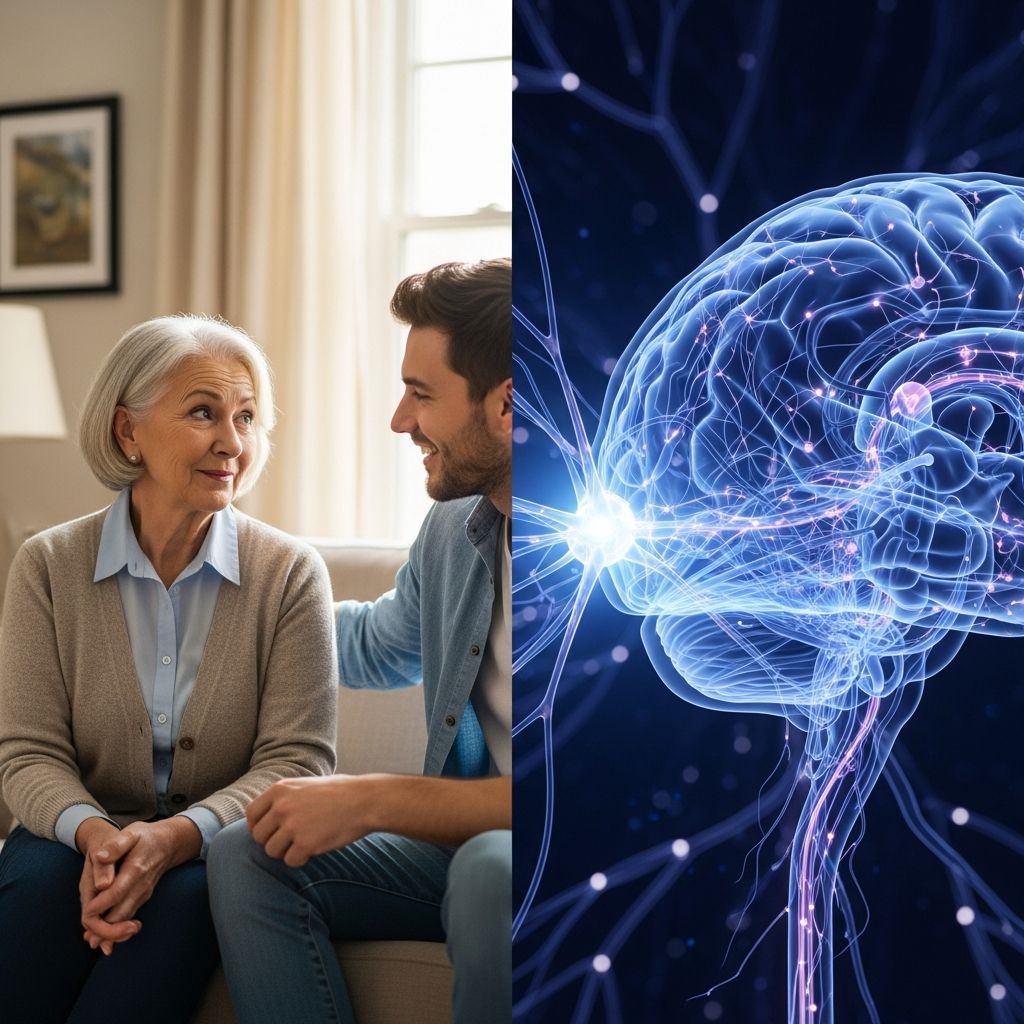
Human memory doesn’t store names in isolation. Instead, the brain constructs intricate **semantic networks**, grouping related concepts together for quick access. Loved ones like children, spouses, and pets occupy a shared ‘family folder’ in this mental architecture. When retrieving a name under pressure, the brain may select from this cluster, leading to substitutions.
This process, detailed in research from Duke University, involves activating multiple competing labels simultaneously. As cognitive scientist Neil Mulligan explains, the system ‘flicks through’ options in the family category before settling on one—sometimes the wrong one. Over 1,700 participants in five studies confirmed this pattern, with misnaming most frequent among close relations.
Emotional Proximity Fuels the Confusion
The closer the bond, the higher the mix-up risk. Studies show misnaming surges with family members because shared emotional categories override precise recall. A mother juggling breakfast and school runs activates her ‘children’ network broadly, pulling sibling names interchangeably.
Phonetic similarity plays a secondary role—names like ‘Emily’ and ‘Ashley’ with overlapping sounds swap more often—but relational ties dominate. This explains why celebrities or acquaintances rarely feature in slips; their mental files reside elsewhere.
Common Triggers in Everyday Parenting
- Multitasking overload: Rushed mornings amplify automatic retrieval, bypassing careful selection.
- Fatigue and stress: Nearly half of surveyed cases linked to distraction, per Duke findings.
- High emotional load: Intense love accelerates network activation, increasing errors.
These triggers highlight adaptive cognition: the brain favors speed over perfection when stakes are low, like home calls.
Age, Similarity, and Other Influences
While universal, name swaps evolve with life stages. Older adults experience more due to subtle declines in response inhibition—the brain’s ability to suppress incorrect options. Yet, even young parents report 95% incidence of familial misnaming.
| Factor | Influence on Mix-Ups | Example |
|---|---|---|
| Relationship Closeness | Primary driver | Child called by sibling’s name |
| Phonetic Similarity | Secondary boost | Dave for Don |
| Age | Increases frequency | More slips post-60 |
| Distraction | Triggers activation | Multitasking parent |
This table summarizes key contributors, drawn from aggregated study data.
Debunking Myths: Not Mommy Brain or Decline
Pop culture blames ‘mommy brain,’ but evidence refutes it. Misnaming reflects optimized storage, not deficit. It’s harmless, occurring across ages and not signaling dementia—unlike consistent, broad memory failures. Parents can rest assured: these slips affirm strong attachments.
Real-Life Examples from Pop Culture and Surveys
Consider Ross from *Friends* uttering ‘Rachel’ at his wedding to Emily—a classic semantic intrusion. Surveys echo this: participants recalled parents swapping kids’ or pet names mid-task, always within family bounds. One study noted spouses calling partners by child’s name during chaos, underscoring network overlap.
Neurological Underpinnings: A Deeper Dive
Semantic networks form via interconnected neurons linking concepts by meaning. Proper names, as ‘nonsense words’ without inherent traits, anchor to relational contexts. Recall cues—like a toy—spark chain reactions: ‘child’ → ‘family’ → multiple names compete.
Neuroimaging supports this; family-related tasks light up shared frontal-temporal regions. Inhibition fails briefly under load, but corrects instantly—hence quick self-corrections.
Global Patterns and Cultural Universality
From U.S. surveys to Danish collaborations, misnaming transcends borders, affirming human cognition’s consistency. Multilingual families report cross-language intrusions within family networks, e.g., English name for Spanish-speaking child.
Practical Tips to Minimize Mix-Ups
Though benign, reducing slips aids clarity:
- Pause before speaking; deliberate recall strengthens precision.
- Use full names in high-stress moments.
- Mindfulness practices enhance inhibition.
- Laugh it off—humor reinforces bonds without shame.
Implications for Cognitive Health Monitoring
Track patterns: isolated family slips are normal; worry if extending to all names or worsening rapidly. Consult professionals for context, but science reassures most cases are affectionate glitches.
Frequently Asked Questions
Is mixing up kids’ names a sign of dementia?
No, it’s a normal semantic error tied to emotional closeness, distinct from pathological memory loss.
Why does the dog’s name come out sometimes?
Pets share the ‘family’ network due to love and cohabitation.
Does name similarity cause all mix-ups?
It contributes but relationships drive most; dissimilar names swap too.
Can I train my brain to avoid this?
Yes, through slower retrieval and stress reduction techniques.
Do dads mix up names as much as moms?
Studies show similar rates, though moms report more in surveys.
Broader Insights into Memory and Relationships
These findings illuminate memory’s relational core. Strong ties create dense networks, prioritizing bonds over labels. In parenting, this underscores love’s neural imprint—slips are badges of attachment, not flaws.
Future research may explore interventions like network training apps, but for now, embrace the mix-up as proof of overflowing care.
References
- There’s A Scientific Reason Why Moms Mix Up Kids’ Names — Scary Mommy. 2024. https://www.scarymommy.com/scientific-reason-why-moms-mix-up-kids-names
- Why do parents mix up their kids’ names? Science has the answer — AJC. 2024-05-03. https://www.ajc.com/pulse/why-do-parents-mix-up-their-kids-names-science-has-the-answer/7XVNBISW3ZBJFJZ7XWXOLLRQM4/
- This is why you mix up your kids’ names, according to science — Mother.ly. N/A. https://www.mother.ly/life/this-is-why-you-mix-up-your-kids-names-according-to-science/
- Why Do People Mix Up Names? — Association for Psychological Science. N/A. https://www.psychologicalscience.org/news/why-do-people-mix-up-names.html
- Why you mix up the names of people you love — Providence Blog. N/A. https://blog.providence.org/toyourhealthblogs/why-you-mix-up-the-names-of-people-you-love