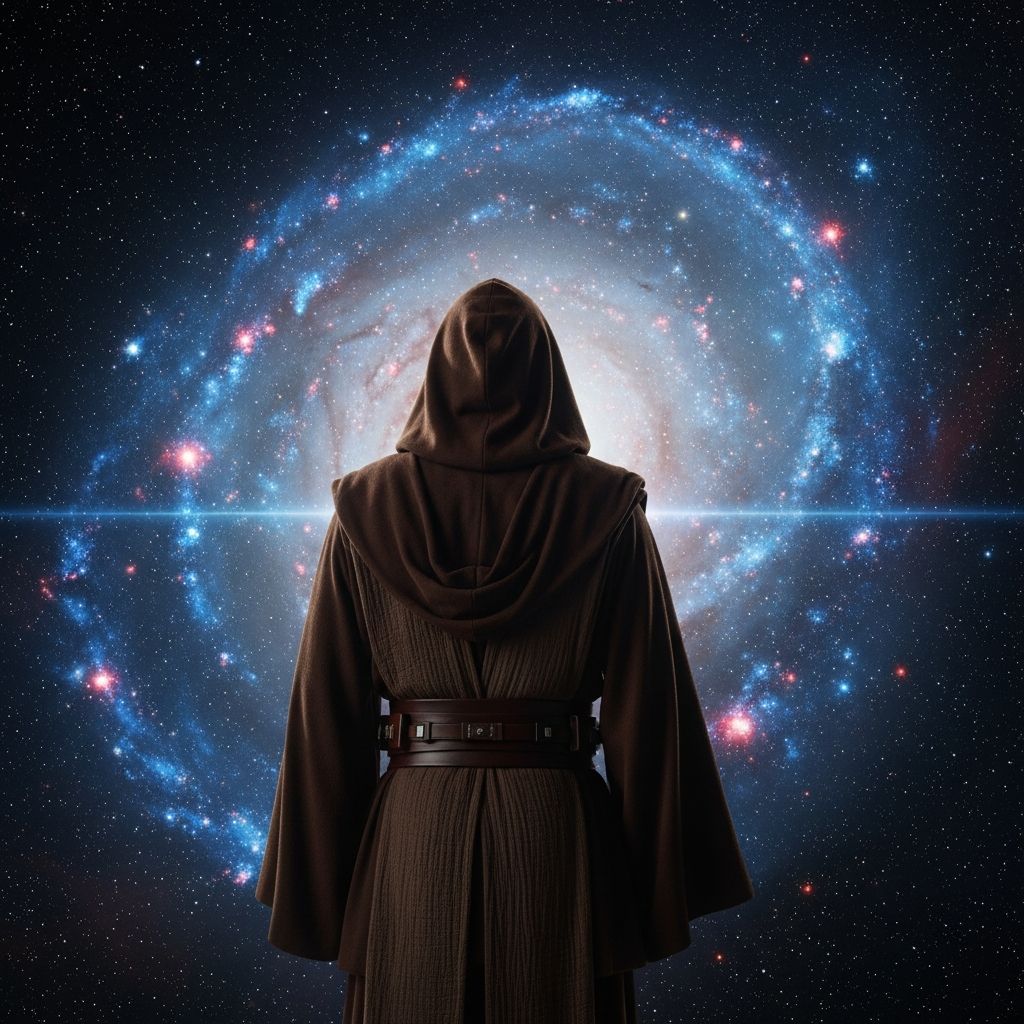
Among all the questions Star Wars fans ask, few are as oddly enduring as this one: if Jedi robes are supposed to mark someone as a Force-wielding space monk, why would a supposedly hidden Obi-Wan Kenobi walk around Tatooine wearing them so openly?
This wardrobe puzzle has grown into a fan-favorite “plot hole,” inspiring theories, arguments, and jokes that say more about how audiences engage with stories than about a single brown cloak.
The Robe Question In A Nutshell
In the original film trilogy, Obi-Wan appears as an old hermit dressed in simple tan and brown garments, which many viewers initially read as local desert wear suited to Tatooine’s harsh environment.
When the prequels arrived decades later, they showed nearly every member of the Jedi Order wearing similar outfits, retroactively turning Obi-Wan’s supposed disguise into something that now looked like an official uniform of a nearly extinct group.
Why Fans Call It A “Plot Hole”
Fans who view this as a plot hole argue that a fugitive Jedi Knight should avoid dressing in anything that loudly signals “I was once a general in a galactic war,” especially while Darth Vader and the Emperor are hunting down survivors.
To this camp, the robe implies carelessness in the writing or planning, as if visual continuity took priority over in-universe logic about staying hidden from a brutal authoritarian regime.
How The Movies Created The Confusion
Part of the tension comes from how the saga evolved: in the 1970s film, the costume department prioritized a monk-like, mythic look for Obi-Wan, not a codified uniform that a future prequel trilogy would have to obey.
Only when later films populated the Jedi Temple with dozens of robed characters did the original outfit shift from atmospheric choice to what appeared to be a strict dress code, generating a retroactive continuity puzzle.
In-Universe Fixes: Robes As Everyday Clothing
One popular in-universe explanation suggests that these light, layered garments are not uniquely Jedi at all but rather common attire across agrarian and desert worlds, much like work clothes or simple religious garb on Earth.
Under this view, Jedi deliberately adopt attire similar to ordinary citizens to signal humility and solidarity, which would mean Obi-Wan looks less like a famous general and more like any other aging moisture farmer on the Outer Rim.
Another Angle: Obi-Wan Is Not Actually Hiding Well
Some fans lean into the idea that Obi-Wan’s disguise is intentionally imperfect, emphasizing that he changes his name only slightly and remains on the homeworld of Anakin’s family, decisions that hardly scream “master strategist.”
In this reading, the robes underline his stubborn identity: he has stepped out of galactic politics, but he has not truly abandoned his vocation or his sense of duty, so he clings to familiar symbols of the Order even in exile.
What This Says About Jedi Values
Looking at the robes as a thematic device, the costume expresses an ideal of service, humility, and detachment from luxury, echoing visual language associated with monks and wandering sages in many cultures.
That symbolism helps the audience instantly recognize the Jedi as spiritual guardians rather than flashy superheroes, which can outweigh strict stealth logic when filmmakers are trying to convey character archetypes at a glance.
Story Logic Versus Visual Iconography
Big franchises constantly juggle diegetic realism with iconic imagery, and Star Wars is no exception: elements like glowing swords, noisy starships in vacuum, and dramatic capes already invite audiences to accept style over literal plausibility.
Jedi robes fall into this same category, functioning as a visual shorthand that instantly communicates role and history, even if strict spy-craft logic would recommend something much more anonymous for someone in hiding.
How Costuming Shaped Canon Over Time
From a production standpoint, the robe debate shows how costume design can retroactively harden into lore: a single outfit designed for one character became the aesthetic template for an entire Order once the prequels expanded the Jedi’s on-screen presence.
Expanded universe material, reference books, and fan discussions then incorporated this look as canonical fact, giving weight to what was originally a practical wardrobe decision made on a relatively small 1970s film set.
Key Perspectives On The Robe Debate
| Perspective | Core Claim | How It Views The Robes |
|---|---|---|
| Strict plot-logic view | The robes undermine the idea that Obi-Wan is hiding from the Empire. | Sees the outfit as evidence of an oversight or inconsistency in the saga. |
| Symbolic narrative view | Visual clarity and mythic symbolism matter more than perfect realism. | Treats the robes as a storytelling tool that signals identity and values. |
| In-universe cultural view | Robes are common across the galaxy, not uniquely Jedi. | Argues that Obi-Wan blends in with local workers and travelers. |
| Character-driven view | Obi-Wan cannot fully let go of being a Jedi, even in exile. | Interprets the garment as an emotional and ethical tether to his past. |
Why Fans Fixate On Details Like This
Modern fandom thrives on close reading, frame-by-frame analysis, and a desire to map every detail into a coherent fictional history, which turns small production choices into fuel for lengthy debates.
Discussions over costuming or ship design become collaborative world-building exercises, allowing fans to test theories, invent explanations, and negotiate what “counts” as sensible inside the shared universe.
Social Media And The Snowball Effect
Once a clever observation about a potential inconsistency appears online, social platforms can rapidly amplify it, turning a niche gripe into a viral talking point discussed in videos, comment threads, and think-pieces.
The robe controversy followed that pattern, with writers and fans highlighting the mismatch between Obi-Wan’s supposed secrecy and his clothing, then others responding with counter-arguments, jokes, and elaborate headcanon.
How Official Explanations Influence The Conversation
Over time, creators and licensed reference material have echoed or reinforced the idea that Jedi choose humble, almost generic robes precisely because they resemble what many ordinary people already wear.
These soft explanations do not erase the sense of inconsistency for everyone, but they give fans who enjoy internal coherence a framework for reconciling the earlier and later films without discarding either.
Lessons About World-Building From A Single Cloak
The robe debate underscores how difficult it is for long-running franchises to keep every visual decision perfectly aligned with future storytelling, especially when decades separate installments.
It also illustrates how audiences today expect fictional universes to behave like complex, internally consistent systems, even though many original creative choices were made quickly, practically, and without knowledge of future expansions.
Tips For Enjoying The Saga Without Getting Stuck On The Robes
Viewers who find themselves distracted by the cloak conundrum can reframe it as an invitation to engage with Star Wars on multiple levels: as mythic storytelling, as a patchwork of production eras, and as a living, changing canon.
Rather than treating every anomaly as a fatal flaw, some fans choose to treat them as prompts for fan fiction, tabletop adventures, or friendly debates that add to, rather than subtract from, the fun of the galaxy far, far away.
- Accept that older films were not built with decades of lore in mind, and that later entries adapt as they go.
- Use inconsistencies as creative sparks for your own stories or theories instead of as deal-breakers.
- Switch lenses between symbolic reading and literal logic depending on what aspect of the scene you want to enjoy.
Frequently Asked Questions About Jedi Robes
Are Jedi robes officially a uniform or just a tradition?
Within the story, various reference sources and interpretations imply that the robes function more as a traditional style than as a rigid, military-style uniform, even if the films visually standardize them for clarity.
Why didn’t filmmakers simply change Obi-Wan’s outfit in later editions?
Altering such an iconic visual would risk undermining the nostalgic power of the original movie and could create new continuity issues, so later stories instead tried to explain the outfit rather than rewrite it.
Do non-Jedi characters wear similar clothing in the films?
Several background characters, particularly on desert and frontier planets, appear in simple tunics and cloaks that resemble Jedi robes, supporting the idea that this is a common style rather than an exclusive badge of membership.
Does the robe issue actually affect the main story?
The plot progresses regardless of what Obi-Wan is wearing, so the robe debate mostly shapes how fans interpret his level of caution and the consistency of the universe, rather than changing the narrative’s major events.
Why do debates like this keep returning years after release?
As new shows, films, and reference materials appear, they reopen older questions and introduce fresh details, prompting fans to revisit long-standing topics with updated perspectives and renewed energy.