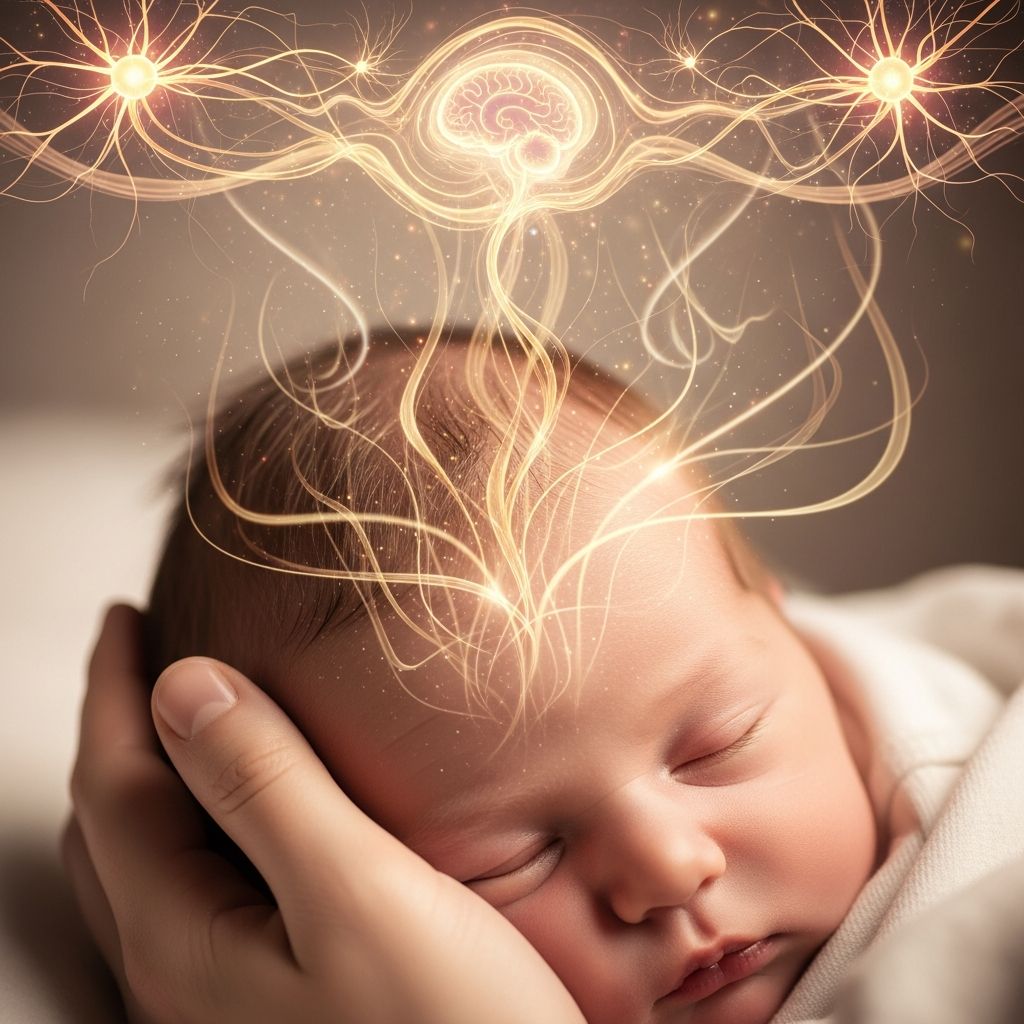
The delicate, sweet aroma emanating from a newborn’s skin captivates parents worldwide, evoking an instant surge of affection and protectiveness. This isn’t mere sentimentality; scientific investigations reveal that this scent profoundly influences brain activity, activating reward pathways and hormonal cascades essential for parent-infant attachment.
Neurological Magic of Infant Aromas
At the heart of this phenomenon lies the brain’s response to olfactory cues from newborns. Functional magnetic resonance imaging (fMRI) studies demonstrate that inhaling infant body odors enhances blood-oxygen-level-dependent (BOLD) signals in regions linked to pleasure and reward, such as the orbitofrontal cortex (OFC) and nucleus accumbens. These activations occur not only in mothers but also in women without children, indicating an innate human response to infantile chemosignals.
Infant scents outperform those of older children, specifically amplifying connectivity in hedonic hotspots like the ventral pallidum. This neural priming prepares caregivers for prosocial behaviors, mirroring the ‘cuteness response’ elicited by baby-like facial features known as the Kindchenschema.
Chemical Composition and Evolutionary Design
Newborns produce a unique bouquet of approximately 150 volatile compounds, including contributions from active sweat glands on the scalp and apocrine secretions. One key player is hexadecanal (HEX), an odorless chemical that modulates aggression and docility in adults exposed to it.
Evolutionarily, this scent serves as a survival mechanism. By triggering motivational responses, it encourages proximity, breastfeeding, and protection—behaviors critical in ancestral environments where infant mortality was high. Researchers posit that natural selection favored mothers whose brains lit up dramatically to their baby’s aroma, ensuring offspring survival.
Dopamine Surge: The Reward Pathway Activation
Sniffing a newborn’s head mimics the euphoria of craving satisfaction, flooding the brain with dopamine via the mesolimbic pathway. In experiments, women smelling baby-worn clothing showed heightened dopamine activity, more pronounced in parents than non-parents. This reward signal reinforces caregiving, akin to how drugs compel repeated use, but here directed toward nurturing.
For mothers, this response intensifies with familiarity; own-baby scents strengthen functional connectivity between the caudate nucleus and posterior cingulate cortex, enhancing emotional investment.
- Dopamine’s role: Drives ‘approach’ behaviors like holding and feeding.
- Comparison to controls: Post-pubertal odors elicit milder responses, underscoring the specificity of infant cues.
- Universal appeal: Even nulliparous women experience reward activation, suggesting broad evolutionary wiring.
Oxytocin’s Embrace: Hormonal Bonding Boost
Beyond dopamine, the newborn scent catalyzes oxytocin release, the ‘love hormone’ pivotal for social bonding. The olfactory bulb connects directly to oxytocin-rich areas like the amygdala and hypothalamus, bypassing conscious processing for rapid emotional impact.
This synergy calms infants—preterm babies show reduced stress when exposed to maternal scents—and relaxes mothers, potentially countering postpartum mood dips. Losing smell, as in COVID-19 cases, disrupts this loop, hindering oxytocin surges and emotional attunement.
| Neurotransmitter/Hormone | Brain Regions Affected | Behavioral Outcome |
|---|---|---|
| Dopamine | Nucleus accumbens, OFC | Increased caregiving motivation |
| Oxytocin | Amygdala, hypothalamus | Enhanced attachment and calm |
| HEX compound | Limbic system | Modulated aggression/docility |
Bidirectional Scent Recognition
The bond is reciprocal: 90% of mothers can identify their infant by scent alone, while babies prefer their mother’s aroma, which acts as a ‘safety signal’ reducing cortisol. This mutual recognition fosters security, vital for neurodevelopment.
In mothers, exposure to their own baby’s odor heightens ventral pallidum connectivity to reward hubs, amplifying affection. Preterm infants benefit immensely, showing stabilized heart rates near scent-infused pads mimicking mom.
Potential Therapeutic Horizons
Emerging research explores newborn scent for mental health. Swedish studies found baby hat aromas affected brains like antidepressants, reducing anxiety via limbic modulation. Funded trials now include fathers, hinting at unisex efficacy.
For anosmic parents post-illness, synthetic recreations could restore bonding. HEX’s calming effects on males suggest applications in paternal engagement or stress reduction.
Practical Ways to Harness the Scent
Parents can amplify benefits:
- Skin-to-skin contact to immerse in natural odors.
- Store baby-worn items for soothing during separations.
- Incorporate scent in NICU care for preemies.
- Partner sniffing sessions to equalize bonding hormones.
Cultural rituals, like burying placentas or oil massages, may evolutionarily tap this instinct.
Frequently Asked Questions
Why do all newborns smell the same yet feel unique?
Core compounds are universal, but individual microbiome and genetics add personalization, enhancing kin recognition.
Does the scent affect dads too?
Yes, though less studied; HEX reduces male aggression, promoting gentleness.
Can the smell help with postpartum depression?
Promising; it mimics antidepressant brain effects, boosting mood via reward circuits.
What if I lost my sense of smell?
Compensate with touch/voice; consult for olfactory training to rebuild pathways.
Does the scent fade? Why?
It peaks neonatally, diminishing as microbiome matures around 6 weeks, shifting bonding cues.
Long-Term Implications for Family Dynamics
This olfactory bond lays the foundation for secure attachments, influencing child outcomes like emotional regulation. Parental brains, rewired by repeated exposure, show lasting reward sensitivity to their child’s cues, sustaining care through toddlerhood.
Cross-cultural consistency underscores universality, though modern interventions like C-sections may delay initial exposure, warranting skin-to-skin advocacy.
In summary, the newborn scent is a masterful evolutionary tool, bridging neuroscience and nurture to forge lifelong connections.
References
- The Science Behind Newborn Smell and Its Role in Mother-Infant Bonding — Mamazing.com. 2023. https://www.mamazing.com/blogs/parenting-tips/the-science-behind-newborn-smell-and-its-role-in-mother-infant-bonding
- That newborn baby scent is addictive—science explains why — Mother.ly. 2023-10-15. https://www.mother.ly/life/new-baby-smell-mom-brain/
- The scent of cuteness—neural signatures of infant body odors — PMC (Chem Senses). 2024-06-12. https://pmc.ncbi.nlm.nih.gov/articles/PMC11192622/
- COVID, Smell, and Emotional Connection with Your Baby — Nurture Science Program. 2022. https://nurturescienceprogram.org/covid-smell-and-emotional-connection-with-your-baby/
- Chemical emitted by babies could make men more docile, women more aggressive — Science.org. 2012-01-18. https://www.science.org/content/article/chemical-emitted-babies-could-make-men-more-docile-women-more-aggressive