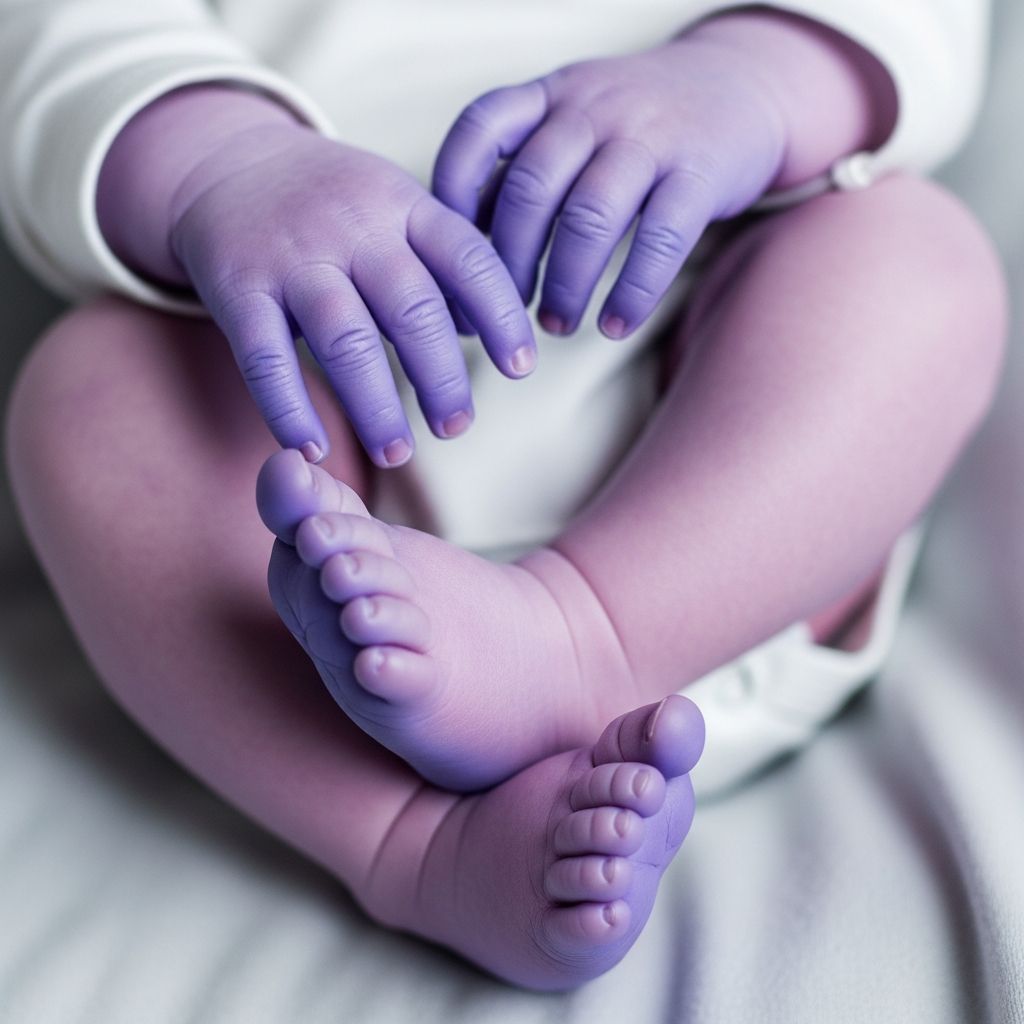
Observing sudden changes in a baby’s skin color, particularly in the hands and feet turning purple or blotchy, can alarm new parents. These occurrences are frequently benign, stemming from an infant’s immature vascular system adjusting to life outside the womb. However, distinguishing routine variations from potential health flags is crucial for peace of mind and timely intervention.
Understanding Common Skin Color Changes in Newborns
Newborns exhibit unique skin responses due to their developing physiology. The circulatory system, still maturing, often leads to temporary discoloration in extremities. This is a normal adaptation phase where blood flow prioritizes vital organs like the heart and brain over hands and feet.
Skin mottling, or cutis marmorata, presents as a marbled, reddish-blue pattern, especially noticeable when the baby is cool. It fades quickly with warmth, reflecting vasomotor instability common in the first weeks of life.
Key Types of Discoloration
- Blotchy or Mottled Skin: Appears as irregular patches, often on legs and arms, triggered by temperature shifts.
- Purple or Bluish Tint: Concentrated in fingers, toes, hands, and feet, resolving upon warming.
- Circumoral Cyanosis: Bluish hue around the mouth during feeding or crying, typically harmless.
These patterns affect over 30% of healthy newborns, particularly during crying or exposure to cooler environments.
Acrocyanosis: The Most Frequent Culprit
Acrocyanosis tops the list of explanations for purple extremities in babies. Defined as bluish discoloration of hands, feet, or perioral areas, it arises from peripheral vasoconstriction—blood vessels narrowing to conserve heat.
This condition peaks in the first 24-48 hours post-birth, diminishing as the baby’s regulatory mechanisms strengthen. Episodes last minutes and respond promptly to gentle warming, such as swaddling or skin-to-skin contact.
Triggers for Acrocyanosis Episodes
| Trigger | Description | Why It Happens |
|---|---|---|
| Cold Exposure | Room temperature below 72°F (22°C) | Vessels constrict to protect core temperature |
| Crying or Agitation | Increased oxygen demand during fussiness | Temporary blood flow redistribution |
| Positional Factors | Legs dangling in carriers or upright holds | Gravity affects immature circulation |
| Gastrointestinal Activity | Vomiting, reflux, or coughing | Alters blood flow dynamics |
Parents report these changes most often when babies are undressed for diaper changes or baths. Reassuringly, the baby’s overall demeanor—alertness, feeding well, and pink central skin—indicates no immediate threat.
When Discoloration Signals Something More Serious
Not all purple hues are innocuous. Central cyanosis, affecting the trunk, lips, or tongue persistently, suggests inadequate oxygenation, demanding urgent evaluation.
Red Flags Requiring Immediate Medical Attention
- Discoloration lasting over 10-15 minutes despite warming
- Accompanies labored breathing, grunting, or rapid breaths
- Present alongside lethargy, poor feeding, or fever
- Swelling, cold-to-touch skin, or asymmetry in limbs
- Bluish tint in mucous membranes or entire body
Serious causes include congenital heart defects like tricuspid atresia, where malformed valves impede circulation, leading to chronic cyanosis. Respiratory issues such as bronchiolitis or pneumonia, sepsis, or methemoglobinemia—abnormal hemoglobin impairing oxygen transport—also manifest similarly.
Raynaud’s Phenomenon in Infants: Rare but Possible
Raynaud’s involves episodic vasospasms causing white, blue, then red discoloration in extremities, often painful in older children. In infants, it’s uncommon but can mimic acrocyanosis, triggered by cold or stress.
Unlike benign acrocyanosis, Raynaud’s may involve triphasic color changes and discomfort. Pediatricians diagnose via history and exclusion of other conditions; management focuses on warmth and avoiding triggers.
Practical Tips for Managing and Preventing Episodes
Empowering parents with strategies reduces worry and supports baby comfort:
- Maintain Ideal Environment: Keep rooms at 68-72°F (20-22°C); use footed sleepers and hats.
- Warm Gently: Hold baby close, use warm (not hot) towels, or tummy time on your chest.
- Positioning Aids: Elevate legs periodically if upright; ensure carriers don’t constrict thighs.
- Massage Lightly: Stroke extremities toward the body to encourage flow.
- Monitor Patterns: Track frequency, duration, and associated symptoms in a journal for doctor discussions.
Avoid over-bundling to prevent overheating, which risks SIDS. Balance is key.
Diagnostic Approaches by Pediatricians
At well-child visits, doctors assess via physical exam, pulse oximetry (measuring oxygen saturation), and echocardiography if heart issues suspected. Most cases resolve without tests, but persistent symptoms prompt blood work or imaging.
Newborn screenings often catch congenital issues early, providing baseline reassurance.
Frequently Asked Questions (FAQs)
Is it normal for my newborn’s hands and feet to be purple when cold?
Yes, this is classic acrocyanosis, a harmless response in over 30% of newborns due to immature circulation. It fades with warmth.
How long does acrocyanosis last in babies?
Typically resolves within days to weeks, fully by 2-3 months as circulation matures.
Should I worry if my baby’s feet turn purple in a baby carrier?
Usually not, if color normalizes when legs are raised. Check for tight straps; consult if persistent.
What’s the difference between acrocyanosis and true cyanosis?
Acrocyanosis is peripheral and transient; true cyanosis is central, persistent, and indicates low oxygen.
Can Raynaud’s affect newborns?
Rarely, but possible. It features color phases and may cause fussiness; pediatric evaluation confirms.
Long-Term Outlook and Parental Reassurance
Most infants outgrow these quirks swiftly, with no lasting effects. Vigilance empowers parents: know your baby’s baseline, trust your instincts, and partner with healthcare providers. Routine check-ups ensure early detection of rarities.
By understanding these phenomena, parents navigate early months confidently, fostering secure bonding amid natural adjustments.
References
- What is acrocyanosis? Why are my newborn’s hands and feet turning purple — Summer Health, Dr. Marcy Borieux, MD, FAAP. 2023. https://www.summerhealth.com/blog/what-is-acrocyanosis-why-are-my-newborns-hands-and-feet-turning-purple
- Why My Infant Purple Feet Happen? Is Everything Alright? — Avocado Health. 2023. https://avocadohealth.ai/parents/infant-purple-feet/
- Baby’s Feet Are Purple: A Pediatrician’s Guide for New Parents — Blueberry Pediatrics. 2023. https://www.blueberrypediatrics.com/health-tips/babys-feet-are-purple-a-pediatricians-guide-for-new-parents
- Cyanosis (Blue Hands & Feet) — Cleveland Clinic. 2024-01-16. https://my.clevelandclinic.org/health/diseases/24297-cyanosis
- Cyanosis | Symptoms, Diagnosis & Treatment — Cincinnati Children’s Hospital. 2023. https://www.cincinnatichildrens.org/health/c/cyanosis
- Blue or grey skin or lips (cyanosis) — NHS. 2024. https://www.nhs.uk/symptoms/blue-skin-or-lips-cyanosis/
- What to Know About Cyanosis in Children — WebMD. 2023. https://www.webmd.com/children/what-to-know-about-cyanosis-in-children