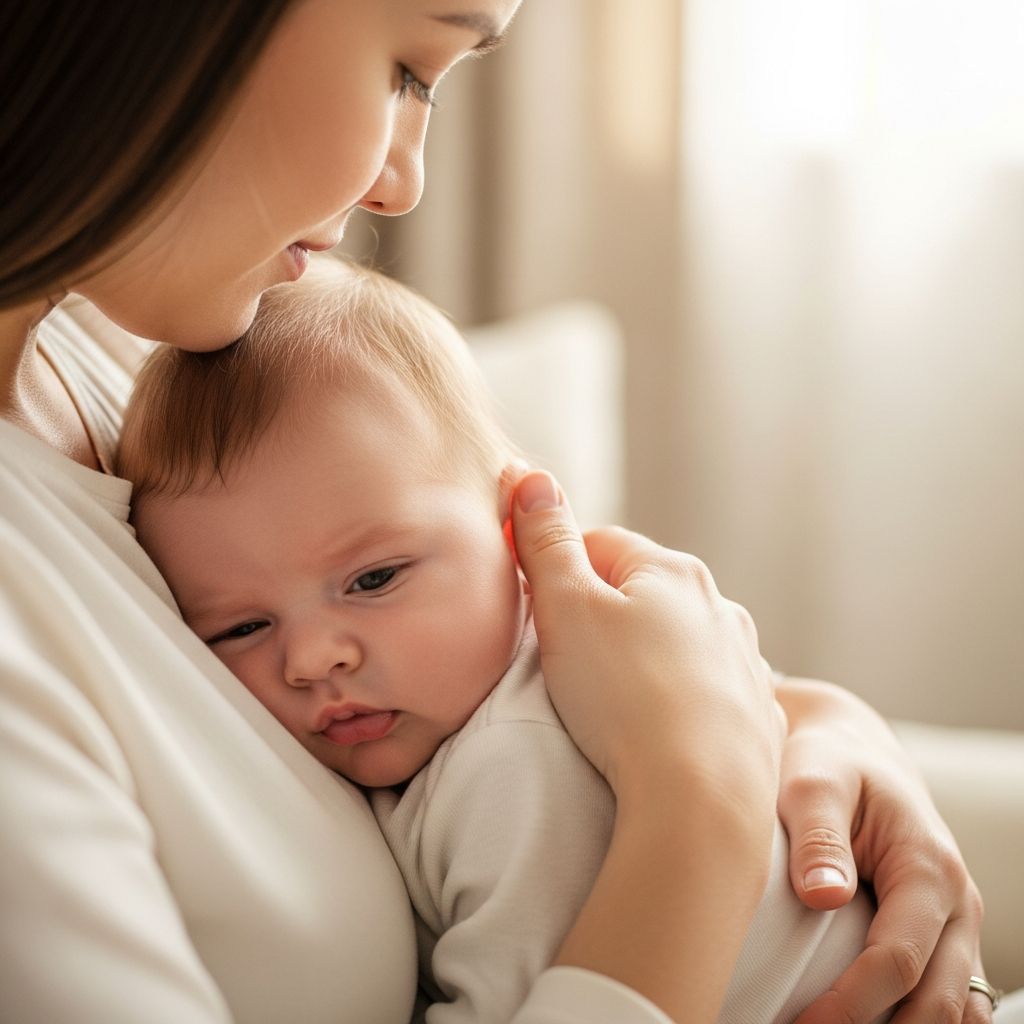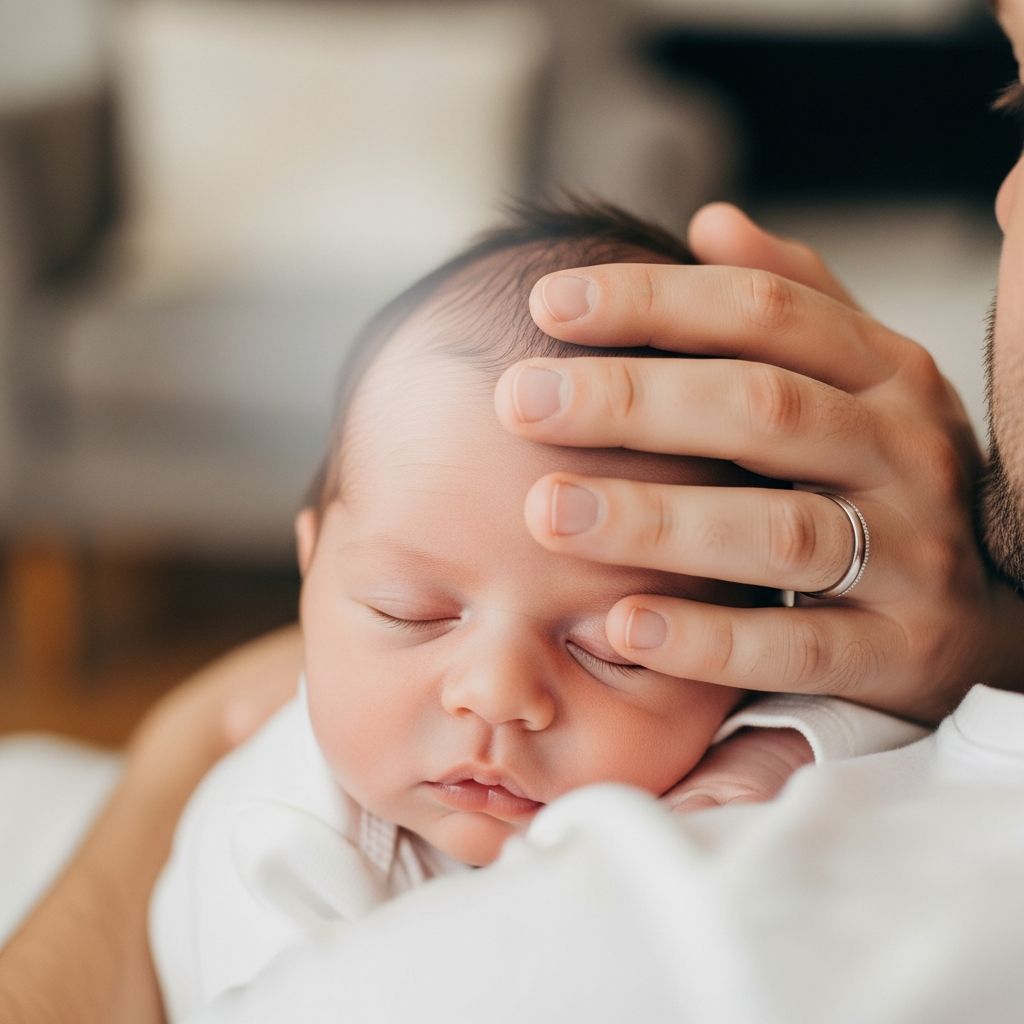
New parents frequently experience a visceral discomfort when their newborn’s distinctive scent is overshadowed by the odors of caregivers, family members, or hospital staff. This reaction stems from deep-seated biological mechanisms designed to promote exclusive bonding and kin recognition between parent and child.
The Unique Signature of a Newborn’s Scent
From the moment of birth, a newborn emits a specific body odor that acts as a chemical identifier, much like a personal fingerprint. This scent, composed of volatile compounds from skin, sweat glands, and amniotic fluid residues, is highly individualized. Research demonstrates that mothers can distinguish their own baby’s odor from that of others within hours of delivery, preferring it strongly due to its rewarding neural impact.
Infant body odors trigger activation in brain regions associated with pleasure and reward, including the orbitofrontal cortex (OFC) and neostriatal areas. Functional MRI studies show that exposure to these scents increases blood-oxygen-level-dependent (BOLD) signals and functional connectivity in olfactory processing, reward, and social cognition networks, more so than odors from older children.
Evolutionary Roots of Scent-Based Kin Recognition
Human evolution has wired parents to recognize and bond with their biological offspring through olfaction, a primitive sense that predates vision and hearing in fetal development. Newborns themselves exhibit preferences, turning toward their mother’s scent, particularly breast milk, which reinforces mutual attachment.
- Selective Neural Response: Infant odors elicit stronger responses in reward circuits compared to post-pubertal scents, priming prosocial behaviors like caregiving.
- Parental Experience Influence: Mothers show heightened activation to their own baby’s scent versus unfamiliar ones, with nulliparous women displaying less pronounced effects, indicating experience-dependent neural plasticity.
- Developmental Shift: Pleasantness of a child’s body odor declines with age, peaking in infancy and dropping post-puberty, correlating with reduced caretaking needs.
This system ensures parental investment is directed accurately, minimizing energy waste on non-kin—a critical survival strategy in ancestral environments.
Neurological Mechanisms Behind the Aversion
When a newborn’s scent is masked by others—through handling, cuddling, or shared bedding—parents may feel an instinctive aversion. This disrupts the olfactory ‘Kindchenschema,’ where baby-like cues (large eyes, soft features, and now scents) activate nurturing circuits.
Studies reveal that unfamiliar infant odors still engage reward areas but less intensely than one’s own. The brain detects this mismatch as a threat to bonding, evoking discomfort or jealousy-like responses. Functional connectivity in pleasure networks strengthens specifically with familiar infant scents, supporting sustained attachment.
| Brain Region | Response to Own Baby Scent | Response to Unfamiliar/Other Scents |
|---|---|---|
| Olfactory Cortex | High BOLD activation | Moderate activation |
| Reward Network (e.g., Striatum) | Strong increase, correlated with pleasantness | Weaker, less rewarding |
| Pleasure Centers (OFC) | Enhanced connectivity | Reduced for non-kin |
These patterns suggest olfaction scaffolds early social development, with scent mismatches signaling potential kin confusion.
Psychological and Emotional Dimensions
Beyond biology, this scent sensitivity ties into attachment theory. The pleasant perception of a baby’s odor fosters emotional warmth essential for secure bonds. When altered, parents report irritation, possessiveness, or anxiety, interpreting it as dilution of their unique connection.
Mothers of young children classify prepubertal odors more accurately, guided by perceptual cues like mildness and sweetness, which fade with puberty due to hormonal changes. This familiarity enhances detection, but unfamiliar overlays can trigger defensive responses to reclaim olfactory exclusivity.
Practical Implications for New Parents
Understanding this phenomenon normalizes the common parental urge to minimize external scents on their baby. Strategies include:
- Gentle scent-preserving routines, like minimal lotions and frequent changes into parent-handled clothing.
- Encouraging skin-to-skin contact to reinforce the baby’s natural odor profile.
- Communicating boundaries with visitors to balance social needs and bonding instincts.
These align with newborns’ sensory preferences, aiding visual and auditory processing when paired with maternal scents.
Developmental Changes in Odor Perception
As children age, body odors evolve. Prepubertal scents remain somewhat pleasant but less so than neonatal ones. Post-puberty, parents perceive them neutrally or unpleasantly, reflecting olfactory modulation of shifting parent-child dynamics.
Mothers show high sensitivity to infant-like odors, often mistaking post-pubertal ones for prepubertal, based on familiarity. This underscores how experience tunes olfactory categorization for adaptive parenting.
Common Myths and Facts
| Myth | Fact | Evidence |
|---|---|---|
| Baby smell aversion is just jealousy. | It’s a neurobiological kin recognition cue. | Neural reward activation specific to own infant. |
| All baby scents are equally appealing. | Own baby’s is uniquely rewarding. | Mothers prefer own vs. others. |
| This fades immediately after birth. | Persists, strongest in early months. | Age-related pleasantness decline. |
Frequently Asked Questions
Is it normal to hate my baby smelling like grandparents?
Yes, this instinctive reaction supports exclusive bonding via unique scent recognition, activating parental reward centers.
Does this affect father-baby bonding too?
Absolutely; both parents show similar olfactory preferences, though maternal studies dominate research.
How long does newborn scent sensitivity last?
It peaks in infancy, declining as odors mature post-puberty, aligning with caretaking shifts.
Can I train myself out of this feeling?
It’s evolutionary, but awareness reduces anxiety; focus on bonding activities reinforces natural scents.
What if my baby has no distinct smell?
Newborns develop individualized odors quickly; consult pediatricians for rare scent absence issues.
Broader Insights from Research
Recent neuroimaging confirms infant odors as part of the ‘baby schema,’ eliciting caregiving urges comparable to visual cuteness cues. This multisensory integration enhances survival odds by ensuring rapid parental attunement.
In clinical contexts, scent-based interventions could bolster bonding in adoption or NICU cases, where familiarity builds over time.
References
- The scent of cuteness—neural signatures of infant body odors — Schäfer et al., PMC. 2024. https://pmc.ncbi.nlm.nih.gov/articles/PMC11192622/
- Newborn Senses — Stanford Medicine Children’s Health. 2023. https://www.stanfordchildrens.org/en/topic/default?id=newborn-senses-90-P02631
- Children’s Body Odors: Hints to the Development Status — Frontiers in Psychology. 2020-03-04. https://www.frontiersin.org/journals/psychology/articles/10.3389/fpsyg.2020.00320/full
- Babies Smell Wonderful to Their Parents, Teenagers Do Not — PMC/NIH. 2017. https://pmc.ncbi.nlm.nih.gov/articles/PMC5574933/
- Research Shows Young Infants Use their Mother’s Scent to See Faces — SRCD. 2020. https://www.srcd.org/news/research-shows-young-infants-use-their-mothers-scent-see-faces
- Olfaction scaffolds the developing human from neonate to adolescence — Royal Society Publishing. 2020. https://royalsocietypublishing.org/rstb/article/375/1800/20190261/30648/Olfaction-scaffolds-the-developing-human-from