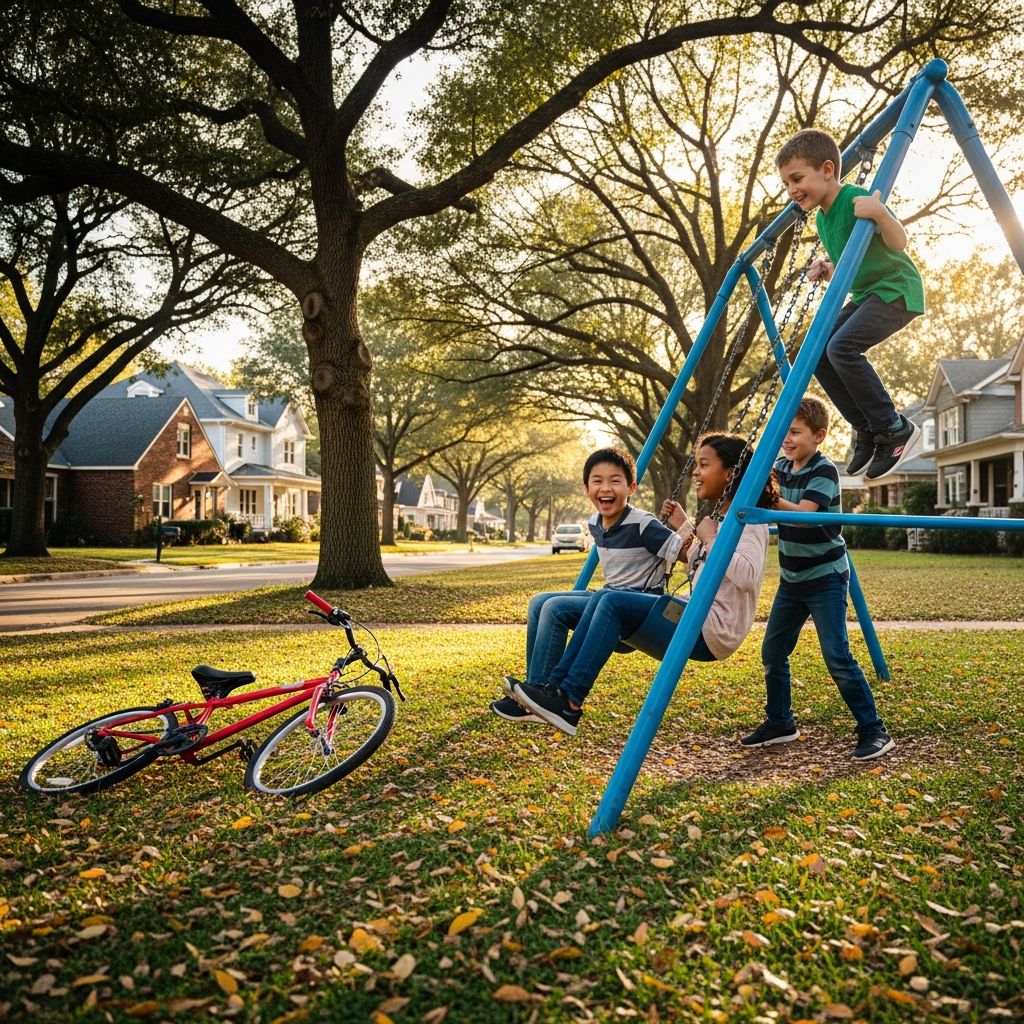
Digital connections and structured activities dominate many children’s lives, yet the simple habit of playing with kids who live nearby still has a powerful impact on development. Neighborhood friends offer daily chances to practice communication, learn empathy, build confidence, and feel rooted in a community, all through largely unstructured, spontaneous play.
This article explores why nearby friendships are so valuable, how they shape kids’ social and emotional growth, and what parents can do to foster a healthy local peer network.
The Unique Power of Nearby Friendships
Children form relationships in many places—school, sports, clubs, and online—but neighborhood friendships offer a distinct set of advantages that other settings rarely match.
- Frequency: Kids can see local friends many times a week, even daily, without extensive planning.
- Spontaneity: Play often starts from a knock on the door or meeting outside, not a scheduled event.
- Familiarity: Shared streets, parks, and routines help kids feel secure and relaxed.
- Continuity: In stable neighborhoods, these friendships may last for years, deepening trust and attachment.
These elements combine to create a rich environment where social skills and emotional capacities grow through everyday experiences, rather than only through organized lessons or adult-directed activities.
Unstructured Play: The Hidden Classroom Outside Your Door
Free play with neighbors functions as an informal classroom where children experiment with roles, rules, and relationships. Research on child development shows that unstructured, peer-led play helps children practice decision-making, creativity, and self-regulation.
Social Skills Built Through Everyday Games
When kids invent games on the sidewalk or in a yard, they naturally encounter social challenges and must work together to solve them.
- Creating rules that feel fair to everyone
- Negotiating turns and team membership
- Handling disputes about scoring or boundaries
- Including younger or less skilled children
Through these repeated interactions, children practice core social skills:
- Communication: Explaining ideas, listening, and adjusting to others’ perspectives.
- Cooperation: Working toward a shared goal, such as keeping a game going or finishing a shared project.
- Conflict resolution: Learning to compromise, apologize, and move on when disagreements arise.
Emotional Growth Through Play
Neighborhood play also nurtures emotional development. Studies show that friendships can increase children’s sense of belonging and emotional security, which support resilience and overall mental health.
- Empathy: Kids notice when a friend is hurt or left out and adjust the game or offer comfort.
- Self-esteem: Being invited to play, having a role in the group, and contributing ideas build confidence.
- Frustration tolerance: Losing games, waiting for turns, and adapting to others’ preferences strengthen emotional control.
Face-to-Face Interaction in a Screen-Filled World
Many children now spend significant time on screens for entertainment, socializing, and schoolwork. While technology can connect kids across distance, it does not fully replace in-person contact. Health organizations and child development experts note that face-to-face relationships are vital for developing nonverbal communication skills, empathy, and deep social understanding.
Why In-Person Friendships Matter
- Reading body language: Eye contact, gestures, and facial expressions are easier to learn in real space than through text or emojis.
- Immediate feedback: Kids experience the direct emotional impact of their words and actions, which teaches responsibility and compassion.
- Shared physical space: Cooperative games, building projects, and sports require coordination and attunement to others’ movements.
Neighborhood friends create convenient opportunities for these face-to-face experiences, often in small, familiar groups that feel less intimidating than large school settings for shy or anxious children.
Neighborhood Friends and a Sense of Community
Beyond individual friendships, local peer networks connect children to a broader community. Research on community involvement in child development highlights that growing up in a supportive, close-knit environment is linked with stronger social-emotional skills, resilience, and adaptability.
Community as a Safety Net
A neighborhood where children know each other—and where adults know the children—creates an informal safety net.
- More adults recognize local kids and can notice if something seems wrong.
- Children feel they belong to a shared space, not just a private home.
- Parents gain informal support from other caregivers who understand their local context.
These community relationships help children feel valued and seen beyond their immediate family, which can reduce isolation and support positive mental health.
Role Models and Diverse Perspectives
Neighbors—both adults and older kids—can become additional role models. Exposure to different family cultures, ages, and viewpoints broadens children’s understanding of the world and teaches them to collaborate with people who are not exactly like them.
| Community Element | Benefit for Children |
|---|---|
| Familiar neighbors | Increased sense of security and belonging |
| Mixed-age play | Opportunities to learn from older peers and guide younger ones |
| Local events and spaces | Shared experiences that strengthen social skills and friendships |
| Supportive adults | Additional guidance, encouragement, and mentoring |
Social Competence: Skills Kids Practice Close to Home
Psychologists describe social competence as the ability to build healthy relationships, communicate effectively, and navigate social situations. Neighborhood friendships provide frequent, low-pressure practice that helps kids strengthen these abilities over time.
Key Skills Learned with Neighborhood Friends
- Initiating contact: Walking over to ask, “Do you want to play?” or sending a simple message to meet outside takes courage and initiative.
- Joining groups: Learning when and how to join a game mid-way, read the mood, and find a role.
- Leadership and followership: Sometimes kids lead by proposing a game; at other times they follow someone else’s idea.
- Repairing relationships: After arguments, children figure out how to reconnect because they know they’ll see each other again.
These skills are essential not just for childhood friendships, but also for future teamwork in school, careers, and family life.
Balancing Structure and Freedom
Many children’s schedules are packed with classes, sports, and tutoring. While such activities can be enriching, experts caution that too much structure can crowd out the open-ended play time that is critical for social and emotional growth.
Why Kids Need Both
- Structured activities teach discipline, specific skills, and how to follow instructions.
- Unstructured neighborhood play encourages creativity, flexible thinking, and peer problem-solving.
Parents can aim for a balance by protecting blocks of free time in the week when local friends can simply meet and decide for themselves what to do.
Helping Your Child Build Neighborhood Friendships
Not every child finds it easy to make friends, and not every neighborhood is naturally social. Parents can still take practical steps to open doors to local connections.
Practical Ways to Encourage Local Friendships
- Be visible outside: Spend time on porches, in yards, and at local parks. Kids are more likely to meet peers when families are present in shared spaces.
- Organize small gatherings: Host simple activities such as sidewalk chalk afternoons, bike riding meetups, or outdoor movie nights.
- Connect with other parents: Introduce yourself to neighbors who have children of similar ages; casual conversations can lead to play invitations.
- Model social behavior: Let your child observe you greeting neighbors, offering help, and maintaining friendly relationships.
- Support shy children: Role-play introductions at home and start with one-on-one playdates rather than large groups.
Guiding Social Skills Gently
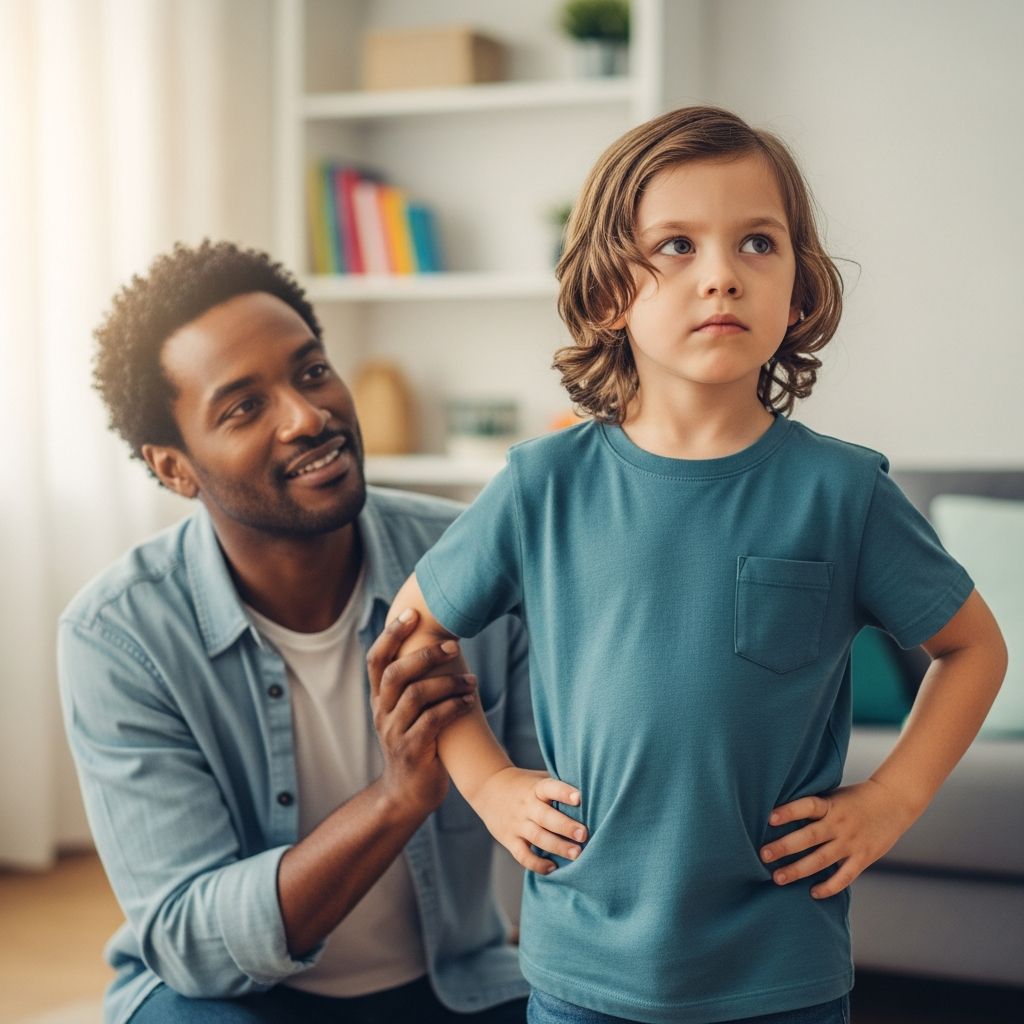
Parents can also coach children on the basic behaviors that support friendship, without controlling the play itself.
- Practice taking turns during family games.
- Talk about how to apologize and accept apologies.
- Discuss how others might feel in different situations.
- Encourage using words instead of physical reactions or withdrawal.
Over time, these lessons show up naturally when kids negotiate with their friends outside.
Safety and Boundaries in Neighborhood Play
Parents often worry about safety, especially when children play outdoors or move between homes. Thoughtful guidelines can allow children freedom while maintaining appropriate supervision.
Creating a Safe Framework
- Set clear rules: Define which areas are allowed, how far children can go, and when they must check in.
- Exchange information: Share phone numbers or messaging details with neighboring parents.
- Agree on expectations: Discuss screen time, snacks, and indoor vs. outdoor rules when kids are at one another’s homes.
- Teach safety skills: Review road safety, how to respond to strangers, and what to do in an emergency.
When these boundaries are clear, children can explore and socialize in a way that supports independence and confidence, while still feeling protected.
Long-Term Benefits of Growing Up with Neighborhood Friends
Childhood friendships, especially those rooted in everyday proximity, can have enduring effects. Studies on friendship and community involvement suggest children who experience stable, supportive social networks are more likely to develop strong emotional regulation, empathy, and resilience later in life.
Lasting Impacts
- Stronger relationships as adults: Early practice with communication and conflict resolution carries into future partnerships and friendships.
- Greater resilience: Having peers and adults to lean on in difficult times teaches children how to seek help and cope with setbacks.
- Community engagement: Kids who grow up feeling connected to their neighborhood are more likely to value civic participation and mutual support as adults.
Frequently Asked Questions About Neighborhood Friends and Kids
My child is introverted. How can I help them connect with local kids?
Start small with one-on-one playdates rather than big groups, and choose activities that match your child’s interests, such as drawing, building, or quiet games. Practice simple social scripts at home (for example, “Hi, do you want to play?”), and stay nearby at first so your child feels secure while they gradually build confidence.
What if there are not many children in our immediate neighborhood?
Look slightly beyond your street to nearby parks, libraries, community centers, and after-school programs. Repeated visits to the same spaces allow your child to see familiar faces and turn acquaintances into friends. Consistency matters more than distance, as long as your child can interact with peers regularly.
How much unstructured playtime should my child have?
Guidelines vary by age, but many child development experts emphasize that children benefit from daily periods of free, child-led play, in addition to any structured activities. Aim to keep some afternoons or early evenings unscheduled so there is room for spontaneous play with nearby friends.
Should I intervene when kids argue during neighborhood play?
Minor disagreements can be valuable learning experiences, and children often resolve them on their own if given time. Step in if there is repeated exclusion, bullying, or risk of harm. When you do intervene, focus on helping the children express feelings, listen to each other, and generate solutions, rather than solving the problem for them.
How do I balance safety concerns with giving my child independence?
Match the level of freedom to your child’s age, maturity, and the specifics of your neighborhood. Set clear boundaries (where they can go, how to check in, who they may visit) and gradually expand those limits as your child shows responsible behavior. Maintaining contact with neighboring adults and reviewing safety rules regularly can help you feel more comfortable granting independence.
References
- The Village Effect: Why Community Involvement Matters for Child Development — Juliette’s House Child Abuse Intervention Center. 2023-04-10. https://www.julietteshouse.org/blog/the-village-effect-why-community-involvement-matters-for-child-development
- Why Kids Need Neighborhood Friends to Socialize Properly — Fatherly. 2019-08-20. https://www.fatherly.com/parenting/kids-neighborhood-friends-socialization
- Why Is it Important for Your Kids to Make Neighborhood Friends? — Kids In The House. 2021-06-15. https://www.kidsinthehouse.com/blogs/louann-moss/why-is-it-important-for-your-kids-to-make-neighborhood-friends
- The Importance of Friendship in Childhood Development — Wonderscope Children’s Museum of Kansas City. 2022-09-01. https://www.inspireu.com/the-importance-of-friendship-in-childhood-development/
- Building a Village: The Importance of Community in Early Childhood Education — Learning Village Preschool. 2022-05-18. https://mylearningvillages.com/building-a-village-the-importance-of-community-in-early-childhood-education/
- In This Together: The Benefits of Community for Parents and Children — Triple P International. 2021-11-05. https://www.triplep-parenting.com/us/articles-and-news/post/in-this-together-benefits-of-community-for-parents-and-children/