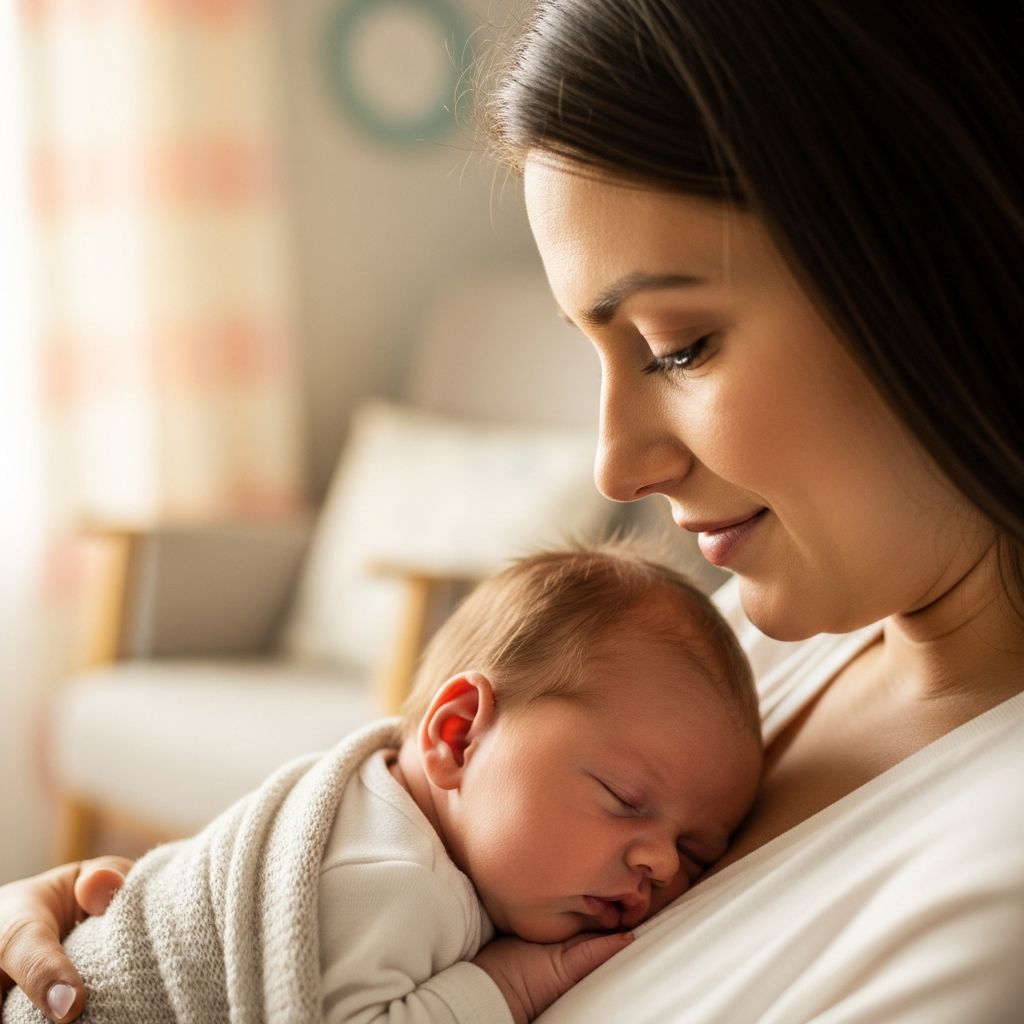
Mothers around the world share an innate ability to recognize and respond to their baby’s cries, a phenomenon rooted in profound neurobiological mechanisms. This response, observed across diverse cultures, highlights how evolution has wired parental brains to prioritize infant needs through hormonal cascades and neural circuits.
The Biological Alarm: How Baby Cries Trigger the Parental Brain
A baby’s cry acts as a powerful auditory signal, instantly activating specific brain regions in parents, particularly mothers. Research shows that hearing an infant cry engages the thalamocingulate circuit, sparking emotional arousal and prompting immediate action. This circuit connects the thalamus to the anterior cingulate cortex, facilitating rapid assessment of the cry’s urgency.
In mothers, this activation is amplified by prior experiences like pregnancy and birth. Studies using functional MRI scans reveal heightened activity in hypothalamic-midbrain-limbic-paralimbic-cortical networks when exposed to cries, distinguishing maternal responses from those of non-parents. Dopamine surges first, sharpening focus and motivation to approach the infant, setting the stage for caregiving.
- Dopamine’s role: Enhances attention and drives approach behavior toward the crying source.
- Neural pathways: Involve the striatum and amygdala for emotional processing.
- Cross-species consistency: Similar patterns seen in animal models, underscoring evolutionary conservation.
Hormonal Symphony: Oxytocin’s Central Role in Sensitivity
Oxytocin, often called the ‘bonding hormone,’ plays a pivotal role in tuning a mother’s brain to her baby’s cries. Released in high levels during labor and breastfeeding, it heightens auditory cortex sensitivity to infant distress sounds. In mouse studies, oxytocin administration altered neural processing of pup cries, enabling quicker recognition and response—a mechanism likely mirrored in humans.
Human research confirms breastfeeding mothers exhibit greater brain activation in emotion-regulation areas like the insula and precuneus when hearing their own baby’s cry compared to formula-feeding mothers. Intranasal oxytocin boosts empathy circuits while dampening fear responses in the amygdala, fostering calm, effective soothing.
| Hormone | Effect on Cry Response | Brain Regions Affected |
|---|---|---|
| Oxytocin | Increases sensitivity and empathy | Amygdala, insula, striatum |
| Dopamine | Drives motivation and attention | Striatum, prefrontal cortex |
| Cortisol | Regulates stress for sustained care | HPA axis, superior frontal gyrus |
This table summarizes key hormones’ impacts, illustrating their coordinated action for optimal parental response.
Stress and Adaptation: Cortisol’s Dual Nature in Caregiving
Prolonged crying triggers the hypothalamic-pituitary-adrenal (HPA) axis, elevating cortisol to mobilize energy for action. In early postpartum mothers, higher cortisol correlates with responsive behaviors and positive infant interactions. However, suckling-induced oxytocin can suppress cortisol release, creating a feedback loop that promotes relaxation post-feeding.
While acute stress aids immediate response, chronic elevation poses risks. Nurturing contact buffers this: parental holding releases oxytocin in infants, silencing the amygdala and preventing full stress activation. Infants in close proximity cry to signal needs but avoid HPA overdrive, thanks to this co-regulation.
Cultural Universals in Soothing Techniques
Despite cultural variations, core soothing methods transcend borders: holding, rocking, vocalizing, and feeding. Anthropological observations reveal five universal responses—voice, touch, proximity, movement, and feeding—consistent from Japan to Argentina. These align with biological imperatives, as brain scans show uniform neural engagement regardless of background.
Breastfeeding mothers often respond faster due to oxytocin priming, predicting sensitivity months later. This universality suggests hardwired instincts, refined by experience, ensuring infant survival globally.
Fathers and Other Caregivers: Shared yet Distinct Responses
While maternal responses dominate research, fathers also react, though differently. Oxytocin enhances female but not always male mouse reactions to cries. In humans, women’s brains show immediate alertness to cries, while men’s may require contextual cues. Both parents activate reward systems post-soothing, fostering attachment.
Co-parenting benefits from these dynamics: fathers provide complementary support, with pair-bonding oxytocin aiding sensitivity. Longitudinal studies affirm secure attachments form through responsive care from all caregivers.
Debunking Myths: Responsive Care vs. ‘Cry It Out’
Controversy surrounds sleep training like ‘cry it out’ (CIO). Some studies report reduced night wakings and lower cortisol post-training, with no long-term behavioral issues. However, critics argue infants don’t self-soothe but withdraw, potentially learning helplessness. ‘Self-soothing’ lacks neurodevelopmental basis in young babies, whose prefrontal cortices are immature.
- Short-term CIO benefits: Faster sleep onset, parental rest.
- Potential risks: Elevated protest cortisol if unbuffered.
- Responsive alternative: Co-regulation via holding prevents stress escalation.
Balanced approaches, starting after 6 months when safer, prioritize attachment. Michigan Medicine notes CIO is typically fine post-6 months, but early responsiveness builds secure bonds.
Practical Strategies for Effective Soothing
Harness biology with evidence-based techniques:
- The 5 S’s: Swaddle, side/stomach position (supervised), shush, swing, suck—mimicking womb conditions to calm via proprioceptive input.
- Skin-to-skin: Boosts oxytocin mutually, reducing cries by 50% in studies.
- Rhythmic sounds: White noise activates auditory gating, akin to intrauterine sounds.
- Vertical motion: Rocking stimulates vestibular system, downregulating arousal.
Combine for synergy: A fussy baby often settles fastest with multiple inputs, reflecting evolutionary soothing patterns.
Long-Term Impacts: Building Secure Attachments
Consistent responsiveness shapes brain development. Oxytocin-enhanced interactions wire reward pathways, promoting emotional regulation. Neglect risks heightened stress reactivity; nurturing fosters resilience.
By 3-4 months, maternal brain sensitivity predicts attunement, linking to child outcomes like lower anxiety. This underscores investing in instinctive care for lifelong benefits.
Frequently Asked Questions (FAQs)
Why do all mothers respond similarly to cries?
Evolutionary biology equips maternal brains with shared circuits activated by oxytocin and dopamine, ensuring cross-cultural consistency.
Is letting babies cry harmful?
Short-term CIO after 6 months shows no major issues in studies, but responsive care buffers stress better in infancy.
How does breastfeeding affect cry response?
It heightens neural sensitivity via oxytocin, improving sensitivity and regulation.
Do fathers’ brains react the same way?
They respond but with less oxytocin-driven urgency; experience bridges the gap.
What if nothing soothes my baby?
Check basics (hunger, diaper), then use 5 S’s; consult pediatrician if persistent, as reflux or colic may underlie.
References
- Neuroendocrinology of Parental Response to Baby-Cry — Fleming AS et al. PMC. 2015-02-01. https://pmc.ncbi.nlm.nih.gov/articles/PMC4319977/
- This is What Happens to a Mother’s Brain When Her Baby Cries — Motherly. 2023-10-15. https://www.mother.ly/health-wellness/its-science/this-is-what-happens-to-a-mothers-brain-when-her-baby-cries/
- Letting Babies Cry – The Facts Behind the Studies — La Leche League GB. 2022-05-20. https://laleche.org.uk/letting-babies-cry-facts-behind-studies/
- The Impact of Nurturing Babies Through Stress — Ann Arbor Family. 2024-03-10. https://annarborfamily.com/health-2/the-impact-of-nurturing-babies-through-stress-rather-than-forcing-self-regulation/
- What Science Says About Letting Your Baby ‘Cry It Out’ — Michigan Medicine. 2023-11-05. https://www.michiganmedicine.org/health-lab/what-science-says-about-letting-your-baby-cry-it-out