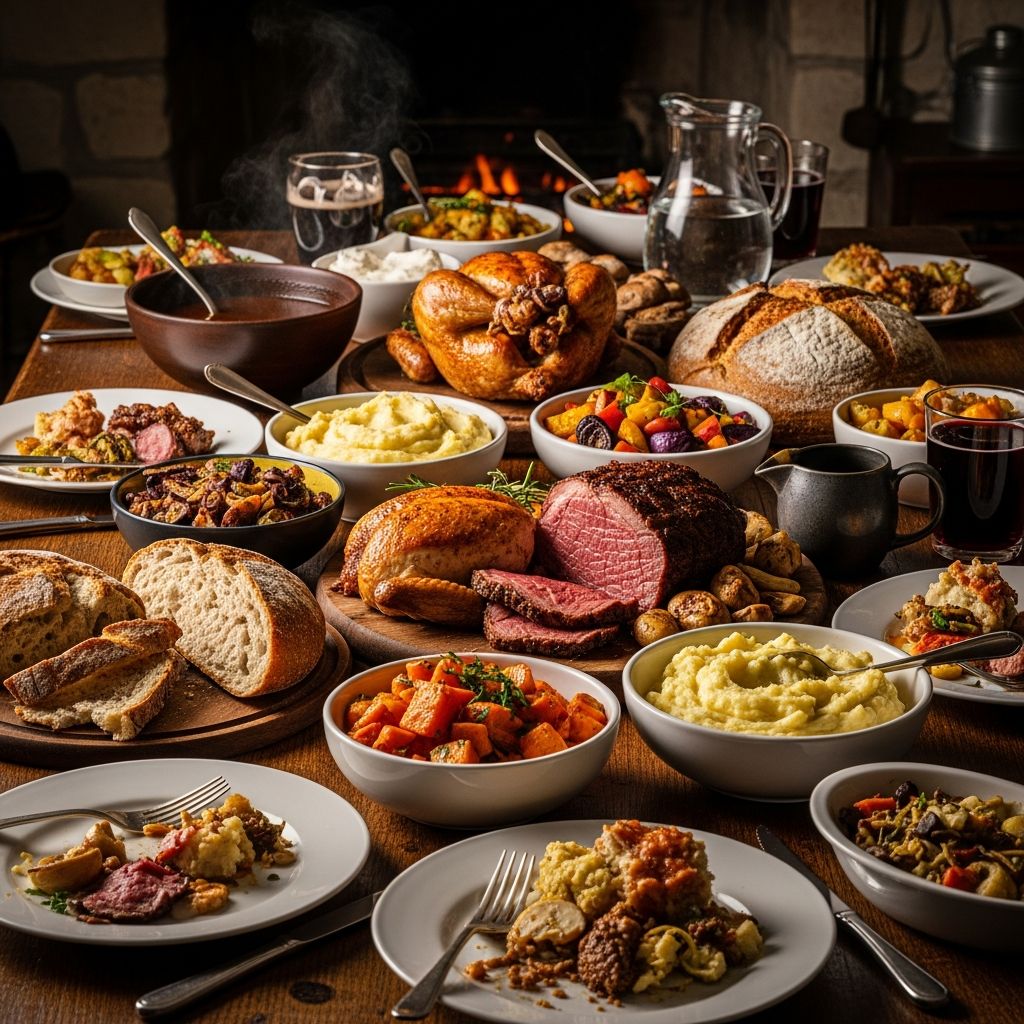
Men frequently display a sense of accomplishment when they consume vast quantities of food, a behavior tied to longstanding cultural associations between eating heartily and masculinity. This phenomenon spans social gatherings, competitive eating events, and everyday meals, where finishing oversized portions signals strength and dominance.
The Roots of Food as a Masculine Symbol
Throughout history, food consumption has been gendered, with hearty, calorie-dense meals positioned as markers of male prowess. In Western societies, red meat in particular has become synonymous with manhood, a trend supported by cross-cultural data showing men consistently outpacing women in meat intake.
Psychological studies reveal that perceptions of ‘heavy’ foods like steak and burgers as inherently masculine persist strongly. North American surveys confirm that both men and women associate meat-heavy diets with male identity, while lighter options like salads evoke femininity. This binary influences not just preferences but also pride in overconsumption.
Evolutionary Echoes in Modern Appetites
From an evolutionary standpoint, men’s larger average body size and higher caloric needs for physical labor may underpin their affinity for big meals. Contemporary research on gender differences shows men gravitate toward high-fat, strongly flavored foods, often linked to reward centers in the brain that prioritize hedonic pleasure over restraint.
- Men report greater preferences for bitter and salty tastes, aligning with processed meats and barbecues.
- Women lean toward sweet and sour profiles, favoring fruits and vegetables.
- Men’s tendency to skip snacks and eat larger, less frequent meals amplifies portion sizes at main sittings.
These patterns suggest a biological baseline amplified by culture, where devouring a massive plate becomes a display of vitality.
Cultural Norms Fueling the Feast
Societal expectations play a pivotal role, with media and advertising reinforcing big eating as a masculine trait. Men’s health magazines and online content often frame substantial protein intake as essential for building muscle and asserting dominance, subtly equating restraint with weakness.
In more gender-equal societies, the gap widens: men eat meat more frequently than women, a paradoxical effect where freedom from traditional roles allows bolder expression of gendered food norms. This is evident globally, except in select low-equality contexts like parts of China and India.
| Gender | Preferred Foods | Eating Patterns |
|---|---|---|
| Men | Red/processed meat, high-fat meals | Larger portions, fewer snacks, faster eating |
| Women | Vegetables, whole grains, tofu | More frequent meals, morning hunger |
This table summarizes key findings from recent gender dietary studies, highlighting how men’s habits support pride in volume.
The Psychology of Competitive Consumption
Pride in eating a lot often manifests in social settings, from barbecues to eating contests, where men compete to out-eat peers. This ties to hegemonic masculinity ideals of control, strength, and excess—values echoed in media portrayals of the ‘male diet’ as robust and unapologetic.
Neurocognitive research indicates men experience heightened reward responses to high-calorie stimuli, driving choices that prioritize satisfaction over health metrics. Such behaviors are rationalized through ‘fuel for performance’ narratives, distancing eating from emotional indulgence.
Health Ramifications of Hearty Habits
While pride in big meals boosts social standing, it carries risks. Men’s higher red meat consumption correlates with elevated chances of chronic conditions, prompting calls for targeted interventions that respect masculine framing—like emphasizing strength from balanced proteins.
Programs adapting weight management for men, such as those allowing ‘manly’ portions of proteins, show better engagement by aligning with these pride-driven norms.
Shifting Tides: Modern Challenges to Tradition
Amid rising health awareness, some men negotiate these impulses by reframing healthy eating as ‘enhanced masculinity’—using science-backed rationales for veggies as performance boosters. Yet, traditional pride endures, especially in meat-centric rituals like game-day feasts.
Frequently Asked Questions
Why do men eat more meat than women?
Men consume more red and processed meat due to cultural links between meat and masculinity, amplified in gender-equal societies where the consumption gap widens.
Is pride in eating large amounts unique to men?
While not exclusive, it’s more pronounced in men, tied to displays of strength and differing reward responses to high-calorie foods.
Can cultural norms change men’s eating pride?
Yes, interventions framing plant-based options as strength-building can shift habits without clashing with masculine ideals.
How does brain activity differ in men’s food choices?
Men show stronger neural activation toward high-calorie foods, promoting hedonic eating over portion control.
What role does society play in men’s big appetites?
Social constructs position big eating as a sign of dominance, reinforced by media and peers across cultures.
Navigating Appetite in a Balanced World
Men’s pride in massive meals weaves biology, culture, and psychology into a potent force. Recognizing this allows for healthier expressions—channeling that energy into nutrient-dense feasts that sustain rather than strain. As research evolves, tailored strategies promise to honor these drives while promoting longevity.
References
- Real Men & Real Food: The Cultural Politics of Male Weight Loss — Nursing Clio. 2017-08-15. https://nursingclio.org/2017/08/15/real-men-real-food-the-cultural-politics-of-male-weight-loss/
- Masculinity in Online Media – Healthy Eating for Men — PMC (Annals of Behavioral Medicine). 2023. https://pmc.ncbi.nlm.nih.gov/articles/PMC10748639/
- Assessing gender differences in food preferences and physical activity — PMC. 2024. https://pmc.ncbi.nlm.nih.gov/articles/PMC10912473/
- Do Men Eat More Meat Than Women Across Cultures? — Faunalytics. 2023. https://faunalytics.org/do-men-eat-more-meat-than-women-across-cultures/
- Gender differences: dietary habits, neuroinflammation, Alzheimer’s — Frontiers in Aging Neuroscience. 2024. https://www.frontiersin.org/journals/aging-neuroscience/articles/10.3389/fnagi.2024.1395825/full
- What It Means to Eat ‘Like a Man’ (or Woman) — Psychology Today. 2015-12. https://www.psychologytoday.com/us/blog/it-s-man-s-and-woman-s-world/201512/what-it-means-eat-man-or-woman