Maggie Simpson has been a baby on television for decades, and the internet loves to imagine what it would actually be like to parent a child who never grows up. In the process, a fictional cartoon infant ends up reflecting real conversations about parenting, expectations, and the strange comfort of pop-culture nostalgia.
Who Is Maggie Simpson, Really?
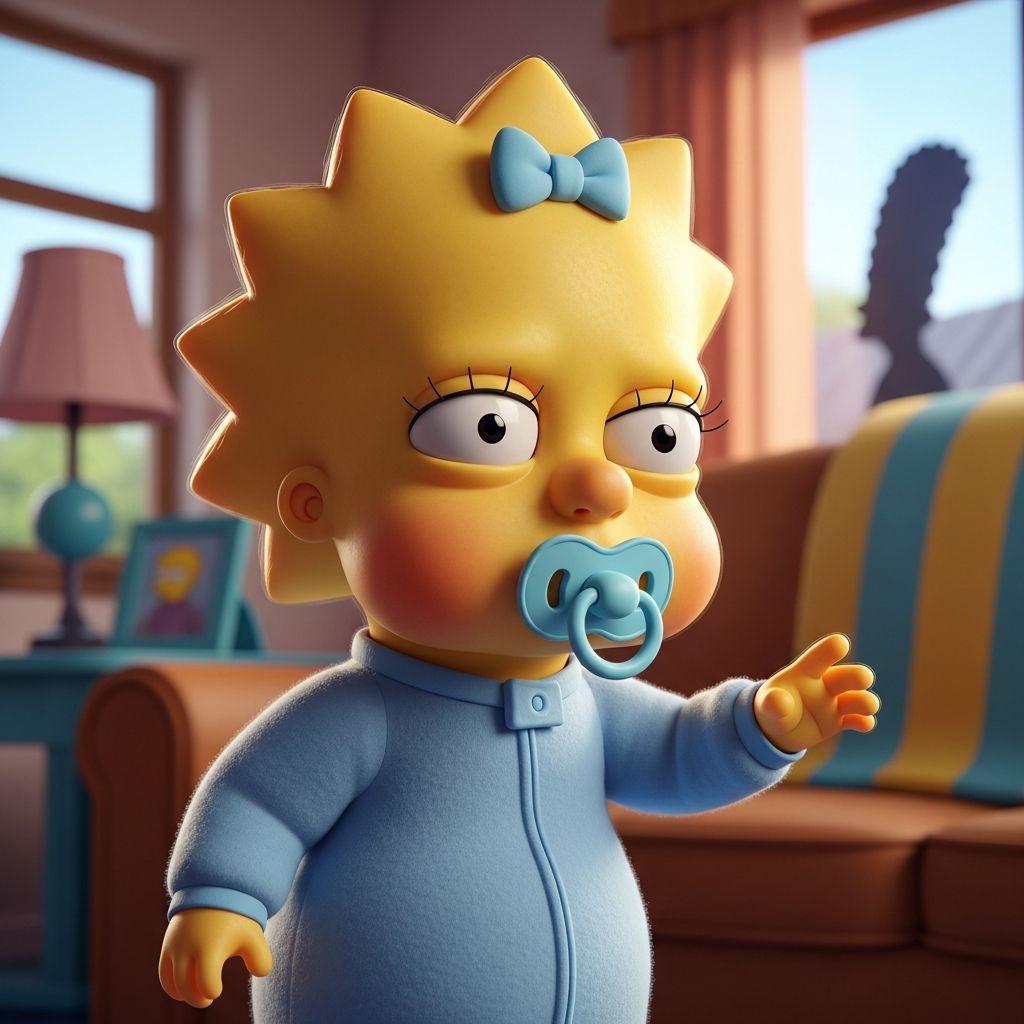
Maggie Simpson is the quietest member of the Simpson family, usually seen with her iconic pacifier, blue onesie, and wide-eyed stare. Although she rarely speaks, she has a surprisingly rich inner life, with moments of bravery, mischief, and emotional depth scattered throughout the series.
Because she never ages, viewers have watched the same baby for generations, creating a sense of familiarity that makes it easy to project real-life parenting experiences onto her character. That combination of innocence, chaos, and timelessness is what makes Maggie such a perfect target for jokes and memes about babies.
Why People Joke About Maggie as a Real Baby
Online reactions to Maggie often center on one core idea: if she were a real baby, she would be both exhausting and unforgettable. The jokes tend to highlight how wild it would be to raise someone who is always technically an infant, yet somehow capable of complex, almost adult-level antics.
- Endless baby phase: Fans imagine the horror and humor of being stuck in the diaper, pacifier, and sleep-deprivation stage forever.
- Secretly capable: Many memes exaggerate Maggie’s more action-hero moments, joking that she would be the “danger baby” of any friend group.
- Too quiet, too observant: Parents recognize that feeling when a very quiet baby suddenly turns out to be plotting something big, and Maggie perfectly fits that energy.
These jokes work because they exaggerate real feelings many caregivers have about babies: awe at how much personality they can show, mixed with fear that things might spin out of control in an instant.
Parenting Fears Wrapped in Humor
On the surface, memes about Maggie Simpson are just funny, but underneath the humor, they often echo genuine anxieties. Parenting a baby can feel unpredictable, and Maggie represents that unpredictability turned up to eleven.
Common themes pop up repeatedly when people joke about her as a real baby:
- Loss of control: The idea that a baby might secretly be more competent than the adults in the room plays on a fear of not being fully in charge.
- Safety worries: Because Maggie gets into so many wild situations in the show, fans magnify those moments and imagine worst-case scenarios for a real household.
- Permanent babyhood: The thought of never moving out of the infant stage taps into every parent’s fear of constant exhaustion and never getting to a more independent phase.
By laughing at a cartoon baby, parents and non-parents alike can talk about fears that might feel too heavy or serious if expressed directly.
How Maggie Reflects Real Babies
Even though Maggie is a cartoon, people project very real baby behavior onto her character. Viewers recognize the way infants can seem both clueless and oddly wise at the same time, and the show leans into that paradox.
The jokes about her usually emphasize traits that feel familiar to anyone who has spent time with babies:
- Silent observers: Maggie often watches everything without saying a word, just like real babies who quietly absorb more than adults realize.
- Sudden chaos: In many episodes, she shifts from calm to chaos in seconds, mirroring how quickly a peaceful moment in real life can turn into a mess.
- Unexpected competence: Memes exaggerate her ability to do surprisingly complex things, reflecting how impressive it can be to see a baby suddenly master a new skill.
Pop Culture, Nostalgia, and the “Forever Baby”
Part of the fascination with Maggie comes from the passage of time. The Simpson family has been on screen for decades, yet Maggie never grows, creating the strange feeling that the world moves on while she stays the same.
This “forever baby” idea connects with nostalgia in several ways:
- Time capsule effect: Adults who first watched the show as kids can look at Maggie and feel transported back to their own childhoods.
- Escapism: A character who never ages offers a small escape from worries about growing older, changing roles, or parenting milestones.
- Shared cultural reference: Because so many people recognize Maggie instantly, she becomes an easy shorthand for talking about babies and parenting online.
Maggie as a Mirror for Modern Parenting
Jokes about Maggie also say a lot about how people see parenting today. Modern caregivers juggle worries about screen time, safety, emotional development, and work-life balance, and they often use humor to let off steam.
Commenters who imagine Maggie as a real baby implicitly weigh these questions:
- Would a baby like her be considered “gifted,” “high-needs,” or simply misunderstood?
- How would different parenting styles respond to a child who is quiet but constantly getting into trouble?
- What does it mean when a fictional baby seems more competent than the adults around her?
These questions never need full answers in the jokes themselves, but they hang in the background and help explain why people find the idea of Maggie as a real baby so compelling.
Humor, Memes, and Relatable Reactions
Memes, comments, and jokes are the primary ways fans interact with the idea of Maggie as a real baby. People share quick reactions, exaggerations, and one-liners that frame her as everything from a tiny mastermind to the embodiment of modern burnout.
Common tones in these jokes include:
- Affectionate exasperation: People act like they are both tired of and deeply attached to the idea of caring for someone like Maggie.
- Hyperbole: Her rare, dramatic moments in the show get turned into full-blown “this baby could run the world” scenarios.
- Self-reference: Many commenters compare themselves to Maggie, joking that they, too, feel like silent observers barely holding everything together.
Imagining Parenting Styles for Maggie
When people joke about Maggie as a real baby, they often implicitly imagine how different parenting approaches would handle her. This leads to playful debates about what kind of parenting style would be “best” for such an unusual child.
| Parenting Style | Likely Reaction | Potential Upside | Potential Challenge |
|---|---|---|---|
| Authoritative (warm but firm) | Sets clear boundaries while still nurturing Maggie’s quirks and independence. | Could help channel her cleverness into safe, age-appropriate exploration. | Staying consistent when she seems both “baby” and “mini adult” at once. |
| Permissive (very lenient) | Laughs off her antics and lets her lead the way. | Encourages creativity and spontaneous problem-solving. | Greater risk of unsafe situations and lack of structure. |
| Authoritarian (strict, high control) | Tries to restrict her behavior tightly and demands obedience. | Predictable routines and clear rules might provide stability. | Little room for the unique, surprising traits fans love in Maggie. |
| Attachment-focused | Keeps her close, responding quickly to her signals and needs. | Strengthens trust and emotional security. | Could feel overwhelming if she truly never leaves the baby stage. |
This kind of playful speculation lets people explore serious parenting questions in a low-pressure, humorous way. Instead of debating real families, they imagine scenarios around a fictional baby everyone already knows.
Lessons Parents Take From the Jokes
Behind the humor, many caregivers come away with small, practical reflections inspired by Maggie-related conversations. A character who lives in a constant baby phase reminds people that early childhood, with all its mess and confusion, still passes quickly in real life.
- Appreciate the fleeting moments: Real babies do grow up, and the most exhausting phases eventually end.
- Stay curious about your child: Just like viewers wonder what Maggie is thinking, parents can benefit from pausing to imagine how their own children experience the world.
- Use humor as a tool: Jokes can relieve pressure and open up more honest conversations about stress, fatigue, and expectations.
Frequently Asked Questions
Why do people find Maggie Simpson so funny as a baby?
People find Maggie funny because she combines total baby helplessness with moments of unexpected competence. That contrast makes it easy to imagine exaggerated, humorous scenarios where she is both the smallest person in the room and secretly in control of everything.
What do jokes about Maggie say about real parents?
Jokes about Maggie often reveal that parents feel overwhelmed, amused, and deeply attached to their children all at once. The humor gives them a safe way to talk about fears, frustrations, and fatigue without directly criticizing themselves or their kids.
Is Maggie meant to represent a particular type of child?
Maggie is not officially labeled as representing any single type of child, but viewers sometimes read her as a symbol of quiet, observant, or “old soul” babies. Her character lets audiences explore how much is going on inside an infant’s mind, even when they cannot speak.
Why does Maggie never grow up on the show?
Keeping Maggie a baby allows the show to maintain a familiar family structure and to keep using baby-related storylines. For fans, that decision creates the unusual experience of watching the same infant across many stages of their own lives.
Can jokes about cartoon babies actually help real parents?
Yes, lighthearted jokes can make serious topics feel more approachable. When parents laugh together about an exaggerated cartoon scenario, they may feel more comfortable later sharing real worries and seeking support.
Final Thoughts on Maggie as the Internet’s Favorite Baby
People joke about Maggie Simpson as a real baby because she condenses so many truths about early childhood into a single, familiar character. She is cute and chaotic, silent and expressive, forever young yet oddly wise, which makes her perfect for memes, debates, and affectionate exaggerations.
In the end, those jokes remind audiences that even fictional babies can spark meaningful reflections on parenting, identity, and the strange mix of exhaustion and love that defines the earliest years of raising a child.