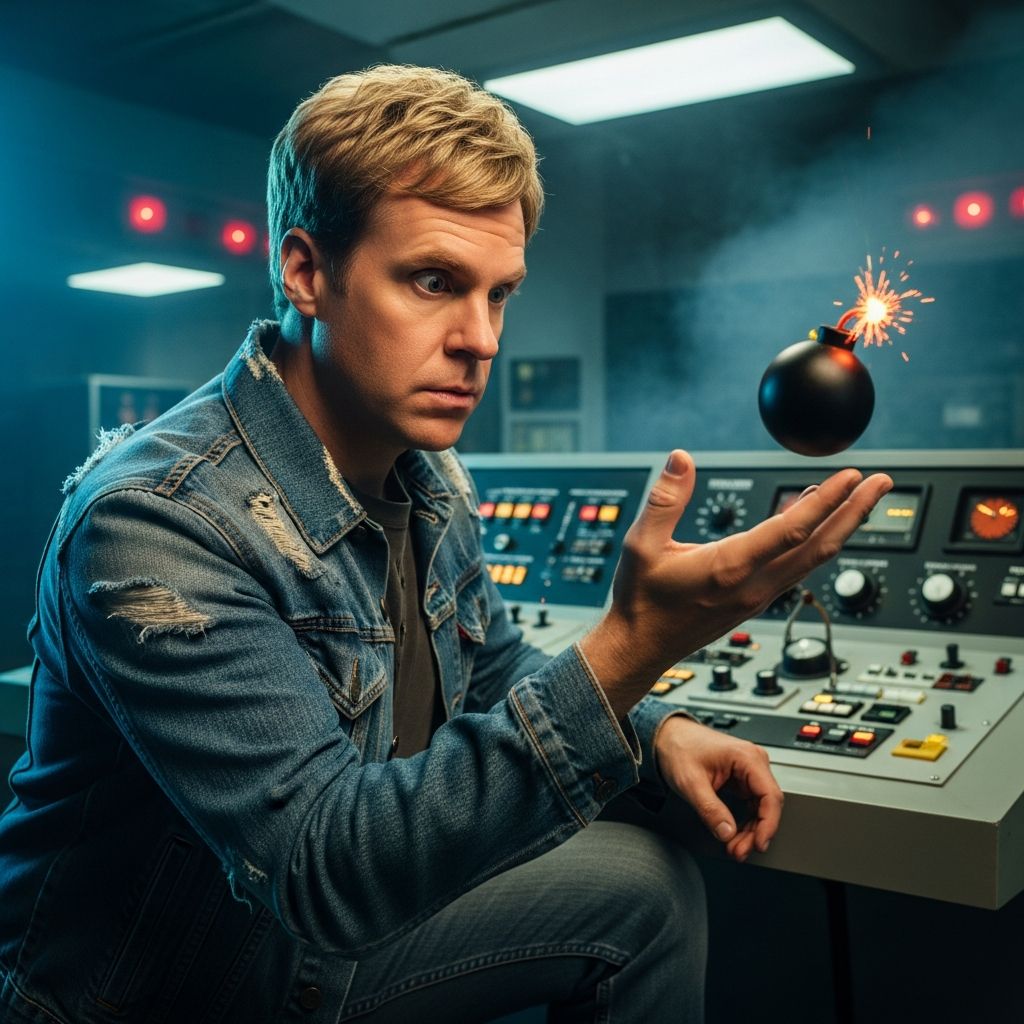
When Will Forte returned to Saturday Night Live to host and bring back his legendary character MacGruber, it was more than a nostalgia play. It was a test: could a 2000s-era parody sketch still feel dangerous, relevant, and genuinely funny in a very different cultural moment?
This article explores how the MacGruber comeback works as both a celebration of the original sketch and a sharp evolution of it, digging into what makes the character enduring, how the new material reflects the times, and why the escalation of absurdity still connects with audiences.
The MacGruber Formula: Simple Setup, Explosive Payoff
To understand why the comeback matters, it helps to revisit the core design of MacGruber as a sketch concept.
- Premise: A bomb is about to explode in a confined space, and only MacGruber can save the day.
- Structure: The team has seconds left; MacGruber starts well, then spirals into a personal crisis, social meltdown, or irrelevant rant.
- Outcome: The bomb always detonates, cutting the sketch off abruptly.
This tight, repetitive formula reflects a classic sketch-comedy strategy: keep the frame identical and vary the emotional or thematic twist each time. Academic analysis of TV comedy notes that repetition with variation is central to long-running sketches, using familiarity to heighten surprise and subversion.
On SNL, MacGruber’s structure mirrors the way many recurring characters work: audiences know what is coming, but not how it will go wrong. That predictability gives the writers freedom to push content further into uncomfortable territory, including taboo topics and political satire.
From MacGyver Parody to Dark Character Study
MacGruber began as a fairly straightforward parody of the 1980s series MacGyver, where a calm hero defuses dangers with household items. MacGruber, by contrast, has the competence of an action hero on paper but the emotional regulation of someone in complete meltdown.
Over time, the sketch drifted away from simply poking fun at action tropes and became a character piece about a man whose worst impulses explode faster than any bomb. Later sketches and the feature film gave him a tragic backstory, unresolved family issues, and an almost pathological need for attention.
The modern MacGruber revival leans into this shift:
- Less parody of MacGyver: The show references the original inspiration, but it is no longer the main joke.
- More parody of a type of man: MacGruber represents a fragile, reckless masculinity that turns every public crisis into a personal stage.
- Satire over spoof: Instead of just mimicking action tropes, the sketches now attack conspiracy culture, toxic politics, and online radicalization.
Will Forte’s Commitment: Playing an Idiot Like a Tragic Hero
Central to the success of the character is Will Forte’s performance style. He plays MacGruber with absolute sincerity, regardless of how absurd or vile the dialogue becomes. Scholars of television comedy have pointed out that deadpan commitment is often what allows extreme or grotesque jokes to work, because the actor never signals that the material is frivolous.
Key elements of Forte’s approach include:
- Melodramatic sincerity: He delivers ridiculous lines as though he is in a serious drama.
- Physical disintegration: Sweat, screaming, frantic movement, and wild eyes sell the illusion of total breakdown.
- Rhythm and timing: MacGruber often interrupts himself or others, ramping up faster than the scene can contain.
Because Forte never winks at the audience, the comedy arises from the mismatch between the character’s self-image (heroic, persecuted, brilliant) and his actual behavior (selfish, incompetent, and delusional). The revival sketches double down on that contrast by placing MacGruber in the middle of real-world anxieties.
How the Comeback Modernizes MacGruber
The new run of sketches arrives in a media environment dominated by misinformation, culture wars, and public-health crises. That context shapes the tone of the MacGruber comeback.
1. Tapping into Conspiracy Culture
Modern MacGruber is no longer just distractible; he is obsessed with fringe beliefs, secret plots, and online rabbit holes. The character reflects a broader social trend where conspiracy theories have moved from the margins to mainstream political discussion.
By letting MacGruber spout exaggerated versions of these beliefs while a bomb ticks down, the sketches make two points:
- Conspiracy thinking becomes an excuse to avoid dealing with urgent, real problems.
- The more he insists he is “the only one who truly knows the truth,” the more he endangers everyone around him.
2. Turning Public Health into Private Delusion
Some of the recent material tackles pandemic-era debates. Public-health research has documented how misinformation about infectious diseases spreads quickly and erodes trust in science, especially when amplified by charismatic figures. MacGruber embodies that dynamic by treating fringe cures and wild theories as more compelling than basic safety.
The tension of a bomb about to explode becomes a metaphor for:
- Ignoring expert advice in life-or-death situations.
- Choosing identity and ideology over evidence.
Instead of preaching, the sketches show how absurd the consequences look when played out in a literal high-stakes scenario.
3. Testing the Limits of Network TV Satire
Broadcast standards restrict graphic content and explicit language, but they rarely prohibit implications or subtext directly. SNL has long used that flexibility to smuggle darker jokes into late-night TV. The MacGruber comeback pushes this to an edge by combining:
- Cheerful, colorful production design reminiscent of 1980s adventure shows.
- Extremely bleak punchlines about death, extremism, or moral collapse.
The juxtaposition gives the sketches an almost whiplash tone, which keeps them from feeling like standard political commentary. Instead, they resemble miniature disaster films starring someone who learned all the wrong lessons from action movies.
The Supporting Players: Straight Men in a Collapsing World
MacGruber is never alone; he is always flanked by competent, increasingly horrified companions. Their function is critical.
| Role | Function in the Sketch | Comedy Effect |
|---|---|---|
| Assistant or partner | Provides needed tools, pleads for focus | Represents audience common sense being ignored |
| Authority figure or guest star | Validates the stakes of the situation | Makes MacGruber’s meltdown feel bigger and more public |
| Off-screen bomb clock | Constant reminder of impending doom | Heightens panic and compresses joke timing |
This dynamic lines up with broader theories of sketch performance, where the “straight man” grounds the absurd character and makes them look even wilder by contrast. In the comeback, these characters are not just props; they often voice the moral or rational perspective that the sketch ultimately sides with.
Escalation as a Comic Engine
Every MacGruber sketch follows a clear escalation path:
- Start with a plausible technical problem.
- Add a personal insecurity or obsession.
- Introduce a darker or socially charged confession.
- End with full-blown catastrophe (the explosion).
From a craft standpoint, this is a textbook example of the comedy principle of heightening—rapidly raising the emotional and situational stakes until the scene cannot logically continue. The bomb serves as a built-in end point: once it goes off, the sketch has to cut.
In the comeback episodes, the escalation often moves from the individual to the collective: MacGruber starts with a personal gripe, then zooms out to a sweeping worldview that implicates politics, media, and society at large. That broader scope is part of why the new material feels more topical than the earlier versions.
Nostalgia vs. Reinvention: Balancing Old Fans and New Viewers
Any revival of a classic sketch faces a fundamental challenge: how to reward long-time fans without alienating new audiences. Media research on franchise revivals notes that successful returns typically mix familiar iconography with updated themes and styles.
MacGruber does this by keeping recognizable elements intact:
- The theme music style and visual setup echo the original era.
- The confined control-room setting remains the main stage.
- The inevitable explosion and title sting close each sketch.
At the same time, the content has evolved:
- Jokes are sharper about real political movements and online behavior.
- The character’s fragility is more explicit, bordering on tragicomic.
- The violence is mainly implied, but the emotional damage is more obvious.
For viewers who grew up with the original sketches, this feels like watching an old cartoon character age into a far more volatile version of himself. For new viewers, it plays as an aggressively modern satire of a specific type of chaos-loving, self-destructive hero.
MacGruber Beyond SNL: Feature Film and TV Series
The character’s return to SNL is also informed by his life outside the show. MacGruber has appeared in a feature film and later a television series for a streaming platform, both of which expand his world, deepen his backstory, and push the humor into even darker territory.
These projects reveal a few important things about how the character functions:
- He can sustain long-form storytelling: The film and series show that the melodramatic side of MacGruber supports arcs about trauma, revenge, and failed maturity.
- He works as action parody and character comedy: Extended fight scenes and stunts emphasize how out of place his personality is in any serious mission.
- The SNL sketches now echo that history: References to past failures and relationships make the revival feel like part of a larger, if ridiculous, canon.
As streaming platforms increasingly revive IP from network television, MacGruber has become an example of how a very simple sketch idea can grow into a cross-platform dark comedy franchise.
Why the MacGruber Comeback Resonates Now
So why does this particular revival land as more than simple fan service?
- It channels modern chaos: The constant noise of online discourse, outrage cycles, and political extremism mirrors the frantic energy of MacGruber’s rants.
- It satirizes dangerous foolishness: Instead of punching down, the sketches target people who treat serious crises like opportunities to grandstand.
- It embraces discomfort: The writing aims for jokes that make viewers laugh and wince at the same time, which aligns with broader trends in contemporary dark comedy.
- It showcases performer chemistry: Forte and his co-stars commit fully to the escalating absurdity, maintaining a sense of reality inside the madness.
In an era where audiences are steeped in real-world dread, the image of a self-destructing hero ignoring an obvious countdown feels less like pure fantasy and more like exaggerated realism.
Practical Lessons for Comedy Creators
Beyond its entertainment value, the MacGruber comeback offers a few practical insights for writers and performers developing their own sketches or characters.
- Start with a simple, repeatable frame. A clear structure (e.g., “there is a bomb”) gives you room to experiment with character and tone.
- Let the character, not the situation, do the damage. The bomb rarely fails because of a technical mistake. It fails because of who MacGruber is.
- Use supporting characters as moral anchors. The straight characters keep the sketch from becoming shapeless chaos.
- Heighten in one direction. MacGruber rarely backtracks or becomes reasonable mid-sketch. He commits harder to his worst impulse.
- Update the stakes with the times. By reflecting current fears and obsessions, the revival avoids feeling like a museum piece.
Frequently Asked Questions (FAQs)
What is MacGruber, in simple terms?
MacGruber is a recurring SNL sketch and spin-off character created as a parody of MacGyver, starring Will Forte as a volatile special-ops hero who always fails to defuse a bomb because he is distracted by personal or social issues.
How did the MacGruber character start?
The character first appeared on Saturday Night Live in 2007 as a short parody sequence and quickly became a recurring sketch, eventually leading to a feature film and a streaming TV series.
Why is the MacGruber comeback considered different from the early sketches?
The comeback leans more heavily into topical satire, conspiracy culture, and darker themes while keeping the familiar bomb-room structure, making the humor feel sharper and more reflective of contemporary anxieties.
Is MacGruber only a spoof of 1980s TV?
No. While it started as a spoof of 1980s action shows, MacGruber has evolved into a satire of reckless masculinity, political extremism, and the modern obsession with being the hero of your own story.
Can someone enjoy the new MacGruber sketches without having seen the older ones or the movie?
Yes. Each sketch works on its own, since the setup and payoff are self-contained, though longtime viewers may catch extra jokes and references to earlier versions of the character.
References
- MacGruber — Wikipedia contributors. 2024-08-10. https://en.wikipedia.org/wiki/MacGruber
- Comedy: A Very Short Introduction — Beard, Mary. Oxford University Press. 2019-01-01. https://global.oup.com/academic/product/comedy-a-very-short-introduction-9780198718867
- Conspiracy theories and the people who believe them — Douglas, Karen et al. American Psychological Association. 2019-01-01. https://www.apa.org/pubs/books/conspiracy-theories
- The COVID-19 infodemic — Zarocostas, John. The Lancet. 2020-02-29. https://doi.org/10.1016/S0140-6736(20)30461-X
- Saturday Night Live and American TV — Marc, David; Thompson, Robert. Indiana University Press. 2013-04-15. https://iupress.org/9780253006432/saturday-night-live-and-american-tv/
- Revival of television series as transmedia practice — Kompare, Derek. Routledge. 2015-06-01. https://www.taylorfrancis.com/chapters/edit/10.4324/9780203068895-14