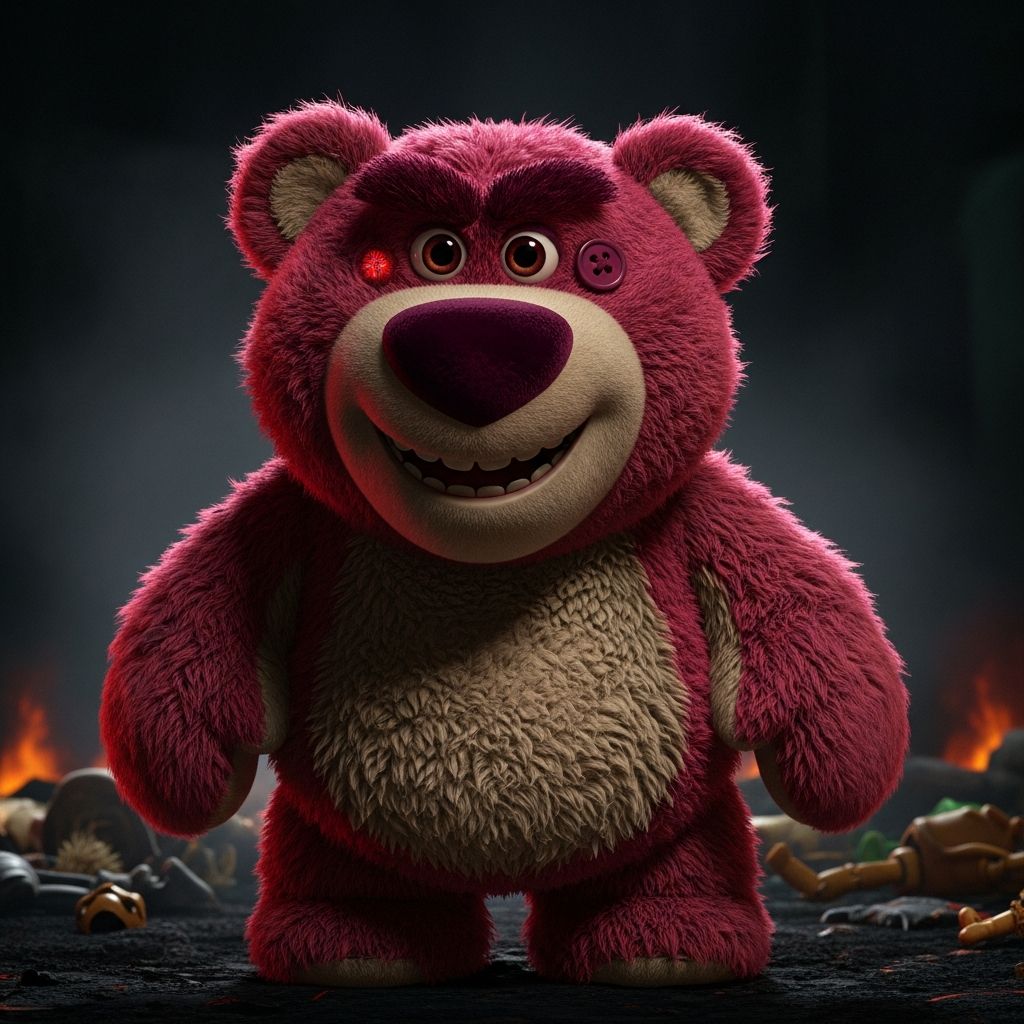
In the landscape of animated villains, few characters feel as unsettling as Lots-o’-Huggin’ Bear from Toy Story 3. Wrapped in pink fur and smelling like strawberries, he looks like the safest toy in the room—but his actions reveal a villain darker and more psychologically disturbing than many traditional on-screen monsters.
This article explores how Lotso’s design, backstory, behavior, and ultimate fate combine to create a uniquely chilling antagonist who elevates Toy Story 3 from a heartfelt adventure into a quiet horror story about abandonment, bitterness, and the choice to stop caring.
The Villain Who Looks Like a Comfort Object
Most villains announce themselves visually—sharp angles, dark colors, menacing expressions—but Lotso is deliberately crafted as the exact opposite. He resembles the kind of plush toy parents buy to make children feel safe at night, and that visual contradiction is the first layer of his disturbing power.
- Soft, rounded design: His body is cuddly and huggable, signaling warmth and protection.
- Bright pink color: Associated with sweetness and innocence, it disguises his cruelty.
- Strawberry scent: The detail that he smells friendly turns him into a sensory trap—inviting trust before he ever speaks.
By giving the darkest character in the film the most comforting exterior, Pixar turns a common childhood symbol of safety—the teddy bear—into a source of dread, subtly tapping into the fear that appearances cannot be trusted.
Lotso’s Origin: From Lost Toy to Lost Soul
Lotso is not portrayed as evil from the start; his villainy grows out of a deeply painful experience of being separated from his child and replaced without explanation. For a toy whose entire identity depends on being loved by one specific child, that silent abandonment feels like a total erasure of his existence.
Instead of processing his loss, Lotso all but rewrites reality in his mind, choosing to believe that love itself is a lie and that toys are disposable objects with no intrinsic worth. This decision marks the key turning point: he doesn’t simply suffer trauma; he builds his entire worldview on never being vulnerable again, even if that means destroying the joy of others.
Sunnyside Daycare as a Toy Prison State
On the surface, Sunnyside Daycare looks like a dream—endless kids, endless playtime, and no risk of being stored in an attic. Under Lotso’s rule, however, the daycare turns into a rigidly controlled ecosystem that functions less like a playground and more like a labor camp for toys.
| Aspect | Surface Appearance | Lotso’s Hidden Reality |
|---|---|---|
| Placement with kids | Toys are happily shared among children. | New arrivals are forced into the chaotic toddler room as disposable shock absorbers. |
| Leadership | Friendly older toy guiding the community. | Autocratic ruler using fear, favoritism, and surveillance to keep control. |
| Rules | Simple guidelines for safety and play. | Unspoken threats: obey or be reassigned to rougher treatment and isolation. |
| Community | Supportive group of toys looking out for each other. | Hierarchy of henchmen and victims, where trust is weaponized. |
Lotso uses Sunnyside as both shield and stage: shield, because its cheerful facade protects him from suspicion; stage, because it gives him a place to replay his own trauma over and over, forcing other toys to feel the powerlessness he once felt.
Charm, Control, and Psychological Manipulation
One of the most unsettling aspects of Lotso is how rarely he raises his voice or directly lashes out at first. His preferred weapons are charm, social pressure, and psychological manipulation, making him feel more like a cult leader than a typical animated villain.
- Love-bombing new arrivals: He greets new toys with warmth, praising Sunnyside as a paradise and framing himself as their protector.
- Selective kindness: He rewards loyalty with privileges, giving certain toys easier rooms or safer play sessions.
- Gaslighting and blame-shifting: When things go wrong, he implies that victims brought it on themselves, preserving his image as a benevolent leader.
This pattern mirrors real-world abusive power structures, where those in charge insist they are helping while quietly tightening their grip, leaving those underneath them unsure whether to be grateful or terrified.
Lotso Versus Woody: Two Responses to the Same Fear
At the heart of Toy Story 3 lies a shared fear for all toys: the fear of being outgrown and discarded once a child grows up. Woody and Lotso both understand this fear intimately, but their responses diverge in opposite directions, turning their conflict into a philosophical duel rather than just a physical one.
| Question | Woody’s Answer | Lotso’s Answer |
|---|---|---|
| What is a toy’s purpose? | To love and be there for a child, even if that love eventually ends. | To survive in any way possible, since love is temporary and unreliable. |
| How should toys face loss? | By accepting change and finding new ways to care for others. | By shutting down emotionally and never trusting anyone again. |
| What do other toys represent? | Chosen family, worthy of sacrifice and loyalty. | Tools or obstacles, useful only as long as they serve his control. |
This contrast makes Lotso more than a simple bad guy; he becomes a dark mirror showing what Woody—and by extension, any person—could become if they let bitterness consume them after a profound loss.
Betrayal at the Furnace: Cruelty Without Redemption
Near the climax, when the toys are on the brink of destruction, Lotso is offered a chance to do something truly heroic by saving them. Instead, he deliberately chooses betrayal, not just to save himself but to assert that his cynical worldview is correct: in his mind, nobody deserves to be saved.
This refusal of redemption is what sets him apart from many family-film villains who often receive last-minute changes of heart. Lotso clings to his hatred, even when kindness toward the group would cost him nothing, illustrating a form of malice rooted not in misunderstanding but in deliberate choice.
Why Lotso Feels More Disturbing Than Other Pixar Villains
Pixar has created many memorable antagonists—from jealous toys to corporate polluters—but Lotso stands out because his evil feels painfully human. There is no cosmic power, no monstrous transformation, no magical curse; there is only a wounded personality that decides hurting others is easier than healing.
- He weaponizes community: Instead of fighting alone, he twists a whole group of toys into enforcers of his fear-based system.
- He targets the vulnerable: New toys and younger-looking characters bear the brunt of his cruelty, echoing real-world bullying dynamics.
- He understands empathy—and rejects it: Because he knows how it feels to be abandoned, he knows exactly how to cut the deepest when inflicting pain.
The result is a villain whose darkness doesn’t come from spectacle but from the recognition that ordinary hurt, left unchecked, can evolve into something monstrous.
Lotso’s Fate: Punishment or Ironic Wish Fulfillment?
Lotso does not end the story with a grand apology or a second chance among the heroes. Instead, he finds himself in a new environment where he is technically cared for yet trapped in a repetitive, mechanical existence that mirrors the emotional loop he never escaped.
This ending operates on two levels: as punishment, because he loses autonomy and status, and as ironic fulfillment, because he finally gets the constant attention he always wanted, but in a way that strips him of power. It suggests that clinging to a toxic worldview can lock a person into their own private prison, even when the outside world thinks they’re fine.
What Lotso Teaches About Trauma and Choice
At its core, Lotso’s story is not just about a villain; it is about what people—or toys—do with their pain. His tragedy illustrates that suffering alone does not define a person’s morality; the crucial factor is whether they choose to confront their wounds or wield them as weapons.
- Trauma can explain behavior without excusing it.
- Bitterness can feel like protection but becomes a cage.
- Compassion, even after betrayal, is a conscious, difficult choice.
In contrast to characters who find healing and new belonging, Lotso clings to resentment, showing audiences—especially older children and adults—that refusing to grow past hurt can turn a sympathetic figure into a source of fear.
SEO-Optimized Key Takeaways
- Lotso from Toy Story 3 is one of Pixar’s darkest villains because he combines a lovable design with a deeply cruel, manipulative personality.
- His backstory of abandonment helps viewers understand his pain while still recognizing that his actions are unforgivable.
- Sunnyside Daycare becomes a metaphor for an abusive system, with Lotso using fear, hierarchy, and false kindness to control other toys.
- Compared with other Pixar antagonists, Lotso’s horror comes from his realism: he behaves like a hurt person who decides never to trust again.
- His unresolved bitterness serves as a cautionary tale about how unhealed trauma can twist love into domination.
Frequently Asked Questions About Lotso in Toy Story 3
Why is Lotso considered Pixar’s darkest villain?
Lotso is often labeled Pixar’s darkest villain because his evil is grounded in emotional reality rather than fantasy. He manipulates others, builds an authoritarian system, and knowingly inflicts the same kind of pain he once suffered, making his choices feel disturbingly plausible in the real world.
Is Lotso completely evil, or is he sympathetic?
Lotso is sympathetic in the sense that his backstory is heartbreaking and understandable; most viewers can empathize with feeling replaced or forgotten. However, the film makes it clear that he crosses a moral line when he uses his pain as a justification to control and torture others, refusing every opportunity to change.
What makes Sunnyside Daycare so disturbing under Lotso’s control?
Sunnyside becomes disturbing because its cheerful, colorful space hides a rigid hierarchy where some toys enjoy comfort while others suffer constant chaos. Lotso controls who gets which fate, using the promise of safety as leverage to demand absolute loyalty and silence.
How does Lotso compare with other Toy Story villains?
Earlier antagonists in the series tend to be jealous, selfish, or obsessed with personal gain, but they often remain one step removed from genuine cruelty. Lotso, by contrast, treats suffering as a tool, deliberately orchestrating environments that break other toys physically and emotionally, placing him in a heavier moral category.
What lesson does Lotso’s story offer to older viewers?
For older viewers, Lotso’s arc highlights that life’s deepest hurts can lead either to empathy or to domination. The character warns that when people respond to abandonment by making sure no one else can be happy, they may gain control but lose the possibility of real connection or peace.