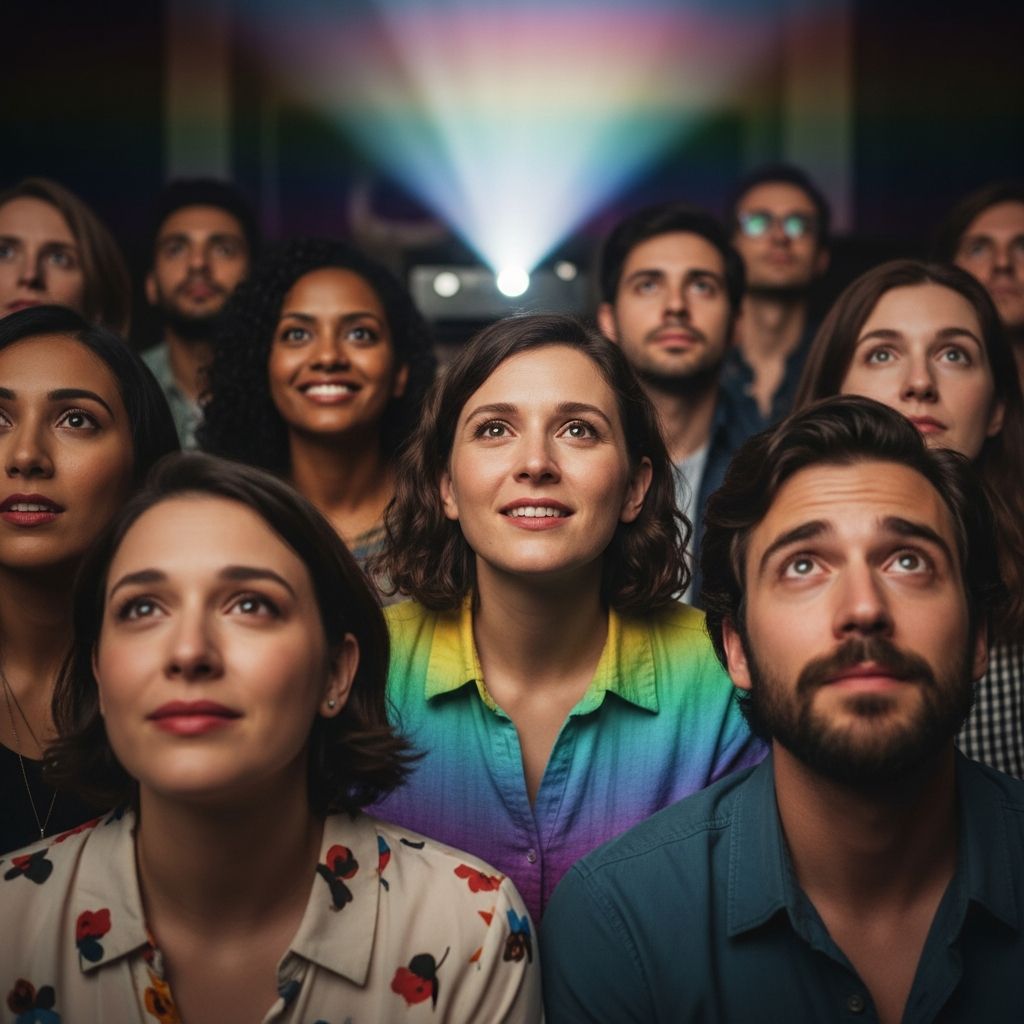
Authentic portrayal of LGBTQIA+ individuals in television and movies plays a crucial role in shaping perceptions, especially among young viewers. Research shows that increased media exposure correlates with greater societal acceptance and improved mental health outcomes for marginalized communities.
The Growing Need for Diverse Narratives
In recent years, the demand for inclusive storytelling has surged as demographic shifts reveal a more diverse population. A 2021 Gallup poll indicated that 7.1% of U.S. adults identify as lesbian, gay, bisexual, or transgender, doubling from 2012, with 21% of Gen Z embracing these identities. This evolution underscores the necessity for media to reflect real-world diversity, moving beyond stereotypes to multifaceted characters.
Media serves as a primary lens through which children and families encounter different identities. When shows feature LGBTQIA+ characters in everyday roles—friends, parents, heroes—they normalize these experiences, reducing isolation for queer youth and building bridges for others. Studies from 2010-2020 analyzed vast news datasets, revealing steady increases in coverage, though imbalances persist, with ‘gay’ mentions dominating over ‘lesbian’, ‘bisexual’, or ‘transgender’.
Psychological Benefits for Young Viewers
For LGBTQIA+ children, seeing themselves on screen can be transformative. Visibility combats feelings of otherness, fostering self-acceptance and resilience. Non-LGBTQIA+ kids, in turn, develop empathy early, learning that love and identity transcend traditional norms.
- Self-Esteem Boost: Characters who thrive despite challenges model healthy identity formation.
- Reduced Suicide Risk: Positive representation correlates with lower mental health crises among queer youth.
- Family Dynamics: Stories depicting supportive families help parents navigate conversations with their children.
Exposure to such content educates without preaching, embedding values of kindness and inclusivity. Parents report that media sparks organic discussions, easing the path to understanding.
Evidence from Media Studies
Quantitative data highlights representation’s impact. GLAAD reports note broadcast networks achieving 11.9% LGBTQIA+ series regulars in primetime, a record high with over half being people of color. A P&G and GLAAD study found that 81% of those exposed to LGBTQIA+ media were more comfortable initiating conversations, with 48% reporting increased acceptance of gay and lesbian individuals compared to 35% without exposure.
| Identity Group | Acceptance Increase (Exposed vs. Non-Exposed) | Source |
|---|---|---|
| Gay/Lesbian | 48% vs. 35% | |
| Bisexual | 45% vs. 31% | |
| Non-Binary | 41% vs. 30% | |
| Equal Rights Support | 80% vs. 70% |
These figures demonstrate media’s power to shift attitudes. Sentiment analysis from a decade-long study showed neutral to positive tones for most LGBTQIA+ terms, though bisexual portrayals lagged slightly.
Challenges in Authentic Representation
Despite progress, gaps remain. Coverage often favors certain identities, with ‘gay’ keywords appearing seven times more than ‘bisexual’ and twice as much as ‘transgender’. This skew risks marginalizing subgroups, perpetuating invisibility for bisexual, transgender, and non-binary individuals.
Businesses and creators must prioritize intersectionality—race, class, ability—alongside orientation. GLAAD’s findings reveal 63% of non-LGBTQIA+ people view the community monolithically, highlighting the need for varied stories. Half of LGBTQIA+ consumers would abandon non-inclusive brands, tying representation to economic imperatives.
Role of Parents in Media Consumption
Parents hold the reins on what children watch, making guided viewing essential. Co-viewing allows for real-time clarification, turning entertainment into teachable moments. Select shows with nuanced characters over tokenism to maximize benefits.
Recommendations include family-friendly series blending adventure with identity exploration, ensuring age-appropriate depth. This approach strengthens family bonds while promoting tolerance.
Societal Shifts Driven by Screen Stories
Media doesn’t just reflect culture; it propels it forward. Increased visibility mainstreams acceptance, influencing policy and norms. From pride events like Pink Dot receiving positive coverage to broader narratives of tolerance, entertainment amplifies voices.
As Gen Z leads with higher identification rates, future content must evolve. Streamers and networks setting records signal momentum, but sustained effort is key to equity.
Strategies for More Inclusive Content Creation
To elevate representation:
- Hire LGBTQIA+ writers and consultants for authenticity.
- Diversify casting beyond stereotypes.
- Balance screen time across identities.
- Measure impact via audience feedback and metrics.
These steps ensure stories resonate genuinely, fostering a media landscape where all feel seen.
Frequently Asked Questions (FAQs)
What age is appropriate for introducing LGBTQIA+ media to children?
Start with age 4-6 using simple, positive stories; progress to complex narratives by 10+. Tailor to maturity and family values.
Does media representation actually change attitudes?
Yes, studies show exposure increases acceptance by 10-15% across groups, enhancing comfort and support.
Why focus on underrepresented identities like bisexual?
They face erasure; balanced coverage prevents bias and promotes full community visibility.
How can parents discuss media with kids?
Ask open questions like ‘How do you feel about that character?’ to encourage empathy and dialogue.
Is there backlash to more representation?
Some exists, but data shows broad comfort, with favorable views of inclusive brands.
Future Outlook for Media Diversity
With trends pointing upward, expect more groundbreaking content. Advocacy from organizations like GLAAD will push boundaries, ensuring media mirrors society’s rich tapestry. For families, this means richer viewing experiences that nurture compassionate future generations.
Embracing these stories isn’t optional—it’s essential for holistic child development. As visibility grows, so does understanding, paving the way for a more equitable world.
References
- News media coverage of LGBT identities over 10 years in a 400-million-word news media dataset — PMC/NCBI. 2024. https://pmc.ncbi.nlm.nih.gov/articles/PMC11006200/
- Boosting LGBTQ representation with more diverse life stories — World Economic Forum. 2022-05. https://www.weforum.org/stories/2022/05/why-lgbtq-representation-should-be-a-priority-for-business-and-media/
- P&G and GLAAD’s New Study Reveals the Power of LGBTQ+ Inclusion in Advertising — Procter & Gamble. 2023. https://us.pg.com/blogs/power-of-lgbtq-inclusion-in-advertising/