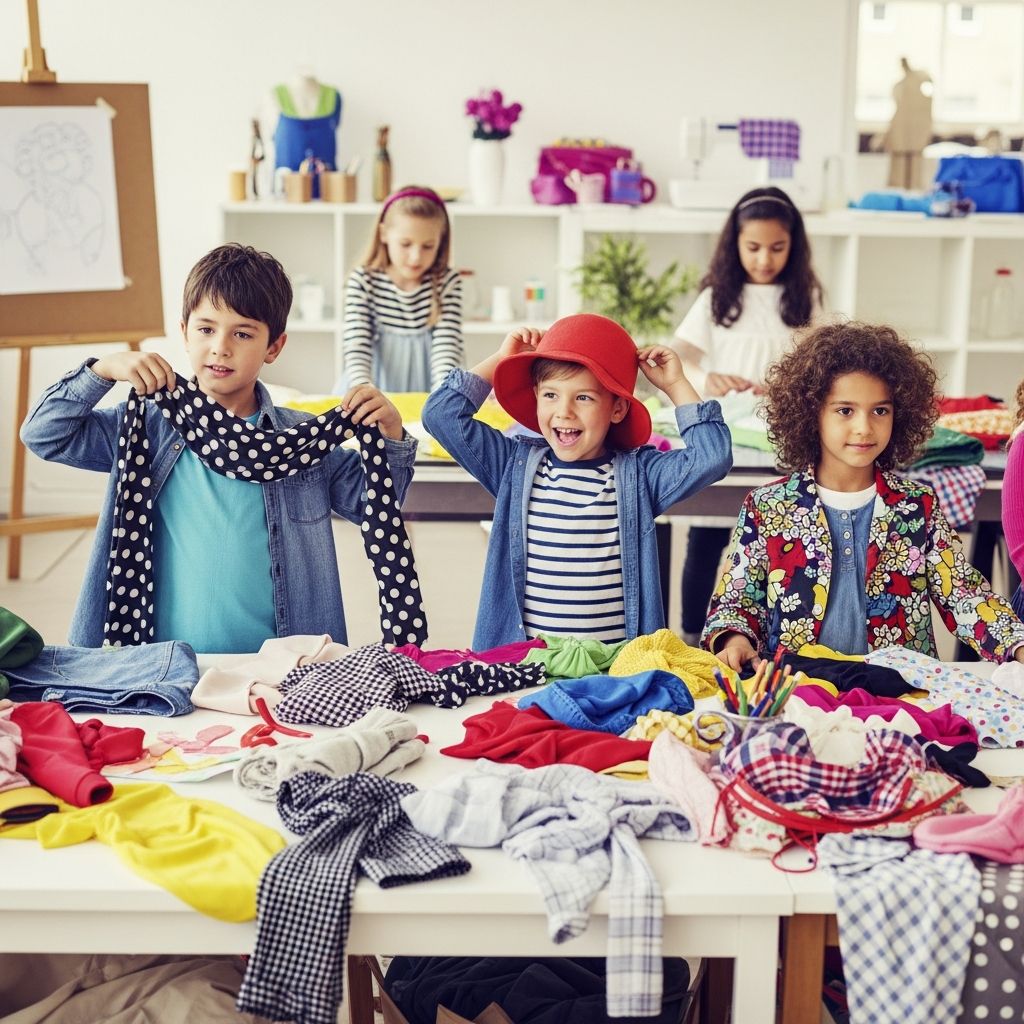
Granting Children Autonomy in Wardrobe Selection: A Developmental Perspective
The simple act of allowing children to select their own clothing extends far beyond daily convenience. When parents grant their children the freedom to make decisions about what they wear, they set in motion a cascade of developmental benefits that influence self-perception, confidence, and critical thinking abilities. This autonomy, though seemingly minor in the broader context of parenting, represents a meaningful opportunity for children to exercise agency over their lives during formative years.
Developmental psychologists recognize that children benefit significantly when given opportunities to make low-stakes decisions in supportive environments. Clothing selection represents an ideal context for this learning because the consequences of choices remain manageable while the opportunities for personal expression remain unlimited. A child who selects a mismatched outfit faces no serious repercussions, yet gains valuable experience in decision-making, planning, and understanding personal preference.
Personal Identity Development Through Sartorial Choices
Children naturally seek ways to communicate their emerging identities to the world around them. Fashion serves as one of the most accessible and visible mediums through which young people articulate who they are and who they wish to become. When parents facilitate this self-expression through clothing choices, they validate their child’s developing sense of self and create space for authentic identity exploration.
The relationship between clothing choices and identity extends deeper than surface-level preferences. When a child opts for dinosaur-themed apparel or chooses particular color combinations, they communicate something meaningful about their interests, personality traits, and current emotional state. These choices become conversation starters that allow parents to gain insight into their child’s evolving thoughts, concerns, and passions. Such dialogue strengthens parent-child relationships by demonstrating genuine interest in the child’s perspective and preferences.
As children age, their clothing selections often reflect developmental milestones. A toddler might gravitate toward bright primary colors and simple patterns, while an older child may begin experimenting with more complex style combinations. Adolescents often use clothing as a form of peer identification or subtle rebellion against parental norms. By allowing these transitions to occur naturally through clothing choices, parents support healthy identity development without conflict.
Building Confidence Through Wearable Autonomy
The connection between what we wear and how we feel about ourselves represents a well-documented psychological phenomenon. When children feel comfortable and confident in their clothing choices, their overall self-assurance extends into other areas of their lives. This confidence boost emerges from multiple sources: the satisfaction of making an independent decision, the joy of wearing something personally meaningful, and the validation that their preferences matter.
Children who regularly participate in clothing selection decisions develop stronger self-esteem because they learn to trust their own judgment and preferences. Rather than accepting default choices made by adults, they practice asserting their opinions and discovering that their voice carries weight in household decisions. This experiential learning about the value of personal agency transfers to other contexts, including academic settings, social interactions, and future professional environments.
The confidence that develops through clothing autonomy operates on both conscious and unconscious levels. Consciously, children recognize that they successfully completed a task and made choices aligned with their preferences. Unconsciously, wearing self-selected clothing reinforces a positive self-image because each outfit represents a personal decision rather than an external imposition. Over time, this repeated reinforcement of self-directed choice builds a robust foundation for healthy self-esteem.
Practical Decision-Making Development in Low-Pressure Contexts
Decision-making represents one of the most essential skills children must develop for successful adulthood, yet opportunities to practice this skill in safe, low-stakes environments remain limited. Clothing selection provides an ideal training ground for developing decision-making competence because the stakes remain manageable while the decision-making process remains genuine.
When children stand before their clothing options each morning, they engage in authentic decision-making activities. They must evaluate multiple options, consider various factors, weigh pros and cons, and commit to a choice. This process mirrors the decision-making frameworks they will eventually apply to more significant life choices. By practicing regularly in the clothing domain, children develop confidence and competence that transfer to academic decisions, social choices, and eventually career considerations.
The iterative nature of daily clothing choices allows children to experience natural consequences without serious negative outcomes. If a child chooses an outfit inappropriate for the weather, they experience mild discomfort and learn the importance of weather considerations in future decisions. If they select items that don’t coordinate well, they gain visual feedback about color and pattern combinations. These gentle consequences teach valuable lessons about decision quality without creating shame or regret.
Parents can support this decision-making development by offering guidance rather than mandates. Asking questions like “Which outfit do you think would be comfortable for outdoor play?” or “What shoes would work best with that dress?” helps children develop decision-making frameworks while maintaining their autonomy. This scaffolding approach ensures children develop genuine decision-making skills rather than simply following parental directives.
Fostering Independence and Personal Responsibility
Independence represents a core developmental goal throughout childhood, yet many daily routines inadvertently limit children’s opportunities to practice independent functioning. Clothing selection stands out as a domain where children can genuinely exercise independence in a meaningful way. This independence extends beyond simply picking clothes; it encompasses responsibility for one’s appearance and the consequences of one’s choices.
When children take responsibility for clothing selection, they begin to understand the connections between their choices and outcomes. They learn to anticipate upcoming weather patterns and select appropriate clothing. They recognize that special events require different outfit considerations than ordinary school days. They discover that certain activities demand specific types of clothing for safety or practicality. Through repeated practice, children internalize these lessons and begin making increasingly thoughtful clothing decisions without parental prompting.
This sense of responsibility also extends to clothing care and maintenance. Children who have invested personal effort in clothing selection often display greater interest in maintaining those items properly. They understand that their clothing represents their own choices and preferences, creating intrinsic motivation to keep items in good condition. This natural connection between choice and responsibility accelerates the development of self-care habits that serve children throughout their lives.
The independence fostered through clothing autonomy builds a foundation for managing larger responsibilities. Children who successfully navigate daily clothing decisions develop confidence that generalizes to other self-management tasks. They recognize their capacity to make decisions, live with consequences, and adjust their approaches based on feedback. This self-efficacy becomes invaluable as they encounter more complex challenges requiring independent problem-solving.
Creative Expression and Imaginative Development
The human imagination flourishes when given space and freedom to explore possibilities without predetermined constraints. Clothing selection offers an ideal canvas for creative expression, allowing children to experiment with color combinations, pattern mixing, and style innovation without fear of serious consequences. Some combinations children create may seem unconventional to adult eyes, yet they represent valuable creative exploration.
When children experiment with clothing combinations, they engage in visual thinking and creative problem-solving. They learn about color theory, pattern compatibility, and aesthetic balance through hands-on experience rather than instruction. A child who discovers that certain colors complement each other has learned a principle they can apply to art projects, room decoration, and countless other contexts. Similarly, a child who learns that patterns can combine harmoniously develops aesthetic discernment that enhances creative work across multiple domains.
The freedom to create “wacky” outfit combinations, far from being problematic, represents important creative development. These unconventional choices demonstrate that the child feels safe exploring beyond conventional boundaries. They reveal a child who thinks independently and trusts their own preferences sufficiently to express them publicly. Rather than discouraging such experimentation, parents who appreciate these creative choices validate creative thinking and encourage continued imaginative exploration.
The creative confidence developed through clothing experimentation often extends into other creative domains. Children who feel empowered to make unusual clothing choices frequently display enhanced confidence in artistic pursuits, storytelling, and innovative problem-solving. The underlying principle remains consistent: when children experience that their creative choices receive respect and support, they develop confidence in their creative capabilities across contexts.
Educational Opportunities Embedded in Wardrobe Selection
Beyond psychological and developmental benefits, clothing selection provides legitimate educational opportunities across multiple subject areas. The process of choosing appropriate clothing teaches concepts in science, mathematics, and practical life skills that translate into academic advantage.
Temperature regulation and seasonal appropriateness introduce children to basic concepts in physical science. Understanding that certain fabrics provide warmth while others offer breathability teaches principles of insulation and air circulation. Recognizing that lighter colors reflect heat while darker colors absorb it demonstrates practical application of physics principles. Children who make these discoveries through personal experience retain these lessons far more effectively than those who simply memorize facts.
Color theory and pattern recognition emerge naturally from clothing choices. Children learn which colors appear harmonious together, how to balance pattern intensity, and how proportion affects visual impact. These aesthetic principles, learned through practical experience, provide foundation for art education and mathematical thinking about symmetry and balance. A child who successfully combines a striped shirt with a solid-colored bottom has applied principles of visual balance and contrast.
Budgeting and financial literacy represent increasingly critical life skills that often lack adequate practical instruction. Parents can leverage clothing shopping to teach valuable money management concepts by providing children with a set budget and allowing them to make purchase decisions within that constraint. Children learn to prioritize spending, evaluate value, and understand the trade-offs inherent in financial decisions. These lessons, grounded in concrete experience, build financial competence that serves children throughout adulthood.
Calendar awareness and planning skills develop naturally when children must select clothing appropriate for upcoming events or activities. A child who learns to plan outfits for a multi-day trip develops organizational thinking and strategic planning abilities. Understanding that gym class requires different clothing than music class teaches children to consider context and prepare accordingly. These practical organizational skills translate directly to academic success and workplace effectiveness.
Navigating Parental Boundaries While Respecting Child Autonomy
Granting children autonomy in clothing selection does not require complete parental abdication of influence or boundaries. The most effective approach involves creating a framework within which children exercise genuine choice while parents maintain appropriate guardrails. This balanced approach respects the child’s developing autonomy while ensuring safety and appropriateness.
Parents can establish clear parameters that preserve choice while maintaining necessary boundaries. For example, a parent might say, “You can wear whatever clothing you’d like that’s appropriate for the weather and activity today.” This statement honors the child’s autonomy while setting reasonable limits. Alternatively, parents might curate the available options by ensuring the closet contains items they consider acceptable, while allowing children to choose freely among those options. This approach preserves genuine choice while preventing problematic selections.
The process of negotiating these boundaries itself becomes educational. When parents explain why certain choices might be problematic—a sleeveless shirt in freezing weather, or pajamas for a formal event—they help children understand decision criteria and consequences. Rather than simply imposing rules, parents help children develop the reasoning that underlies clothing decisions. Children who understand the principles behind restrictions develop better decision-making ability than those who simply follow mandates without comprehension.
As children demonstrate developing judgment and responsibility, the boundaries naturally expand. A young child might require parental input about weather-appropriateness, while an older child might make such determinations independently. This graduated expansion of autonomy matches the child’s developing capabilities and maintains the supportive structure necessary for optimal development. The goal remains consistent: supporting the child’s decision-making growth while ensuring safety and appropriateness.
Table: Developmental Benefits of Clothing Autonomy by Age Group
| Age Group | Primary Developmental Focus | Parental Role | Key Benefits |
|---|---|---|---|
| Toddlers (2-3 years) | Basic preference expression | Offer limited, safe choices; validate preferences | Early autonomy experience; vocabulary development |
| Preschoolers (4-5 years) | Color and pattern recognition | Curate closet; offer choices within parameters | Creative expression; color learning; decision practice |
| Early Elementary (6-8 years) | Practical consideration of context | Guide thinking with questions; discuss choices | Planning skills; consequence understanding; independence |
| Late Elementary (9-11 years) | Peer awareness and personal style | Support identity exploration; negotiate boundaries | Self-esteem; identity development; social confidence |
| Adolescents (12+ years) | Identity expression and individuation | Respect autonomy; maintain communication | Self-advocacy; authentic identity; confidence |
Creating an Environment That Supports Clothing Autonomy
While granting children autonomy in clothing selection requires minimal structural change, certain environmental modifications enhance the likelihood of success and positive experiences. Making clothing accessible, organized, and child-appropriate removes barriers to independent choice and increases the probability that children will make thoughtful selections.
Organizing clothing in ways that make options visible to children facilitates decision-making. When children must rummage through drawers to locate items, they may make hasty choices or become frustrated. Arranging clothing on low rods or in low drawers that children can access independently transforms the closet into a tool supporting autonomy. Similarly, grouping similar items together helps children visualize combinations and make coherent choices.
The number and variety of options presented significantly influences decision outcomes. Too many options overwhelm developing decision-making capabilities, while too few options restrict genuine choice. A balanced approach offers sufficient variety to allow authentic preference expression without creating paralysis through excessive options. Parents might rotate seasonal clothing or gradually introduce new items to maintain an optimal selection level.
Labeling or categorizing clothing can support younger children’s independent selection. Pictures of outfit combinations provide visual guidance for children who haven’t yet developed full visualization skills. Grouping clothing by activity type or occasion helps children understand context-appropriate selections without requiring parental decision-making.
Creating a judgment-free environment where unconventional choices receive acceptance rather than criticism becomes essential for sustaining children’s confidence in their clothing decisions. When a child wears an unusual combination, responding with curiosity rather than correction communicates respect for the child’s choices. Questions like “Tell me about your outfit choices today” invite the child to explain their reasoning and demonstrate interest in their decision-making process.
Frequently Asked Questions
At what age should I allow my child to choose their own clothes?
Even toddlers as young as two or three can begin expressing clothing preferences between limited options. The level of autonomy naturally expands as children demonstrate developing judgment and responsibility. Most developmental experts suggest offering choices as early as language develops, then gradually increasing independence with age.
What if my child wants to wear inappropriate clothing?
Establish clear boundaries about appropriateness while allowing choice within those parameters. Explain the reasoning behind limits—weather protection, safety, or social expectations—so the child learns decision-making principles rather than simply following rules. For young children, curating the closet to include only acceptable options preserves autonomy while preventing problematic choices.
How do I handle conflicts about clothing choices?
Conflicts often indicate an opportunity for learning rather than a disciplinary situation. Discuss the situation when emotions are calm, exploring the child’s reasoning and your concerns. Collaborative problem-solving that respects the child’s autonomy while addressing legitimate issues models healthy conflict resolution.
Can clothing autonomy actually improve decision-making skills?
Yes, research in developmental psychology confirms that practicing decision-making in low-stakes environments builds decision-making competence. Clothing selection provides an ideal context because consequences remain manageable while the decision-making process remains genuine. Skills developed through this practice transfer to academic and social decision-making contexts.
What if my child’s clothing choices affect their social acceptance?
This situation requires sensitive navigation between supporting autonomy and addressing real social concerns. Having an honest conversation with your child about how choices affect peer relationships respects their developing judgment while providing important information. Rather than imposing conformity, help them understand the trade-offs between self-expression and social acceptance, allowing them to make informed decisions.
How does clothing autonomy support neurodevelopment?
Making choices, experiencing consequences, and adjusting future decisions based on outcomes strengthens neural pathways related to executive function, planning, and impulse control. The repetitive nature of daily clothing decisions provides consistent cognitive exercise that supports healthy brain development during critical formative years.
References
- Why You Should Let Your Kids Choose Their Own Clothes — Dream Big Little Co. Accessed April 2, 2026. https://www.dreambiglittleco.com/blogs/dream-big-little-co-its-a-lifestyle/why-you-should-let-your-kids-choose-their-own-clothes
- Why Letting Kids Pick Their Own Outfit Matters — Family SCL. Accessed April 2, 2026. https://family-scl.com/Why-Letting-Kids-Pick-Their-Own-Outfit-Matters
- Let Your Kids Choose Their Clothes and Reap the Benefits! — Nudnik Life. Accessed April 2, 2026. https://nudniklife.com/blogs/news/let-your-kids-choose-their-clothes-and-reap-the-benefits
- Should children choose their own clothes? — Doña Carmen. Accessed April 2, 2026. https://donacarmen.com/en/blogs/news/should-children-choose-their-clothes
- Why I’m letting my child choose their own clothes — Motherly. Accessed April 2, 2026. https://www.mother.ly/life/letting-your-child-choose-their-own-clothes/