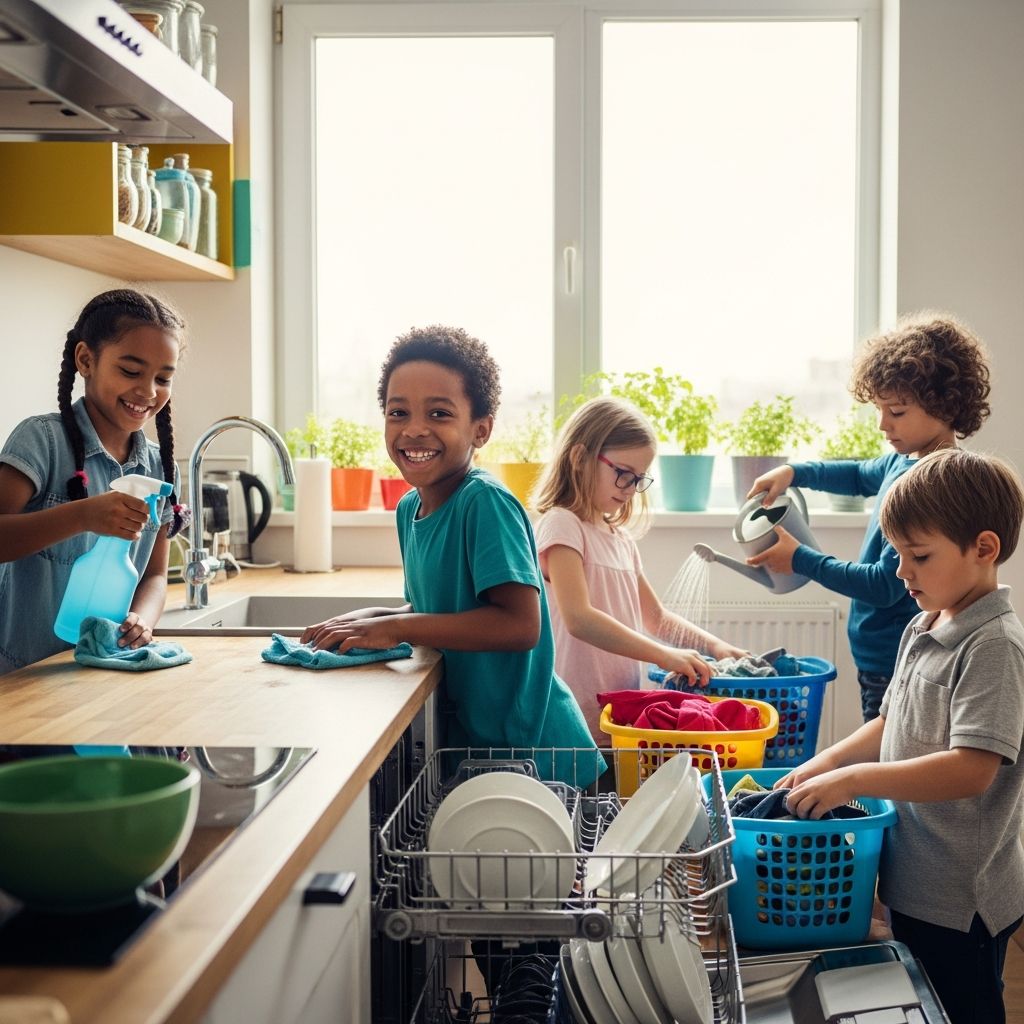
Assigning household tasks to children from a young age lays the foundation for essential life skills, personal growth, and family harmony. Research spanning decades reveals that kids who regularly contribute to home duties exhibit higher self-esteem, greater responsibility, and improved mental health outcomes.
Why Household Tasks Matter for Child Development
Household tasks go beyond mere tidiness; they serve as practical training grounds for real-world competencies. Children learn that their actions impact others, fostering a sense of purpose and belonging within the family unit. Longitudinal studies, such as the Harvard Grant Study, demonstrate that early involvement in chores correlates with adult success in careers and relationships, as it cultivates hard work and interpersonal connections.
By participating in daily routines, kids experience tangible achievements, which bolster their confidence. This sense of competence reduces helplessness and promotes positive mental health, according to child development experts.
Core Benefits of Involving Children in Home Duties
The advantages extend across emotional, cognitive, and social domains. Here’s a breakdown of key gains supported by child psychology research:
- Enhanced Self-Esteem and Competence: Completing tasks provides authentic success, far superior to abstract praise, leading to a robust self-concept.
- Stronger Work Ethic: Regular responsibilities teach perseverance and the value of effort, predicting long-term wellbeing.
- Improved Mental Health: Contributions create purpose, alleviating anxiety and building resilience.
- Better Family Dynamics: Shared efforts reduce parental stress and strengthen bonds through teamwork.
Age-Appropriate Tasks for Growing Independence
Tailoring tasks to developmental stages ensures children feel capable without frustration. Start simple and gradually increase complexity to match abilities.
| Age Group | Suggested Tasks | Skills Developed |
|---|---|---|
| Toddlers (2-4 years) | Putting toys away, sorting laundry colors, wiping spills | Basic motor skills, following instructions, tidiness |
| Preschoolers (5 years) | Setting table, feeding pets, watering plants | Responsibility, simple planning, care for living things |
| School-Age (6-11 years) | Vacuuming, folding clothes, helping with meals, taking out trash | Organization, time management, teamwork |
| Teens (12+ years) | Laundry, yard work, cooking full meals, basic home maintenance | Independence, problem-solving, financial awareness |
These progressions, drawn from parenting guidelines, help children master self-care and contribute meaningfully.
Building a Robust Work Ethic Early On
A solid work ethic forms through consistent, achievable challenges. Children who handle chores view effort as normal, approaching adult jobs with diligence rather than avoidance. Observational evidence from multi-generational families shows chore-raised individuals maintain cleaner spaces and handle workloads effectively.
Unlike rewards that fade, intrinsic motivation from task completion endures. The American Psychological Association notes this builds lasting self-worth tied to real contributions.
Sharpening Problem-Solving Through Everyday Challenges
Household duties naturally present puzzles: figuring out stains, organizing shelves, or optimizing cleaning techniques. These micro-challenges hone critical thinking, as kids experiment, fail, and adapt—skills vital for academic and professional success.
For instance, learning to sweep effectively requires trial and error, mirroring workplace troubleshooting. This hands-on practice outperforms theoretical lessons, embedding resilience.
Fostering Deeper Family Connections
Joint task completion transforms routine work into bonding opportunities. Conversations flow naturally while folding laundry or gardening, creating memories and mutual respect. Children shift from passive recipients to active family members, enhancing emotional ties.
Families report less conflict and more quality time when chores are shared, freeing evenings for play. This teamwork instills cooperation and empathy, key to healthy relationships.
Preparing Youth for Real-World Autonomy
Many young adults struggle with basics like cooking or cleaning due to absent early training. Chores bridge this gap, ensuring seamless transition to independence. By teens, skilled individuals manage households confidently, impressing roommates and employers.
Practical preparation includes budgeting for groceries or maintaining vehicles, setting the stage for self-reliant adulthood.
Effective Strategies for Implementing Chores
Success hinges on thoughtful introduction. Key tactics include:
- Modeling enthusiasm: Parents doing tasks alongside kids encourages participation.
- Offering choices: Let children select methods to build ownership.
- Fading incentives: Use sparingly to promote internal drive.
- Positive feedback: Praise effort and outcomes specifically.
- Consistent routines: Link chores to daily schedules for habit formation.
Avoid overload; balance with play to prevent resentment. Adjust based on feedback for sustained engagement.
Overcoming Common Hurdles
Resistance is typical initially. Counter with fun elements like music or timers, and explain benefits clearly. For varied abilities, adapt tasks—use tools for smaller hands or simplify for focus issues.
If motivation wanes, revisit purpose: “This helps our family thrive.” Persistence yields cooperation as kids internalize value.
Long-Term Outcomes Backed by Evidence
Decades of data confirm chores predict positive trajectories. The Harvard study links them to career advancement and relationship quality, while others tie them to reduced frustration tolerance and higher achievement.
In essence, these habits compound, yielding capable, empathetic adults.
Frequently Asked Questions (FAQs)
What age should kids start chores?
Begin at toddlerhood with simple tasks like picking up toys to build habits early.
Should chores be paid?
Limited allowances teach value, but emphasize family contribution over payment to foster intrinsic motivation.
How to handle kids who refuse chores?
Start small, involve them in choices, and model participation; consistency leads to acceptance.
Do chores really impact adult success?
Yes, studies show strong correlations with work ethic, self-esteem, and life satisfaction.
Can chores help with mental health?
Absolutely; they provide purpose and accomplishment, boosting confidence and reducing anxiety.
References
- Kids who do chores early benefit in these surprising long-term ways — Artful Parent. 2023. https://artfulparent.com/gen-st-kids-who-do-chores-early-benefit-in-these-surprising-long-term-ways/
- The benefits of chores for kids — Bright Horizons. 2024. https://www.brighthorizons.com/article/parenting/benefits-of-chores
- Household chores for kids and teenagers — Raising Children Network (Australian Government-funded). 2025-02-01. https://raisingchildren.net.au/preschoolers/family-life/routines-rituals-rules/chores-for-children
- The Benefits of Chores — Center for Parenting Education. 2023. https://centerforparentingeducation.org/library-of-articles/responsibility-and-chores/part-i-benefits-of-chores/
- The benefits of chores for your child — Michigan State University Extension. 2024. https://www.canr.msu.edu/news/the_benefits_of_chores_for_your_child
- Harvard: Key to Happy, Successful Kids? Chores — University View Women’s & Children’s Services. 2023. https://www.uvws.org/news/s94a63z7yun3fczjm80xh8fzivafkb