Children don’t just enjoy silly jokes—they often become obsessed with them, repeating the same puns and knock-knock routines for days on end. What looks like simple nonsense to adults is actually a powerful developmental tool that helps kids master language, build confidence, and connect with others. Behind every groan-inducing “Why did the chicken cross the road?” is a growing brain learning how to think, communicate, and cope with the world.
Why Kids Are Drawn to Silly Jokes
Young children are naturally attracted to humor that is simple, predictable, and a little bit absurd. Their brains are still learning how language works, so jokes that play with words, sounds, and expectations feel like exciting puzzles to solve . When a child hears a joke like “What do you call a sleeping bull? A bulldozer!”, they experience a small “aha!” moment as they connect the two meanings of the word . That moment of understanding triggers a burst of pleasure in the brain, reinforcing their curiosity and encouraging them to seek out more jokes .
Unlike adult humor, which often relies on irony, sarcasm, or cultural references, kids’ jokes are built on clear rules: a setup, a twist, and a punchline that makes sense once you “get it” . This structure is comforting and easy to remember, which is why children love repeating the same jokes over and over . They’re not just being silly—they’re practicing how stories and conversations are built, and they’re learning that words can be playful, not just functional .
How Jokes Support Brain Development
Every time a child tells or listens to a joke, they’re doing more than just laughing—they’re exercising several key areas of their brain. Jokes require them to recognize patterns (like the rhythm of a knock-knock joke), hold information in short-term memory (remembering the setup), and then reframe it in a surprising way (the punchline) . This kind of mental gymnastics strengthens their working memory, attention, and problem-solving skills, all of which are crucial for learning in school and everyday life .
Wordplay jokes, in particular, help children understand that words can have multiple meanings and that language is flexible . When a child laughs at “I’m reading a book about anti-gravity—it’s impossible to put down,” they’re beginning to grasp puns, metaphors, and figurative language . This deeper understanding of language lays the foundation for reading comprehension, creative writing, and even more sophisticated humor later on .
Building Confidence and Social Skills
Telling jokes is one of the first ways children learn to perform in front of others and manage social interactions . When a child stands up and says, “Knock knock,” they’re practicing public speaking, timing, and reading the room—skills that will serve them well in presentations, conversations, and group activities . Each time their joke lands (or even when it doesn’t), they gain a little more confidence in their ability to express themselves and connect with people .
Humor also helps children navigate social situations and build friendships. Sharing a joke creates a shared moment of joy that can break the ice with new classmates or strengthen bonds with siblings and friends . Over time, kids learn to read their audience: they notice when a joke makes people laugh, when it falls flat, and when it might be better to change topics . This awareness of others’ reactions is a key part of empathy and emotional intelligence .
Emotional Regulation and Stress Relief
Laughter is a natural stress reliever for both children and adults. When kids laugh at silly jokes, their bodies release endorphins and other feel-good chemicals that help them relax and feel safe . This biological response makes humor a powerful tool for managing big emotions like anxiety, frustration, or disappointment . A well-timed joke can turn a tense moment into a lighthearted one, helping a child calm down and regain control .
Regular exposure to playful, low-stakes humor also helps children become more comfortable with awkwardness and embarrassment . When parents or caregivers willingly make “dumb” jokes and laugh at themselves, they model that it’s okay to be imperfect and that mistakes can be funny rather than shameful . This builds resilience and teaches kids that they can handle social slips without falling apart .
How Parents Can Use Jokes to Connect and Teach
Parents don’t need to be stand-up comedians to use humor as a parenting tool. Simple, everyday moments—like mealtime, car rides, or bedtime—are perfect opportunities to share jokes and build connection . Asking questions like “What’s the silliest joke you know?” or “Can you make up a joke about dinosaurs?” invites conversation and gives kids a chance to shine .
- Keep a joke jar: Write down a few jokes on slips of paper and let kids pull one out each day at dinner or bedtime .
- Play joke games: Take turns starting a knock-knock joke or finish-the-punchline game to encourage creativity and listening skills .
- Encourage original jokes: Ask kids to invent their own jokes about their favorite animals, foods, or toys; this boosts creativity and language skills .
- Laugh together: Even if a joke seems painfully obvious or corny, respond with genuine laughter and enthusiasm to validate their effort .
- Use humor to redirect: When a child is upset, a silly question (“If you were a fruit, what would you be and why?”) can shift their focus and lighten the mood .
Types of Jokes That Work Best for Kids
Not all jokes land equally with children. The most effective ones are short, easy to remember, and based on concepts kids already understand, like animals, food, school, or everyday routines . Here are a few categories that tend to be big hits:
- Knock-knock jokes: Their predictable structure makes them easy to learn and repeat, and the call-and-response format feels like a game .
- Animal puns: Jokes that play on animal names or sounds (“What do you call a dog that does magic tricks? A labracadabrador!”) tap into kids’ love of animals and wordplay .
- Food jokes: Silly questions about food (“Why did the tomato turn red? Because it saw the salad dressing!”) are relatable and often lead to more giggles .
- “What do you call…” jokes: These riddles encourage kids to think creatively about names and categories, building vocabulary and categorization skills .
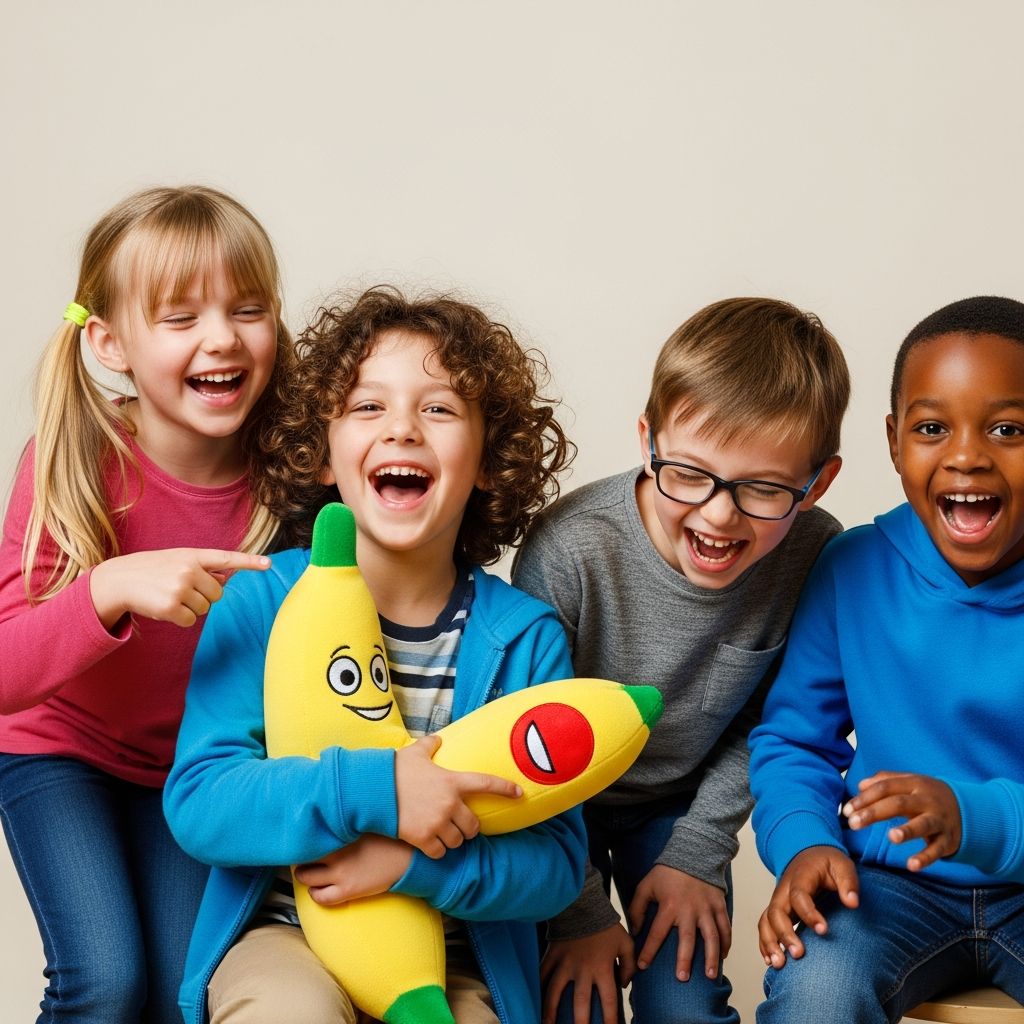
- Visual or physical humor: Jokes that involve funny faces, exaggerated voices, or simple props (like a banana phone) add an extra layer of fun for younger children .
When Jokes Become a Phase (and That’s Okay)
It’s completely normal for kids to go through intense “joke phases” where they tell the same jokes over and over, sometimes at the most inconvenient times . This repetition isn’t just about being annoying—it’s how children master new skills . By repeating a joke, they’re solidifying their memory of it, practicing their delivery, and testing how different people react .
As children grow older, their sense of humor naturally becomes more complex. They start to appreciate sarcasm, irony, and more subtle forms of humor, and their jokes may become more story-like or character-driven . This evolution reflects their growing theory of mind—the ability to understand that other people have different thoughts, feelings, and intentions . Parents can support this growth by continuing to engage with humor, even as the jokes get more sophisticated .
Practical Tips for Parents and Caregivers
Here are a few simple, research-backed strategies to make the most of kids’ love of jokes:
- Be an active listener: Give your full attention when a child tells a joke, even if you’ve heard it ten times already; this shows that their voice matters .
- Keep it age-appropriate: Choose jokes that match your child’s language level and life experience so they can actually “get” the humor .
- Balance humor with boundaries: It’s okay to laugh at silly jokes while also setting limits on when and where joking is appropriate (for example, not during quiet time or serious conversations) .
- Model healthy humor: Use jokes to diffuse tension, but avoid teasing that could hurt feelings or embarrass the child in front of others .
- Make it a family habit: Create regular joke-sharing times, like “Joke of the Day” at dinner or a “Silly Story” at bedtime, to build connection and routine .
Sample Joke Ideas by Age Group
| Age Group | Example Jokes | Skills Supported |
|---|---|---|
| 3–5 years | “Knock knock.” / “Who’s there?” / “Boo.” / “Boo who?” / “Don’t cry, it’s just me!” | Listening, turn-taking, simple wordplay |
| 6–8 years | “What do you call a sleeping bull? A bulldozer!” | Vocabulary, puns, memory, storytelling |
| 9–12 years | “Why did the math book look so sad? Because it had too many problems.” | Abstract thinking, subject knowledge, social timing |
Frequently Asked Questions
Why do kids love the same jokes over and over?
Repetition helps children master language patterns, remember sequences, and feel confident in their ability to tell a joke successfully . Each retelling reinforces their understanding and gives them a sense of control and accomplishment .
Are “dumb” jokes actually good for kids?
Yes—what adults call “dumb” jokes are often excellent for kids’ development . Simple puns and knock-knock routines build language skills, social confidence, and resilience by showing that it’s okay to be silly and make mistakes .
How can I encourage my child to make up their own jokes?
Start with simple prompts like “What’s the silliest thing a banana could do?” or “Can you make a joke about your favorite animal?” . Praise their creativity, not just whether the joke is “funny,” and join in by making up your own silly jokes together .
When should I be concerned about a child’s sense of humor?
If a child’s jokes are consistently mean-spirited, hurtful, or used to exclude others, it may be a sign they need help understanding empathy and appropriate social behavior . In most cases, though, a love of silly jokes is a healthy, normal part of development .