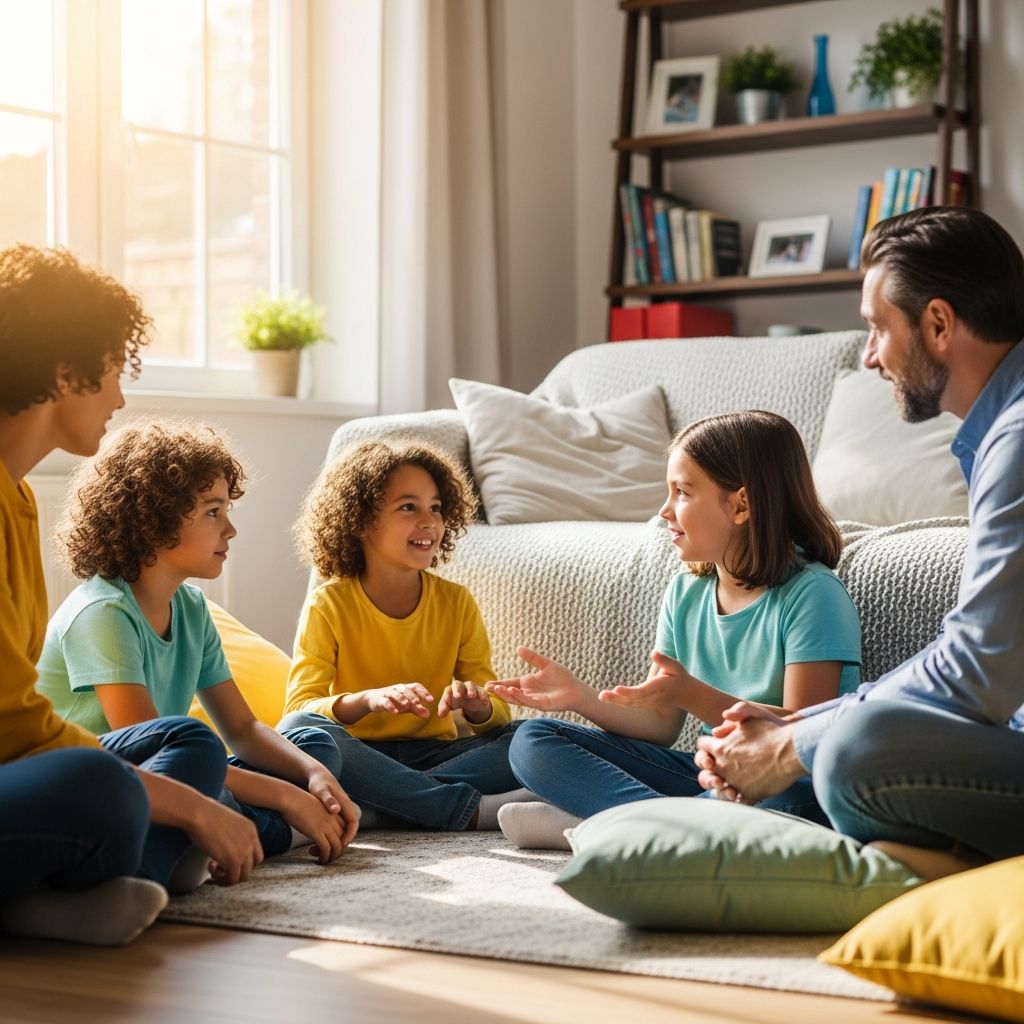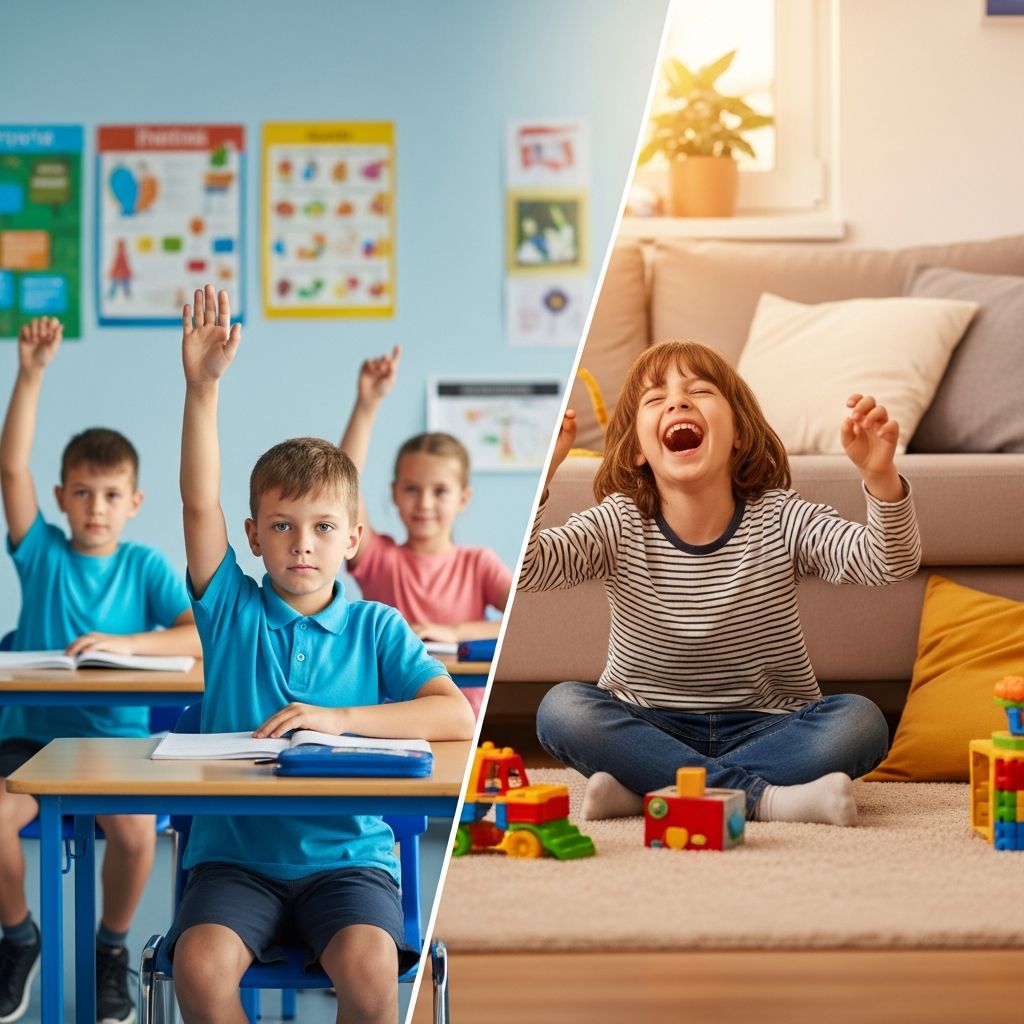
Many parents notice a puzzling pattern: their child is a model student during school hours but transforms into a bundle of energy, defiance, or meltdowns once home. This discrepancy stems from the unique demands of each setting, where children expend effort to adapt, often saving their true emotions for the safety of family.
Environmental Influences on Behavior Shifts
School environments buzz with noise, crowds, structured routines, and constant social interactions, demanding high levels of self-control from children. At home, the familiarity allows relaxation, leading to released tension. For instance, sensory overload in classrooms—bright lights, chatter, and physical proximity—can exhaust a child, who then ‘unwinds’ dramatically after school.
Homes offer unconditional love, enabling kids to express unfiltered feelings without fear of judgment. This security paradoxically results in more challenging behaviors, as children test boundaries knowing forgiveness awaits.
The Role of Emotional Exhaustion
Children, especially those with ADHD or anxiety, deplete mental resources maintaining composure at school. They focus intensely on tasks, suppress impulses, and navigate peer dynamics, leaving little energy for home tasks like homework. This ‘restraint collapse’ manifests as irritability or tantrums post-school, a normal response to cognitive fatigue.
- Signs of exhaustion: Sudden mood swings upon arriving home.
- Common in: Kids with neurodiverse conditions who mask symptoms at school.
- Impact: Difficulty transitioning to evening routines.
Neurodevelopmental Factors at Play
Conditions like ADHD amplify differences; children hyperfocus in structured school settings but struggle in less predictable homes. Anxiety may cause over-compliance at school to avoid scrutiny, followed by home outbursts.
| Condition | School Behavior | Home Behavior |
|---|---|---|
| ADHD | Effortful focus, rule-following | Impulsivity, hyperactivity |
| Anxiety | Withdrawn, compliant | Emotional release, clinginess |
| Autism | Structured adherence | Sensory meltdowns |
This table highlights how school structure supports certain traits, while home flexibility exposes vulnerabilities.
Family Dynamics and Hidden Stressors
Home issues like parental stress, sibling rivalry, or financial strain can provoke behaviors absent at school. Children may act out to seek attention or cope with discord, diverting family focus unconsciously. Harsh discipline or violence exposure links to impulsivity and poor regulation, worsening school-home gaps.
Peer victimization at school compounds home adversities, accelerating academic and behavioral declines. A stable home buffers these, but inconsistencies in rules—laxer than school’s—erode expectations.
Strategies for Consistent Behavior
Bridge environments by creating home structures mimicking school positives. Establish predictable routines for homework, meals, and bedtime to ease transitions.
- Debrief the day: Allow 30 minutes of unstructured play post-school for emotional reset.
- Set clear rules: Use visual charts for expectations, consistent with school policies.
- Positive reinforcement: Praise specific good behaviors to build habits.
- Collaborate with teachers: Share insights for unified approaches.
For neurodiverse kids, sensory breaks and professional input (e.g., therapy) prove effective.
Public and Alternative Settings
Behaviors vary elsewhere too—tantrums at stores arise from overstimulation, unlike controlled classrooms. At relatives’ homes, relaxed rules spark issues similar to home. Consistent parenting across contexts prevents escalation.
When to Seek Professional Help
Monitor for patterns: prolonged aggression, withdrawal, or academic slips signal deeper issues. Consult pediatricians for ADHD/anxiety screenings if home behaviors disrupt family life.
- Red flags: Hours-long tantrums, violence toward siblings, refusal of self-care.
- Next steps: Behavioral therapy, school counseling.
Practical Parenting Tips for Harmony
Empower parents with tools:
- Model calm responses to de-escalate.
- Incorporate exercise to burn off school-day energy.
- Foster emotional vocabulary: ‘How did school feel today?’
Research shows supportive homes mitigate harsh environment effects, promoting resilience.
Frequently Asked Questions
Why is my child an angel at school but wild at home?
School demands suppress emotions; home safety allows release. This is common, especially with ADHD.
How can I stop after-school meltdowns?
Provide transition time with snacks and quiet play. Consistent routines help regulate.
Is this a sign of bigger problems?
Often normal, but persistent issues warrant checking for anxiety or family stressors.
What if both school and home are challenging?
School stressors like bullying amplify home issues. Involve educators and professionals.
Does peer pressure play a role?
Yes, school social dynamics encourage conformity, absent at home.
Building Long-Term Emotional Skills
Teach regulation through mindfulness games, role-playing scenarios. Longitudinally, this fosters balance. Track progress weekly to celebrate gains.
Parents’ self-care matters; stressed adults model poor coping. Join support groups for shared strategies.
In summary, understanding these dynamics empowers targeted interventions, turning frustration into growth opportunities.
References
- School and home behavior in children: Why are they so different? — Indiana University School of Medicine, Pediatrics. 2023. https://medicine.iu.edu/blogs/pediatrics/child-development-school-and-home-behavior-why-are-they-so-different
- The Link between Harsh Home Environments and Negative Academic Trajectories — PMC/NCBI (Peer-reviewed). 2012-10-01. https://pmc.ncbi.nlm.nih.gov/articles/PMC3470830/
- The Mystery Behind Dual Personalities: Why Kids Behave Differently at Home and In School — Teachers Training Vietnam (Educational blog, informed by psych principles). 2023. https://www.teacherstrainingvietnam.com/blog/314-The-Mystery-Behind-Dual-Personalities-Why-Kids-Behave-Differently-at-Home-and-In-School-blog.php
- Child Behavior at School vs Home: What Every Parent Should Know — BMH Mind and Body (Health resource). 2024. https://bmhmindandbody.com/child-behavior-at-school-vs-home-what-every-parent-should-know/
- The Usual Causes of Child Behavior Problems at Home — Carolina Counseling Services. 2023-03-01. https://carolinacounselingservices.com/the-usual-causes-of-child-behavior-problems-at-home/
- Why Does My Child Behave Differently at Home vs School? — PTS Coaching. 2024-08-01. https://ptscoaching.com/2024/08/behavior-at-home-vs-school/