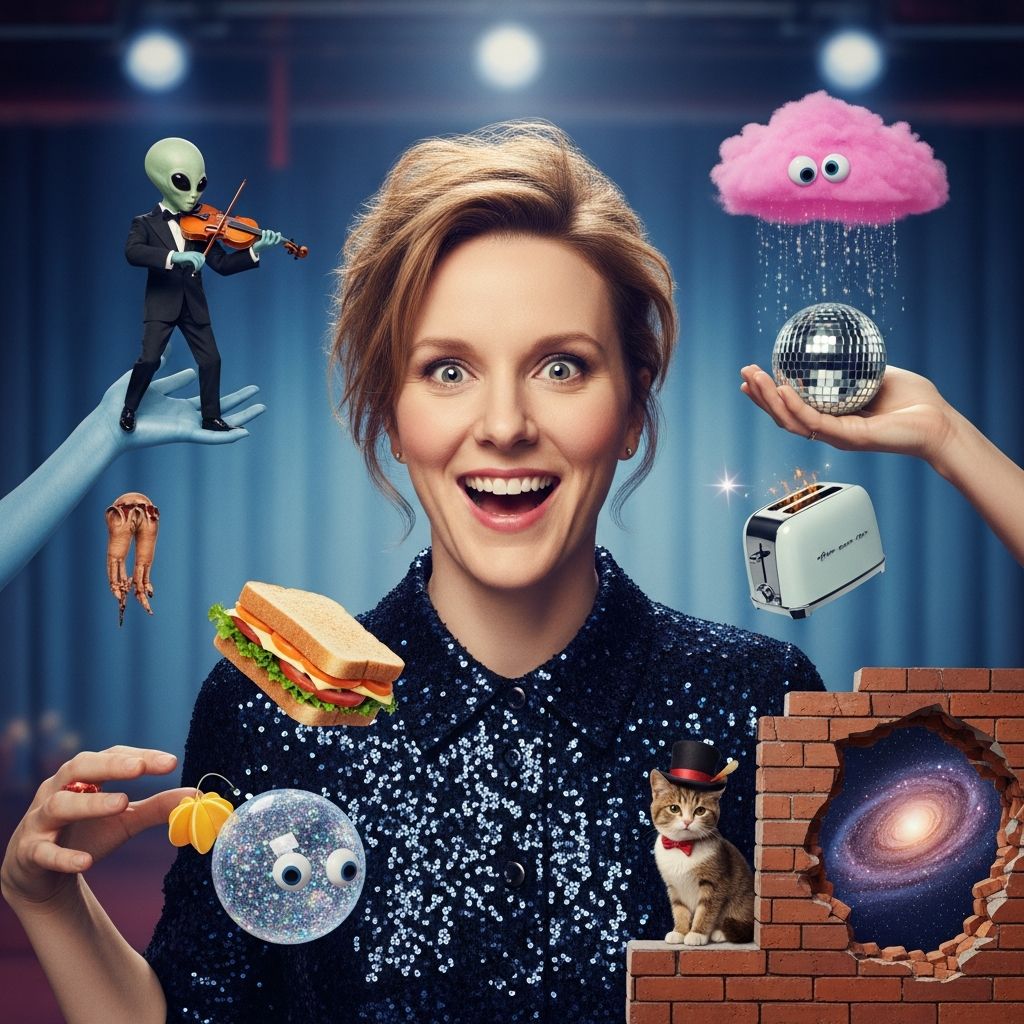
Kate McKinnon did not become a Saturday Night Live favorite by playing it safe. Her most memorable moments are also her strangest ones, where she leans all the way into characters who seem too bizarre even for late-night TV.
This article explores how McKinnon’s weirdest SNL sketches work, why they stick in viewers’ memories, and what they reveal about the power of committed, character-driven comedy.
The Power of Committing to the Bit
In sketch comedy, the difference between a joke that falls flat and a bit that becomes iconic often comes down to commitment. Kate McKinnon’s defining trait on SNL is her absolute willingness to disappear into the most absurd premise and treat it as completely real.
Her performances show that when an actor fully believes in a character, the audience is invited to believe in that world too, no matter how surreal or trivial the situation may seem on paper.
- She uses extreme physicality to make even simple lines feel unpredictable and alive.
- Her characters often live in a space between tragedy and silliness, which keeps viewers off-balance in the best way.
- She never breaks first; part of the fun is watching everyone else on stage struggle not to laugh.
Three Types of Weird That McKinnon Does Best
While Kate McKinnon has played dozens of recurring characters and impressions, many of her most beloved weird sketches fall into a few recognizable categories. Thinking about them in groups makes it easier to understand how she builds and escalates absurdity.
Below is a quick framework for the flavors of weird McKinnon frequently brings to SNL.
| Type of Weird | Core Joke | What McKinnon Adds |
|---|---|---|
| Unhinged witness or storyteller | Other people describe an event calmly while her character’s version is shockingly grotesque, specific, or chaotic. | Wild physical storytelling, oddly precise details, and sudden emotional swings from deadpan to hysterical. |
| Social misfit in a normal setting | A regular environment (office, family dinner, classroom) is disrupted by her character’s total lack of social filters. | Cringe-inducing over-sharing, strange body language, and a mix of confidence and obliviousness. |
| Hyper-specific character obsession | The sketch focuses on one oddly niche aspect of a character—like a hobby, accent, or fixation—and pushes it to extremes. | Layered vocal quirks, tiny repeated gestures, and improvised reactions that feel both spontaneous and fully in character. |
How Her Characters Turn Awkward into Hilarious
McKinnon often plays characters who should be unbearable in real life—people who overshare, ignore boundaries, or react to trauma in totally inappropriate ways. On paper, that sounds more uncomfortable than fun.
What makes her versions so watchable is the way she balances grotesque humor with vulnerability, hinting that there is a real inner life behind all the chaos.
- She frequently makes her characters oddly proud of their humiliating experiences, which flips shame into comedy.
- Even at their most abrasive, her characters seem oddly lonely or eager to connect, which keeps them from feeling cruel.
- She uses unexpected pauses, squints, and tiny facial tics to make every reaction feel earned rather than random.
Physical Comedy: Faces, Posture, and Controlled Chaos
Some SNL cast members rely mostly on clever lines; McKinnon often gets laughs before she even speaks. The way she moves across the stage, twists her body, or widens her eyes is an essential part of why her weirdest sketches land so hard.
Her physicality transforms simple dialogues into vivid, almost cartoon-like situations that viewers can’t stop rewatching.
- She often hunches or contorts her body in ways that reflect the character’s emotional state—defensive, flirty, feral, or utterly exhausted.
- Her reactions are frequently delayed by a second or two, which makes them feel less rehearsed and more like genuine odd behavior.
- Small choices—like how she sits in a chair, smokes a fake cigarette, or adjusts a cheap wig—become running jokes inside a sketch.
Dialogue That Leans into Absurd Specifics
Another signature of McKinnon’s strangest SNL work is her use of oddly specific details. Instead of generic punchlines, her characters often list strangely vivid images, oddly technical terms, or hyper-local references that sound like they came from a very real life.
This specificity tricks the brain into accepting even the most surreal scenario, because it feels like something someone actually went through and is now trying to process out loud.
- Her punchlines often involve shifting from grand statements to extremely small, petty complaints.
- She is adept at stacking three or four escalating images in a row, each slightly more bizarre than the last.
- Even when the sketch has a sci-fi or supernatural premise, she keeps the language grounded in mundane sensations and objects.
Why Other Cast Members Keep Breaking
Part of the legend around Kate McKinnon’s weird sketches is how frequently they cause her scene partners to break character. That is rarely an accident; she plays her choices very close to the edge of what anyone on stage expects.
Watching a stone-faced host suddenly lose composure as McKinnon leans into another unexpected gesture becomes part of the entertainment, almost like a mini game inside the sketch.
- She often saves her strangest choices for late in the sketch, when everyone thinks they know the rhythm already.
- Her timing with eye contact—suddenly locking onto another performer and refusing to look away—creates moments that feel dangerously live.
- Improvised-sounding asides, delivered under her breath, often feel like secrets the audience is hearing before the other actors process them.
How Her Weirdness Updated the SNL Formula
Saturday Night Live has always featured oddball characters and out-there premises, but McKinnon’s era pushed that tradition into a more emotionally layered direction. Her sketches rarely rely only on shock value; they often feel like tiny character studies that just happen to be ridiculous.
That combination helped SNL feel contemporary without abandoning its roots in big personalities and heightened situations.
| Classic SNL Weird | McKinnon-Era Weird |
|---|---|
| Often built around a single catchphrase or costume. | Built around a fully realized person with a backstory hinted at in jokes. |
| Relies on repeating one big gag until the blackout. | Introduces new, stranger details as the sketch progresses. |
| Focuses on external absurdity (props, sets, one-note behavior). | Balances external absurdity with emotional beats and vulnerability. |
Why Viewers Rewatch the Strangest Sketches
Fans often return to McKinnon’s weirdest SNL sketches again and again, sometimes years after they first aired. That kind of rewatch value is rare in a show that produces so much new content every week.
The secret is density: every frame feels packed with micro-choices, background reactions, and throwaway lines that are easy to miss on the first viewing.
- Her characters tend to reveal new layers of oddity on each rewatch, from small gestures to improvised muttering.
- The contrast between her intensity and the polished SNL set design makes the whole thing feel even more unhinged.
- Knowing a big laugh is coming does not ruin it, because the exact way she gets there feels slightly different every time.
Lessons for Aspiring Sketch Comedians
Beyond being fun to watch, Kate McKinnon’s strangest sketches function as a kind of masterclass in character-based comedy. They show that “weird” is not just about stacking random jokes; it is about making bold choices that still feel grounded in a clear point of view.
Anyone trying to write or perform sketches can learn from how she builds and sustains these odd characters across a four- or five-minute piece.
- Start with a clear core: Decide what your character deeply wants (attention, validation, revenge, love) and let every strange choice grow from that.
- Use physicality as storytelling: Ask how your character’s posture, walk, or facial tics can reveal their internal life before they speak.
- Lean into specifics: Replace generic jokes with oddly detailed memories, sensory descriptions, or niche references.
- Escalate, don’t repeat: Each new beat of the sketch should push the weirdness a little further rather than restating the same joke.
- Protect the character’s reality: No matter how absurd, your character should act as if everything they say is completely normal.
Audience Connection: Finding Humanity in the Bizarre
A key reason McKinnon’s oddities resonate is that they mirror how real people process discomfort, fear, or embarrassment. Her characters cope with overwhelming situations by leaning into strange humor, much like viewers do when they joke about their own awkward experiences.
That sense of shared vulnerability under the chaos helps turn even the most surreal sketches into strangely relatable TV moments.
FAQs About Kate McKinnon’s Weird SNL Sketches
Why do Kate McKinnon’s weird sketches stand out from other SNL bits?
They stand out because they combine big, absurd premises with a surprising amount of emotional detail. Instead of just playing a caricature, McKinnon gives each character a point of view, history, and vulnerability, which makes the weirdness feel earned rather than random.
Are her strangest sketches scripted or improvised?
The backbone of each sketch is scripted, but McKinnon’s timing, physical reactions, and under-the-breath comments often feel improvised. That mix of structure and spontaneity is part of what keeps her scenes feeling live and dangerous, especially when other actors start to break.
What can comedy writers learn from her style?
Comedy writers can learn the value of building sketches around characters, not just punchlines. By starting with a clear, specific character and then dropping them into escalating situations, writers can achieve the same blend of relatability and off-the-wall humor that makes McKinnon’s work memorable.
Do her weird sketches work for every audience?
Not every viewer will connect with her most out-there characters, and that is part of their charm. The sketches are unapologetically specific and odd, which sometimes means they become cult favorites rather than universally beloved pieces—but for the people who love them, they feel unforgettable.
Why are these sketches important in SNL’s larger history?
They show how the show can still innovate within a familiar format. McKinnon’s strange characters helped refresh the idea of what an SNL character could be: not just a catchphrase machine, but a fully realized, if deeply weird, person the audience wants to revisit.