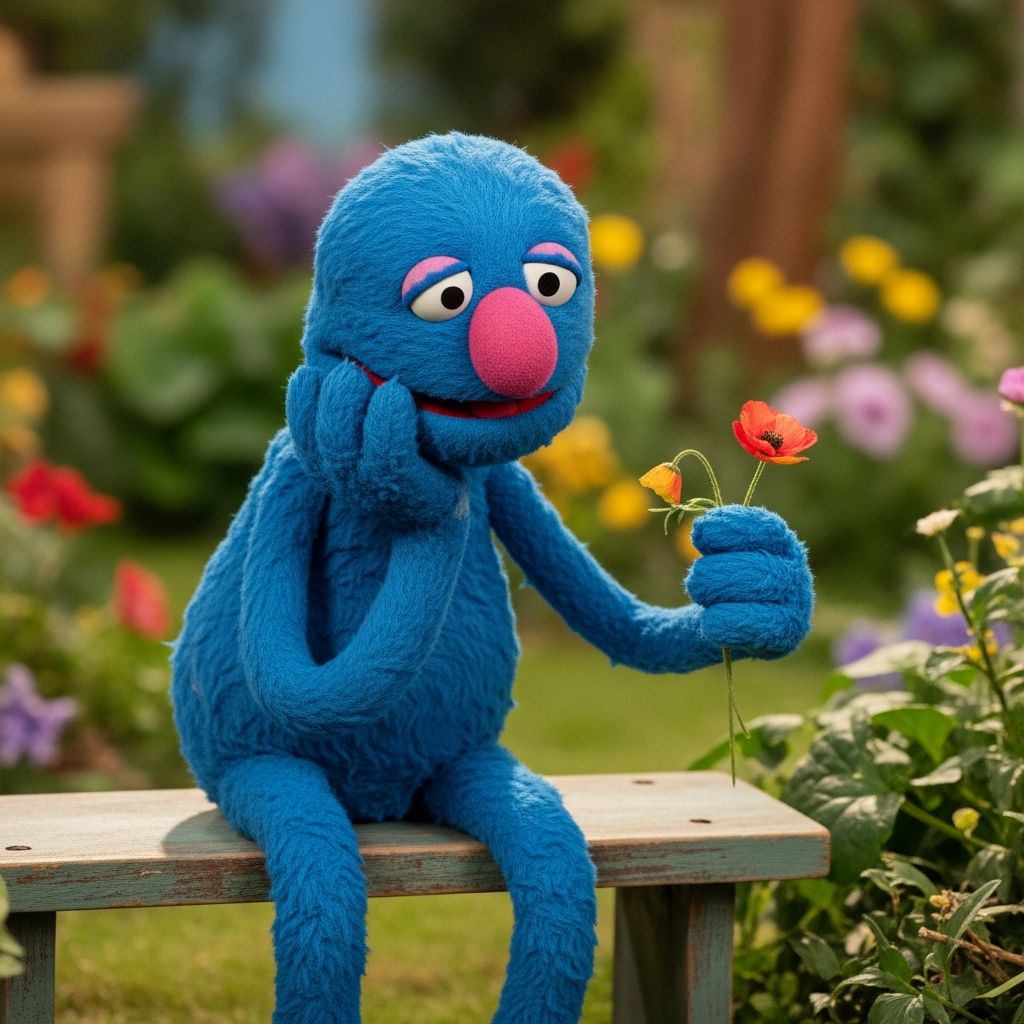
Among all the colorful residents of Sesame Street, Grover stands out as the character who wears his heart on his fuzzy blue sleeve. He is excitable, dramatic, hopeful, and often deeply unsure of himself, especially in the classic picture books that many parents remember from their own childhoods. In those stories, Grover does more than entertain — he quietly models what it means to be scared, to fail, and to keep looking for love and acceptance anyway.
This article explores why Grover feels so emotionally rich, how his 1970s-era books tap into surprisingly heavy themes, and what families today can learn from his anxious, lovable adventures.
Who Is Grover? More Than a Cute, Furry Monster
On-screen, Grover is usually introduced as a “cute, furry little monster” with a bouncy voice and big feelings. Created for Sesame Street, he is one of the longest-running Muppet characters, originally performed by Frank Oz, and has appeared in sketches, songs, and story segments that span generations.
- Color and design: A blue, furry monster with a pink nose and expressive eyes.
- Signature traits: Rarely uses contractions when he speaks, which gives his dialogue a slightly formal, earnest sound.
- Alter egos: Super Grover (a well-meaning but clumsy superhero), waiter Grover, traveling Grover, teacher Grover, and more.
Children quickly notice that Grover is both eager and easily overwhelmed. He wants to do things right, he wants everyone to be happy, and he desperately wants to be liked. That combination of confidence and insecurity makes him feel surprisingly human.
Grover on Television vs. Grover in the 1970s Storybooks
Grover’s TV persona is primarily silly and energetic: he flies into scenes as Super Grover, misunderstands simple tasks, and cheerfully bungles his way through problem-solving. The child or another character often ends up solving the problem while Grover stumbles around.
In the 1970s storybooks, however, Grover’s inner life comes into sharper focus. Instead of brief comedy sketches, the books linger on difficult emotions:
- Fear of the unknown and of imaginary monsters.
- Anxiety about school, performance, and fitting in.
- Shame after making mistakes or being laughed at.
- Yearning to be loved, praised, and accepted exactly as he is.
| Grover on TV | Grover in Books |
|---|---|
| Short, humorous sketches focused on a single concept (near/far, over/under, etc.). | Longer narratives that follow his thoughts, doubts, and emotional ups and downs. |
| Often the comic relief, with physical humor and exaggerated reactions. | Frequently the emotional center, working through fear, sadness, and embarrassment. |
| Problems are usually solved quickly or by others. | Problems sometimes remain partly unresolved; Grover learns to live with imperfection. |
Because these books stay with Grover through his lowest points, they allow readers to see a more complex, almost “emo” version of the character: still funny and lovable, but nursing real insecurities and heartbreak.
The Anxious Heart of Grover: What Drives Him
At the core of many Grover stories is a deep, almost painful desire to be:
- Good enough at something — not just okay, but extraordinary.
- Included by his peers, welcomed into the group, invited to play.
- Seen and valued by adults and friends alike.
Psychologists note that children begin to compare themselves with others and worry about their competence in early school years, especially around academics and sports. Grover’s stories mirror this developmental stage: he longs to excel, fears failure, and interprets criticism or teasing as a threat to his entire sense of self.
Common emotional patterns in Grover’s books include:
- Catastrophic thinking: Expecting the worst possible outcome from a situation (“If I fail, everyone will hate me”). This resembles the kind of “all-or-nothing” thinking that cognitive-behavioral therapists often see even in younger children.
- Self-talk as comfort: Grover often calls himself “lovable” or “cute” out loud, as if he is trying to convince himself that he deserves affection.
- Shame spirals: After a public mistake or social rejection, he can sink into sad, self-blaming monologues — until someone helps him see himself differently.
Fear, Control, and the Genius of “The Monster at the End of This Book”
One of the most famous Grover stories (and a best-selling children’s book for decades) centers entirely on his fear of an unknown “monster” waiting at the end of the book. As the pages turn, he grows more frantic, piling on elaborate attempts to stop the reader from reaching the end: building walls, tying pages together, pleading, and panicking.
The book brilliantly captures several emotional truths:
- Fear of the unknown: Grover has no evidence that there is a dangerous monster ahead, but the idea terrifies him. This mirrors children’s fear of things they can’t see or predict, like the dark or future events.
- Illusion of control: His repeated efforts to stop the pages from turning are doomed to fail, yet he keeps trying, much like how children (and adults) try to control what cannot be controlled.
- A surprising revelation: When he finally reaches the end, he discovers the monster is himself — the same cute, furry Grover he has always been.
The message is gently profound: sometimes the thing we fear most is our own nature — our flaws, our feelings, our “monstrousness.” Real courage is not avoiding the end of the story; it is accepting who we are when we get there.
Failing in Front of Everyone: Grover and Public Embarrassment
Other 1970s books place Grover in very public, very painful moments of failure. A typical scenario might involve him practicing hard for a game, dreaming about being the star, and then falling short when it matters most. When the people around him laugh or criticize instead of offering support, his reaction is intense:
- He wonders whether he is good at anything at all.
- He lashes out at friends who were not actually responsible.
- He sinks into sadness and self-pity, sometimes to the point of tears.
Researchers have found that children are particularly sensitive to peer rejection and social humiliation, which can significantly affect their self-esteem and willingness to try new things. Grover’s over-the-top reactions may be comedic on the surface, but emotionally they ring true. They validate the experience of kids who feel that one bad day — one missed goal, one failed test — defines everything about them.
The Role of Grown-Ups: Honest, Gentle Reassurance
One of the most striking aspects of these books is how the adults, especially Grover’s mother, respond. Instead of giving empty praise or unrealistic guarantees, she often chooses a more nuanced truth:
- She acknowledges that he might never be the best at a specific skill.
- She emphasizes that his worth does not depend on performance.
- She reminds him that he will always be “good at being Grover.”
This aligns with what child development experts call a growth mindset approach: praising effort, character, and persistence rather than innate talent or outcomes. It also matches guidance from organizations like the American Academy of Pediatrics, which encourage parents to validate feelings, avoid harsh comparisons, and help children separate who they are from what they achieve.
For parents, Grover’s stories quietly model how to talk to a child who is hurting:
- Listen to their version of what happened.
- Reflect back their feelings (“You’re sad and embarrassed”).
- Tell the truth kindly (“You might not be great at this, and that is okay”).
- Reaffirm unconditional love and acceptance.
Grover vs. Elmo: Who We Are and Who We Wish We Were
In later years, Elmo became the cheerful red face of Sesame Street: optimistic, enthusiastic, and almost endlessly upbeat. Grover, by contrast, is nervous, intense, and perpetually worried about doing the wrong thing. Both characters are valuable, but they symbolize different emotional realities.
| Character | Emotional Style | What They Represent |
|---|---|---|
| Elmo | Joyful, curious, optimistic. | Who we would like to be on our best days: open-hearted, excited, unburdened by doubt. |
| Grover | Anxious, hopeful, easily hurt but always trying again. | Who we often are inside: worried, longing for approval, afraid of failing or being rejected. |
For many adults rereading Grover’s books, the character feels like a mirror: he dramatizes private fears most grown-ups learned to hide. Children, who are still learning how to deal with big emotions, may find it comforting to see a beloved monster cry, panic, and then gradually find his way back to calm.
Why Grover Matters for Today’s Kids
Modern families are increasingly aware of children’s mental health. Reports from organizations such as the U.S. Centers for Disease Control and Prevention (CDC) have highlighted rising concerns about anxiety and depression symptoms in children and adolescents. While Grover’s stories were not written as clinical tools, they line up remarkably well with contemporary recommendations for emotional literacy:
- Labeling feelings: Grover often names his emotions — scared, sad, worried — making it easier for kids to do the same.
- Normalizing fear and failure: By treating his catastrophes with humor and compassion, the stories send the message that mistakes are survivable.
- Showing repair: After hurting a friend’s feelings, Grover usually apologizes and tries to make amends, modeling reconciliation.
- Highlighting self-acceptance: The ultimate lesson is not “you will win next time,” but “you are lovable even when you lose.”
How Parents Can Use Grover Stories for Emotional Learning
Reading Grover’s books or watching his segments can be an opportunity for deeper family conversations. Parents can gently draw out what children notice and feel, turning a funny story into a mini emotional skills workshop.
Simple Ways to Start Conversations
- “What is Grover feeling right now?”
Help kids identify emotions in the story — scared, mad, embarrassed, proud. Younger children may point; older ones can use words. - “Have you ever felt like that?”
Invite them to make connections to their own lives without pressuring them to share more than they want. - “What could Grover try next time?”
Brainstorm coping strategies: asking for help, taking a break, talking to a grown-up, practicing more. - “What would you say to Grover if you were his friend?”
This encourages empathy and shows kids how to comfort others kindly.
Linking Grover’s Lessons to Real Life
Parents and caregivers can also refer back to Grover in everyday moments:
- After a tough game or test: “Remember when Grover tried really hard and still didn’t win? How did he feel? What did his mom tell him?”
- When a child is afraid of something new: “Grover was scared of the monster at the end of the book. What helped him keep turning the pages?”
- When siblings argue: “Grover sometimes yelled when he was upset and then felt bad. What could he have done instead?”
Frequently Asked Questions (FAQs)
Q: Why do Grover’s older books feel sadder than many modern children’s stories?
A: Many of Grover’s 1970s-era books allow him to experience strong emotions — fear, disappointment, jealousy, shame — without rushing to fix everything with a happy, easy ending. This slower pacing makes room for complex feelings and more realistic conversations about failure and self-worth, which some modern, more upbeat stories tend to gloss over.
Q: Are Grover’s books appropriate for very young children if they include fear and sadness?
A: For most young children, these stories are appropriate when read with a caring adult who can pause, explain, and reassure. Experts in child development note that age-appropriate exposure to mild fear or sadness in stories can help kids practice handling emotions safely, especially when the narrative also models comfort, repair, and love.
Q: What can Grover teach children about anxiety?
A: Grover often exaggerates danger in his mind, worries about worst-case scenarios, and tries to control what he cannot control — all of which resemble anxious thinking. Parents can use his reactions to show kids how thoughts can make fears feel bigger, and how talking, breathing, and getting support can help those feelings shrink again.
Q: How do Grover’s stories fit with what experts recommend for building resilience?
A: Resilience research emphasizes realistic encouragement, secure relationships, and opportunities to try, fail, and try again. Grover’s adventures consistently include those elements: he faces challenges, feels upset, receives honest but loving feedback, and ultimately learns that he is more than any single success or failure.
Q: Is Grover still relevant for today’s kids?
A: Yes. Even though some books are decades old, the emotions they explore — fear of the unknown, wanting to fit in, worrying about not being good enough — are timeless. In an age when children may face academic pressure and social comparison earlier than ever, Grover’s blend of vulnerability, humor, and self-acceptance may be more valuable, not less.
References
- Grover — Wikipedia. 2024-01-15. https://en.wikipedia.org/wiki/Grover
- Grover — Muppet Wiki (Fandom / Sesame Workshop–affiliated reference). 2023-05-10. https://muppet.fandom.com/wiki/Grover
- Grover — Sesame Street Character — Sesame Street Guide. 2020-08-01. https://www.sesamestreetguide.com/2020/08/grover-sesame-street-character.html
- Grover from Sesame Street — CharacTour. 2019-11-20. https://www.charactour.com/hub/characters/view/Grover.Sesame-Street
- The Subtle Science of Sesame Street: What You Never Realized Grover Was Teaching Your Child — The 74 Million. 2019-06-10. https://www.the74million.org/article/the-subtle-science-of-sesame-street-what-you-never-realized-grover-was-teaching-your-child/