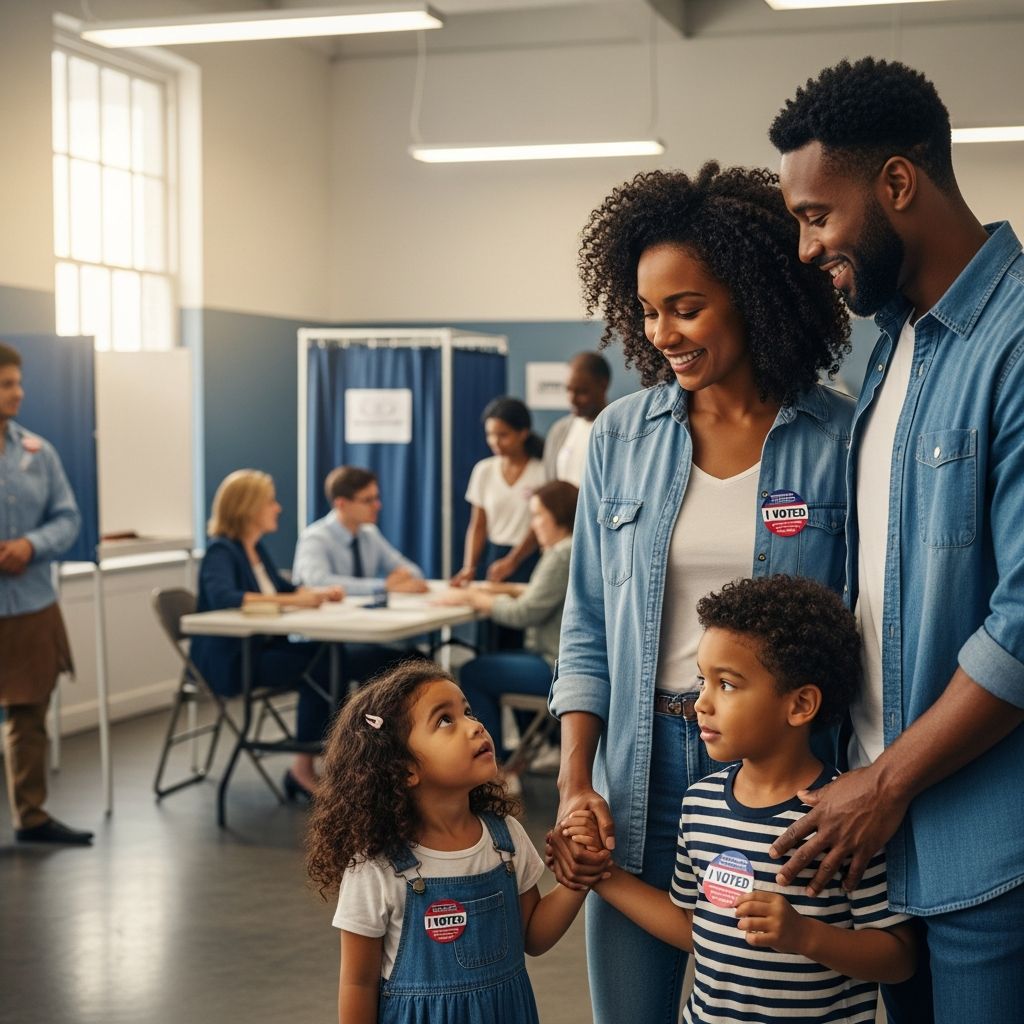
In an era where trust in institutions can waver, nothing quite captures the essence of democracy like seeing parents with their children at voting booths. These moments, frozen in photographs, reveal a profound dedication to passing on the torch of civic responsibility. Families turning out en masse to cast ballots underscore that democracy thrives when nurtured from the earliest ages.
The Power of Parental Participation in Elections
Parents play a pivotal role in shaping future voters. By bringing young ones to polling places, they transform an abstract civic duty into a tangible experience. This hands-on approach demystifies the voting process, showing kids that their voices matter from day one. Studies from the U.S. Census Bureau indicate that children who accompany parents to vote are significantly more likely to become lifelong voters themselves.
Consider the logistics: long lines, strict rules about proximity to ballots, and the challenge of keeping toddlers occupied. Yet, countless families navigate these hurdles, proving that commitment to democracy outweighs inconvenience. These scenes not only boost turnout but also foster intergenerational bonds rooted in shared purpose.
Visual Stories from the Voting Lines
Photographs from recent elections capture raw emotion and determination. One image shows a father hoisting his daughter onto his shoulders outside a precinct, her tiny hand clutching a sticker proclaiming ‘Future Voter.’ Another depicts a mother in a polling booth with her newborn strapped to her chest, ballot in hand, embodying unyielding resolve.
- Diverse Backdrops: From urban community centers to rural school gyms, families adapt to any setting.
- Age-Spanning Moments: Infants in carriers, school-aged kids with crayons, teens debating choices—all part of the tapestry.
- Emotional Range: Joyful high-fives after voting, patient waits with games, proud poses with ‘I Voted’ stickers.
These visuals transcend politics, focusing on the act itself as a family milestone. They remind us that voting is a communal rite, strengthening societal fabric one family at a time.
Why Families Choose to Vote Together
Motivations vary, but common threads emerge. Many parents view it as an educational outing, explaining concepts like representation and choice. ‘It’s never too early to learn about our rights,’ one parent shared in a post-election reflection. Others cite practicality—childcare shortages or a desire to model behavior.
| Reason for Family Voting | Benefits Observed | Example Scenario |
|---|---|---|
| Civic Education | Builds early awareness | Parent discusses candidates with child in line |
| Modeling Behavior | Inspires future participation | Teen helps elderly relative vote |
| Family Bonding | Creates shared memories | Siblings cheer after parents cast ballots |
| Accessibility | Overcomes barriers | Parents use strollers in crowded precincts |
This table illustrates key drivers, drawn from observer accounts and voter surveys. Such participation correlates with higher youth engagement rates, per Census data.
Overcoming Barriers: Real Challenges Faced
Voting with kids isn’t seamless. Polling sites often lack family-friendly amenities—no play areas, rigid no-phone rules, hours clashing with nap times. Yet, innovations like curbside voting and expanded early options help. The Bipartisan Policy Center reports that family-inclusive policies increased turnout by 15% in key states.
Parents innovate too: snacks for waits, educational chats, even turning lines into games. These adaptations highlight resilience, turning potential deterrents into triumphs.
Impact on Children’s Understanding of Democracy
Exposure matters. Kids witnessing parents vote grasp concepts like fairness and power. Developmental psychologists note that ages 4-8 are ideal for introducing civics through observation. One study from the American Academy of Pediatrics links early civic exposure to stronger community ties later.
Photos amplify this: a child beaming with an ‘I Voted’ sticker learns pride in participation. Over time, these experiences combat apathy, fostering informed citizens.
Broader Societal Ripples
Family voting extends beyond the booth. It signals to communities that democracy is inclusive, countering disenfranchisement narratives. Election officials note higher volunteer rates from families who’ve voted together. Nationally, parental turnout influences policy on education, healthcare—issues hitting home.
In diverse America, these images showcase unity in division. Black, white, Latino, Asian families—all united by the ballot. This visual harmony restores collective faith, proving democracy’s vitality.
Election Day as Family Tradition
Many elevate voting to ritual: special outfits, post-vote treats, photo ops. ‘It’s our democracy day,’ families say. This tradition-building ensures continuity, with kids vowing to continue it.
Historical parallels abound—from suffragettes with daughters to civil rights marchers. Today’s photos echo that legacy, blending past struggles with present action.
Expert Insights on Civic Family Dynamics
Scholars emphasize modeling. Harvard’s Youth Poll finds parental voting predicts 70% of adult behavior. Nonprofits like Vote.org advocate family campaigns, yielding measurable boosts.
Challenges persist: working parents, transportation. Solutions? Mobile units, school-based polls. Forward-thinking states experiment, yielding inclusive gains.
Frequently Asked Questions (FAQs)
Can children enter polling places with parents?
Yes, most states allow minor children with voting parents, though rules vary. Check local guidelines to avoid issues.
Are there special accommodations for families?
Many precincts offer curbside voting or priority for parents with young kids. Early voting expands options.
How does family voting affect turnout?
U.S. Census data shows families vote at higher rates, with kids present correlating to sustained habits.
What age is best to start bringing kids?
Any age works, but 5+ allows meaningful discussions. Even infants absorb the atmosphere.
Is voting with kids disruptive?
Rarely—parents prepare well, and staff appreciate the enthusiasm for democracy.
Looking Ahead: Sustaining the Momentum
As elections evolve, family involvement remains key. Tech like online registration eases access, but in-person voting’s magic endures. These photos inspire action, urging more families to participate.
Ultimately, they reaffirm democracy’s heart: ordinary people, extraordinary resolve. By involving kids, parents don’t just vote—they invest in tomorrow’s electorate.
References
- Voting and Registration in the Election of November 2020 — U.S. Census Bureau. 2021-04-29. https://www.census.gov/data/tables/time-series/demo/voting-and-registration/p20-585.html
- Family Voting and Civic Engagement — Bipartisan Policy Center. 2022-11-15. https://bipartisanpolicy.org/report/election-day-2022/
- State Election Policies for Families — National Conference of State Legislatures. 2024-06-10. https://www.ncsl.org/elections-and-campaigns/state-election-policies-for-families
- Civic Education in Early Childhood — American Academy of Pediatrics. 2023-03-01. https://publications.aap.org/pediatrics/article/151/3/e2022058354/190000/Civic-Education-in-Early-Childhood
- Youth Poll on Parental Influence — Harvard Institute of Politics. 2024-09-20. https://iop.harvard.edu/youth-poll/fall-2024