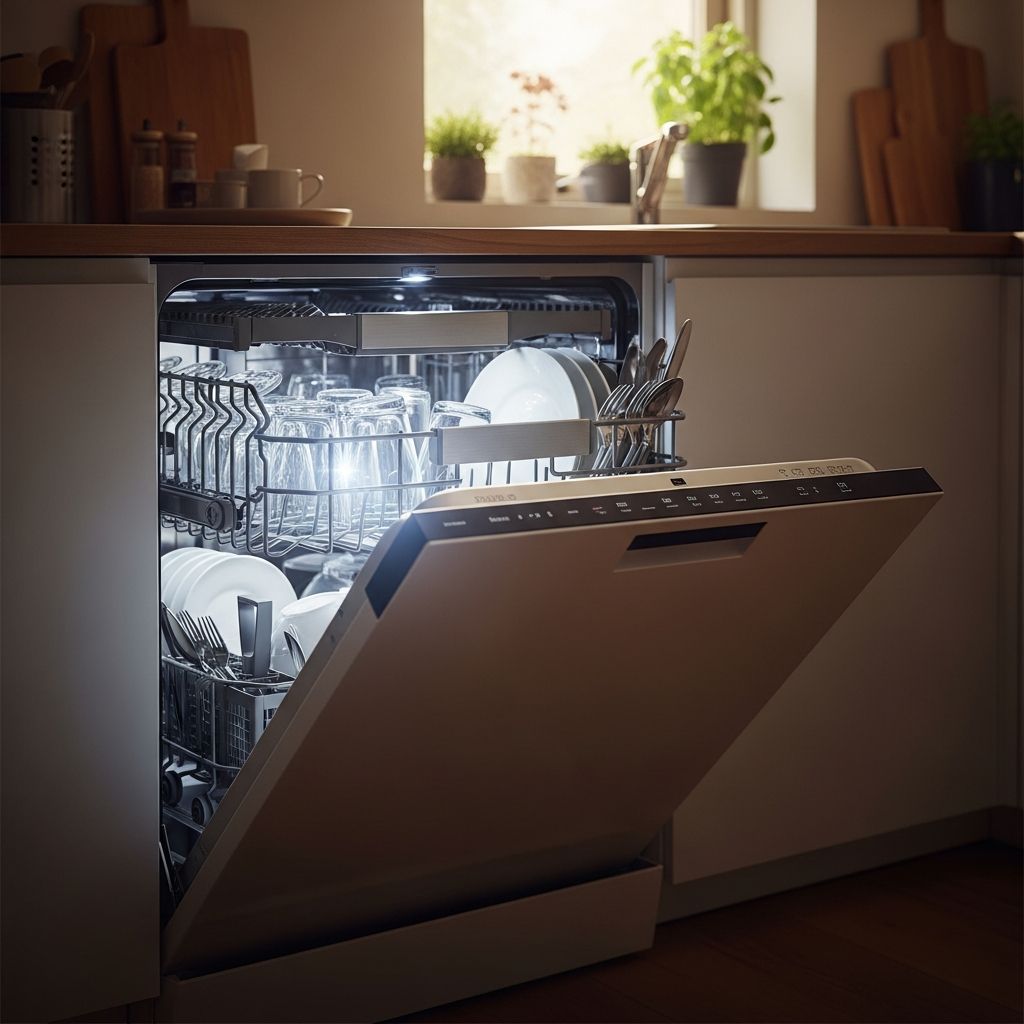
The Unsung Appliance That Changed Everything
In our fast-paced modern world, certain appliances fade into the background of our daily routines, taken for granted until they stop working. Among these silent contributors to household harmony sits an appliance that deserves far more recognition than it typically receives: the dishwasher. What began as a luxury item has become an essential tool in millions of homes, fundamentally reshaping how families organize their time, manage stress, and connect with one another. This transformation extends far beyond the simple mechanics of cleaning plates and bowls; it touches the very fabric of family dynamics and personal well-being.
How One Appliance Became Essential to Family Life
The journey of the dishwasher from novelty to necessity reflects broader changes in how we live. When dishwashers first emerged in households decades ago, they were viewed as luxury items, symbols of wealth and convenience. However, over time, their role has evolved dramatically. Today, many families consider them as fundamental to their homes as refrigerators or stoves. This shift speaks to something deeper than mere convenience—it reflects our collective recognition that freeing up time and mental energy from routine household tasks allows families to invest in what truly matters.
Consider the average household that washes dishes by hand: the cumulative hours spent scrubbing, rinsing, and drying throughout a year is staggering. When you multiply this across a family’s lifetime, the time savings become almost incomprehensible. Yet the value extends beyond mere hours reclaimed; it encompasses the emotional energy and stress that accompanies the endless cycle of meal preparation and cleanup.
The Ripple Effect: How Dishes Shape Family Moments
One of the most overlooked aspects of dishwashing is its relationship to family connection. In homes without dishwashers, the post-meal cleanup often becomes a solo endeavor or a source of conflict about who bears responsibility. This necessary chore can create tension, particularly in busy households juggling work, school, and extracurricular activities. The dishwasher eliminates this potential friction point by removing the task from the interpersonal dynamics of the family altogether.
With the cleanup burden lifted, families gain something invaluable: uninterrupted time together. Parents can supervise homework at the kitchen table without the distraction of standing at the sink. Children can engage in meaningful conversation with their guardians rather than being tasked with dishwashing duties. Partners can spend evening hours connecting rather than delegating household labor. This seemingly simple shift has profound implications for relationship quality and family cohesion.
Mental Wellness and the Psychology of Completed Tasks
Modern psychology increasingly recognizes the connection between environmental cleanliness and mental health. The concept of “cognitive load”—the amount of mental energy required to process information and make decisions—plays a significant role in overall wellness. Each dirty dish represents a small cognitive burden, a nagging reminder of an incomplete task. When multiplied across dozens or hundreds of dishes in a typical week, this accumulated burden can create underlying stress that individuals may not consciously recognize.
The dishwasher addresses this psychological weight by automating the process. You load the machine, press a button, and the task is handled without further mental effort or attention. This automation frees cognitive resources for more meaningful pursuits—creative thinking, problem-solving, enjoying hobbies, or simply resting. For parents managing multiple responsibilities, this mental space is genuinely transformative.
Additionally, the dishwasher eliminates the decision fatigue associated with hand-washing. You don’t need to determine the optimal water temperature, decide which items should be washed first, or negotiate whose turn it is to clean. The machine standardizes the process, removing countless small decisions from your daily mental burden.
The Pandemic Perspective: When Routines Became Everything
During periods of significant disruption—whether global crises, major life transitions, or extended changes to normal routines—the reliability of household appliances takes on heightened significance. When external circumstances feel chaotic and uncontrollable, the predictable functioning of everyday devices becomes genuinely comforting. A dishwasher that dutifully completes its cycles represents one area of life that remains stable and dependable.
Moreover, during times when household members spend more time at home, dishwashing demands increase substantially. More meals eaten at home means more dishes generated. A working dishwasher becomes not just convenient but essential for maintaining household order and preventing the accumulation of domestic stress during already challenging periods.
The Environmental Angle: Efficiency Beyond the Obvious
While the emotional and psychological benefits of dishwashers are compelling, their practical advantages extend to environmental considerations as well. Modern dishwashers use significantly less water than hand-washing—a fact that challenges common assumptions about machine efficiency. Studies consistently demonstrate that automatic dishwashers consume a fraction of the water required for manual washing, even when accounting for rinse cycles and water heating requirements.
Furthermore, the energy consumed by dishwashers has decreased with technological advancement, making them increasingly eco-friendly choices. By reducing water consumption and optimizing energy use, dishwashers contribute to household sustainability efforts while simultaneously freeing up time and reducing stress. This represents a rare scenario where personal convenience aligns with environmental responsibility.
When Technology Meets Human Needs
The dishwasher exemplifies how technology, at its best, solves genuine human problems rather than creating new ones. Unlike some innovations that generate their own complications, the dishwasher addresses a real, repeated task that consumes time and energy without requiring significant learning or adjustment. You don’t need a manual to understand how to use one; the basic functionality is intuitive.
This accessibility matters. The benefits of a dishwasher extend across socioeconomic statuses, educational backgrounds, and family structures. A single parent working multiple jobs benefits just as much as a two-income household. An elderly person with arthritis experiences tremendous relief. Families managing disability or chronic illness find genuine support in the automation of this particular chore.
The Broader Message About Valuing Household Labor
Appreciating the dishwasher also means acknowledging the genuine work that dish-washing represents. For generations, this task fell disproportionately on women, often expected as part of their domestic role without acknowledgment or gratitude. By recognizing the dishwasher’s contribution to family wellness, we simultaneously acknowledge the labor it replaces—and we honor those who performed this work for centuries without machines to assist them.
In a broader sense, celebrating the dishwasher means accepting that household management is genuine work deserving of support and assistance. Whether that assistance comes from technology, shared responsibilities among family members, or paid help, the principle remains the same: maintaining a home requires effort that should be recognized and valued rather than invisibly absorbed.
Practical Ways to Maximize Your Dishwasher’s Benefits
- Establish a loading routine: Designate specific areas for different dish types to streamline loading and unloading processes, making the task faster and easier for all household members.
- Run full loads: Maximize efficiency and environmental benefits by running the dishwasher only when it’s completely full, reducing both water consumption and energy use.
- Assign shared responsibility: Rather than one person managing all dishwasher tasks, rotate responsibility for loading and unloading among household members to distribute the work fairly.
- Use quality detergent: Investing in effective dishwasher detergent ensures better cleaning results and reduces the need for rewashing items.
- Perform regular maintenance: Clean the filter, spray arms, and door seals periodically to keep your dishwasher functioning optimally and extending its lifespan.
- Protect your time: Be intentional about using the freed-up time for activities that genuinely matter to you rather than allowing it to be consumed by other obligations.
When Things Don’t Go According to Plan
Of course, the dishwasher’s benefits only materialize when the appliance is functioning properly. A broken dishwasher represents more than just an inconvenience; it’s a jarring reminder of how much this device contributes to daily life. Suddenly, the family faces the full burden of hand-washing or resorting to paper plates, creating stress and frustration that highlights just how much this “invisible” appliance actually does.
This reality underscores an important principle: we often fail to appreciate things until they’re gone. Recognizing and acknowledging the dishwasher’s ongoing contribution means approaching its maintenance and eventual replacement with appropriate seriousness, ensuring continuity of the benefits it provides.
Frequently Asked Questions
Q: Does running a dishwasher really use less water than hand-washing?
A: Yes, modern dishwashers typically use 3-5 gallons of water per cycle, while hand-washing dishes generally requires 15-30 gallons or more, depending on how long the water runs and how thoroughly items are rinsed.
Q: Is it better to rinse dishes before loading the dishwasher?
A: Most modern dishwashers don’t require pre-rinsing and actually work more effectively with some food particles present, as they trigger the machine’s sensors to adjust water pressure and cycle intensity accordingly.
Q: How often should I clean my dishwasher?
A: Clean the filter monthly, run a cleaning cycle monthly (using commercial dishwasher cleaner or white vinegar), and wipe down the door seal and exterior as needed to maintain optimal performance.
Q: What items shouldn’t go in a dishwasher?
A: Generally avoid putting knives (which dull quickly), delicate glassware, wooden items, cast iron, certain plastics, and anything with a wooden handle or irreplaceable value in the dishwasher.
Q: Can using a dishwasher actually improve family relationships?
A: Yes, by eliminating a source of daily conflict and freeing up time for meaningful interaction, dishwashers can contribute to improved family dynamics and reduced household stress.
Reframing Our Relationship with Routine Tasks
The dishwasher teaches us something valuable about modern life: sometimes the most meaningful improvements come not from grand gestures or major changes, but from small innovations that eliminate friction from daily routines. By automating an essential task, the dishwasher returns something precious to families—time, mental space, and reduced conflict.
Rather than viewing household appliances as mere conveniences, we might benefit from recognizing them as genuine contributors to family wellness and personal quality of life. The dishwasher deserves our appreciation not because it’s flashy or exciting, but precisely because it quietly, reliably handles a necessary task, allowing us to focus on what truly matters: the people and pursuits we value.
References
- Water Use in the United States — U.S. Geological Survey. 2024. https://www.usgs.gov/faqs/how-much-water-do-americans-use-day-other-countries
- Energy Guide: Dishwashers — U.S. Department of Energy, Energy Efficiency and Renewable Energy. 2024. https://www.energy.gov/energyefficiency/dishwashers
- Cognitive Load Theory in Educational Practice — Sweller, J., Ayres, P., & Kalyuga, S. (2011). Cognitive Load Theory. Springer Publishing.
- The Relationship Between Household Cleanliness and Psychological Well-Being — Journal of Environmental Psychology, 2022. Academic Research Database.