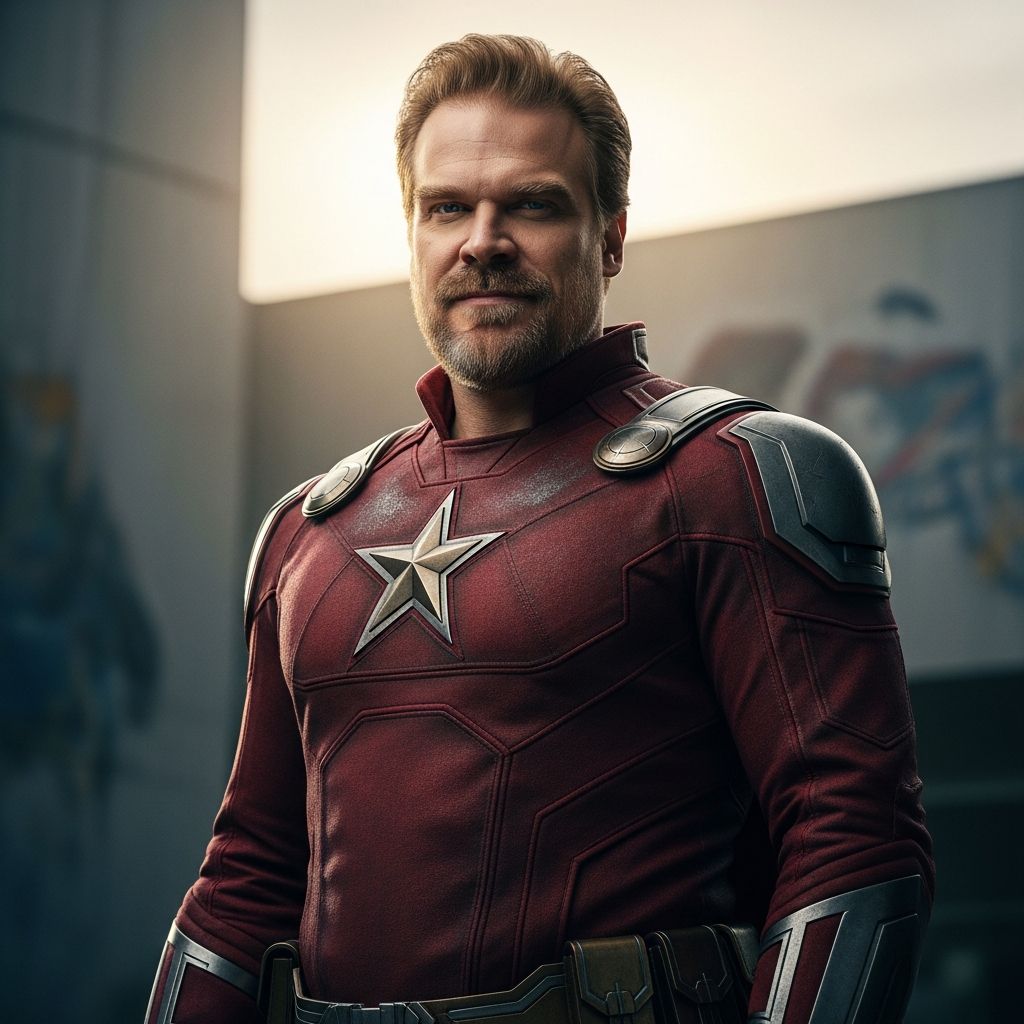
For years, superhero movies have showcased impossibly chiseled bodies, sculpted six-packs, and ageless physiques that feel more like digital illusions than real humans. Then along came David Harbour as Alexei Shostakov, the Red Guardian in Black Widow, lumbering into the Marvel universe with a soft belly, a graying beard, and the emotional chaos of a deeply flawed dad. In the process, he turned the so-called “dad bod” into something surprisingly heroic.
The Rise of the Dad Bod Superhero
The term “dad bod” started as a tongue-in-cheek way to describe men with a mix of muscle and softness, often linked to middle age, parenthood, and a relaxed approach to fitness. Instead of rippling abs, the dad bod carries the weight of late-night snacks, long workdays, and very little time to live in the gym. On screen, that body type has historically been used for comic relief or to signal that a character is past his prime.
In the superhero genre, however, the standard has long been different. Leading men typically arrive in peak condition, symbolizing discipline, strength, and near-superhuman resilience. Against that backdrop, Harbour’s Red Guardian appears as a deliberate contrast: strong and capable, yet visibly aged and out of shape, a walking reminder that time eventually claims even the mightiest of heroes.
David Harbour’s Red Guardian: A Flawed Father Figure
In Black Widow, David Harbour plays Alexei Shostakov, a Soviet super-soldier who once imagined himself as Russia’s answer to Captain America. Built up by propaganda and his own ego, Alexei clings desperately to stories of his glory days, even as his body and reputation tell a different story. His role as a pseudo-father to Natasha Romanoff and Yelena Belova adds emotional complexity, blending parental guilt, misguided pride, and genuine affection.
Harbour leans into Alexei’s contradictions. He is boastful yet insecure, physically powerful yet emotionally immature, and frequently ridiculous while still capable of real sacrifice. Rather than portraying a perfect mentor, the film presents him as the kind of dad many people recognize: embarrassing, self-absorbed, but still aching for connection and redemption.
| Aspect | Red Guardian (Alexei) | Typical MCU Hero |
|---|---|---|
| Body type | Bulky, soft around the middle, visibly aged | Lean, hyper-defined muscles, youthful appearance |
| Emotional maturity | Immature, nostalgic, desperate for validation | Confident, emotionally composed (at least on the surface) |
| Role in the family | Flawed father figure seeking a second chance | Typically the moral center or aspirational leader |
| Comic relief | Source of humor rooted in vulnerability and delusion | Occasional jokes, but rarely at the expense of stature |
| Symbolism | Represents aging, regret, and real-world fatherhood | Represents idealized strength and heroic perfection |
Turning Insecurity into Comedy and Heart
One of the most memorable aspects of Harbour’s performance is how he uses humor to expose Alexei’s insecurities. His insistence that his old suit still fits, his constant bragging about fighting Captain America, and his clueless attempts at fatherly wisdom all function as jokes, but they also reveal deeper wounds. The laughs come from watching a man who has built his identity on strength grapple with the reality of decline.
This balance between comedy and vulnerability is what makes the character resonate. Audiences recognize the discomfort of aging—the shrinking clothes, the fading records, and the stories that grow more exaggerated over time. By putting all of that into a super-soldier, the film normalizes those insecurities and suggests that even heroes are allowed to be ridiculous, imperfect, and self-deceiving.
- Alexei’s bragging highlights how men often cling to past achievements when they feel irrelevant in the present.
- The physical strain of squeezing into his old uniform mirrors the emotional strain of living up to a former self.
- The character’s awkward attempts at parenting show that care can exist even inside deeply flawed behavior.
Red Guardian and the New Image of Masculinity
By embracing softness, age, and emotional messiness, Red Guardian represents a shift away from the narrow vision of masculinity that dominates superhero media. Traditional heroes communicate strength through stoicism and physical perfection; Alexei communicates it through endurance, emotional exposure, and the willingness to face his failures, however clumsily.
The dad bod here is not a joke about laziness. Instead, it becomes a visual shorthand for everything Alexei has been through: prison time, political betrayal, emotional damage, and a life lived without the luxury of constant self-improvement. His shape tells a story of survival more than vanity. In a culture obsessed with optimization, that kind of visible imperfection can feel revolutionary.
Key Ways the Character Challenges Stereotypes
- Vulnerability on display: Alexei openly seeks validation and affection, undercutting the myth of the emotionally sealed male hero.
- Strength without polish: He can still fight, lift, and protect, proving that functional strength does not always look like a fitness magazine cover.
- Room for failure: The narrative allows him to be selfish and wrong but still capable of meaningful change.
How Harbour Uses His Own Image
Part of the appeal of Harbour’s Red Guardian is how it plays off his existing public persona. Known to many as Chief Jim Hopper in Stranger Things, Harbour has often embodied characters who are rumpled, world-weary, and physically imposing without being conventionally glamorous. That history makes his casting as a super-soldier both surprising and perfectly fitting.
Harbour’s willingness to laugh at his own body while still treating it as powerful sends a subtle but important message. Instead of trying to hide or digitally smooth away his imperfections, the performance leans into them. The result is a character that fans can both mock affectionately and admire—a reminder that charisma and presence often matter more on screen than strict aesthetic ideals.
Body Image, Aging, and the Superhero Fantasy
Superhero films have long contributed to unrealistic expectations for men’s bodies, encouraging extreme workouts, strict diets, and a fixation on leanness that can blur into obsession. The dad bod trend emerged partly as a backlash to that intensity, suggesting that softness, comfort, and real-life priorities should also have value. Red Guardian embodies that pushback from within the very genre that popularized the idealized male physique.
Seeing a hero with a thick waistline and graying hair does not magically solve body image pressures, but it widens the emotional space of the story. Viewers who do not see themselves in the gleaming armor of other characters might recognize themselves in Alexei’s aches, his nostalgia, and his very human desire to feel like he still matters. That recognition can help reduce shame and broaden the idea of who gets to stand at the center of a blockbuster.
What the Dad Bod Hero Represents
- A body shaped by time and circumstance instead of a personal trainer’s schedule.
- A hero who fails publicly, apologizes poorly, and still keeps trying.
- A reminder that resilience and love are not limited to the young or the sculpted.
Fatherhood, Regret, and Second Chances
Underneath the jokes, Red Guardian’s story is about a man wrestling with the consequences of his choices as a father figure. He participated in a mission that treated his makeshift family as disposable, and years later he must face the daughters who feel abandoned and used. The dad bod here is not just a physical trait; it becomes a metaphor for emotional weight—regrets, missed birthdays, and the lingering knowledge that some damage cannot be undone.
Yet the film also grants him moments of grace. His crude attempts at connection, his willingness to take hits for the younger characters, and his clumsy but sincere apologies all illustrate a central truth of parenthood: perfection is impossible, and what often matters most is the willingness to show up again after failing. That message resonates far beyond the walls of any fictional Russian prison.
Why Audiences Embrace Imperfect Heroes
Audiences have increasingly gravitated toward heroes who show cracks in their armor. Flawed protagonists allow viewers to explore their own anxieties through a safe, heightened lens, and they make moments of courage feel earned rather than guaranteed. Red Guardian fits neatly into this broader trend, but he stands out because his flaws are so intimately tied to aging and family—topics that hit close to home for many adults.
His popularity also reflects a hunger for variety. Not every hero needs to be a billionaire genius or a cosmic warrior. Sometimes people want to root for the washed-up ex-soldier still telling the same old stories at the dinner table, if only because they recognize that person from their own life. In that sense, Red Guardian is less a fantasy figure and more a funhouse mirror of every dad who has ever insisted he “still has it.”
Lessons for Real-World Dads
For real fathers watching Black Widow, there are a few takeaways hiding beneath the one-liners and fight scenes. One is the idea that physical appearance, while part of personal health, does not determine emotional value. Children rarely remember the number on the scale, but they remember presence, attention, and the feeling of being taken seriously. Another is that it is never too late to ask hard questions about past choices and to try, however imperfectly, to repair trust.
Red Guardian shows that being a dad is not about maintaining a perfect image; it is about learning to live honestly with your limitations. Admitting weakness, apologizing without making excuses, and celebrating others’ accomplishments instead of clinging to your own are all forms of heroism that rarely make poster art—but matter deeply in everyday life.
Practical Insights Inspired by the Character
- Embrace imperfection: Your kids do not need a flawless superhero; they need a consistent, caring presence.
- Share the spotlight: Celebrate your children’s achievements instead of competing with your own past glories.
- Talk about regret: Honest discussions about mistakes can model emotional courage and growth.
- Care for your body realistically: Health matters more than aesthetics; movement, rest, and balance count more than chasing an impossible ideal.
Frequently Asked Questions
Is the dad bod here meant as a joke or a serious statement?
The film uses the dad bod for humor, but it also treats it as an authentic reflection of aging, stress, and life experience. The jokes invite the audience in, while the character’s emotional arc gives that body real narrative weight.
Does Red Guardian undermine the superhero ideal?
Rather than undermining the genre, Red Guardian expands it. His presence proves that heroism can take many shapes and that stories about redemption, family, and failure can coexist with explosive action and spectacle.
What makes David Harbour so effective in this role?
Harbour combines physical heft with a talent for blending comedy and pain. He sells the idea that Alexei could once have been a feared super-soldier while also capturing the insecurity and tenderness of a dad who knows he has fallen short.
Does this portrayal change real-world body standards?
No single character can transform cultural norms, but representations like Red Guardian chip away at rigid ideals. By putting a softer, older body in a heroic context, the film subtly invites viewers to question why only one kind of physique has been treated as heroic for so long.
Why does the character resonate with parents specifically?
Parents recognize Alexei’s mix of love, regret, and self-delusion. His struggle to reconnect with the daughters he hurt mirrors the real-world difficulty of repairing family relationships, making his journey feel emotionally grounded despite the larger-than-life setting.
David Harbour’s Red Guardian will never be the sleekest or most efficient fighter on a Marvel roster, but that is exactly the point. In his battered armor and too-tight suit, he gives superhero fans something they rarely see on screen: a hero who looks like he has truly lived, lost, and loved—and who still believes, against all evidence, that there is time left to make things right.