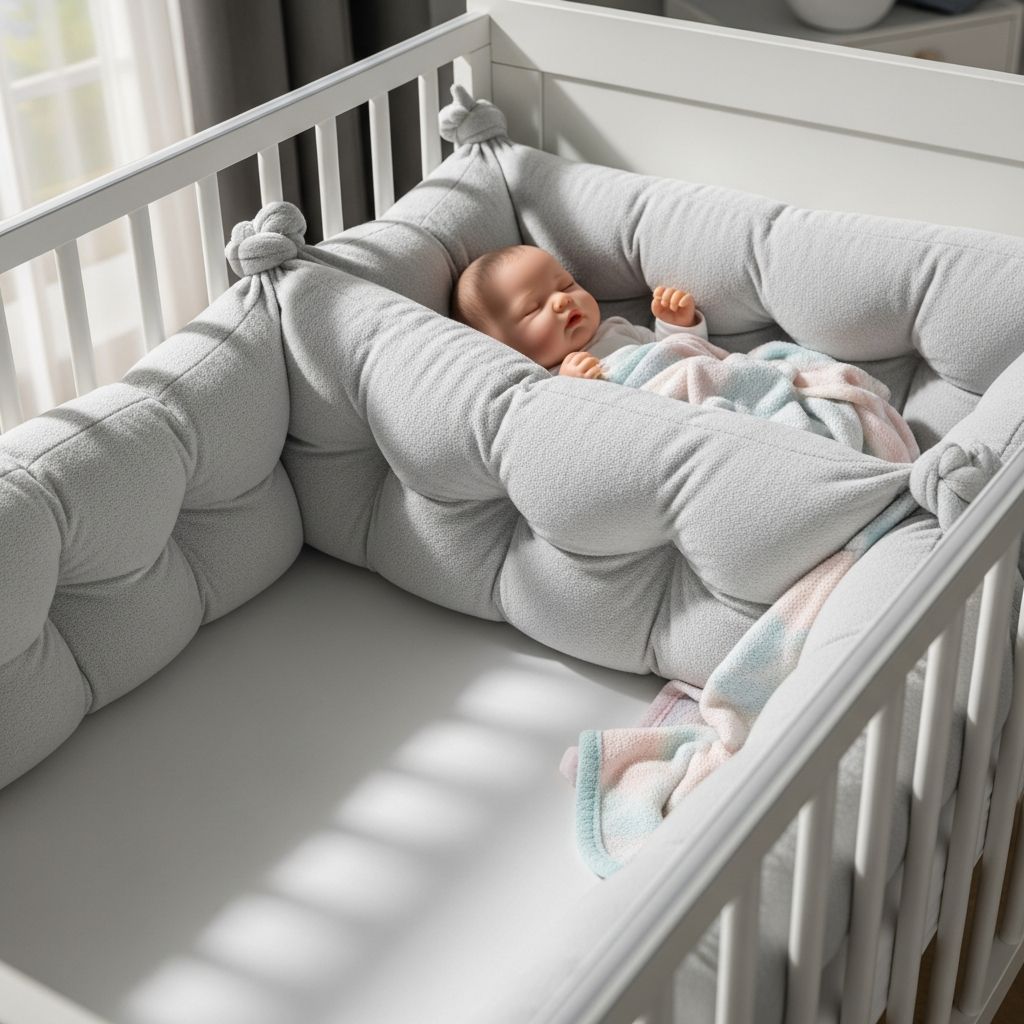
Parents often seek ways to make their baby’s crib more comfortable and visually appealing, but items like crib bumpers can introduce unforeseen hazards. These padded attachments, designed to line the crib’s sides, have been linked to numerous infant fatalities due to suffocation, strangulation, and entrapment. Federal regulations now prohibit their sale, emphasizing a bare crib setup as the gold standard for safety.
The Evolution of Crib Accessories and Safety Concerns
Crib bumpers emerged in the mid-20th century as decorative elements meant to soften crib edges and prevent minor bumps. Marketed in charming patterns, they promised coziness without compromising safety. However, decades of data reveal a darker reality: these products create gaps where infants can wedge their bodies, face risks from soft padding that obstructs airways, and ties that could entangle necks.
Early promotions ignored biomechanical realities of infant sleep. Babies under one year lack the strength to reposition themselves if pressed against fabric, leading to oxygen deprivation in minutes. This shift in understanding prompted health organizations to reevaluate such accessories rigorously.
Primary Risks Associated with Crib Padding
Health authorities identify three core dangers from crib bumpers, each substantiated by incident reports and clinical analysis.
- Suffocation Hazards: Soft materials conform to a baby’s face, blocking nostrils and mouth. Unlike firm surfaces, padding doesn’t allow air passage, causing rapid hypoxia.
- Strangulation Threats: Ties, ribbons, or loose fabric can loop around tiny necks, especially as babies roll or shift during sleep cycles.
- Entrapment Possibilities: Gaps between bumpers, mattresses, and slats trap limbs, heads, or torsos, immobilizing infants in perilous positions.
These risks compound during unsupervised sleep, the period when most incidents occur. Babies spend up to 16 hours daily asleep in their first months, amplifying exposure.
Compelling Data from Decades of Investigation
Statistical evidence underscores the urgency. Between 1990 and 2019, the U.S. Consumer Product Safety Commission documented 113 infant deaths tied to padded crib bumpers. A separate analysis in The Journal of Pediatrics identified 27 fatalities directly attributable to these items, with causes including facial compression and neck entanglement.
Post-2011 trends showed no decline despite awareness campaigns; a 2016 follow-up study noted rising incidents, possibly due to persistent use of older stock. Ohio alone reports three infant sleep-related deaths weekly, many involving non-compliant bedding.
| Risk Factor | Reported Incidents (1990-2019) | Primary Cause |
|---|---|---|
| Suffocation | ~70% | Face against padding |
| Strangulation | ~20% | Ties or fabric loops |
| Entrapment | ~10% | Body wedged in gaps |
This table summarizes CPSC findings, highlighting suffocation dominance. No severe head injuries were prevented; most ‘benefits’ addressed superficial bruises irrelevant to long-term health.
Regulatory Actions and Federal Bans
In response to mounting evidence, the Safe Sleep for Babies Act of 2022 banned padded crib bumpers nationwide, classifying them as hazardous products. The Consumer Product Safety Commission enforced this via the Infant Sleep Products Rule, prohibiting manufacture, sale, and distribution. This followed years of voluntary guidelines proving insufficient.
Even mesh alternatives, touted as breathable, fall under scrutiny. While federal rules exempt non-padded liners, experts urge avoidance due to climbing aids and residual entrapment risks. Retailers face penalties for stocking banned items, though legacy products linger in homes.
Expert Consensus from Pediatric Leaders
The American Academy of Pediatrics has opposed bumpers since 2011, stating unequivocally: no evidence supports injury prevention, while suffocation, strangulation, and entrapment risks persist. Pediatricians like Dr. Heidi Szugye reinforce this, noting marketing once portrayed them as essential, yet data proves otherwise.
Cleveland Clinic health resources echo: remove bumpers immediately from any crib. The Juvenile Products Manufacturers Association once contested, claiming standards ensured safety, but consensus favors bare cribs. International bodies align, prioritizing ABCs of safe sleep: Alone, Back, Crib.
Debunking Common Myths About Crib Protection
Myth 1: Bumpers Prevent Arm/Leg Traps. Studies show most such incidents cause bruises, not fractures; slat spacing under 2-3/8 inches inherently minimizes serious harm.
Myth 2: Breathable Versions Are Safe. Mesh may reduce suffocation but enables climbing, turning bumpers into makeshift ladders for active toddlers.
Myth 3: Decorative Use Justifies Risk. Aesthetics never outweigh lives; photos can capture cuteness via safe setups.
These misconceptions persist online, but peer-reviewed research dismantles them systematically.
Implementing Safe Sleep Environments Effectively
Creating a hazard-free crib is straightforward:
- Select a firm, flat mattress fitting snugly (less than two fingers’ gap at sides).
- Use a tight-fitting sheet only—no pillows, blankets, toys, or wedges.
- Position crib away from windows, cords, and heaters.
- Lay baby on back for every sleep, naps included.
- Maintain room temperature at 68-72°F; dress in light sleepers.
Breathable mattresses enhance airflow, further mitigating roll-over risks without add-ons.
Alternatives That Prioritize Both Safety and Style
Short of bumpers, enhance crib appeal safely:
- Wall Art and Mobiles: Hang from above or sides, out of reach.
- Blackout Curtains: Promote longer sleep cycles naturally.
- Safe Swaddles: Until rolling begins (around 2 months).
- Breathable Sleep Sacks: Replace loose blankets for warmth.
These options satisfy parental instincts without compromising protocols.
Age-Specific Guidance for Crib Transitions
Newborns (0-3 months): Strict bare crib adherence critical as reflexes dominate movement.
Infants (4-6 months): Rolling introduces entrapment risks; monitor closely.
Toddlers (7-12 months): Climbing phase heightens fall dangers from padded boosts.
Transition to toddler beds around 2-3 years or at 35 inches height, per AAP.
Frequently Asked Questions About Crib Safety
What if I already own crib bumpers?
Discard or donate them immediately; do not resell. Legacy items remain dangerous despite age.
Are there any approved bumper types?
No; AAP and CPSC advise against all varieties, including mesh.
How do I know my crib meets standards?
Check JPMA certification; slats firm, no lead paint, mattress fits precisely.
Can room-sharing replace crib safety?
Yes, share room (not bed) for 6-12 months to cut SIDS by 50%.
What about inclined sleepers?
Banned alongside bumpers; flat surfaces only, under 10-degree incline.
Long-Term Benefits of Adhering to Guidelines
Families following bare-crib rules report fewer sleep disruptions and heightened confidence. Reduced SIDS aligns with global declines post-AAP campaigns. Educating caregivers prevents tragedies, fostering healthier starts.
In summary, while crib bumpers aimed to protect, evidence demands their absence. Prioritize simplicity for serenity.
References
- Are Crib Bumpers Safe? – Cleveland Clinic Health Essentials — Cleveland Clinic. 2023-05-15. https://health.clevelandclinic.org/crib-bumpers-safety
- Why Crib Bumpers Aren’t Safe for Your Baby — Healthline. 2016-06-15 (updated 2023). https://www.healthline.com/health/parenting/crib-bumper-safety
- Crib Bumper Dangers — Ohio Chapter, American Academy of Pediatrics. 2022-08-01. http://oldsite.ohioaap.org/crib-bumper-dangers
- Are Crib Bumpers Safe For Your Baby? | What The Experts Say — Newton Baby. 2024-02-20. https://www.newtonbaby.com/blogs/hush/crib-bumpers
- Why Crib Bumpers Were Banned and Tips For Safe Sleep Practices — SafeWise. 2024-09-10. https://www.safewise.com/news/cute-but-deadly-why-crib-bumpers-were-banned-and-tips-for-safe-sleep-practices/