The Phenomenon of Children Reporting Paranormal Encounters
Many parents around the world have experienced moments when their children describe seeing ghosts, spirits, or other paranormal entities. These reports often leave caregivers uncertain about how to respond—whether to dismiss the claims as imagination, pursue psychological evaluation, or consider the possibility of genuine spiritual experiences. Understanding this phenomenon requires examining multiple perspectives, from developmental psychology to spiritual traditions, to better support children who report these encounters.
Developmental Psychology and the Childhood Imagination
Developmental psychologists have long studied why young children appear to have heightened sensitivity to paranormal phenomena. During the preoperational stage of cognitive development, children typically struggle to distinguish between reality and imagination. Their brains are still developing the capacity to filter sensory information and apply logical reasoning to distinguish actual events from invented scenarios.
The immature cognitive structures of early childhood mean that children may experience vivid mental imagery with the same intensity as factual perception. This neurological reality doesn’t mean children are being dishonest or intentionally fabricating stories; rather, their developing minds genuinely process imaginative content as perceptually real. This developmental phase typically spans from ages two through seven, though individual variation exists among children.
The Role of Belief Systems and Openness
One compelling explanation for why children report paranormal sightings more frequently than adults involves the power of belief systems and cultural conditioning. As people mature, they internalize societal messages that ghosts do not exist, creating mental barriers that filter out or reinterpret ambiguous experiences. Children, conversely, lack these ingrained skeptical frameworks that typically develop through socialization and education.
Young children have not yet been taught by their social environments that spirits are impossible. This absence of limiting beliefs may make them more receptive to interpreting unusual sensations, shadows, sounds, or visual anomalies as paranormal rather than dismissing them outright. In spiritual and parapsychological communities, this openness is sometimes viewed as heightened spiritual awareness rather than mere imagination or cognitive limitation.
Distinguishing Between Imaginary Friends and Spirit Encounters
Parents often wonder whether their child’s description of a ghostly visitor represents an imaginary friend or an actual paranormal encounter. Understanding the differences can help caregivers respond appropriately and take their children’s experiences seriously.
Imaginary friends typically display flexibility and adaptability. When parents ask children detailed questions about imaginary companions—such as their names, appearance, or favorite activities—children often pause, hesitate, and seem to be improvising answers in real time. The specifics may change between conversations or become vague when pressed for details.
Reported spirit encounters, by contrast, typically involve remarkable consistency and specificity. Children describing spirits they claim to have seen often provide immediate, detailed information without hesitation. They describe precise clothing, physical characteristics, locations where they observed the entity, and sometimes even identify the spirit as a deceased relative. The accounts maintain consistency across multiple conversations, suggesting the child is recalling a genuine memory rather than inventing details spontaneously.
Psychological Perspectives on Paranormal Reporting
Some psychologists attribute childhood paranormal reports to hallucinations or symptoms of underlying mental health conditions. Visual or auditory hallucinations can occur in conditions such as schizophrenia or other psychiatric disorders. However, these conditions typically manifest with additional symptoms and usually become clinically apparent later in development, not during early childhood.
Research has also identified connections between childhood trauma and paranormal beliefs. Studies indicate that individuals who experience trauma may develop heightened fantasy proneness and specific coping mechanisms that influence how they interpret ambiguous sensory experiences. The relationship between these factors suggests that some paranormal reports may reflect psychological processing of difficult experiences rather than genuine supernatural encounters.
Spiritual and Parapsychological Viewpoints
Practitioners in spiritual, metaphysical, and parapsychological fields offer alternative explanations for children’s paranormal reports. Many spiritual traditions maintain that children possess natural spiritual sensitivity that diminishes with age as materialist worldviews dominate their thinking. Some spiritual communities view the ability to perceive spirits as a gift or inherent talent that varies among individuals.
From these perspectives, spirits are understood as remnants of deceased persons or non-physical entities that exist in dimensions adjacent to physical reality. Children’s relative openness to these experiences, combined with fewer skeptical filters, may genuinely allow them to perceive beings invisible to most adults. In this framework, the child’s account represents a valid perceptual experience rather than imagination or pathology.
Common Characteristics of Children’s Paranormal Reports
Across diverse cultures and time periods, children’s descriptions of paranormal encounters share striking similarities. These commonalities may suggest either universal psychological patterns or evidence supporting the validity of genuine experiences:
- Spirits typically appear in familiar locations such as bedrooms, hallways, or family living spaces
- Children often describe spirits of deceased family members or individuals who died in their home
- Reports frequently include specific identifying information that children couldn’t have known through normal means
- Children describe consistent emotional responses, often including fear, confusion, or attempts at communication
- Multiple children in different locations sometimes report encounters with similar-appearing entities or receiving identical warnings
- Children who report seeing spirits often mention difficulty controlling or understanding the experiences
How Childhood Trauma May Influence Paranormal Beliefs
Research examining the connections between adverse childhood experiences and paranormal beliefs reveals complex relationships. Children who experience trauma may develop coping mechanisms that affect how they process and interpret sensory information. Fantasy proneness—the tendency to engage in imaginative thinking and blur boundaries between imagination and reality—often increases following traumatic experiences.
These psychological adaptations, while potentially protective in helping children manage overwhelming experiences, may also make them more susceptible to interpreting ambiguous stimuli as paranormal. Understanding this connection helps parents recognize that trauma-affected children’s paranormal reports warrant compassionate attention and potentially professional support, regardless of whether the underlying cause is psychological or genuinely supernatural.
Parental Responses to Children’s Paranormal Reports
When children describe seeing ghosts or spirits, parental reactions significantly influence how children process and integrate these experiences. Effective parental responses typically involve several key elements:
- Validation without confirmation: Acknowledge that the child experienced something meaningful without necessarily confirming that ghosts exist or that the encounter was supernatural
- Calm reassurance: Maintain emotional composure to prevent the child from becoming more anxious or frightened
- Information gathering: Ask gentle questions to understand what the child experienced, when it occurred, and how it affected them emotionally
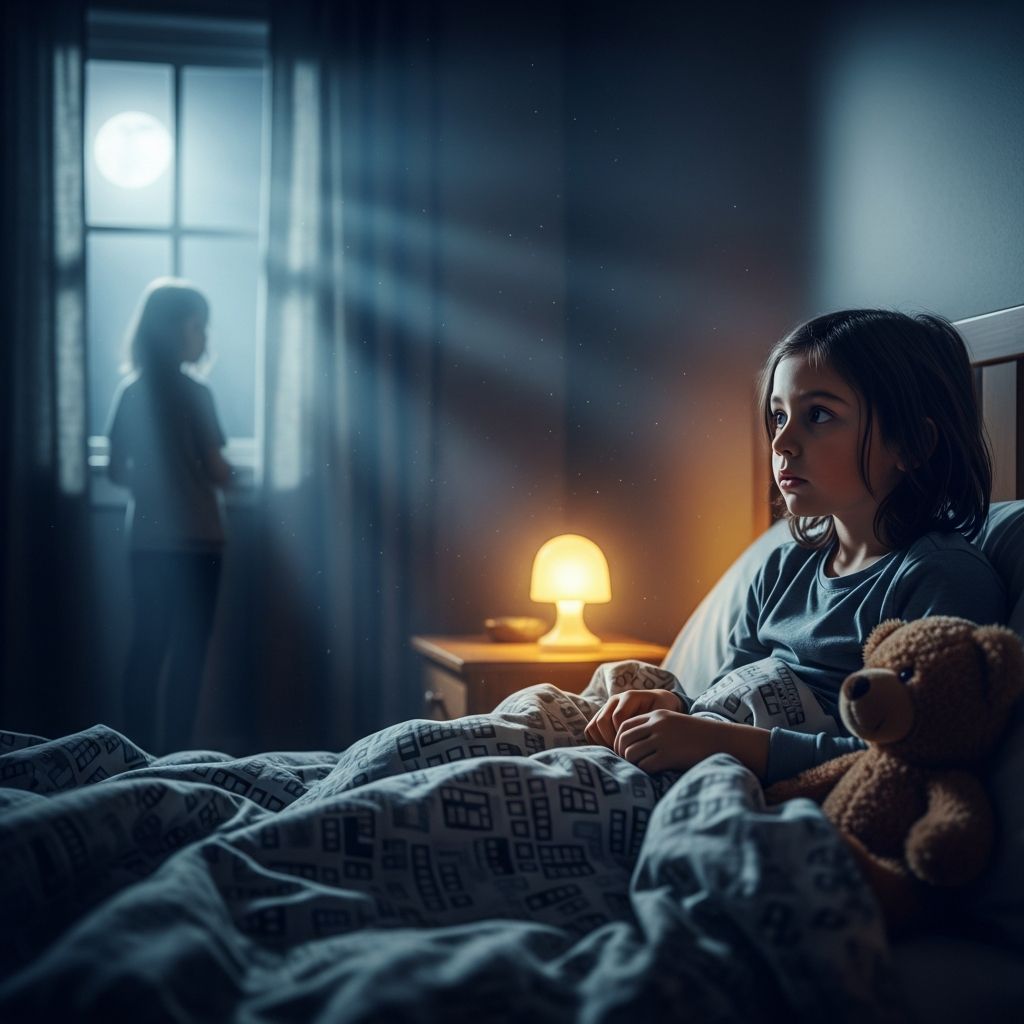
- Establishing safety: Implement practical measures such as nightlights, reassuring bedtime routines, or checking closets and under beds if the child feels unsafe
- Professional consultation: Consider involving a child psychologist or therapist if paranormal reports coincide with anxiety, sleep disturbances, behavioral changes, or if they consume the child’s thoughts excessively
When to Seek Professional Guidance
Parents should consider professional evaluation if their child’s paranormal experiences trigger significant distress, interfere with daily functioning, or coincide with other behavioral or emotional changes. A qualified mental health professional can assess whether reports reflect normal developmental imagination, anxiety-driven experiences, or potential psychiatric concerns requiring intervention.
Professional guidance proves particularly valuable when children report that spirits are giving them instructions, when paranormal encounters provoke intense fear disrupting sleep and daily activities, or when parents notice the child’s overall functioning declining in academic, social, or emotional domains.
Creating a Supportive Environment
Regardless of whether children’s paranormal reports reflect genuine supernatural experiences or psychological phenomena, creating a supportive environment benefits child development. Parents can foster emotional safety by:
- Taking children’s reports seriously rather than ridiculing or dismissing their experiences
- Listening without judgment when children describe what they’ve encountered
- Avoiding language that labels the child as imaginative, crazy, or attention-seeking
- Maintaining open communication channels where children feel comfortable discussing unusual experiences
- Teaching coping strategies for managing fear or anxiety related to paranormal concerns
The Historical Context of Childhood Paranormal Encounters
Children’s reports of seeing ghosts extend back centuries in recorded history, with documented accounts dating to at least the early 1700s. The consistency of these reports across time periods, cultures, and geographic locations suggests either a universal developmental phenomenon or evidence that such experiences possess genuine external reality. The historical prevalence of these accounts indicates that childhood paranormal reports represent a longstanding aspect of human experience rather than a modern invention.
Considering Multiple Explanations Simultaneously
The most balanced approach acknowledges that childhood paranormal reports likely involve multiple contributing factors. A child’s paranormal experience might simultaneously reflect developmental cognitive patterns, psychological responses to their environment, openness unburdened by skeptical conditioning, and potentially genuine perception of non-physical phenomena. Rather than forcing experiences into rigid explanatory categories, parents benefit from remaining flexible and considering how various factors might interact in their particular child’s situation.
Frequently Asked Questions
Q: At what age do children typically report seeing ghosts?
A: Children may begin reporting paranormal encounters as early as infancy, though accounts typically become more detailed and verbal between ages two and seven. Some children continue experiencing and reporting such encounters throughout their lives, while others’ reports diminish as they age and internalize cultural beliefs that dismiss paranormal phenomena.
Q: Is there a difference between a child being haunted and a child seeing ghosts?
A: Yes, according to spiritual perspectives, a child who sees ghosts can perceive and interact with spirits, whereas being haunted suggests negative spiritual attachment or interference. A child can see spirits without being negatively affected or haunted by them. Understanding this distinction helps parents respond appropriately to their child’s experiences.
Q: Should I tell my child that ghosts don’t exist?
A: This depends on your family’s beliefs and your child’s emotional response. Directly contradicting a child’s experience may undermine their trust in their perceptions and your judgment. Instead, you might acknowledge their experience while helping them understand and process it safely, regardless of whether the underlying cause is psychological or spiritual.
Q: Can paranormal sensitivity be stopped or controlled?
A: Research and clinical experience suggest that stopping a child from seeing ghosts entirely proves difficult, but learning to manage the experiences and their emotional impact is possible. Professional support can help children develop coping strategies, reduce anxiety, and maintain healthy emotional functioning even if the paranormal experiences continue.
Q: What signs indicate my child needs professional mental health support?
A: Seek professional evaluation if paranormal reports coincide with significant anxiety, sleep disturbances, behavioral problems, academic decline, or if they dominate your child’s thoughts and conversations. A qualified mental health professional can determine whether intervention is necessary and what type of support would benefit your child.
References
- Childhood Trauma and the Development of Paranormal Beliefs — National Center for Biotechnology Information (NCBI). 2014-01-01. https://pubmed.ncbi.nlm.nih.gov/24647210/
- Children Who See Spirits: Is It Just Imagination or Something More? — US Ghost Adventures. 2025-11-13. https://usghostadventures.com/haunted-stories/children-who-see-spirits-is-it-just-imagination-or-something-more/
- A Psychological View of Children Seeing Ghosts — Dr. Lisa Liggins Chambers. http://www.lisaligginschambers.com/kids-can-see-ghosts-can-you/blog-26-a-psychological-view