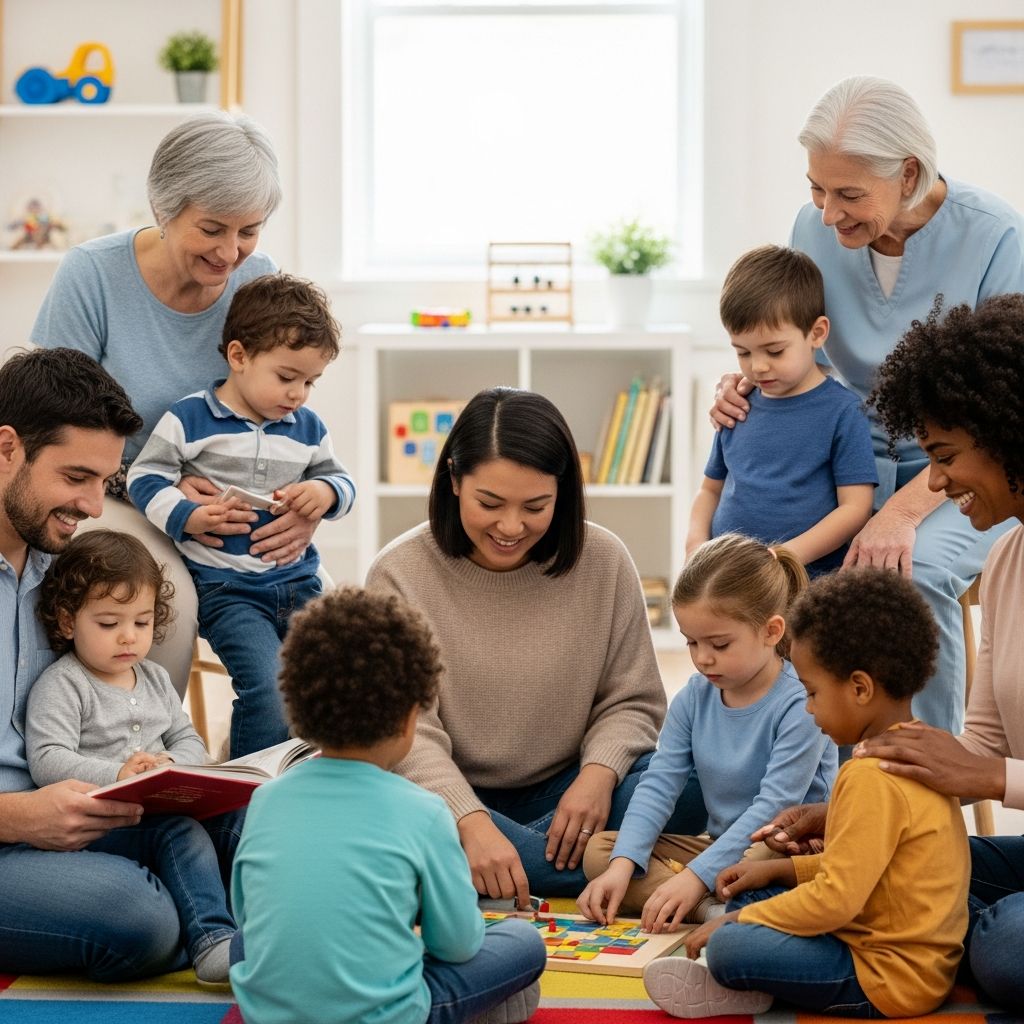
Exposing children to a network of caring adults beyond immediate family members plays a crucial role in their emotional and social development. This approach not only builds resilience but also teaches valuable life lessons about trust, empathy, and community interdependence.
The Developmental Advantages of Diverse Care
Young minds flourish when surrounded by multiple sources of affection and guidance. Research highlights that children who interact with various caregivers develop superior emotional regulation and adaptability. For instance, consistent exposure to non-parental figures helps kids form secure attachments that extend beyond the nuclear family, reducing anxiety during separations and enhancing overall confidence.
This diversity in care mirrors natural human societies where child-rearing was historically a communal effort, known as alloparenting. Modern families can replicate this by involving trusted relatives, teachers, or babysitters, leading to broader social horizons and better problem-solving skills.
Fostering Empathy Through Shared Responsibilities
Teaching children that others can meet their needs encourages perspective-taking from an early age. Parents can guide kids to appreciate how different adults offer unique comforts, such as a grandparent’s storytelling or a teacher’s structured play, cultivating gratitude and reducing self-centered tendencies.
- Perspective-building activities: Discuss scenarios where family members support each other, like attending events despite personal reluctance.
- Daily empathy exercises: Role-play situations involving grandparents’ joy from visits, helping kids value intergenerational bonds.
- Service-oriented tasks: Involve toddlers in simple acts like donating toys, building awareness of others’ needs.
These practices lay the foundation for lifelong kindness, as children learn that prioritizing others’ happiness often reciprocates with deeper relationships.
Overcoming Parental Hesitations
Many parents grapple with jealousy or worry when entrusting kids to outsiders. Philosophy professor Anca Gheaus argues that children have a right to stable, loving relationships with caregivers, independent of parental emotions. Firing a beloved sitter due to envy undermines the child’s well-being, suggesting society should promote ongoing, community-based care.
To manage these feelings, parents can focus on training and vetting caregivers rigorously. Organizations emphasize selecting “safe people” through background checks and observing interactions, ensuring safety while expanding the child’s support network.
| Common Parental Concern | Strategy to Address | Child Benefit |
|---|---|---|
| Jealousy over bonds | Acknowledge emotions; observe positive interactions | Forms multiple secure attachments |
| Safety worries | Vetting process and safety education | Learns to identify safe adults |
| Different caregiving styles | Open communication with caregivers | Adapts to diverse environments |
Practical Strategies for Introducing New Caregivers
Start small to build comfort. Begin with short playdates at trusted friends’ homes or family gatherings where other adults engage the child positively. Gradually extend to daycare or babysitters, always preparing kids with stories about the fun ahead.
For working parents, who now comprise 71% of mothers with minor children, piecing together care from family, sitters, and programs is common. Advocate for policies supporting consistent, trained caregivers to create a true “village” effect.
- Assess compatibility: Choose providers whose values align with yours but offer complementary strengths.
- Prepare transitions: Use books and talks about new caregivers’ roles.
- Monitor and debrief: Ask kids about their experiences to reinforce positives.
- Model trust: Express enthusiasm about the arrangement visibly.
Long-Term Social and Emotional Gains
Children accustomed to multiple caregivers exhibit greater empathy and relationship skills. They understand not everyone shares their preferences, promoting flexibility—a key to adult success. Exposure also secures better family income through parental work, while kids gain peer interactions in child-centric settings.
In preschool years, egocentric thinking naturally dominates, but guided experiences shift focus outward. Activities like garden-to-donation discussions teach resource sharing, embedding generosity early.
Community and Policy Implications
Society benefits when caregiving is devalued no longer as solely maternal or familial. Proposing trained, community “villages” elevates the profession, ensuring quality care for all. Parents modeling selflessness—putting community needs first—inspire children similarly.
Frequently Asked Questions
How do I know if a caregiver is safe for my child?
Prioritize background checks, references, and supervised trials. Teach kids age-appropriate safety skills, like choosing “safe people” who respect boundaries.
Will my child prefer another caregiver over me?
Securely attached kids love multiple people without diminishing parental bonds. Healthy jealousy can be managed through reflection and policy support.
At what age should I introduce non-family care?
From infancy in short doses, scaling up as readiness shows. By age 3-4, sharing concepts emerge, aiding empathy growth.
Does this reduce my parenting role?
No— it enhances it by preventing burnout and modeling community reliance, strengthening family dynamics.
What if caregiving styles differ greatly?
Differences build adaptability. Communicate expectations clearly to align on core values.
Conclusion: Embracing the Village
Inviting others into your child’s care circle enriches lives profoundly. It nurtures independent, empathetic individuals ready for a interconnected world.
References
- Children And Putting Others First — The Kid’s Coach. Accessed 2026. https://www.thekidscoach.org.uk/putting-other-people-first/
- Why our kids need others to love them — Motherwell Magazine. 2016-10-04. https://motherwellmag.com/2016/10/04/why-our-kids-need-others-to-love-them/
- Choosing Safe People to Care for Your Children — Kidpower International. Accessed 2026. https://www.kidpower.org/library/article/choosing-safe-people/
- Encouraging young kids to consider the needs and feelings of others — First Things First. Accessed 2026. https://www.firstthingsfirst.org/first-things/encouraging-young-kids-to-consider-the-needs-and-feelings-of-others/
- Learning to Let Others Love My Kids — Charleston Moms Blog. Accessed 2026. https://charlestonmoms.com/perspectives-in-parenting/learning-let-others-love-kids/