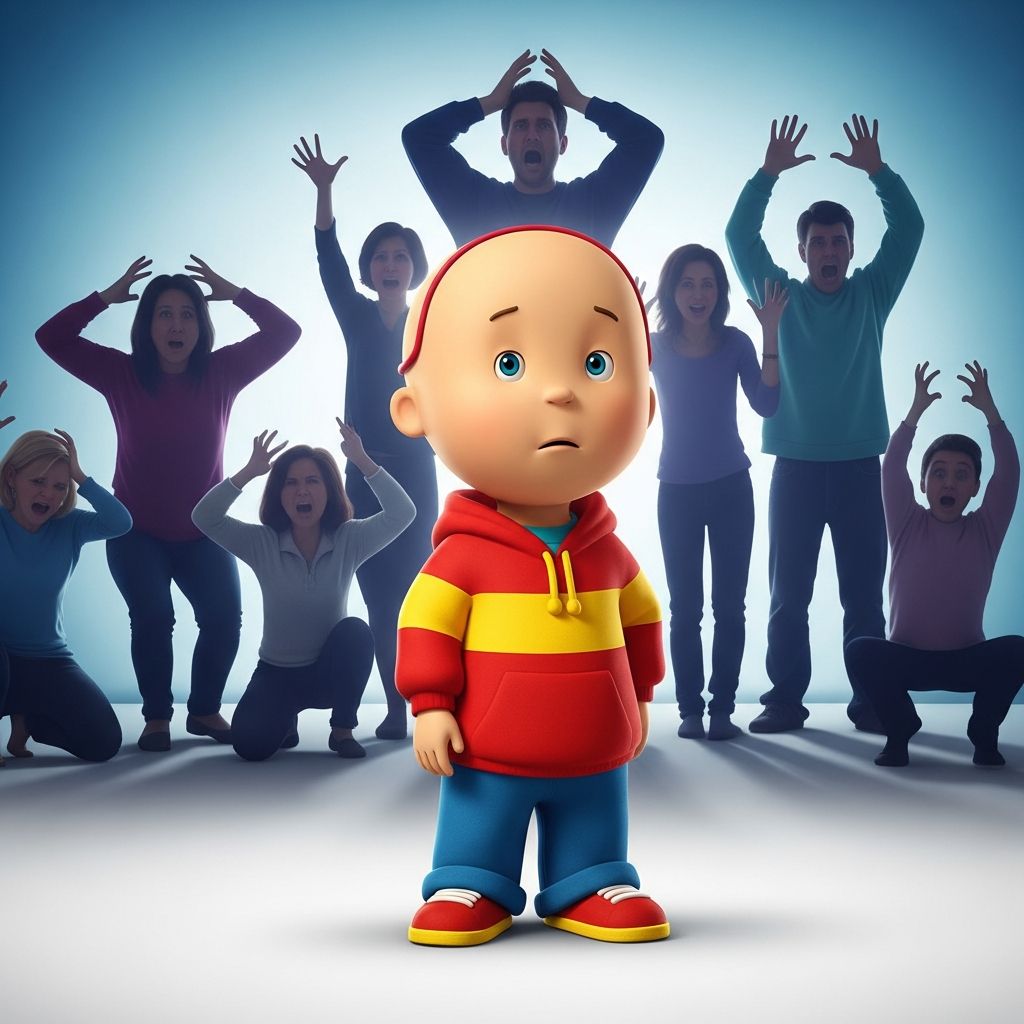
For a show built around a soft-spoken four-year-old, few cartoons inspire as much parental fury as Caillou. The series has become a lightning rod in parenting circles, blamed for whining, tantrums, and a very specific kind of preschool chaos in living rooms everywhere.
The Strange Power of a Mild Little Cartoon
On paper, Caillou looks harmless: simple animation, everyday stories, and a quiet, low-stakes tone designed to soothe toddlers. Yet many families describe a very different experience — one where kids come away more irritable, more demanding, and weirdly fixated on the show’s whiny main character.
That disconnect is what makes the series fascinating. Rather than being infamous for violence or crude jokes, it’s disliked because it seems to model the very behaviors parents spend all day trying to discourage. Understanding that gap helps clarify what healthy children’s television should look like in the preschool years.
How Caillou’s World Is Built
Caillou’s fictional universe is intentionally small and familiar. Episodes revolve around errands, playdates, small conflicts with his younger sister, and routine milestones like visiting the doctor or starting preschool. The plots are slow, the color palette is soft, and the tone is intentionally low-stimulation to keep very young viewers calm.
Instead of high adventure, the show focuses on mood: mild frustration, boredom, curiosity, and the tiny dramas of preschool life. That design choice is important, because it amplifies the emotional behavior of the main character. When very little is happening on screen, every whine, complaint, or outburst becomes the center of attention.
The Main Complaint: A Whiny Preschool Role Model
Ask a group of parents what bothers them most about Caillou and a single word comes up again and again: whining. The character’s default response to frustration is to protest loudly, cry, or collapse into a tantrum, often for problems that feel minor to adults.
Parents do not expect perfect behavior from a four-year-old on screen, but the sheer volume and intensity of these reactions can be jarring in a show aimed at toddlers. Because children that age copy what they see, many adults feel as if the program is handing their child a ready-made script for acting helpless and demanding.
Where Are the Consequences?
Another source of frustration is the way adults respond to Caillou’s behavior. His parents are endlessly patient and rarely set clear boundaries. When he misbehaves, the reaction is more often soothing than corrective, and genuine consequences are rare.
In a preschool show, the goal is usually to portray kind, supportive caregivers. But when caretakers never say “no” with any real weight, young viewers get a distorted picture of how family life works. The message can start to feel like: big feelings always change the rules, and adults will fix problems regardless of a child’s choices.
What Healthy Preschool Conflict Usually Looks Like
Many successful preschool series lean on a simple arc: the child character faces a small problem, tries an approach that doesn’t work, receives guidance, and then practices a better strategy. The misbehavior or mistake is there, but so is a clear shift toward a healthier skill by the end.
In Caillou, that pattern is much fuzzier. Conflicts are often resolved by time passing, by adults stepping in, or by circumstances changing, not by the child practicing a new tool. The result is subtle but important: kids see problems dissolving more than they see problem-solving.
Table: Caillou vs. More Skill-Focused Preschool TV
| Element | Caillou | Skill-Focused Preschool Shows |
|---|---|---|
| Central child behavior | Frequent whining and helplessness; adults take the lead in solutions. | Curiosity and trial-and-error; kids practice solving their own problems with support. |
| Adult responses | Extremely patient, minimal boundaries, limited follow-through on consequences. | Warm but firm; clear limits, encouragement, and modeled coping skills. |
| Educational focus | Emphasis on ordinary daily life, with little explicit teaching of skills. | Explicit social-emotional learning, early math or literacy, and safety lessons. |
| Emotional modeling | Big feelings expressed loudly, with few calm-down strategies shown. | Feelings acknowledged, then redirected with breathing, problem-solving, or asking for help. |
| Takeaway for kids | Problems feel overwhelming and are usually fixed by adults or good luck. | Problems are normal and solvable; children can learn and improve with practice. |
Why Kids Mimic Caillou So Quickly
Preschoolers are expert imitators. When a show’s main character spends much of the episode moaning about what is unfair, that language and tone can become contagious. Children copy intonation, catchphrases, and even the rhythm of the character’s complaints.
Because the show’s stories are so grounded in everyday life — going to the park, going to the store, arguing over toys — kids can easily map those scripts onto their real experiences. It is not surprising that some parents notice more resistance, more dramatic protests, and more “I can’t” statements after heavy exposure.
The Hidden Appeal for Exhausted Parents
Despite all the backlash, Caillou lasted years on the air and has cycled through different platforms precisely because young kids do watch it. The pacing is slow, the colors are gentle, and the stakes are low, which makes it an easy background show when parents need a few quiet minutes.
This is part of the uncomfortable truth: a cartoon can be annoying to adults and unhelpful for behavior, yet still serve as a reliable digital babysitter. The trade-off between immediate convenience and long-term habits is at the heart of the debate around this particular series.
Is Caillou “Bad” or Just Misaligned With What Families Want?
Labeling any children’s show as purely good or bad misses the complexity of real families. Some kids watch Caillou and shrug; others absorb every exaggerated pout. Some parents are unbothered by the lack of educational content, while others want every minute of screen time to teach something concrete.
The more useful question is: does this show support the specific skills and values your family is working on right now? If the answer is no — if you spend your afternoons de-escalating the same behavior you just watched on screen — that misalignment is worth paying attention to.
What Parents Actually Want From Preschool TV
When parents push back against a show like Caillou, they are usually asking for a few core things rather than perfection. They understand that toddlers are messy and dramatic; they just want media that nudges development in a healthier direction rather than glorifying the mess.
In general, caregivers tend to look for preschool programs that:
- Show kids using age-appropriate coping skills, even if imperfectly.
- Include warm but firm adults who calmly hold boundaries.
- Balance silly or chaotic moments with clear problem-solving.
- Model kindness, cooperation, and repair after conflicts.
- Offer at least a modest dose of real educational value, whether social-emotional or academic.
How to Use Any Show Without Letting It Take Over
Even if a program is not ideal, parents are not powerless. How a show is used may matter more than whether it is on the “approved” or “banned” list in online parenting debates. A few intentional habits can keep media in its place.
Consider these strategies for any preschool cartoon:
- Co-watch when you can: Sit nearby sometimes and comment on what characters are doing, especially when they make better choices.
- Press pause on meltdowns: If a character starts screaming to get their way, pause and ask, “What else could they try?” before letting the episode continue.
- Link to real life: Later in the day, remind your child, “Remember how the character tried again instead of giving up? Let’s do that here.”
- Rotate content: Balance noisier, more dramatic shows with calmer, more skill-focused ones, so no single style dominates.
- Set clear viewing rules: Decide in advance when and how long screens are allowed, and stick to it so the show never feels in charge.
Signs a Show Is Working Against You
Every child responds differently to media, but there are red flags that a particular series is making your day harder. These clues matter more than anyone’s ranking of the show online.
Watch for patterns like:
- More frequent whining or arguing immediately after viewing.
- Kids repeating lines from the show to resist limits or chores.
- Increased frustration tolerance problems — quick tears, “I can’t do it” talk, or dramatic reactions to small setbacks.
- Obsessive attachment to one show to the point where other activities lose appeal.
- Playtime that centers on imitating the most unhelpful behavior, rather than imaginative stories.
How to Talk to Your Child About a Problematic Favorite
Cutting off a beloved show cold turkey is possible, but often leads to big protests. Sometimes it is more effective to involve your child in the decision and frame the change as growing up rather than punishment.
One approach is to talk about the character directly: “Sometimes this character forgets how to use kind words. Our family is practicing using calm voices, so we are going to watch more shows where kids do that.” Then offer alternatives that still feel fun but better match your values.
Reimagining What a Show Like Caillou Could Teach
The premise of a simple, everyday preschool life is not the problem. In fact, it is rich territory for meaningful lessons about sharing, disappointment, friendship, and patience. The issue is when that world stops short of showing growth and instead lingers on the least constructive behavior.
A reimagined version of this kind of show could keep its gentle tone while doing far more with emotional skills. Viewers could see the main character take deep breaths, repair with a sibling after lashing out, practice waiting their turn, and respectfully accept “no” from a parent — all without losing the familiar, cozy feel that draws toddlers in.
Making Peace With Imperfect Kids’ TV
Parents are often told to either eliminate screens completely or accept whatever the algorithm serves up. In reality, most families live somewhere in between. A show like Caillou becomes a useful mirror in that middle space, exposing which habits and attitudes feel unacceptable in your home.
It is reasonable to be bothered by a cartoon that seems to celebrate whining and erode boundaries, especially when you are the one dealing with the fallout. But that frustration can also sharpen your sense of what you do want your kids watching — stories that treat big feelings as real, misbehavior as fixable, and children themselves as capable of learning.
FAQs About Caillou and Preschool TV
Is Caillou actually harmful for kids?
For most children, a few scattered episodes are not going to cause lasting damage. The concern is more about repeated exposure to unhelpful behavior without good modeling of better options. If you notice a clear link between watching and more intense whining or tantrums, that is a sign to cut back or stop.
Why do some kids love Caillou so much?
The slow pacing, simple visuals, and familiar daily situations make the show easy for very young children to follow. They recognize themselves in the frustrations and desires of the main character, even when that behavior is exaggerated.
Should parents ban the show completely?
Some families feel calmer after removing it altogether, while others simply limit how often it is watched and balance it with more constructive shows. The best choice is the one that reduces conflict in your home and aligns with the values you are trying to teach.
What should parents look for in better alternatives?
Look for programs that show kids trying, failing, trying again, and being gently guided instead of rescued. Warm adults, clear boundaries, and visible coping strategies are strong signs that a show supports healthy development.
How much does any single show really matter?
No cartoon can outweigh the influence of everyday parenting, but media does shape the scripts kids reach for when they are tired, frustrated, or bored. Thoughtful choices about even one frequently watched show can make daily life a little smoother for everyone.