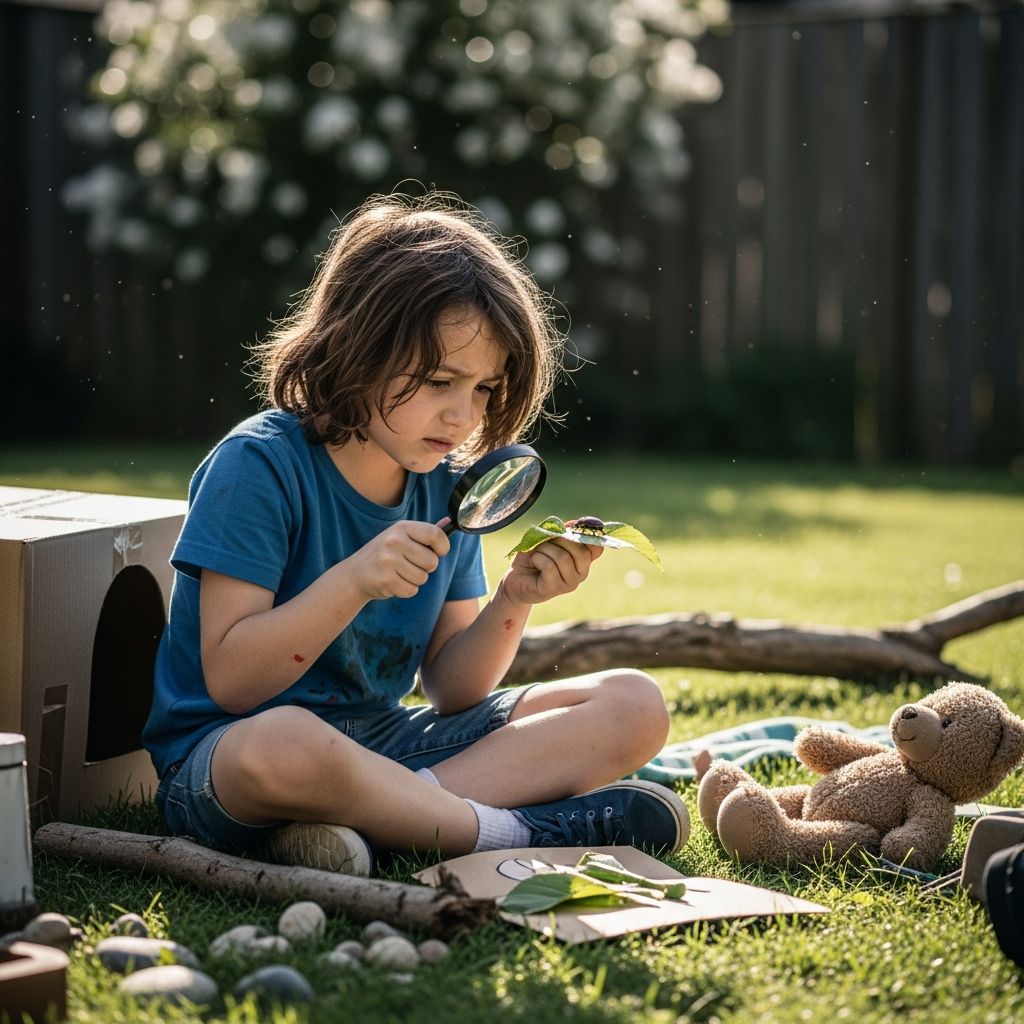
Many parents feel pressured to keep their children entertained every minute of the day. Yet research from psychologists and child development experts shows that boredom can be deeply beneficial for kids, giving their brains space to imagine, reflect and create in ways structured activities and screens often do not.
This article explores why boredom matters, how it supports healthy development, and how parents can respond constructively when they hear, “I’m bored.” You will also find practical, screen-free ideas and answers to common questions about boredom and kids.
What Is Boredom, Really?
Boredom is more than simply having nothing to do. Psychologists describe boredom as an uncomfortable state in which a person wants to be engaged, but the current activity or situation feels unstimulating or uninteresting. For children, that feeling can show up as restlessness, complaining, or seeking instant entertainment.
While it may look negative on the surface, this mental discomfort has an important function: it signals that a child needs to choose what to do next. That moment of choice is where learning and growth can happen.
Why Boredom Is Good for Kids
Contrary to many fears, boredom is not a sign of failure in parenting. In the right conditions—safe, supportive, and mostly screen-free—boredom can act as a doorway to key developmental skills.
1. Boredom Fuels Creativity and Imagination
When children are not constantly entertained, their brains naturally wander, daydream, and generate new ideas. Neuroscience research connects this to activation of the brain’s default mode network, which is involved in creativity, memory, and self-reflection. Without a steady stream of external input, kids have room to:
- Invent games, stories, characters and imaginary worlds
- Experiment with art, building, or music in self-directed ways
- Combine ideas in novel, unexpected ways
Professionals who study curiosity and learning note that stretches of unstructured time allow children to explore activities in greater depth and develop skills they might not practice in highly structured settings like school.
2. It Encourages Problem-Solving and Initiative
Boredom nudges kids to ask, “What can I do about this?” Instead of adults immediately rescuing them with activities, children get practice:
- Scanning their environment for possibilities
- Making decisions about how to use their time
- Starting and organizing their own play or projects
Mental health professionals emphasize that this self-directed problem-solving helps kids build autonomy and resilience, as they learn they can shift from discomfort to engagement through their own choices.
3. It Builds Independence and Confidence
When children experience that they can move through boredom and find something meaningful to do, their sense of competence grows. They do not need adults or devices to fill every empty moment. Over time, this supports:
- Independence – the ability to entertain themselves
- Self-trust – confidence in their own ideas and interests
- Intrinsic motivation – choosing activities because they enjoy them, not for external rewards
Child development experts point out that agency—choosing what to do and how to do it—is a powerful driver of deep learning and engagement.
4. It Supports Emotional Regulation and Mental Rest
Today’s children are often overstimulated by busy schedules and digital media. Short periods of boredom can actually give the brain a chance to rest and reset. Health organizations note that moderate boredom is linked with improved problem-solving and creativity, and can provide needed downtime for both children and adults.
Learning to tolerate the mild discomfort of boredom also helps kids practice emotional regulation: noticing an unpleasant feeling, staying with it, and making a constructive choice rather than seeking instant distraction.
Common Myths About Boredom in Children
| Myth | What Research and Experts Suggest |
|---|---|
| “If my child is bored, I’m not doing enough as a parent.” | Experts emphasize that boredom is a normal, even useful, part of childhood—not a parenting failure. |
| “Boredom means my child is lazy or unmotivated.” | Boredom is a signal that their current activity isn’t engaging, not a character flaw. With support, it can prompt curiosity and initiative. |
| “Kids need constant stimulation to learn and succeed.” | Unstructured, screen-free time helps children develop creativity, problem-solving and life skills they may not get from highly structured activities alone. |
| “Allowing boredom will make behavior worse.” | Initial protest is common, but over time, kids typically become more capable of managing their own time and emotions. |
How to Respond When Your Child Says “I’m Bored”
Parents do not have to provide instant entertainment. Instead, you can treat boredom as an opportunity to support growth.
1. Acknowledge the Feeling
Start by validating your child’s experience. This helps them feel seen rather than dismissed.
- “You’re feeling bored right now. That can be uncomfortable.”
- “It’s tough when nothing sounds interesting.”
Normalizing boredom aligns with guidance from parenting and mental health experts, who encourage acknowledging feelings as the first step toward constructive problem-solving.
2. Gently Return the Problem to Them
After empathizing, invite your child to take the lead. For example:
- “I trust you can find something to do. What are two ideas you could try?”
- “Let’s brainstorm a few possibilities, and you can pick one.”
This shifts responsibility from the adult to the child, reinforcing independence and decision-making.
3. Offer Structure Without Controlling the Outcome
Some children need a light framework to get started. You might:
- Keep a written list or jar of activity prompts they helped create
- Suggest categories, such as “something active,” “something creative,” or “something that helps someone else”
- Set a timer (for example, 15 minutes) during which they choose a non-screen activity to try
The key is to support, not direct, their choices, allowing curiosity to lead.
4. Protect Screen-Free, Unstructured Time
For boredom to lead to creativity and reflection, children need time without instant digital distraction. Health and education experts encourage limiting recreational screen use and preserving daily blocks for free play.
This does not require an all-or-nothing approach. Even one or two predictable periods each day—after school, weekend mornings, or early evenings—can become a regular space for open-ended play.
Practical Boredom-Friendly Activity Ideas
You do not need elaborate crafts or expensive supplies. The goal is to provide simple starting points so children can take off with their own ideas.
Low-Prep Indoor Ideas
- Open-ended art corner – Paper, tape, recyclables, crayons or markers, with no instructions.
- Building challenges – Use blocks, cardboard, or household items to build “the tallest tower,” “a bridge,” or “a tiny city.”
- Pretend worlds – Invite kids to create a store, restaurant, library or museum using toys and everyday objects.
- Story starters – Offer the first sentence of a story and let them continue through drawings, writing, or pretend play.
- Homemade games – Encourage designing their own board game, with rules they invent and test.
Active and Sensory Play
- Indoor obstacle paths – With pillows, chairs, or tape on the floor (walk, crawl, balance, hop).
- Movement sequences – Children create a short exercise or dance routine and teach it to others.
- Yoga or stretching time – Simple poses or stretches can help kids tune into their bodies and reduce stress.
- Water and small-world play – Bowls of water, cups, spoons or figures (with supervision) can become entire imagined oceans or laboratories.
Outdoor Exploration Ideas
- Backyard or park “expeditions” – Kids collect leaves, stones, or sticks and then sort, count or create with them.
- Nature maps – Invite children to draw a map of the yard or nearby outdoor area, marking interesting spots.
- Movement trails – Use chalk or natural markers to create a path with prompts like “tiptoe,” “spin,” or “jump.”
- Quiet watching – Challenge kids to sit silently for a few minutes and list all the sounds, animals, or changes they notice.
Supporting Different Ages Through Boredom
Children’s needs change as they grow. Here are general guidelines for responding to boredom at different stages.
Early Childhood (Approximately 3–6 Years)
- Offer a safe environment with simple, open-ended materials (blocks, dolls, art supplies, play kitchen).
- Expect more hands-on support at first, then gradually step back.
- Keep screen exposure especially limited to protect developing attention and imagination.
Middle Childhood (Approximately 7–11 Years)
- Involve kids in planning boredom-friendly spaces or activity lists.
- Encourage deeper projects—building, writing, coding offline, crafting, or learning real-life skills like simple cooking under supervision.
- Give them more responsibility for deciding how to use their free time.
Adolescence (Approximately 12+ Years)
- Talk openly about boredom as part of emotional health, not something to fear.
- Support exploring new interests—music, sports, clubs, volunteering, or creative projects—rather than defaulting to devices.
- Invite teens into real-world tasks: planning a meal, budgeting for a small project, or organizing an outing.
When Boredom Might Signal a Deeper Issue
Boredom is common and usually harmless. However, persistent or intense boredom can sometimes be linked with underlying concerns.
- Frequent statements like “nothing is fun” combined with changes in sleep, appetite, or mood may reflect depression or anxiety.
- Difficulty focusing on any activity might indicate attention-related challenges.
- Constant reliance on screens to escape boredom can contribute to irritability and trouble concentrating.
If you notice ongoing distress, loss of interest in previously enjoyed activities, or other significant changes, consider consulting a pediatrician, mental health professional, or school counselor.
Frequently Asked Questions (FAQs)
How much boredom is healthy for kids?
There is no exact number of minutes, but experts emphasize having regular, predictable periods of unstructured, mostly screen-free time each day. The goal is balance: enough free time for creativity and rest, alongside reasonable structure for school, sleep, and family routines.
Won’t my child fall behind if I don’t fill their schedule with activities?
Research on curiosity and skill development suggests that unstructured time can help children build problem-solving, creativity, and life skills that complement academic learning. A moderate schedule that leaves space for downtime is often more sustainable than constant busyness.
Should I stop offering ideas when my child is bored?
You do not have to stop helping entirely. Instead, shift from fixing the boredom to collaborating. Validate feelings, then offer light support—such as a menu of options or a reminder of available materials—while leaving the final decision and initiative to your child.
Is boredom different from screen time limits?
Limiting screens may increase moments of boredom at first, but they are not the same thing. Screen limits create the conditions for free play and reflection; boredom is the internal feeling that can push kids to explore those opportunities in meaningful ways.
What if my child gets angry when I don’t fix their boredom?
Frustration is common, especially if a child is used to immediate entertainment. Stay calm, empathize with the discomfort, hold the boundary on screens or constant rescuing, and express confidence in their ability to find something to do. Over time, most kids adjust and become more self-reliant.
References
- Boredom Can Be Great for Kids — University of Virginia School of Education and Human Development. 2022-06-28. https://education.virginia.edu/news-stories/boredom-can-be-great-kids
- Why We Must Let Our Kids Be Bored — Massachusetts General Hospital / ParentAndTeen.com. 2021-07-07. https://parentandteen.com/why-we-must-let-our-kids-be-bored/
- The Healing Power of Boredom: Why Kids and Teens Need to Be Bored Sometimes — Integrated Care Clinic. 2023-03-20. https://integratedcareclinic.com/blog/the-healing-power-of-boredom-why-kids-and-teens-need-to-be-bored-sometimes/
- Boost Your Brain With Boredom — Mayo Clinic Health System. 2021-02-09. https://www.mayoclinichealthsystem.org/hometown-health/speaking-of-health/boost-your-brain-with-boredom
- It’s Okay to Be Bored: 3 Surprising Benefits of Boredom for Kids — Good Inside. 2022-08-16. https://www.goodinside.com/blog/3-surprising-benefits-of-boredom-for-kids/