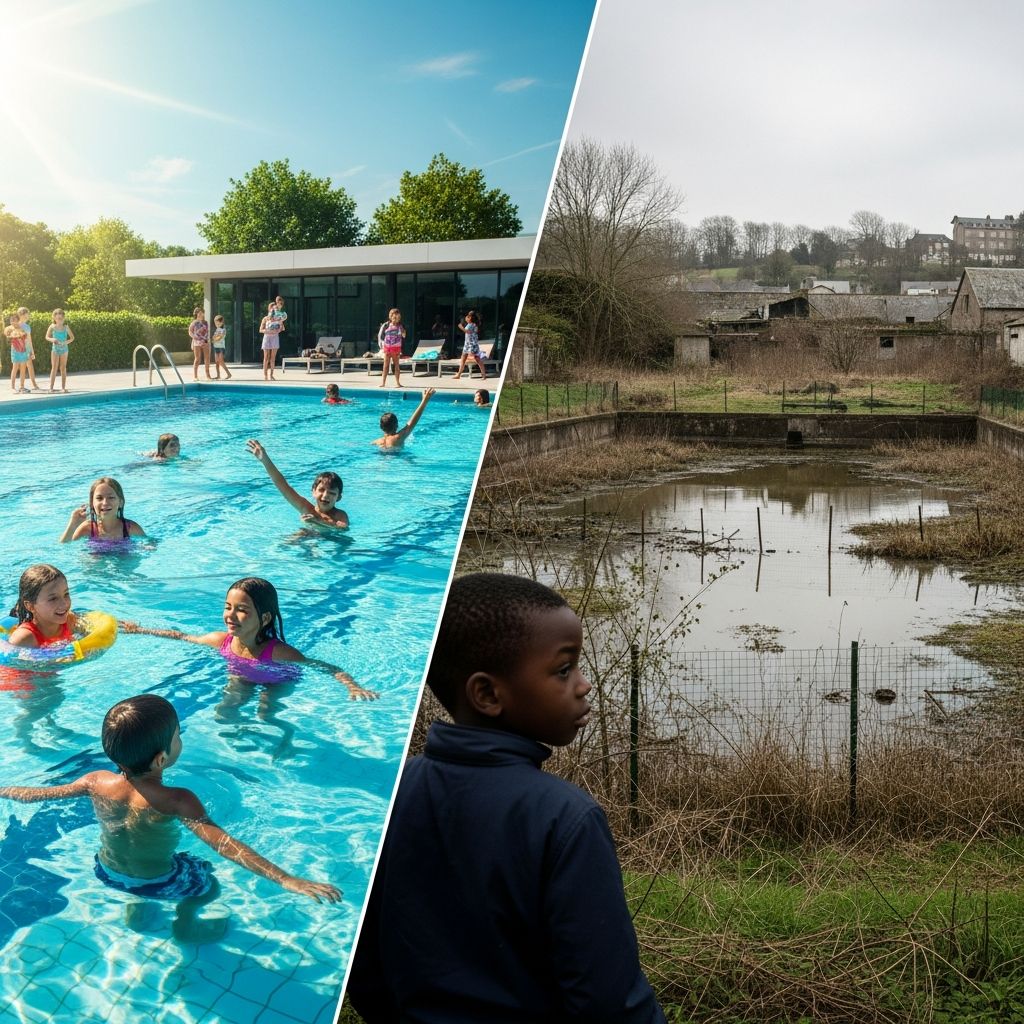
The Persistent Challenge of Water Competency in Black Households
The ability to swim represents more than a recreational skill—it is a fundamental survival competency that protects individuals from water-related emergencies. Yet across the United States, significant disparities exist in swimming proficiency between racial and ethnic groups. Data reveals that 64 percent of Black children lack adequate swimming ability, compared to just 40 percent of white children. This gap extends to parents and guardians as well, with 78 percent of Black parents reporting no or low swimming ability. These statistics underscore a troubling reality: families within Black communities often lack the foundational water skills necessary to keep themselves and their children safe in aquatic environments.
The consequences of this disparity manifest in devastating ways. Black children aged 10 to 14 experience drowning rates that are 7.6 times higher than their white counterparts. Between 2020 and 2022, drowning deaths among Black Americans increased by 28 percent. These are not random occurrences but rather predictable outcomes of systematic inequities in access, opportunity, and resources that have persisted for generations.
Historical Roots of Contemporary Swimming Inequality
Understanding current disparities in swimming competency requires examining the historical landscape of water access in America. Racial segregation policies fundamentally shaped which communities could access public swimming facilities. During the early twentieth century, swimming was actually more common among Black Americans than among white Americans. However, as the century progressed and formal segregation policies took hold, public swimming pools became spaces of racial exclusion. Black individuals were systematically denied access to these facilities through explicit segregation laws and discriminatory practices.
The aftermath of integration created paradoxical consequences. Rather than simply opening existing pools to all communities, many municipalities chose a different path: they closed public swimming facilities entirely. This strategy effectively maintained segregation while avoiding the legal requirements of desegregation. For Black families who lacked the financial resources to join private swimming clubs or afford expensive private lessons, this closure meant continued exclusion from swimming opportunities. Even decades after the formal end of segregation in the 1960s, the impact of these decisions remained visible in the landscape of predominantly Black neighborhoods, where accessible public pools remained scarce.
This historical discrimination created what researchers describe as a long shadow. Swimming never became embedded in the recreational and sports culture of African American communities to the same degree it had in white communities. Multiple generations grew up without consistent access to swimming facilities or instruction, meaning that lack of swimming ability became normalized within family structures. Parents who did not learn to swim had difficulty teaching their children, perpetuating the cycle of water incompetency.
Modern Barriers to Swimming Education and Access
Economic and Geographic Obstacles
Contemporary barriers to swimming education operate on multiple levels. Cost represents one significant obstacle. Swim lessons through private instructors and facilities often carry substantial fees that many families cannot afford. Public recreation programs that might offer more affordable options have become increasingly rare in many predominantly Black neighborhoods due to reduced municipal funding and infrastructure investment. Geographic accessibility creates additional challenges—families in areas without nearby public pools must travel farther to access water facilities, requiring transportation and time that may be difficult to arrange.
Shortage of Qualified Instructors and Role Models
The swimming instruction workforce itself reflects broader disparities. A relative shortage of Black swimming instructors and coaches means fewer role models for Black children learning to swim. Research suggests that the presence of Black lifeguards and swimming professionals correlates with increased swimming participation among Black youth, indicating the importance of representation in aquatic professions. When instructors and authority figures in swimming spaces do not reflect the racial and ethnic backgrounds of learners, it can create additional psychological barriers to participation and comfort in these environments.
Cultural and Psychological Factors
Beyond structural barriers, cultural and psychological factors influence swimming participation patterns. Fear of water, sometimes rooted in historical trauma and family narratives about water safety, can discourage Black children and parents from engaging with swimming instruction. These fears are not unfounded—they reflect real disparities in safety and outcomes that communities have observed. Additionally, lack of exposure to swimming in early childhood creates unfamiliarity that can persist into adolescence and adulthood, making the prospect of learning to swim feel more daunting.
The Growing Urgency of Climate-Related Water Safety
The importance of swimming competency extends beyond traditional recreational contexts. Climate change is intensifying water-related threats that will disproportionately affect Black communities. Data indicates that Black neighborhoods currently experience flooding events at higher rates than non-Black areas. This disparity is expected to worsen significantly—projections suggest that by 2050, Black neighborhoods will experience twice as many flood events as non-Black areas. In this context, swimming ability transforms from a leisure skill into an essential survival competency.
Environmental justice researchers recognize that systemic inequalities in housing, infrastructure investment, and land use planning have positioned predominantly Black communities in more flood-vulnerable locations. These same communities simultaneously possess lower rates of swimming proficiency, creating a dangerous convergence of risk factors. Young people growing up in Black neighborhoods face both heightened exposure to water emergencies and reduced preparation to respond effectively.
Disparity Patterns Across Age Groups and Demographics
The drowning disparity between Black and white youth deepens significantly with age. While younger children show some variation in drowning rates, the gap becomes most pronounced in the 10-14 age group, where the disparity reaches 7.6 times. This pattern suggests that interventions must be age-appropriate and that older children face particular vulnerability.
Swimming ability disparities also exist between children and their parents. The data presents a complex picture: 78 percent of Black parents report poor or no swimming ability. This high rate among adults means that many children lack the advantage of having a parent or guardian who can teach them basic water skills or model comfortable behavior in aquatic environments. By comparison, 67 percent of white parents report similar limitations, indicating a broader societal issue but one that is more acute in Black communities.
| Swimming Ability Status | Black/African-American | Hispanic | White/Caucasian |
|---|---|---|---|
| Children with No/Low Swimming Ability | 64% | 45% | 40% |
| Parents with No/Low Swimming Ability | 78% | 62% | 67% |
Institutional Responses and Community Solutions
Recognition of swimming disparities has prompted responses from national organizations committed to public health. The YMCA, in partnership with the Centers for Disease Control and Prevention, launched dedicated research initiatives beginning in 2011 to understand specific barriers that Black families face in accessing swimming education. This foundational work has informed ongoing programming, including the “Safety Around Water” initiative designed to increase swimming participation and reduce drowning rates in Black communities.
Research examining successful interventions has identified promising approaches. A 2019 study analyzing drowning rates in Florida documented a reduction in disparities between Black and white children in that state, potentially attributable to community-level initiatives specifically targeting Black children. These findings suggest that focused, culturally responsive programs can shift outcomes, though scaling such initiatives remains challenging.
Community-based organizations have also emerged as important actors in addressing swimming disparities. Groups like Outdoor Afro work to increase water access and comfort among Black communities by creating welcoming spaces and programming that centers Black experiences and perspectives. These grassroots efforts recognize that standard swimming instruction approaches may not adequately address the specific cultural, historical, and psychological dimensions of water access for Black individuals.
The Path Forward: Addressing Root Causes
Effectively addressing swimming disparities requires moving beyond individual-level interventions to tackle systemic issues. Increased investment in public swimming infrastructure in predominantly Black neighborhoods would expand physical access. Scholarship programs and subsidized swimming instruction must reach families for whom cost represents a barrier. Deliberately recruiting and training Black swimming instructors and lifeguards addresses both the shortage of qualified professionals and the need for representation in aquatic spaces.
Educational initiatives should begin in early childhood, recognizing that young children who are exposed to water in positive, supervised contexts develop greater comfort and skill. Schools in communities with limited independent access to pools could incorporate swimming instruction into physical education curricula. Community centers and recreational programs require adequate funding to offer affordable, accessible instruction year-round.
Additionally, cultural competency training for swimming instructors and aquatic facility staff can create more welcoming environments for Black families. Acknowledging historical trauma, understanding current barriers, and actively working to dismantle discriminatory practices—whether overt or implicit—represents necessary work to rebuild trust and increase participation.
Frequently Asked Questions
Why do Black children have higher drowning rates than white children?
The disparity stems from multiple interconnected factors including historical discrimination limiting access to swimming facilities and instruction, lower parental swimming ability, geographic and economic barriers to current swim lessons, and insufficient representation of Black professionals in aquatic fields. No physiological differences explain the disparity—it reflects social and structural inequities.
What percentage of Black children cannot swim?
Approximately 64 percent of Black children lack adequate swimming ability, compared to 40 percent of white children. This gap represents a significant public health concern, particularly given the elevated drowning risks faced by Black youth.
How did segregation affect swimming participation in Black communities?
During segregation, Black Americans were excluded from public swimming facilities. When public pools were desegregated, many municipalities closed them entirely rather than integrate. This prevented Black families from accessing swimming opportunities for generations, interrupting what had once been higher swimming rates among Black Americans.
What can communities do to reduce swimming disparities?
Effective approaches include investing in public pool infrastructure in underserved neighborhoods, providing subsidized or free swimming instruction, recruiting and training Black swimming professionals, incorporating swimming into school curricula, and creating culturally responsive programs that address historical trauma and build community trust.
How does climate change make swimming skills even more critical?
Black neighborhoods are projected to experience twice as many flooding events by 2050 compared to non-Black areas. Swimming ability becomes a survival skill in contexts of increased water emergencies, making current disparities in water competency increasingly dangerous.
References
- Black Kids Face Drowning Crisis. Outdoor Afro Has a Solution — Capital B News. 2024. https://capitalbnews.org/drowning-disparity-black-kids-swim-lessons/
- Why Are Black Youth at Highest Risk for Drowning? — YMCA. https://www.ymca.org/ystories/healthy-living/black-youth-at-highest-risk-of-drowning
- Racial disparities in drowning deaths persist, research shows — Journalists Resource. https://journalistsresource.org/health/racial-disparities-in-drowning-deaths-persist-research-shows/
- Competitive Swimming and Racial Disparities in Drowning — PMC/National Institutes of Health. https://pmc.ncbi.nlm.nih.gov/articles/PMC6010033/
- Addressing Racial Disparities in Water Safety — Pool Safely. 2018. https://www.poolsafely.gov/2018/02/22/addressing-racial-disparities-in-water-safety/
- Swimming Against the Current: Understanding Drowning Disparities in the Black Community — Okayplayer. https://www.okayplayer.com/swimming-against-the-current-understanding-drowning-disparities-in-the-black-community/797173