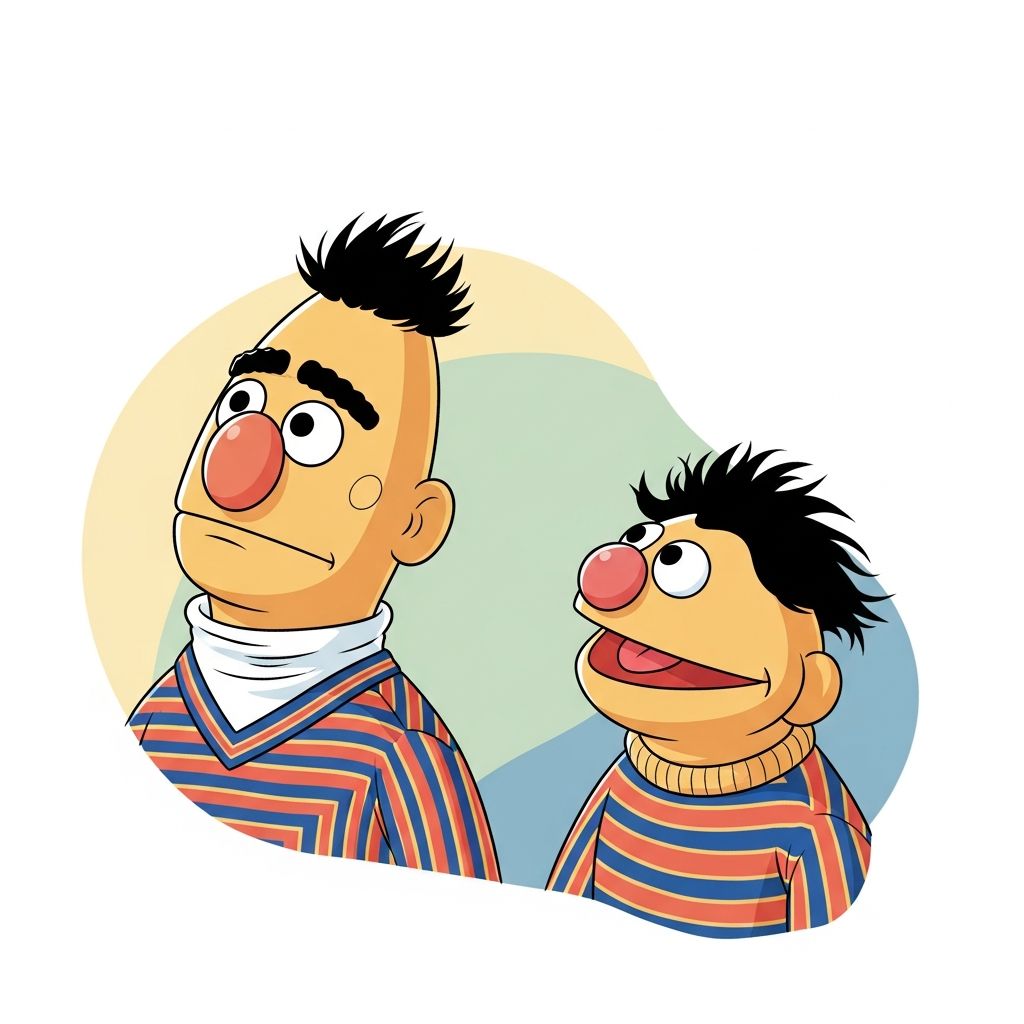
Bert and Ernie live together, bicker, laugh, and care deeply about each other, and for decades adults have debated one question: are they a couple? Sesame Workshop has repeatedly said no, emphasizing that the roommates are puppets without sexual orientation and that their relationship is not romantic. For many parents, that answer is not only acceptable but unexpectedly helpful.
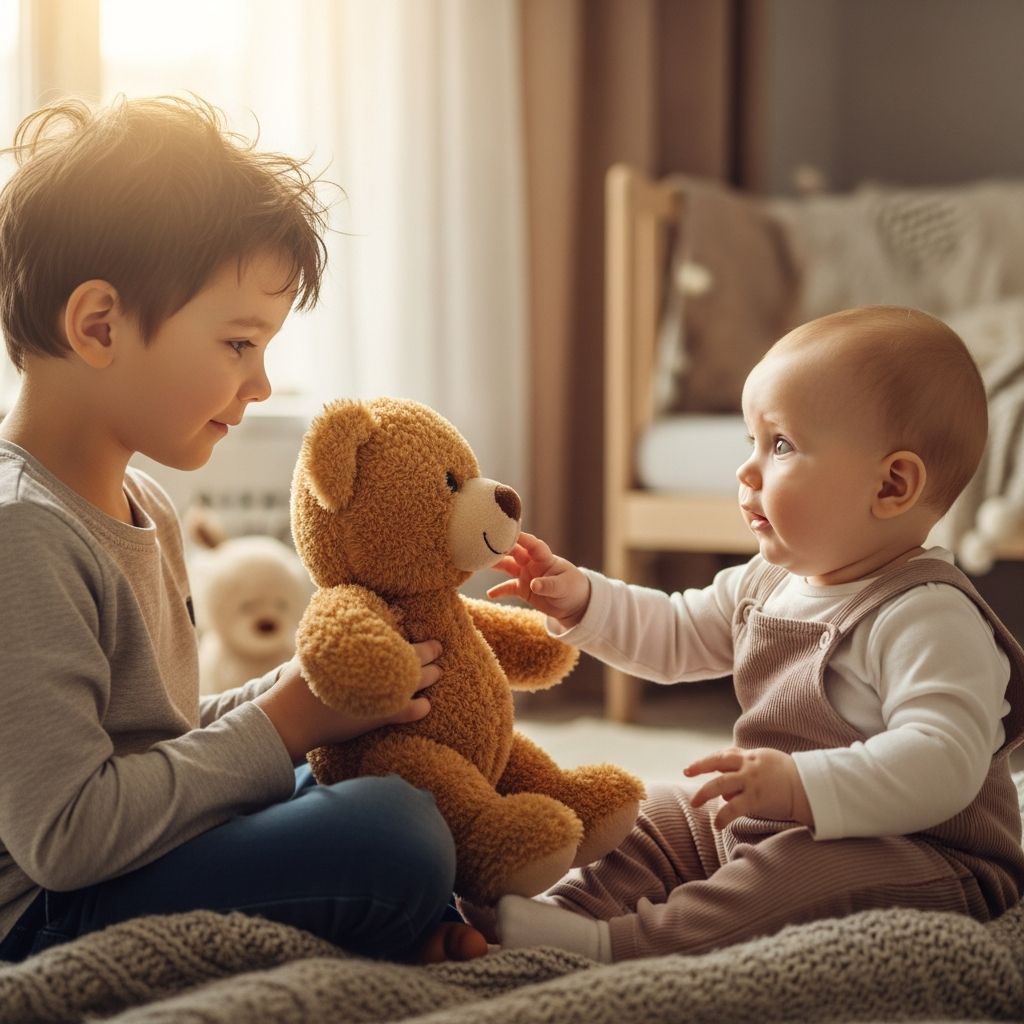
Seeing two male characters who share a home, show affection, and stay firmly in the realm of friendship offers boys something they rarely see elsewhere: a model of intimate, emotionally safe male friendship that has nothing to do with romance or sex. That can be powerful in a culture that still tells many boys to toughen up, hide vulnerability, and avoid anything that looks too soft or “girly.”
What Sesame Street Says About Bert and Ernie
Debate about Bert and Ernie’s orientation stretches back to the 1990s, when Sesame Workshop leadership clarified that the characters are not designed with sexuality in mind. As the organization explained, the roommates exist to show children how to be good friends and how to navigate conflict, not to model adult romantic relationships.
From a child development perspective, this emphasis on friendship aligns with what early childhood experts know: young children are preoccupied with play, belonging, and basic emotional skills far more than with adult-style romance. For preschoolers, the important questions are usually “Who will be my friend?” and “What happens if we disagree?”—exactly the territory where Bert and Ernie live.
For adults who want more LGBTQ+ representation in media, that can feel like a missed opportunity. But there is a separate, and still important, gain in having these particular puppets remain non-romantic: they loosen the strict rules many boys absorb about how they are allowed to treat each other.
How Boys Learn the Rules of Masculinity
Research on gender socialization shows that boys begin to get strong cultural signals about “acting like a man” very early in life. By the early school years, many boys have already learned that crying, expressing fear, or showing tender affection to male friends can bring teasing or rejection.
- Emotional restriction: Boys are often told, directly or indirectly, to hide sadness, fear, and vulnerability.
- Stigma around affection: Hugging or holding hands with another boy can be mocked as weak, childish, or “gay,” even among very young children.
- Pressure to appear tough: Many boys learn that anger and dominance are acceptable, while gentleness and dependence are not.
Scholars sometimes describe this as a narrow, traditional or “hegemonic” masculinity: a set of expectations that privileges toughness, control, and emotional distance. These expectations are linked to higher risk of depression, substance use, and difficulty seeking help later in life.
Against that backdrop, Bert and Ernie’s world looks quietly radical. They argue, but they also reconcile. They annoy each other, yet never stop sharing a home. They are free to be silly, tender, and scared, side by side. None of this erases the need for explicit LGBTQ+ visibility in kids’ media. But it does speak to another urgent task: broadening the emotional lives boys are allowed to have.
Why a Non-Romantic Bond Can Help Boys
Keeping Bert and Ernie officially non-romantic leaves their relationship squarely in the category of friendship. That matters, because friendship is the primary emotional laboratory for children. What boys see labeled as “just friends” shapes how they think real-life friendships are supposed to look.
| Aspect of Bert & Ernie’s Bond | Message Boys Can Learn |
|---|---|
| They live together, share space, and share routines. | Close male friends can rely on each other daily without it needing to be romantic. |
| They show irritation and care in the same episode. | Friendships can have conflict and still be loving and secure. |
| They express affection and concern verbally and physically. | It is acceptable for boys to say “I care about you” and to show comfort and tenderness. |
| They play, imagine, and act goofy together. | Playful, creative intimacy between boys is normal and healthy. |
Because their bond is never labeled as a romance, children do not have to choose between seeing them as “just friends” or as “a couple.” They can simply notice that two male characters share deep affection—and that the adults around them treat this as ordinary.
Platonic Intimacy: A Missing Model for Many Boys
Developmental research suggests that close, emotionally open friendships protect children and teens from loneliness, depression, and stress. Yet boys, especially during adolescence, often begin to report fewer intimate friendships and more hesitation about showing vulnerability than girls do.
Several cultural forces contribute to this shift:
- Fear of being labeled: Boys may avoid hugging, complimenting, or confiding in male friends in case others question their masculinity or orientation.
- Media stereotypes: Male friendships are frequently depicted as based on competition, banter, or shared activities, rather than emotional support.
- Limited vocabulary: Many boys are given fewer words for complex inner states, making it harder to articulate what they feel or need.
In this environment, it is not trivial that a globally recognized pair of male characters demonstrate daily, non-sexual closeness. Bert and Ernie normalize the idea that two male-presenting figures can build a life together that is full of warmth, without any requirement to attach labels, jokes, or defenses to that closeness.
Helping Kids Separate Affection from Sexuality
Another reason their non-romantic status can be helpful is that it allows adults to draw a clear line between affection and sexuality. Younger children in particular often conflate “love” with adult romance if all the examples they see of deep closeness are couples.
By meeting Bert and Ernie first and foremost as friends, children can learn:
- That love can mean loyalty, safety, and shared routines, not only romance.
- That hugs or shared living space are not automatically romantic.
- That friendship can be central, not secondary, in a person’s emotional life.
These distinctions are useful when parents later talk with children about different kinds of love: family bonds, friendships, and romantic or sexual relationships. It becomes easier to say, “Bert and Ernie love each other like best friends; some people also fall in love as romantic partners, and that looks different in some important ways.”
Talking with Kids About Bert, Ernie, and Representation
Parents sometimes feel caught between two impulses: wanting to celebrate LGBTQ+ representation, and wanting to follow the show’s own explanation of its characters. It is possible to do both thoughtfully.
When kids ask whether Bert and Ernie are gay—or say they must be because they live together—parents can respond in ways that both respect Sesame Workshop’s stance and affirm queer identities in general.
Some approaches that can help include:
- Affirm the question. You might say, “That’s an interesting question; lots of people have wondered about that.” This shows curiosity is welcome.
- Share what the creators say. Explain that the people who make the show say Bert and Ernie are friends, not a romantic couple, and that the characters were designed to teach about friendship.
- Normalize LGBTQ+ people. Add that, in real life, some men fall in love with men and some women with women, and that families like that are just as real and loving as any other.
- Return to feelings. Ask what your child notices about how Bert and Ernie treat each other—kindness, patience, frustration, forgiveness—and connect those to what makes a good friend.
This way, the conversation does not hinge on “proving” a label for two puppets. Instead, it becomes a chance to talk about the variety of relationships people have, the value of good friendship, and the importance of treating all families with respect.
What Parents Can Emphasize When Watching Together
Co-viewing children’s television allows adults to name and reinforce the emotional skills on screen. With Bert and Ernie, parents can highlight specific moments that push back against restrictive notions of masculinity.
- When Ernie admits fear or sadness: Point this out and connect it to your child’s experiences: “He’s saying he’s scared. Everyone feels scared sometimes; it helps to tell a friend.”
- When Bert apologizes or forgives: Emphasize that caring about someone includes making up after a conflict and taking responsibility for mistakes.
- When they share joy: Celebrate scenes of shared laughter or creativity as examples of healthy, playful friendship.
- When they disagree: Talk through how they solve the problem—taking turns, listening, compromising—and ask how your child might handle similar moments.
By narrating these behaviors, parents help children recognize that gentleness, honesty, and interdependence are strengths, not weaknesses, for boys and for all genders.
Balancing Friendship Models and LGBTQ+ Visibility
It is important not to treat Bert and Ernie’s non-romantic status as a solution to the separate need for explicit LGBTQ+ representation. Many major medical and psychological organizations, including the American Academy of Pediatrics and the American Psychological Association, stress that affirming LGBTQ+ identities and family structures is crucial for children’s mental health and safety.
Media that clearly features LGBTQ+ characters and families—children with two moms or two dads, or stories where a character grows up to love someone of the same gender—plays a different and necessary role. Both kinds of representation can coexist:
- Friendly puppets like Bert and Ernie show that affectionate male friendships are normal and valued.
- Stories with openly LGBTQ+ characters show that queer identities and relationships exist, are valid, and can be joyful and ordinary.
For parents, the question is less “What exactly are Bert and Ernie?” and more “What do I want my child to learn from them, and what other stories do I need to offer so they see the full spectrum of real-life identities and relationships?”
Key Takeaways for Parents Raising Boys
When you step back from the debates and look through a developmental lens, several practical lessons emerge from the way Bert and Ernie have been framed.
- Emotional closeness between boys needs visible models. Characters like Bert and Ernie legitimize warmth, silliness, and vulnerability among male friends.
- Friendship deserves center stage. Making their bond explicitly platonic highlights that friendships can be as deep and life-shaping as romantic relationships.
- Affection is not the same as sexuality. Children can see hugging, sharing space, and saying “I care about you” as part of many different types of relationships.
- Media is only one piece. Parents still need to offer real-life experiences and diverse stories that affirm both healthy masculinity and LGBTQ+ lives.
Two puppets may not answer every cultural question about gender and sexuality. What they can do—and have done for generations—is quietly assure children that deep, gentle friendship between boys is not just allowed. It is something worth singing about.
Frequently Asked Questions (FAQs)
Q: Why has there been so much debate about Bert and Ernie’s orientation?
A: Adults have projected their own questions about representation onto the characters because the roommates are unusually close and live together. Sesame Workshop has repeatedly said the pair are puppets without sexual orientation whose relationship is meant to model friendship, not romance. That explanation has sparked conversation about both LGBTQ+ visibility and how boys learn to relate to each other.
Q: Does saying Bert and Ernie aren’t gay send a negative message about LGBTQ+ people?
A: It can feel disappointing if people hoped the characters would be explicit queer icons. However, parents can frame the creators’ stance as a statement about the characters’ purpose, not about the value of LGBTQ+ identities. You can say that these puppets are about friendship, while making clear that real-life gay, lesbian, bi, and trans people and families are respected and loved.
Q: How can I use Bert and Ernie to encourage my son to be more emotionally open?
A: Watch episodes together and comment on what the characters feel and how they show it. When one admits fear or sadness, connect it to times your child felt the same. When they hug or help each other, label that as kindness and strength. Linking what happens on screen to your child’s daily life helps normalize emotional expression and affectionate friendship for boys.
Q: Is it important that children also see clearly LGBTQ+ characters in media?
A: Yes. Major professional organizations emphasize that affirming LGBTQ+ identities and showing diverse families helps reduce stigma and supports the well-being of both LGBTQ+ youth and those with LGBTQ+ parents. Bert and Ernie can model gentle male friendship, while other shows and books can introduce children to explicitly queer characters and families.
Q: What if my child insists that Bert and Ernie are a couple?
A: You can acknowledge your child’s interpretation while explaining the creators’ intent. For example: “Some people do imagine them that way, and that’s one way to think about them. The people who make the show say they are best friends who live together. Either way, what matters most is how kindly they treat each other.” This keeps the focus on values—kindness, loyalty, and respect—rather than on winning an argument about labels.
References
- Promoting the Well-Being of Children Whose Parents Are Gay or Lesbian — American Academy of Pediatrics. 2013-03-20. https://publications.aap.org/pediatrics/article/131/4/827/30912/Promoting-the-Well-Being-of-Children-Whose-Parents
- Resolution on Sexual Orientation, Gender Identity and Expression, and Marriage Equality — American Psychological Association. 2011-08-03. https://www.apa.org/about/policy/resolution-sexual-orientation
- Bert and Ernie Sexual Orientation Controversy — Memepedia (summary citing Sesame Workshop statements). 2018-09-20. https://memepediadankmemes.fandom.com/wiki/Bert_and_Ernie_Sexual_Orientation_Controversy
- Man Up! Masculinity, Race, and Moral Identity Among Men in Prison — Victor M. Rios, in Contexts (American Sociological Association). 2011-11-01. https://journals.sagepub.com/doi/10.1177/1536504211427919
- Precarious Manhood — Vandello & Bosson, in Current Directions in Psychological Science. 2013-06-01. https://journals.sagepub.com/doi/10.1177/0963721413486976
- Adolescent Boys’ Friendships: The Distinctive Features of Close Friendships and Group Relationships — Way & Greene, in Child Development. 2006-07-01. https://srcd.onlinelibrary.wiley.com/doi/10.1111/j.1467-8624.2006.00909.x
- The Importance of Play in Promoting Healthy Child Development and Maintaining Strong Parent-Child Bonds — American Academy of Pediatrics. 2018-09-01. https://publications.aap.org/pediatrics/article/142/3/e20182058/38606/The-Importance-of-Play-in-Promoting-Healthy-Child