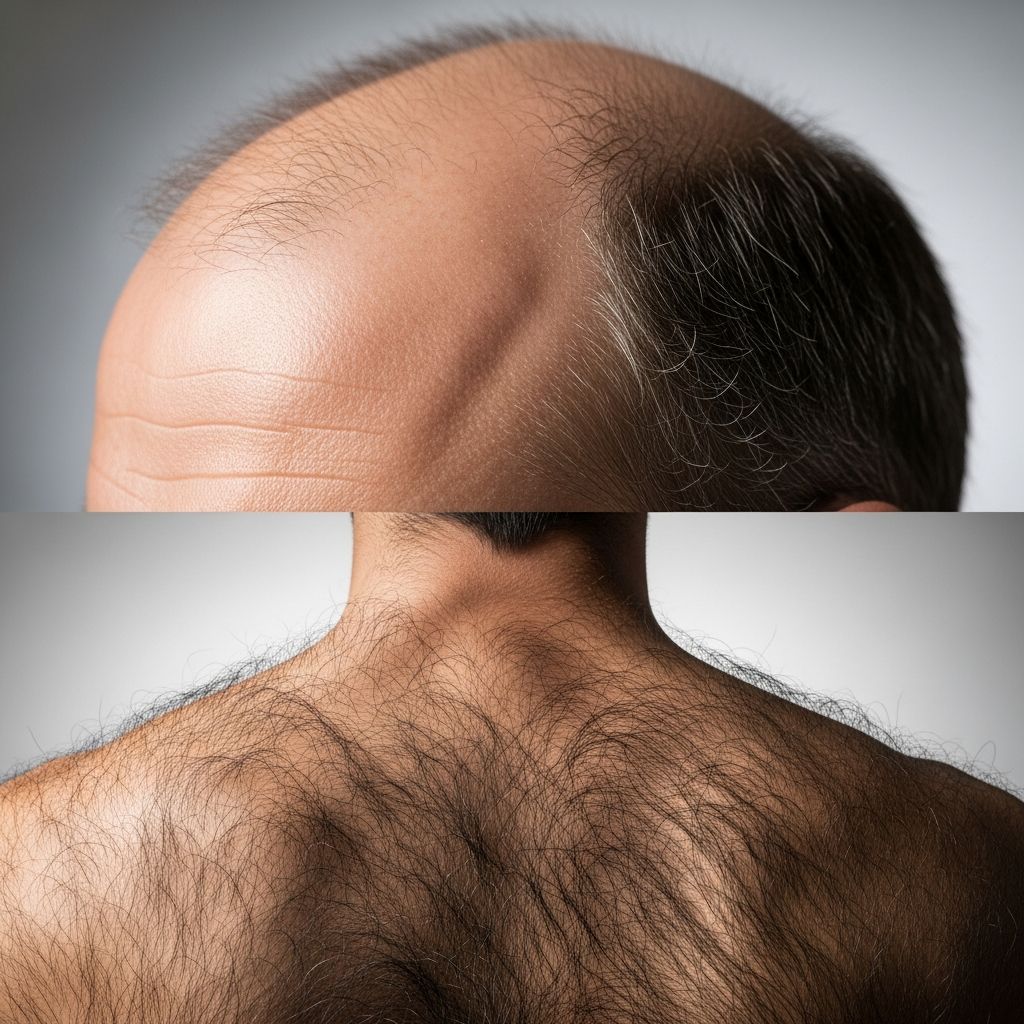
Men experiencing thinning hair on their crowns often notice a surprising trade-off: denser growth on their backs, shoulders, and necks. This pattern stems from dihydrotestosterone (DHT), a potent hormone that shrinks scalp follicles while stimulating body hair.
The Role of Hormones in Hair Distribution
Hair growth across the body is regulated by androgens, primarily testosterone and its byproduct DHT. Produced via the enzyme 5-alpha reductase, DHT converts about 10% of circulating testosterone. While testosterone promotes general male traits, DHT exerts stronger effects on hair follicles.
On the scalp, DHT binds to sensitive receptors, triggering miniaturization. Follicles produce thinner, shorter hairs until they stop growing entirely, leading to the classic horseshoe pattern of male pattern baldness. In contrast, follicles on the back, shoulders, chest, and face respond positively to DHT, developing thicker, coarser terminal hairs.
- DHT’s dual action: Inhibits scalp growth but enhances body hair.
- Enzyme key: 5-alpha reductase amplifies DHT from testosterone.
- Age factor: Cumulative exposure increases sensitivity over decades.
This explains why balding accelerates in middle age, coinciding with peak body hair proliferation. Even fully bald scalps retain fringes because side and back follicles resist DHT.
Genetics: The Ultimate Decider
While hormones drive the process, DNA determines vulnerability. Male pattern baldness, or androgenetic alopecia, affects two-thirds of men, with risk doubling if a father is bald. Maternal grandfather’s baldness strongly predicts it, linked to X-chromosome genes influencing follicle sensitivity.
Not all high-testosterone men bald; only those with genetically DHT-sensitive scalp follicles do. Body hair genes operate independently, allowing ‘power donuts’—bald tops with lush backs.
| Genetic Influence | Scalp Effect | Body Effect |
|---|---|---|
| High DHT sensitivity | Miniaturization, loss | Thick growth |
| Low DHT sensitivity | Full hair retention | Minimal body hair |
| Family history | 2x higher risk | Variable |
Puberty activates these genes as DHT surges, but full effects emerge later. Teens may notice temple recession; by 50, many sport unruly ear and nose hairs from prolonged exposure.
Why Body Hair Thrives Where Scalp Fails
Follicle types differ by region. Scalp follicles cycle through growth (anagen), transition (catagen), and rest (telogen) phases, lasting years. DHT shortens anagen in sensitive scalps, yielding vellus (fine) hairs instead of terminal ones.
Back and shoulder follicles, however, lengthen anagen under DHT, producing dark, robust hairs. This androgen-dependent dimorphism peaks post-puberty, explaining middle-aged men’s ‘hairy backs.’
- Scalp: DHT shortens growth cycle, thins hair.
- Body: DHT extends growth, coarsens hair.
- Neck/ears: Progressive lengthening with age.
Environmental factors like hygiene don’t cause this; it’s internal, hormone-driven.
Health Implications and Myths Busted
Increased body hair signals high androgens but isn’t inherently harmful. However, elevated DHT links to prostate issues in some studies, though correlation isn’t causation. Balding itself raises cardiovascular risk slightly, per recent meta-analyses, but lifestyle trumps genetics.
Myths:
- Too much testosterone causes baldness: No, it’s follicle response.
- Baldness is contagious: False; purely genetic/hormonal.
- Shampoos reverse it: Only if DHT-blocking; most don’t.
Treatment Options for Scalp and Body Hair
Managing the imbalance involves targeting DHT or cosmetics.
Scalp Restoration
Minoxidil (Rogaine) vasodilates follicles, promoting growth in 60% of users. Finasteride inhibits 5-alpha reductase, reducing scalp DHT by 60-70%, halting loss in 80-90%. Low-level laser therapy stimulates follicles; transplants relocate DHT-resistant back hairs to scalps, thriving post-move.
Body Hair Reduction
Shaving offers quick relief but stubble returns. Waxing/lasering targets follicles long-term; electrolysis permanently destroys them. Prescription eflornithine slows facial growth, adaptable for backs.
| Method | Scalp Use | Body Use | Pros | Cons |
|---|---|---|---|---|
| Minoxidil | Yes | No | OTC, effective | Lifelong use |
| Finasteride | Yes | Off-label | Reduces DHT | Side effects (rare) |
| Laser | Yes | Yes | Permanent reduction | Costly, multiple sessions |
| Transplant | Yes | No | Natural results | Invasive |
Side effects like finasteride’s erectile dysfunction affect <2%; monitor with doctors.
Grooming Strategies for Modern Men
Embrace or tame: Bruce Willis rocks bald; others groom. Back shaving kits with ergonomic razors suit DIY. Professional waxing lasts 4-6 weeks. Trimmers maintain neatness without full removal.
- Daily: Trim neckline, nose/ear hairs.
- Weekly: Shave or depilate back.
- Monthly: Wax or laser maintenance.
Products: Androgen blockers like ketoconazole shampoos mildly reduce body hair; moisturize post-grooming to prevent irritation.
Embracing the Bald and Bold Look
Acceptance builds confidence. Baldness signals maturity; body hair, virility in some cultures. Combine shaving with fitness for a sculpted, hair-free torso. Confidence trumps perfection.
Frequently Asked Questions (FAQs)
Why do balding men get more back hair?
DHT shrinks scalp follicles but stimulates back ones, creating inverse growth.
Can I prevent both baldness and body hair?
Finasteride lowers DHT systemically, addressing both, but consult a doctor.
Is body hair growth a sign of high testosterone?
Indirectly yes, via DHT conversion; genetics modulate it.
Does shaving back hair make it grow thicker?
No myth; it appears coarser due to blunt tips.
Are hair transplants effective for balding?
Yes, using DHT-resistant back follicles; 90% success rate.
Can women experience similar patterns?
Hirsutism mimics it from androgen excess, but rarer.
References
- Why Middle-Aged Bald Men Grow Hair On Their Backs and Shoulders — Fatherly. 2023 (approx., based on content). https://www.fatherly.com/health/why-bald-men-grow-hair-on-their-back
- Why Do Some Men Get Bald as They Grow Older? [ID0906] — YouTube (Healthcare Triage). 2023-10-15. https://www.youtube.com/watch?v=M6AuRah-f0Q
- Male Pattern Baldness (Androgenic Alopecia): Stages, Treatment — Cleveland Clinic. 2024-01-26. https://my.clevelandclinic.org/health/diseases/24515-male-pattern-baldness-androgenic-alopecia
- Hirsutism – Symptoms & causes — Mayo Clinic. 2024-08-26. https://www.mayoclinic.org/diseases-conditions/hirsutism/symptoms-causes/syc-20354935