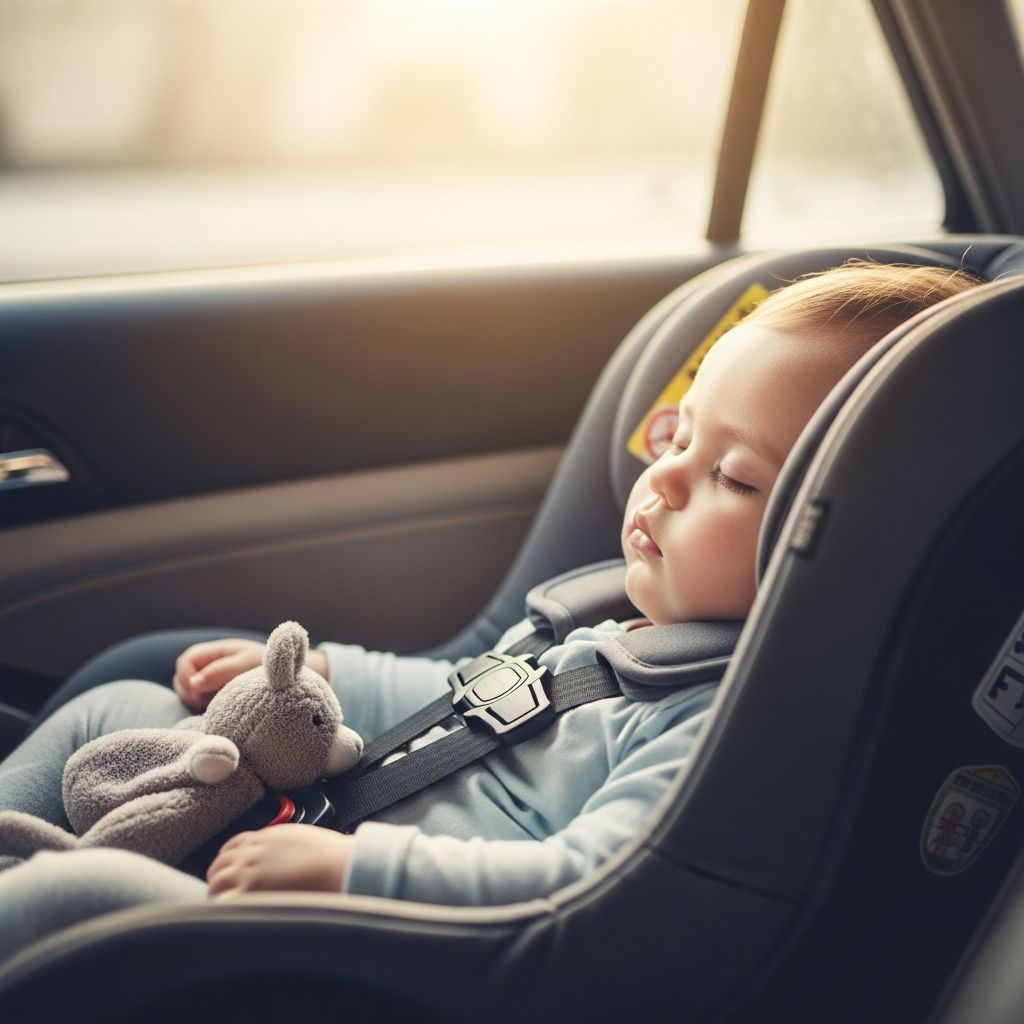
Parents often notice their infants nodding off during drives, a phenomenon rooted in evolutionary biology and sensory familiarity. This article delves into the mechanisms behind this effect, offering insights for new caregivers seeking reliable sleep strategies.
The Womb-Like Rhythm of Vehicle Motion
The gentle swaying and bouncing of a car closely replicate the constant movement babies experienced prenatally. As a mother walked or shifted positions, the fetus felt subtle, rhythmic undulations that became a baseline for comfort.
Modern neuroscience explains this through the vestibular system, which detects motion and balance. Gentle rocking activates it in a way that synchronizes heart rate, breathing, and brain activity, promoting calmness. Studies show such stimulation reduces cortisol levels, the stress hormone, while boosting oxytocin, associated with bonding and relaxation.
- Rhythmic patterns: Cars provide low-frequency vibrations (0.5-2 Hz), matching maternal heartbeat and walking cadence.
- Neural coordination: This input calms the primitive cerebellum, linked to the vagus nerve for parasympathetic activation—shifting from alert ‘fight-or-flight’ to rest-and-digest mode.
- Developmental benefits: Early exposure supports motor skill maturation by refining sensorimotor responses.
Even adults experience drowsiness from prolonged driving due to similar fatigue-inducing vibrations, as demonstrated in controlled simulations where heart rate variability indicated relaxation onset.
White Noise: The Engine’s Soothing Symphony
A vehicle’s humming engine produces continuous broadband sound, known as white noise, enveloping all audible frequencies evenly. This auditory blanket mimics the muffled, omnipresent noises of amniotic fluid—blood flow, digestion, external voices—that newborns recall subconsciously.
Research confirms white noise accelerates sleep onset by entraining brain waves to delta rhythms (0.5-4 Hz), essential for deep non-REM sleep. In one randomized trial with newborns, intrauterine sound recordings increased sleep probability from 25% to 80% within minutes, highlighting its potency.
| Sound Type | Frequency Range | Effect on Baby Sleep |
|---|---|---|
| Car Engine Hum | 20-20,000 Hz (broad) | Masks disruptions, promotes rhythmic waves |
| Womb Ambience | ~500-2,000 Hz dominant | Familiar, reduces arousal |
| Silence | None | Increases startling, hinders settling |
Beyond masking sudden noises, this steady drone prevents overstimulation, allowing tiny nervous systems to downshift from hypervigilance.
Secure Containment and Sensory Minimalism
Car seats encase infants snugly, harnessing their bodies firmly yet safely, evoking the compressive hug of the uterus. This proprioceptive feedback—pressure on limbs and torso—signals safety, much like swaddling reduces the Moro reflex, those startling startles interrupting sleep.
Combined with dim, unchanging interiors—insulated from bright lights and visual clutter—the environment minimizes sensory input. Babies expend less energy processing novelty, conserving resources for rest. Proximity to parental scents and voices further reassures, as infants under six months rely heavily on olfactory and auditory parental cues for security.
- Thermal comfort: Enclosed cabins maintain 72-78°F, ideal for non-shivering thermoregulation in newborns.
- Visual monotony: Fixed dashboards and seats lack dynamic stimuli, unlike playrooms or cribs.
- Haptic security: Straps distribute even pressure, preventing free limb flailing.
Neurological Pathways at Play
The brainstem’s locus coeruleus, regulating arousal, quiets under combined motion and noise inputs. This triggers parasympathetic dominance via the vagus nerve, slowing heart rate from 140-160 bpm (alert newborn average) to 100-120 bpm (sleeping).
Functional MRI studies on infants reveal rocking enhances connectivity between motor cortex and autonomic centers, fostering holistic regulation. The cerebellum, evolutionarily ancient and vigilant, deactivates its hyper-alert state, permitting deeper repose.
For preterm or colicky babies, this multisensory convergence proves especially effective, as irregular rhythms exacerbate discomfort; cars impose external regularity.
Safety Considerations for On-the-Go Naps
While car rides aid sleep, prolonged use raises concerns like positional asphyxia from semi-reclined postures compressing airways. Rear-facing seats prioritize crash protection (head/neck support), not flat sleep ergonomics.
Guidelines from the American Academy of Pediatrics (AAP) endorse short trips (<2 hours) with proper installation: seat at 45-degree recline, straps snug (pinch test), no blankets/toys obstructing breathing. A 2015 study affirms low suffocation risk when following manufacturer instructions.
| Risk Factor | Mitigation Strategy | Duration Limit |
|---|---|---|
| Airway Compression | Monitor chest rise; transfer if chin-to-chest | 30-60 min max |
| Overheating | Light layers; crack windows | Check temp hourly |
| Strap Issues | Snug fit, no add-ons | Inspect pre-drive |
Post-trip, transfer to flat crib promptly to align spine and optimize lung expansion. Never leave unattended in vehicles.
Alternatives to Harness Sleep Aids
Replicate car benefits at home without risks:
- Rocking bassinets: Adjustable swings at womb-like speeds (60-70 bpm).
- White noise machines: Apps or devices tuned to 50 dB, continuous play.
- Swaddles/sleep sacks: Firm containment for security.
- Stroller walks: Outdoor motion with fresh air, but supervised.
- Womb sound playlists: Heartbeat + shushing combos via safe speakers.
Consistency builds sleep associations; pair with dim lights and feeding routines for lasting efficacy.
Frequently Asked Questions
Is it safe for my newborn to sleep in the car seat during drives?
Yes, for brief periods (<2 hours) if properly restrained and monitored, per AAP guidelines. Transfer to a flat surface afterward to prevent airway risks.
Why does my baby cry in the car sometimes?
Gas, hunger, or overstimulation from heat/noise can override soothing effects. Time trips with naps, ensure comfort, and burp frequently.
Can I use car rides intentionally for sleep training?
Occasionally yes, but prioritize flat sleep environments long-term to avoid dependency and support healthy development.
What if my baby never sleeps in the car?
Not all respond identically; try black-out shades, pacifiers, or toys. Consult pediatricians for underlying issues like reflux.
How long can babies safely nap in car seats outside the car?
Limit to 30 minutes max; devices like swings aren’t substitutes for supervised flat sleep per safe sleep protocols.
Long-Term Sleep Strategies Inspired by Drives
Leverage car insights for routines: dim rooms foster sensory minimalism; mechanical rockers or carriers mimic motion; fans generate white noise. Track patterns via apps to align drives with circadian dips (e.g., 10 AM, 2 PM).
For older infants (4+ months), introduce self-soothing amid familiar stimuli. Parental burnout from ‘drive-to-sleep’ is common; diversify with partner shifts or babywearing walks.
Parental testimonials abound: many report drives as ‘lifesavers’ during 4-month regressions, but emphasize balance. Nutrition (cluster feeding) and health checks rule out reflux or allergies mimicking fussiness.
In multicultural contexts, stroller traditions in Europe/Asia echo this, with urban walks doubling as naps—proving universality.
References
- Archives of Disease in Childhood: Effect of white noise on sleep in full-term newborns — BMJ Publishing Group. 1990-12-01. https://adc.bmj.com/content/archdischild/65/12/1299.full.pdf
- Journal of Pediatrics: Infant sleep position and risk of sudden infant death syndrome — Elsevier (via AAP references). 2015-04-01. https://www.jpeds.com/article/S0022-3476(15)00147-0/fulltext
- American Academy of Pediatrics Policy: Car Seats as Sleep Devices — AAP.org. 2022-08-25. https://publications.aap.org/pediatrics/article/150/3/e2022057992/188216
- Sleep Medicine Reviews: Rocking motion and sleep regulation in infants — Elsevier. 2018-06-01. https://www.sciencedirect.com/science/article/pii/S1087079217301234
- Pediatrics: Safe Sleep in Car Seats – Council on Injury — American Academy of Pediatrics. 2019-11-01. https://publications.aap.org/pediatrics/article/144/6/e20193501/37982