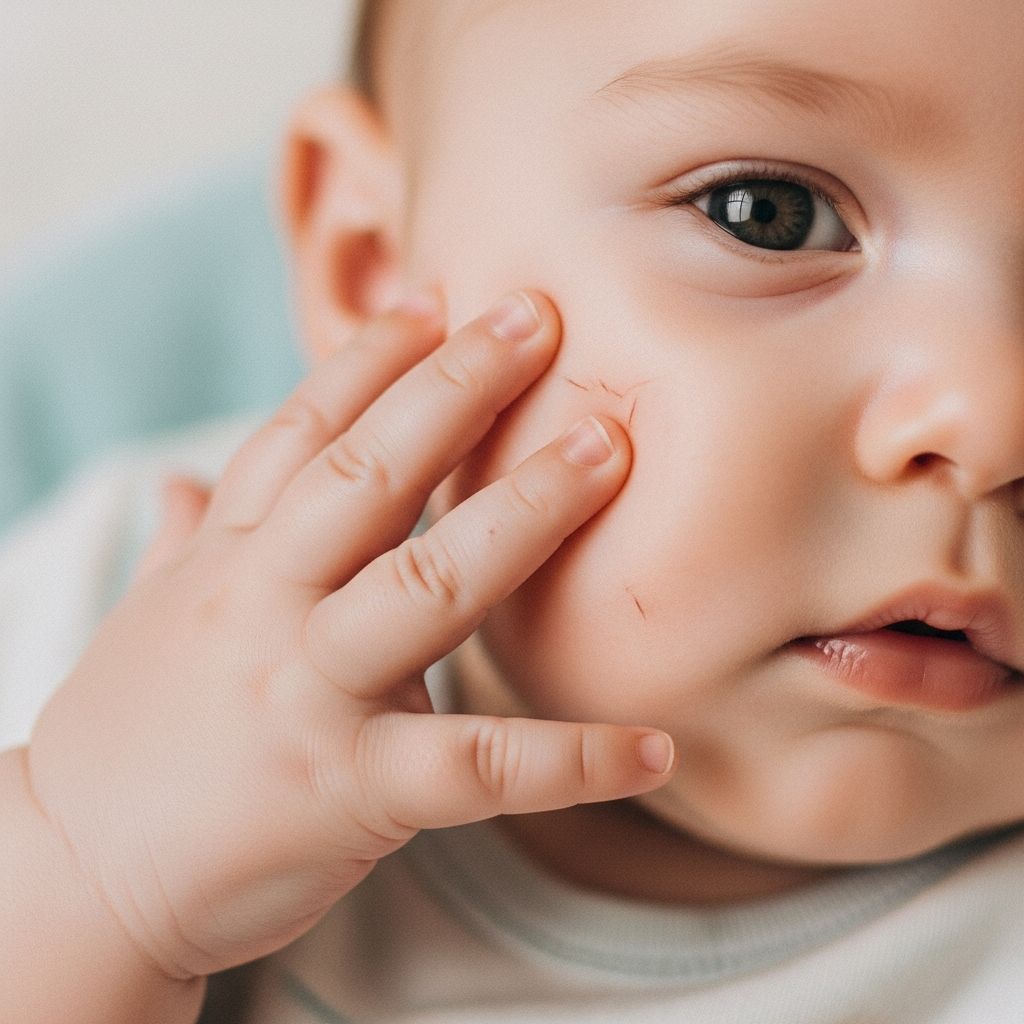
Seeing a tiny baby scratch their own face or body can be surprisingly upsetting, especially when it leaves red marks or little scabs. Yet mild scratching is one of the most common concerns in the first months of life and is usually manageable with a bit of knowledge and a few simple habits.
This guide walks through why babies scratch, what may be behind the itch, safe ways to protect their skin, and the signs that mean it is time to call your pediatrician.
Why Babies Scratch Themselves
Scratching is usually a mix of normal development and sensitive baby skin. Understanding the “why” behind it helps you choose the right fixes instead of fighting every little hand movement.
Normal Reflexes and Wiggly Arms
In the first months, babies do not have full control over their hands. Their arms fly around with startle reflexes, random swats, and stretching movements, and their nails often catch delicate facial skin in the process. Many babies seem to scratch most during light sleep or when they are just waking up, simply because their limbs are moving more.
- Newborn reflexes can cause sudden arm jerks that lead to unintentional scratching.
- Babies explore their faces with their hands long before they can control how hard they touch.
- Light sleep and drowsy periods are peak times for wayward fingernails.
Itch: The Tiny Problem Behind Big Scratches
Sometimes scratching is not just random movement; it is your baby’s way of reacting to itch or irritation. Baby skin is thinner than adult skin and loses moisture more easily, so even small triggers can feel very uncomfortable. When something itches, babies do the only thing they can: rub, claw, or scratch at it.
In those cases, the scratching is a signal to go looking for a cause, such as dryness, a rash, or contact with something irritating.
Common Causes of Baby Scratching
Several overlapping factors often contribute to scratching. It is helpful to think in terms of three big buckets: dry or sensitive skin, specific skin conditions, and environmental triggers.
Dryness and Sensitive Skin
Dryness is one of the most frequent reasons a baby rubs or scratches their skin. When the outer layer of skin doesn’t hold moisture well, nerve endings are more exposed and more reactive, making itch signals stronger.
- Frequent bathing without enough moisturizing can strip natural oils.
- Low humidity (especially in heated or air-conditioned rooms) dries the skin.
- Fragranced soaps, bubble baths, or harsh cleansers make dryness worse.
Skin Conditions That Can Increase Itch
Sometimes the scratching is linked to a specific skin condition. Only a health professional can diagnose these, but knowing what they look like helps you know when to seek help.
| Condition | What it often looks like | Common locations | How it tends to feel |
|---|---|---|---|
| Eczema (atopic dermatitis) | Dry, rough, sometimes red or patchy areas that may flare and quiet over time. | Cheeks, scalp edges, behind knees, inside elbows, torso folds. | Very itchy, especially at night; scratching can worsen redness and roughness. |
| Simple dry skin | Fine flaking, dull or ashy appearance, tiny cracks or roughness. | Arms, legs, cheeks, belly, anywhere with more air exposure. | Mild to moderate itch, often worse after baths or in dry rooms. |
| Contact irritation | Redness or rash in places where clothing, diapers, or products touch the skin. | Neck folds, diaper area, under elastic bands, under tags or seams. | Stinging or itching, sometimes with visible discomfort when touched. |
| Heat rash | Small bumps or dots, sometimes red, sometimes skin-colored. | Back, neck, chest, folds where sweat collects. | Prickly or itchy, often worse in warm, stuffy environments. |
Environmental and Everyday Triggers
Even without a chronic skin condition, little everyday exposures can make a baby itchy. Often the scratching will appear suddenly after a change in products, fabric, or routine.
- Scented detergents, fabric softeners, and dryer sheets used on baby clothes and bedding.
- Rough fabrics, tags, or seams around the neck, wrists, or ankles.
- Drool, milk, or sweat sitting on the skin for long periods and breaking down the skin’s barrier.
- Dust or pet dander collecting on soft toys, blankets, or carpets near where the baby sleeps.
Is Baby Scratching Ever Normal?
Some scratching is expected as babies learn to move and react to new sensations. The goal is not to eliminate every scratch, but to reduce injury and make sure there is no bigger problem behind it.
Signs Scratching Is Likely Harmless
If your baby seems content, feeds well, sleeps reasonably for their age, and has only occasional small marks, the scratching is probably part of normal development.
- Red lines or tiny scabs that heal quickly and do not get infected.
- No obvious rash or only briefly pink skin after rubbing.
- Scratching that comes and goes, mostly during sleepy moments or fussing.
Signs to Talk With a Pediatrician
Any time you worry, it is appropriate to call your baby’s health provider. There are certain patterns that are especially important to mention because they may suggest more than simple dryness or random scratching.
- Open sores, yellow crusts, spreading redness, or warmth around scratched areas.
- Persistent rash that does not improve with gentle skin care and fragrance-free products.
- Very intense itch that keeps the baby from sleeping or feeding.
- Scratching combined with fever, poor feeding, or changes in behavior.
- Any concern about allergies, such as hives, swelling, or trouble breathing. (These symptoms require urgent care.)
Practical Ways to Protect Your Baby’s Skin
There are two main pieces to reducing scratching: protecting the skin from damage and making the skin less itchy in the first place. The following approaches can be combined and adjusted based on your baby’s age, climate, and any medical guidance you receive.
Gentle Nail and Hand Management
Managing tiny fingernails is a simple but powerful step. Because nails grow quickly and can be surprisingly sharp, keeping them short and smooth immediately lowers the risk of deep scratches.
- Trim nails every few days using baby nail clippers or a soft file.
- Many caregivers find it easiest to cut nails while the baby is deeply asleep or immediately after a bath when nails are softer.
- Check for sharp corners after trimming and smooth them with an emery board.
Some families also use soft cotton mittens or fold-over cuffs on sleepers, especially at night. These can protect the skin while the baby’s movements are most jerky and uncontrolled. For older infants who use their hands to explore and learn, mittens are usually best reserved for sleep and short periods, so that daytime play and fine-motor development stay on track.
Building a Skin-Friendly Routine
Daily care choices influence how itchy a baby’s skin feels. A simple, consistent routine goes a long way toward preventing dryness and irritation.
- Use lukewarm water for baths and keep most baths short.
- Choose fragrance-free, dye-free cleansers labeled for sensitive or baby skin and avoid harsh soaps.
- Pat (do not rub) the skin dry with a soft towel.
- Apply a gentle, fragrance-free moisturizer within a few minutes of bathing, while the skin is still slightly damp, to lock in moisture.
In very dry climates or during winter with indoor heating, some babies benefit from moisturizer more than once a day. Thick creams or ointments often protect better than very light lotions, but your pediatrician can help you choose what makes sense for your child’s skin and any specific condition.
Choosing Fabrics and Laundry Products
Because babies spend much of their time against textiles, what touches their skin matters. Softness and simplicity are your best friends here.
- Dress your baby in soft, breathable fabrics such as cotton rather than stiff or scratchy materials.
- Remove clothing tags that rub and avoid tight seams or elastics around irritated areas.
- Wash baby clothing and bedding in fragrance-free detergent and skip fabric softeners and dryer sheets, which often leave residues that bother sensitive skin.
Creating a Comfortable Sleep Environment
Many parents notice scratching during naps and at night. This is partly because itching often feels more intense when a baby is lying still. A few thoughtful changes to the sleep space can reduce the urge to scratch.
- Keep the room at a comfortable temperature so the baby does not overheat.
- Use a humidifier if the air is very dry, following cleaning instructions carefully to avoid mold or bacteria.
- Dress your baby in one or two light layers instead of many heavy ones to reduce sweating.
- Consider an age-appropriate swaddle for young babies who still have a strong startle reflex, making sure swaddling is safe and does not restrict hip movement or breathing.
Supporting Babies With Ongoing Itchy Skin
When scratching is linked to a chronic condition such as eczema, daily life can become a cycle of flare-ups and healing. While a health professional should guide treatment, there are everyday strategies that often help families cope more comfortably.
Working With Your Pediatrician
If your baby has frequent redness, thickened patches, or relentless itch, bring detailed observations to medical visits. Information about when scratching is worst, what seems to trigger it, and how the skin responds to moisturizers or other products is very useful for diagnosis and treatment planning.
- Ask whether your baby’s rash is consistent with eczema, contact dermatitis, or another condition.
- Follow instructions on prescribed creams or ointments exactly, including where and how often to apply them.
- Discuss how to combine medical treatments with moisturizers and other daily care to support the skin barrier.
Everyday Comfort Strategies
For many babies, small comfort measures reduce scratching intensity even when the underlying condition is still present. The goal is to interrupt the itch–scratch cycle before it leads to broken skin.
- Use cool, damp cloths on particularly itchy areas for brief periods to provide soothing sensations.
- Gently pat or rub near an itchy spot to distract from scratching, especially while the baby drifts off to sleep.
- Keep nails short and consider protective clothing (such as soft long-sleeved onesies) when flares are at their worst.
- Stay consistent with the skincare routine recommended by your healthcare provider, even on days when the skin looks better.
Emotional Side: Calming Parent Worry
It is easy to feel guilty or anxious when scratches appear on a baby’s face. Remember that almost all babies manage to scratch themselves at some point, even with very attentive caregiving. The focus is not on being perfect but on learning what helps your particular child and adjusting over time.
- Remind yourself that small scratches heal and are part of early life with a very active little person.
- Ask for help, reassurance, or second opinions from healthcare providers when you feel stuck or overwhelmed.
- Take photos or keep a brief log of rashes or scratching patterns if that helps you feel more in control and prepared for appointments.
Quick-Reference Tips for Reducing Baby Scratching
For busy moments, it can help to have a short checklist in mind. The following points summarize the most important day-to-day strategies:
- Keep nails short and smooth; consider mittens during sleep for younger babies.
- Bathe briefly in lukewarm water and moisturize promptly with fragrance-free products.
- Use soft, breathable fabrics and avoid fragranced detergents, softeners, and rough seams.
- Maintain a comfortable, not overly warm, sleep environment with adequate humidity.
- Consult a pediatrician for persistent rashes, intense itch, or any signs of infection or allergy.
FAQs About Baby Scratching
1. When do babies usually stop scratching their faces so much?
As babies gain better control over their hands, usually in the late newborn period and over the first several months, accidental scratches tend to decrease. Many families notice that by the time a baby can intentionally reach and grasp toys, sleep-related face scratches have become far less frequent. The timeline is different for every child, but improved motor control often makes a big difference.
2. Are baby mittens safe to use all day?
Soft mittens or sleeve cuffs are helpful for short-term protection, especially for newborns and during sleep. However, babies also need time to use their hands to explore, learn textures, and bring their fingers to their mouths as part of development. For that reason, many experts suggest using mittens mainly at night or during severe flare-ups, leaving hands free during supervised awake time whenever safely possible.
3. How can I tell the difference between normal dry skin and something like eczema?
Simple dryness often shows up as fine flaking or a slightly rough feel that improves steadily with regular moisturizing and gentle products. Eczema, by contrast, tends to appear in distinct patches that are very itchy, may look red or thickened, and may flare and improve in cycles. If moisturizing alone does not seem to help, or if your baby seems very uncomfortable, it is important to have a health professional evaluate the skin.
4. Is it okay to bathe my baby every day if they are scratching a lot?
Daily baths can be fine for many babies if they are short, use lukewarm water, and are followed promptly by a good moisturizer. The main concern is avoiding long, hot baths and harsh soaps that strip natural oils and worsen dryness. If your baby has a diagnosed skin condition, follow the specific bathing plan recommended by the healthcare provider, as some children benefit from more structured routines.
5. Should I worry that scratching means my baby has allergies?
Scratching alone does not automatically mean a baby has food or environmental allergies. Many infants scratch because of simple dryness, mild irritation, or conditions like eczema that do not always involve specific allergens. However, if scratching appears alongside hives, swelling, vomiting, or trouble breathing, or if there seems to be a consistent link to a certain food or exposure, medical evaluation is very important to rule out allergic reactions.
While scratches and rashes can be stressful to see, they are usually manageable with gentle care, some environmental tweaks, and open communication with your baby’s healthcare team. Over time, as you get to know your baby’s skin and rhythms, managing scratching becomes much more intuitive.