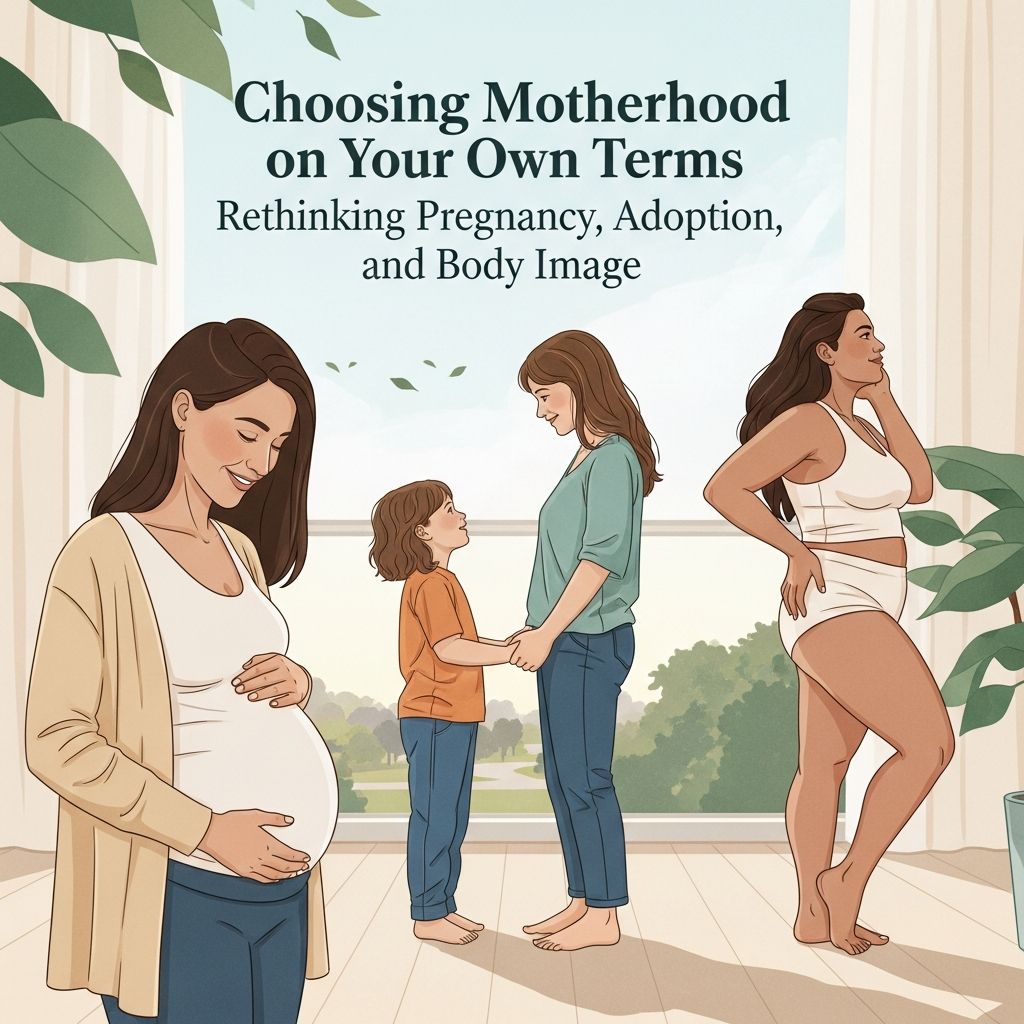
In an age when every personal decision made by public figures becomes a talking point, the way women choose to become mothers often gets turned into a referendum on what everyone else should do. When a well-known fitness personality voices a preference for adoption over pregnancy and mentions concerns about what pregnancy might do to her body, the reaction can be swift, emotional, and polarizing. This conversation touches on far more than one person’s comments—it reveals deep cultural anxieties about motherhood, body image, health, and what society expects from women.
Beyond One Comment: What the Controversy Really Reveals
When a celebrity in the fitness industry was quoted as saying she would rather adopt than become pregnant because she could not handle what pregnancy might do to her body, many people saw the remark as proof that she believed babies “ruin” women’s bodies. Others argued that the quote was oversimplified, taken out of context, or failed to reflect her medical history and deeper reasons for planning to adopt. Whether or not a quote was perfectly accurate, the strong response underscores how sensitive people are about what motherhood is supposed to look like—and what women are allowed to say about their bodies.
Underneath the outrage sits a bigger set of questions: Who gets to define a “valid” reason for choosing adoption? Is concern about health or body image automatically shallow? And why do women, more than men, face intense moral scrutiny for how they protect, use, or present their bodies when they decide to become parents?
Motherhood as a Personal, Not Moral, Choice
Decisions about whether to pursue pregnancy, adoption, surrogacy, or a child-free life are deeply personal, shaped by experience, health, values, and sometimes trauma. Yet public debates often treat one woman’s choice as a moral barometer for everyone else. When a high-profile trainer speaks about adoption, some critics assume she is insulting pregnancy itself or dismissing the physical sacrifices many mothers have made.
In reality, one person’s boundaries around their body do not invalidate anyone else’s choices or sacrifices. One woman can cherish her pregnancies as empowering and beautiful, while another may feel apprehension, grief, or fear because of medical diagnoses or a complicated relationship with her body. Both experiences are real and deserve respect.
Common reasons women may choose adoption over pregnancy
- Chronic health conditions that make pregnancy risky or painful.
- Fertility disorders that require invasive treatments or surgeries.
- Past trauma related to reproduction, medical care, or body autonomy.
- Ethical or emotional pull toward caring for children who already need families.
- Professional and financial realities that make extended physical recovery difficult.
Body Image, Health, and the Weight of Public Expectation
When the woman at the center of this discussion is a trainer whose livelihood depends on having a lean, muscular physique, her comments about pregnancy and her body triggered particular outrage. Some health professionals publicly criticized her for “sending the wrong message,” suggesting that she should model confidence in women’s ability to “bounce back.” Others pointed out that her job places her under unusual pressure to maintain a very specific body shape, and that she, like many women, has a history of weight struggles and body image issues.
It is easy to say that pregnancy does not “ruin” bodies when you have the resources, time, and support to prioritize recovery, nutrition, and exercise. It is much harder to reconcile public expectations of instant post-baby perfection with the lived realities of exhaustion, hormonal changes, surgery scars, or chronic pelvic pain. A trainer publicly wrestling with these tensions inadvertently shines a light on the often invisible fear many women carry about how pregnancy will change their bodies.
| Stage | Common External Pressures | Possible Internal Conflicts |
|---|---|---|
| Before pregnancy | Need to stay “attractive,” maintain career image, avoid weight gain, and appear always “in control” of one’s body. | Desire for children vs. fear of physical changes, pain, or loss of identity. |
| During pregnancy | Expectations to “glow,” gain the “right” amount of weight, and remain active and productive. | Anxiety about health, appearance, medical risks, and how others judge changing size and energy. |
| After pregnancy | Pressure to “bounce back” quickly, minimize visible signs of childbirth, and be both an ideal mother and ideal worker. | Conflict between recovering, bonding, and managing shame about not looking or feeling like one’s old self. |
When Medical Realities Complicate the Story
Lost in many headlines about this particular controversy is an important reality: some women learn early in life that they have conditions such as endometriosis or polycystic ovary syndrome that may make fertility difficult or require serious medical intervention. For them, the phrase “I can’t handle doing that to my body” is less about superficial vanity and more about years of painful periods, invasive exams, surgeries, or warnings about high-risk pregnancies.
A woman with a known reproductive health condition may see adoption not as a second-best option but as the path she was always meant to take. She might feel both protective of her health and deeply moved by the prospect of parenting a child who needs a stable home. When media narratives flatten this into “she cares too much about her figure,” they erase the medical and emotional context that often shapes such decisions.
Questions to ask when judging less and listening more
- Could there be a health story behind this choice that is not public?
- Am I assuming vanity when the real issue might be pain, risk, or trauma?
- Why does this person’s reproductive choice feel threatening to me personally?
- What biases do I hold about what a “good mother” looks like or does?
Adoption: Not a Consolation Prize
Adoption is often framed as what people do only after attempting pregnancy without success, but many families choose adoption as their first and primary route to parenthood. Some are motivated by personal histories, a sense of calling, or a clear-eyed awareness that there are children—both in their own countries and around the world—who need safe, permanent homes.
When critics mock a public figure’s plan to adopt because she wants to protect her body, they sometimes inadvertently devalue adoption itself, as if it is merely a workaround for people who do not want to “ruin” their bodies. In truth, adoption involves its own profound emotional work: navigating paperwork and institutions, confronting questions of identity and loss, and committing to parenting a child whose early experiences may include trauma or instability.
Realities of adoption often overlooked
- Long, unpredictable timelines that can stretch for years.
- Background checks, home studies, and probing questions about finances, relationships, and mental health.
- Legal and ethical complexities, especially in international and private adoptions.
- Ongoing conversations with children about their origin stories, birth families, and identity.
When Public Figures Talk About Private Pain
Celebrity interviews rarely capture the full complexity of someone’s relationship with her health and fertility. A single sentence, pulled from a lengthy conversation, can be stripped of nuance. When a famous trainer later clarifies that her concerns about pregnancy are rooted in long-standing reproductive health issues, the follow-up rarely travels as far as the original, provocative quote.
This dynamic creates a familiar pattern: an offhand remark becomes a symbol of everything people fear or resent about beauty culture and celebrity privilege. The woman at the center of the storm may learn a painful lesson about how much vulnerability she can risk sharing, especially around topics like fertility, shame, and illness. Meanwhile, the deeper, more useful conversation—about how many women quietly carry similar fears—gets pushed aside.
How Body Politics Shape the “Good Mother” Myth
Cultural narratives still suggest that “good mothers” should be willing to sacrifice anything—including health, career, and sense of self—to bring biological children into the world. Within that logic, choosing adoption, or deciding that the physical risks of pregnancy are too high, can be read as selfish or unloving. This narrative ignores how many forms love and caregiving can take.
It is also steeped in body politics. The same culture that demands that mothers sacrifice their bodies also demands that they emerge from childbirth quickly restored to a narrow ideal of thinness and youth. When a woman preemptively resists that double bind, she is often punished for naming the contradiction too clearly.
Challenging harmful messages
- Reject the idea that enduring physical risk is the only proof of maternal love.
- Affirm that adopted, fostered, and stepchildren are not “less than” biological children.
- Recognize that caring for one’s health can itself be an act of responsibility toward future children.
- Call out media that glorifies rapid “bounce back” stories without acknowledging resources and privilege.
Supporting Women Through All Paths to Parenthood
Whether a woman becomes a mother through pregnancy, adoption, both, or not at all, she deserves an environment where her choices are met with curiosity and care instead of suspicion. Friends, partners, and communities can do tangible things to help reduce shame and pressure around these decisions, especially when public controversies flare up and reinforce judgment.
Practical ways to be supportive
- Listen more than you advise. Ask open-ended questions and respect boundaries when someone does not want to discuss her reproductive plans.
- Avoid comments about what pregnancy will or will not do to someone’s body; every body and every pregnancy is different.
- Validate adoption as a primary, not secondary, path to parenthood; avoid language that suggests it is a consolation prize.
- Challenge jokes or gossip that frame women’s reproductive decisions as vanity or weakness.
- Offer concrete help—time, childcare, meal support—rather than just commentary, especially during fertility treatments, adoption processes, or postpartum recovery.
Listening to Your Own Body and Story
At the heart of this topic lies a simple but radical idea: women are allowed to prioritize their bodies, health histories, and emotional limits when making decisions about motherhood. They may choose adoption because of medical risks, or pregnancy despite uncertainty about how their bodies will change. They may change their minds over time as new information, new partners, or new diagnoses emerge.
Rather than allowing public debates about celebrities to dictate what is acceptable, it is more helpful to look inward and ask what combination of physical safety, emotional readiness, and relational support feels sustainable. There is no one script that all women must follow, and there is no single path to becoming a devoted, present, loving parent.
FAQs: Pregnancy, Adoption, and Body Image
Does choosing adoption mean someone is afraid of “ruining” their body?
Not necessarily. Some people mention body-related reasons because they feel safer talking about appearance than discussing fertility issues, chronic pain, or traumatic medical histories. Adoption can be motivated by many factors, including a desire to avoid medical risks, a sense of calling, or a wish to care for children who already need families.
Is it wrong to worry about what pregnancy might do to your body?
Feeling anxiety about major physical changes is normal. The problem arises when people equate those worries with a lack of love for potential children or treat women as selfish for wanting to protect their health or mental well-being. Acknowledging fear can be the first step toward making an informed, grounded decision.
Can you be a “real” mother if you do not give birth?
Yes. The idea that biology alone defines motherhood is both outdated and harmful. Parenting is built on presence, caregiving, and long-term responsibility, not solely on pregnancy or genetics. Adoptive, foster, and stepmothers all form deep, authentic bonds with their children.
How can public discussions about celebrity motherhood affect everyday women?
When famous women are shamed for their reproductive choices, it sends a message that ordinary women will be judged too. This can make people more reluctant to share their struggles with infertility, miscarriage, or difficult decisions about pregnancy and adoption. Healthier conversations focus on empathy and nuance instead of labeling choices as right or wrong.
What if I feel torn between wanting a biological child and fearing pregnancy?
Ambivalence is common and does not make you weak or confused; it makes you human. Speaking with healthcare professionals, therapists, and trusted loved ones can help clarify your priorities and options—from medical support during pregnancy to exploring adoption or other paths to parenthood. The goal is not to eliminate fear but to choose a way forward that honors both your longing and your limits.