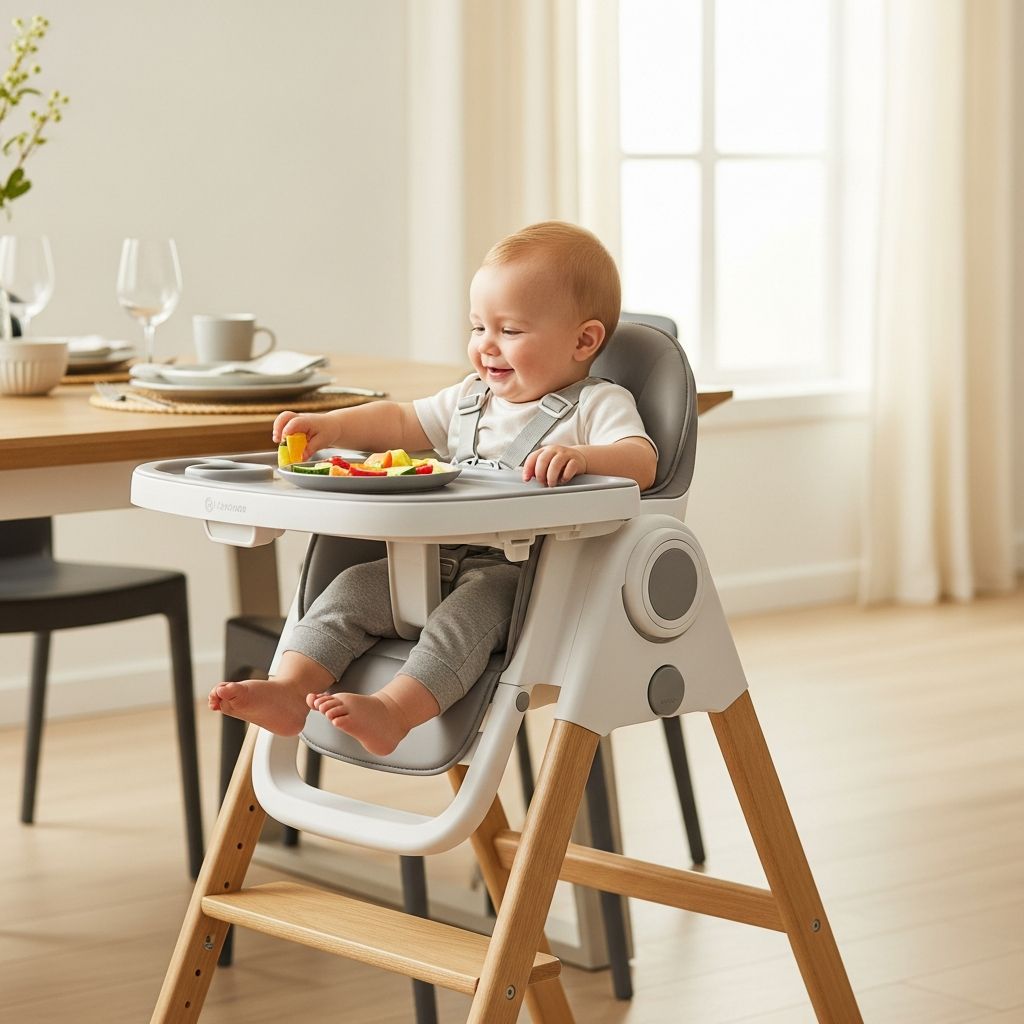
Choosing a high chair is about much more than a place to park your baby at mealtimes. It is a long-term piece of gear that affects safety, posture, family routines, and even how much you enjoy the daily clean-up. When you look at the full picture, investing in a thoughtfully designed high chair often ends up saving time, stress, and money over the years.
The Hidden Job of a High Chair
On the surface, a high chair is simply a seat that brings a baby up to table height. In daily life, though, it does a lot more: it keeps a wiggly child secure, supports their small body, and gives parents a stable base for feeding, playing, and bonding. When these jobs are done well, mealtimes feel calmer and safer.
A high-quality chair is designed with both the baby and the caregiver in mind. That means secure restraint systems, proper posture support, and practical details like easy cleaning and adjustability. Instead of being a short-lived baby item, the right chair can follow your child from first bites to independent eating and beyond.
Key Features That Justify the Price
High chairs vary widely in cost, but higher prices often reflect better design, stricter safety engineering, and more durable materials. Paying more upfront can be reasonable when you understand exactly what you gain. Below are the features that truly make a difference, especially when used multiple times a day for years.
1. Robust Safety and Stability
Safety is the single most important reason to look beyond the cheapest option. A well-engineered high chair resists tipping, keeps your child properly restrained, and remains solid even with daily use and cleaning. That peace of mind is difficult to put a price on.
- Wide, well-balanced base that resists tipping from side-to-side wiggling.
- Secure harness (preferably a 3-point or 5-point system) that is easy for adults but tough for toddlers to defeat.
- Stable frame that does not wobble when the tray is bumped or the child pushes against the table.
- Clear, intuitive locking mechanisms for folding or height adjustments.
2. Ergonomic Support for Little Bodies
Comfort in a high chair is not about plush padding; it is about alignment. When a baby is seated with good posture, swallowing is easier, self-feeding is safer, and the child can focus on exploring food instead of fighting their own body position. A quality chair is designed with this in mind from the start.
- Upright back to keep the torso straight rather than reclining during solid meals.
- Adjustable footrest so legs are supported and not dangling in midair.
- Seat depth that allows knees to bend at roughly a right angle without slouching.
- Tray or table distance that lets the child rest arms comfortably without leaning far forward.
3. Materials That Last
Babies and toddlers are tough on gear. Cheaper chairs may crack, stain, or loosen over time, while better-made pieces remain sturdy and visually acceptable long past the baby stage. This is especially important if you hope to use the chair for multiple children or resell it.
- Solid wood or high-quality metal frames that resist bending and warping.
- Non-toxic finishes and plastics free from common harmful chemicals.
- Heavy-duty connectors, screws, and joints that hold up to repeated assembly and adjustment.
- Durable fabrics or cushions that do not shred or pill after frequent washing.
Cleaning: The Everyday Deal-Breaker
Parents often underestimate how much time they will spend cleaning a high chair. Crumbs, sticky smears, and spills are a daily reality. A design that makes cleaning simple can dramatically improve how you feel about using the chair multiple times each day. Over time, effortless cleanup feels like one of the biggest returns on your investment.
When evaluating ease of cleaning, look beyond marketing labels and pay attention to the actual surfaces. Smooth, simple shapes beat complicated systems with lots of crevices. A slightly higher upfront cost is far easier to justify when you are not spending minutes every meal digging dried food out of tiny corners.
| Design Element | Easy-to-Clean Option | Likely to Trap Mess |
|---|---|---|
| Seat surface | Hard, smooth plastic or sealed wood | Deep quilting, heavy seams, textured fabric |
| Tray design | Removable top tray, minimal grooves | Fixed tray with raised ridges and hidden tracks |
| Harness system | Detachable straps, wipeable material | Non-removable, absorbent straps with bulky buckles |
| Frame structure | Simple lines, few exposed screws | Multiple tubes, hinges, and decorative cut-outs |
Look for a chair that can be wiped down quickly after each meal without elaborate disassembly. Removable trays that fit in a dishwasher, cushions that can be tossed in the wash, and straps that can be detached and scrubbed make a huge difference in daily routine.
How a High Chair Grows With Your Child
A major reason a more expensive high chair becomes cost-effective is that it can serve your child for many years instead of a small window of infancy. Some models adapt from a supportive infant seat to a toddler chair and even a youth seat at the family table. Instead of buying several separate products, you use one evolving piece of furniture.
Flexibility is not just about height. The most useful chairs allow you to customize seating as your child gains independence, going from spoon-fed purees to finger foods and eventually to using regular cutlery alongside everyone else. Each stage benefits from good posture, appropriate restraint, and being close to the table.
Stages a Convertible High Chair Can Cover
- Early tasting: Extra support to keep a younger baby stable when first practicing with small amounts of food.
- Self-feeding toddler: Tray or table seating where the child can reach food safely, with enough space for experimentation.
- Preschool years: Chair height and footrest adjusted so the child can climb up and sit independently at family meals.
- School-age seating: In some designs, the same frame can be used as a sturdy child or even adult chair for a desk or dining table.
Real-World Convenience for Busy Families
Beyond safety and ergonomics, a great high chair respects the reality of life with kids: limited space, constant multitasking, and the need for gear that simply works. The more seamlessly a chair fits into your routines, the more it earns its keep. Design details that seem minor on paper can be the difference between loving and resenting this daily-use item.
Space, Storage, and Movement
Where the high chair will live matters. Some families benefit from a sleek, permanent seat that blends with the dining set, while others need a foldable option that tucks away between meals. Thinking about your space before buying can keep you from feeling cramped or frustrated later.
- Compact footprint for small dining areas or apartments.
- Foldable frame if you plan to store the chair between meals.
- Wheels with reliable brakes for moving the chair between rooms.
- Simple profile that does not snag on table legs or nearby furniture.
Ease of Daily Use
Parents often hold a baby in one arm while adjusting the chair or tray with the other. Good design anticipates this and keeps steps simple. If you struggle every time you buckle in your child or remove the tray, the chair will quickly become a source of irritation instead of help.
- One-handed tray removal and attachment.
- Harness buckles that click securely without pinching little fingers.
- Adjustments that do not require tools or complicated steps.
- Clear visual cues that the chair is locked into a safe position.
Long-Term Value and Cost Per Use
It is easy to focus on the price tag alone, but a more useful lens is cost per use. If you use the high chair two or three times a day for several years, the total number of meals quickly climbs into the thousands. A chair that lasts through that entire period, and perhaps through additional children, usually ends up being more economical than replacing cheaper models.
In addition, high-quality chairs tend to retain better resale value. When your family is done, you may be able to sell or pass on the chair in excellent condition, effectively reclaiming part of your investment. Thoughtful design and durable materials play a big role in this extended life cycle.
Simple Cost Per Use Example
Consider two hypothetical chairs:
- Chair A costs more but lasts 6 years and remains comfortable and safe.
- Chair B costs less but needs replacing after 2 years, and you buy it again or switch to another product.
When you divide the total cost by years of use and by daily meals, the more expensive option often ends up costing only a few cents more per day or even less. That small difference is usually outweighed by the benefit of better safety, easier cleaning, and a happier mealtime atmosphere.
Style, Aesthetics, and Family Life
Parents sometimes feel shallow for caring about appearance, but it is reasonable to want a high chair that looks good in your home. This piece of gear often sits in a prominent spot in the kitchen or dining room for years. When it matches your style, it feels like furniture instead of clutter.
A more attractive, well-finished high chair can also encourage you to keep it out and ready to use. That makes it easier to offer snacks at the table, invite your child into family meals, and establish routines around shared eating instead of scattered feeding sessions in different locations.
Key Considerations Before You Buy
Every family’s needs are a little different, but asking the right questions before purchasing helps ensure that the chair you select truly earns its place. Use the checklist below to compare options and clarify your priorities.
Practical Checklist
- Safety: Does it feel stable? Are there any sharp edges or pinch points? Is the harness secure and easy to fasten?
- Fit for your child: Can your baby sit upright with hips, knees, and feet supported? Is there room to grow?
- Cleaning: Can you wipe all surfaces quickly? Are straps and cushions removable and washable?
- Space: Will the chair fit at your table without blocking walkways? Do you need it to be foldable?
- Longevity: Up to what age or weight is the chair designed to be used? Does it convert to other seating stages?
- Everyday usability: Can you operate the tray, harness, and adjustments with one hand while holding your child?
- Budget in context: When you consider daily use and possible resale, does spending a bit more now make sense?
Frequently Asked Questions
When should a baby start using a high chair?
Most babies are ready for a high chair when they can sit with minimal support and hold their head up steadily, often around six months. The exact timing depends on your child’s development, so look for signs of trunk control and stable sitting rather than focusing solely on age.
Is a tray necessary, or can we use the table?
Many high chairs work either with a tray or pulled directly up to the table. A tray can be helpful for messy early experiments with food, while table eating feels more inclusive at family meals. Choosing a chair that offers both options gives you flexibility as your child grows.
Do high-end chairs really last longer?
Higher-end high chairs are often built with stronger materials, more thoughtful engineering, and replaceable parts, all of which contribute to a longer life span. While no product is indestructible, these design choices make it more realistic to use the same chair through multiple children or stages.
What if we have very limited space?
Families in small homes or apartments may prefer compact frames, hook-on seats, or foldable high chairs that can be stored between meals. Even in tight quarters, it is still possible to find designs that prioritize safety and support without dominating the room.
How important is a footrest, really?
A footrest might look optional, but it plays an important role in posture and stability, especially for toddlers. When a child’s feet are supported, the whole body is more relaxed, which can make eating, chewing, and swallowing easier and more comfortable.
Making Peace With the Price Tag
Sticker shock is natural when comparing high chairs, but context helps. This is one of the few baby items you will use multiple times every single day, for years, at a time when sleep is scarce and patience is limited. A chair that reduces daily friction is not a luxury; it is a practical investment in your family’s routine.
When you prioritize safety, support, cleanability, and long-term flexibility, the right high chair quickly proves its worth. Instead of feeling like just another purchase, it becomes a quiet partner in thousands of shared meals, messy experiments, and family moments around the table.