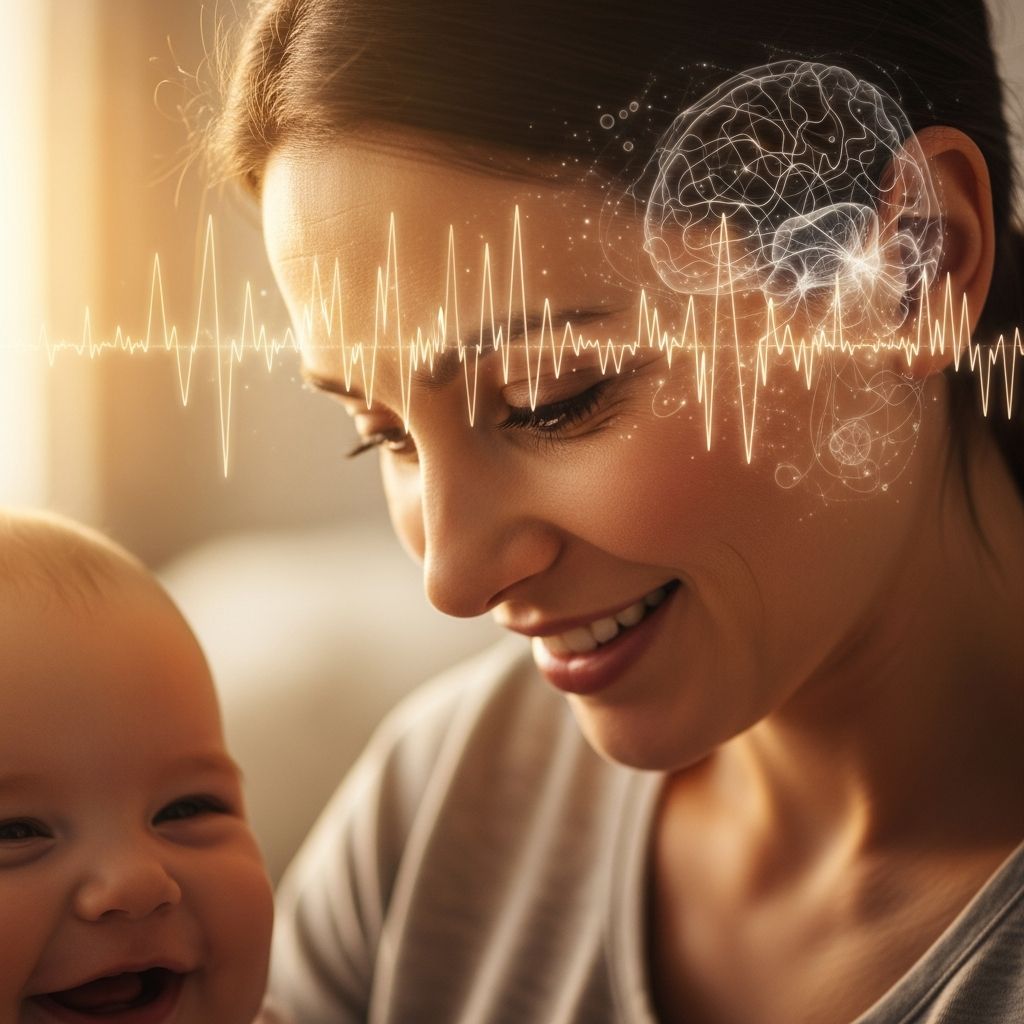
A baby’s first genuine smile is a milestone that transforms new motherhood. This simple expression, often appearing around 6-8 weeks, triggers a cascade of neural activity in the mother’s brain, activating reward pathways akin to a natural high. Functional MRI studies reveal that viewing one’s own smiling infant engages dopamine-rich regions, fostering deep emotional attachment and motivating caregiving behaviors.
The Neuroscience of Maternal Joy
At the heart of this phenomenon lies the brain’s reward system, primarily driven by dopamine, a neurotransmitter associated with pleasure and motivation. When first-time mothers observe photos of their own baby’s happy face, key areas light up: the ventral tegmental area (VTA), substantia nigra, striatum, and parts of the prefrontal cortex. These regions process emotions, cognition, and behavioral responses, integrating feelings of love with practical actions like nurturing.
Research conducted at Baylor College of Medicine scanned 28 first-time mothers viewing images of their infants and unknown babies displaying happy, neutral, or sad expressions. The strongest activations occurred specifically with own-baby happy faces, not neutral or sad ones, highlighting how positive cues uniquely reinforce bonding.
- Ventral tegmental area/substantia nigra: Dopamine production hubs that signal reward.
- Striatum (including putamen): Links rewards to motivated actions.
- Prefrontal cortex regions: Handle emotion (medial prefrontal, anterior cingulate, insula), cognition (dorsolateral), and motor outputs.
This network suggests evolution has wired mothers to find profound joy in their infant’s smiles, ensuring survival through attentive care.
How Dopamine Drives the ‘Natural High’
Dopamine isn’t just about fleeting pleasure; it’s the brain’s way of saying, “This is worth repeating.” A baby’s smile releases it in quantities comparable to addictive substances, but positively. In the study, happy own-infant faces (OH > UH contrast) activated nigrostriatal pathways (*P*<0.0005, FDR q<0.05), with BOLD signals peaking precisely at stimulus onset.
Unlike sad faces, which elicited broader pain/fear responses without strong reward activation, smiles created a euphoric loop. Mothers reported intuitive pulls toward interaction, backed by motor cortex engagement preparing for physical responses like picking up or cooing.
| Baby Expression | Brain Response in Mothers | Key Regions Activated |
|---|---|---|
| Happy (Own Baby) | Strong reward/motivation | VTA/SN, striatum, prefrontal cortex |
| Neutral (Own Baby) | Moderate emotional processing | Medial prefrontal, insula |
| Sad/Crying (Own Baby) | Pain/fear empathy, less reward | Anterior cingulate, amygdala |
| Any (Unknown Baby) | Weaker overall activation | Limited striatal response |
This table summarizes fMRI findings, showing smiles’ superior pull on maternal brains.
Evolutionary Roots of Smile-Induced Bonding
From an evolutionary standpoint, the smile serves as a social signal. Infants smile to elicit care, and mothers’ brains are primed to respond. This reciprocity builds secure attachment, crucial for infant survival. Dr. Lane Strathearn notes these reactions mirror drug addiction pathways but promote healthy bonds, potentially explaining attachment disorders when disrupted.
Cross-species parallels exist; primates show similar reward responses to offspring cues. In humans, this amplifies during the postpartum period when oxytocin and hormonal shifts heighten sensitivity.
Brain Changes Beyond the First Smile
The first smile isn’t isolated; repeated interactions reshape the maternal brain. Structural changes include increased gray matter in reward and empathy areas, persisting months postpartum. Functional connectivity strengthens between emotional and cognitive centers, enhancing intuitive parenting.
Long-term, this fosters resilience. Mothers with robust reward responses report higher satisfaction and lower postpartum depression risks, as positive feedback loops counteract stress.
Individual Variations in Maternal Responses
Not all brains react identically. Factors like prenatal bonding, delivery experience, and mental health influence activation strength. For instance, mothers with depression show blunted dopamine responses to smiles, underscoring the need for early intervention.
Cultural and experiential differences also play roles. Adoptive mothers or those with fertility challenges may develop similar pathways through skin-to-skin contact and responsive care, proving neuroplasticity’s power.
Practical Ways to Amplify the Smile Effect
Parents can nurture these neural pathways:
- Responsive interactions: Mirror smiles immediately to reinforce dopamine release.
- Skin-to-skin contact: Boosts oxytocin, synergizing with dopamine for deeper bonds.
- Capture moments: Photos/videos of smiles can retrigger reward centers during tough times.
- Mindful presence: Reduce distractions to fully engage with cues.
- Seek support: If responses feel muted, consult professionals for therapy or screening.
These strategies leverage science to build lasting connections.
Implications for Child Development
A mother’s attuned responses to smiles predict secure attachment, linked to better cognitive, emotional, and social outcomes in children. Reciprocal smiling games enhance language development and emotional regulation.
Disruptions, like inconsistent caregiving, can impair infant brain development, emphasizing the smile’s role in early intervention programs.
Frequently Asked Questions (FAQs)
What happens in a mother’s brain during her baby’s first smile?
The brain’s dopamine reward centers activate, including VTA, substantia nigra, and striatum, creating a ‘natural high’ that strengthens bonding.
Why do only happy faces trigger strong rewards, not sad ones?
Happy faces engage nigrostriatal pathways for motivation; sad faces activate pain/empathy areas without equivalent reward.
Can non-biological mothers experience this?
Yes, through responsive caregiving, neuroplasticity builds similar pathways.
How does this relate to postpartum depression?
Blunted responses may signal risk; early smile interactions can help mitigate.
At what age do babies first smile socially?
Around 6-8 weeks, distinguishing it from reflexive newborn smiles.
Future Research Directions
Ongoing studies explore paternal responses, longitudinal effects, and interventions for at-risk families. Advanced imaging like EEG complements fMRI for real-time insights. Understanding these mechanisms could revolutionize parental support programs.
References
- What’s in a Smile? Maternal Brain Responses to Infant Facial Cues — Lane Strathearn et al. 2008-07-07. https://pmc.ncbi.nlm.nih.gov/articles/PMC2597649/
- Baby’s Smile Is A Natural High — ScienceDaily (Baylor College of Medicine). 2008-07-07. https://www.sciencedaily.com/releases/2008/07/080707081852.htm
- Baby’s Smile Different From Others — ABC News. 2008-08-04. https://abcnews.com/GMA/Parenting/story?id=5506746&page=1
- Baby’s Smile A Natural High For Mom — CBS News (Pediatrics journal study). 2008-07-07. https://www.cbsnews.com/news/babys-smile-a-natural-high-for-mom/