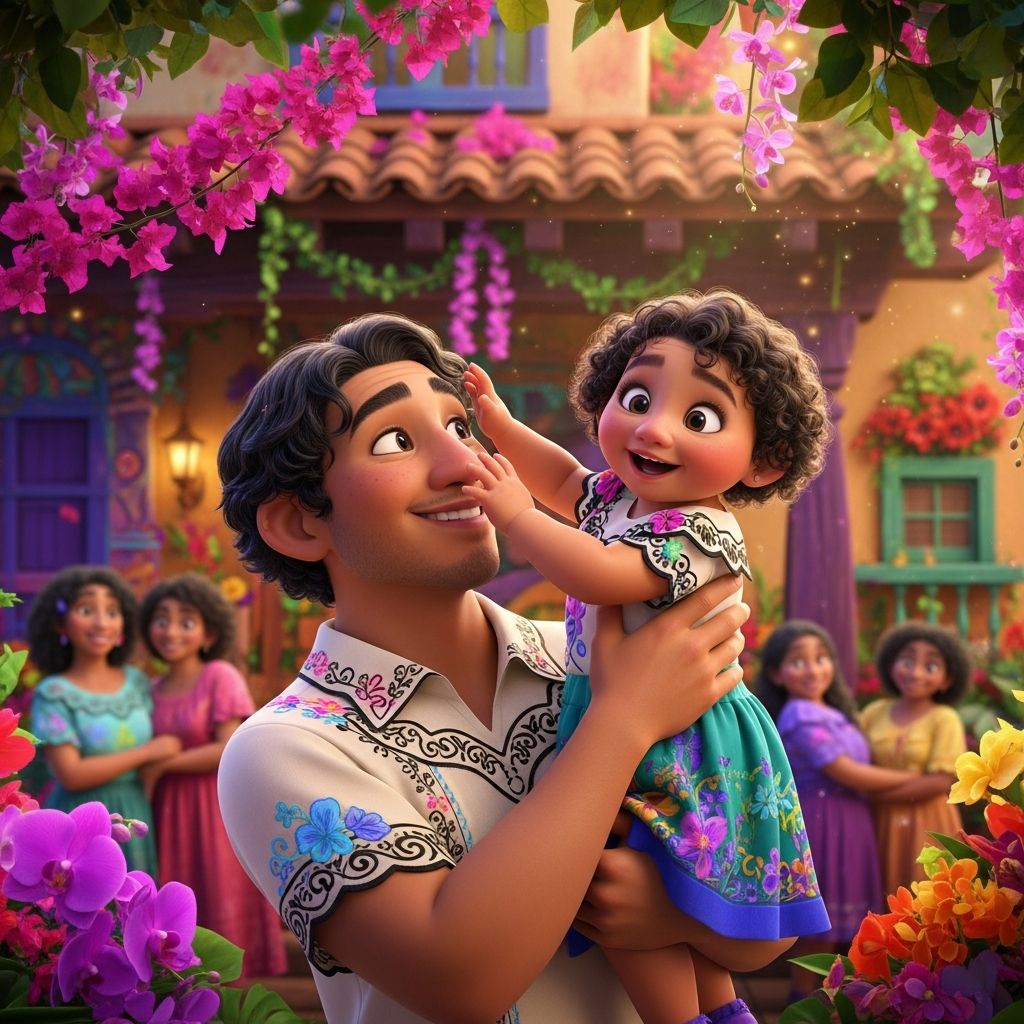
Every so often, a short family video captures something so simple and pure that it speaks to parents everywhere: a baby watching Disney’s Encanto, spotting a character on the screen, and joyfully insisting that this character is actually their dad. That tiny moment of recognition can feel like nothing more than adorable content, yet it hides a powerful truth about representation, connection, and how children learn to see themselves in the world.
The Viral Moment: Baby Meets “Dad” on Screen
Imagine a cozy family movie night: Encanto is playing, colorful scenes flash across the TV, and a baby is nestled close to a parent, taking everything in. A familiar-looking character appears, and the baby immediately points, lights up, and confidently declares that the character is Daddy. The adults laugh, but they also feel a rush of pride and emotion because the resemblance is real enough that even a very young child notices it.
Moments like these often make their way online, where viewers respond with a mix of laughter, tears, and comments about how rare—and meaningful—it can be to see yourself, or someone you love, reflected so clearly in a movie. The baby’s delight sends a quiet message: when kids recognize faces, skin tones, hair textures, or cultural details that match their everyday lives, they feel more at home in the stories they watch.
Why Kids Latch Onto Lookalike Characters
Even babies and toddlers quickly become experts at recognizing the people they see every day, and they naturally scan new situations for anything familiar. When a character on screen looks like a parent, sibling, or even the child themselves, the brain lights up with that sense of “I know this person” and “this feels like my world.” That recognition is especially striking in animated films, where expressive eyes, hair, and clothing carry a lot of the emotional weight.
Lookalike moments matter even more for families who rarely saw themselves accurately or respectfully portrayed in the media they grew up with. When a child points to a character in Encanto and proudly yells “That’s Daddy!” or “That’s me!” parents often feel like an entire generation’s wish has quietly been answered: their family is visible and valued in a major movie.
Encanto, Family, and Cultural Details Kids Recognize
Encanto stands out because it leans into rich, specific details of family life, culture, and personality instead of relying on vague, one-size-fits-all backgrounds. While kids may not know the term “representation,” they instinctively respond to familiar skin tones, hair types, language rhythms, and multi-generational households full of cousins, grandparents, and extended relatives.
When a child sees a character who looks like a parent, it’s often about more than just facial features. It can be the way someone smiles, the style of clothing, or even the quiet strength, kindness, or playfulness that mirrors how Dad behaves at home. That overlap allows children to connect the fantasy world of the movie with the safe, loving world of their own family.
How Representation Shapes a Child’s Self-Image
Psychologists often talk about “mirrors and windows” in media. Mirrors help children see themselves reflected on screen, while windows introduce them to lives and experiences different from their own. Both are important, but for many kids, mirrors have historically been scarce, especially in mainstream animated films.
When a baby confidently identifies a parent in a character, it’s an early, joyful example of a mirror: the message is that their family belongs in stories that are beautiful, magical, and central—not just in the background. Over time, regular exposure to characters who look like them or share their culture can help children build a healthier sense of self, increase pride in their identity, and reduce feelings of being “othered” or invisible.
Benefits of Familiar Faces in Kids’ Media
Seeing familiar features and family dynamics in movies like Encanto gives kids more than just a cute moment for social media. It supports emotional development and social skills in concrete ways. Children who feel accurately represented tend to be more engaged with stories and more open to exploring the emotional lessons those stories carry.
- Stronger engagement: Kids are more likely to pay attention and talk about a movie when they recognize people who look like their loved ones.
- Higher empathy: When children see their own families’ joys and struggles on screen, they gain language and images to understand complex feelings.
- Normalizing diversity: Familiar representation teaches children that different skin tones, accents, and cultures are normal, not exceptions.
Parents’ Emotional Reactions to Lookalike Characters
For parents, watching a child point to a character and shout “That’s Daddy!” can stir up deep emotions. Many adults remember growing up with few, if any, major characters who shared their complexion, hair, language, or cultural traditions. Now, seeing a child form that instant bond with a character brings a sense of healing and progress.
These reactions often show up in comments about how powerful it feels to watch a baby light up at a character who really does resemble their family. Parents may feel validated in their decision to seek out diverse stories and proud that their children are growing up in a media landscape that is slowly becoming broader and more inclusive.
Quick Comparison: When Kids See Themselves vs. When They Don’t
The difference between having representation and lacking it can be subtle at first, but over time it shapes how children interpret their place in the world. This simple table highlights some of the contrasting experiences kids may have with and without familiar characters on screen.
| When kids see lookalike characters | When kids rarely see themselves |
|---|---|
| Feel proud and excited to point out characters that resemble their family. | May assume that heroes or main characters are always from other backgrounds. |
| Are more likely to view their identity and culture as normal and celebrated. | Can start to feel like their family or community is less visible or less important. |
| Use movie moments to start conversations about their lives and experiences. | Have fewer chances to connect personal stories with the media they enjoy. |
Tips for Parents: Using Encanto Moments to Talk About Identity
A simple moment of a baby recognizing a parent in Encanto can open the door to meaningful, age-appropriate conversations as children grow. Parents can gently guide those conversations to build confidence, celebrate uniqueness, and model respect for others’ differences.
- Ask open questions: As kids get older, try prompts like “Who in this movie reminds you of our family?” or “Which character do you feel most like, and why?”
- Affirm their connections: When a child says “That looks like Daddy” or “She has hair like mine,” respond with enthusiasm and validation.
- Connect to real life: Point out shared traditions, foods, or values in the story that match your family’s experiences.
- Introduce other diverse stories: Use the excitement around Encanto to explore more books and shows that highlight a variety of backgrounds.
Beyond Encanto: Building a Library of Inclusive Stories
While a single film can spark powerful emotions, kids benefit most when they see inclusive casting and storytelling woven consistently into their media diet. Families can look for shows and books with diverse protagonists, varied family structures, and storylines that center different cultures in affirming ways.
As parents curate content, the goal is not to exclude older favorites but to balance them. A media library that includes many cultures and identities sends the message that no one style of family or appearance is “default”—everyone’s stories are worth telling, celebrating, and revisiting.
Frequently Asked Questions
Is it normal for babies to think characters are real people they know?
Yes, it is very common for babies and toddlers to treat animated characters like familiar people, especially when those characters resemble someone they love. Young children are still learning the difference between real life and fiction, so they focus on emotional cues and visual similarities instead of strict boundaries. When they see a character who looks like Dad or another caregiver, it feels perfectly natural to them to claim that connection.
Does representation really affect kids at such a young age?
Even though babies cannot articulate complex ideas about identity, they are constantly absorbing patterns about who appears in stories, who is celebrated, and who is missing. Regularly seeing people who look like their family in positive, central roles helps build a foundation of belonging and confidence. Over time, those early impressions shape how children feel about themselves and how they interpret diversity in the world around them.
How can parents support healthy media habits around movies like Encanto?
Parents can turn movie time into connection time by watching alongside their children, pausing to answer questions, and inviting kids to share what they notice. Simple follow-ups—like drawing favorite characters, acting out scenes, or talking about feelings in the story—make media more interactive and less passive. By doing this, parents help children process what they see and carry the movie’s emotional lessons into daily life.
What if my child never sees characters who look like our family?
If mainstream choices feel limited, parents can explore children’s books, independent animations, and international films that offer more varied representation. Talking openly with kids about why certain stories mean a lot to your family can also give context and empowerment. The key is to signal that any lack of representation is a problem with the media landscape, not with your child or your culture.
Why do parents get so emotional about these videos?
For many adults, watching a child joyfully recognize their family on screen feels like witnessing change in real time. It contrasts sharply with their own childhood experiences of rarely seeing people like themselves in beloved movies. Those emotions—relief, joy, and even grief for what they missed—are a sign of how deeply stories shape our sense of who belongs in the spotlight.
A Small Moment With a Big Message
A baby insisting that their dad is a character in Encanto might seem like a fleeting, funny moment, the kind you save on your phone or share with friends online. Yet behind the giggles lies powerful evidence that representation on screen reaches even the youngest viewers. When children find their families in animated worlds—through faces, colors, and cultures that feel familiar—they learn that their stories are worth seeing and celebrating.
For parents, these moments are reminders to keep pushing for richer, more inclusive storytelling and to keep noticing the quiet ways media strengthens kids’ self-worth. A single delighted finger pointing at the TV can say more about belonging than a thousand speeches: “There we are. We’re part of this story too.”