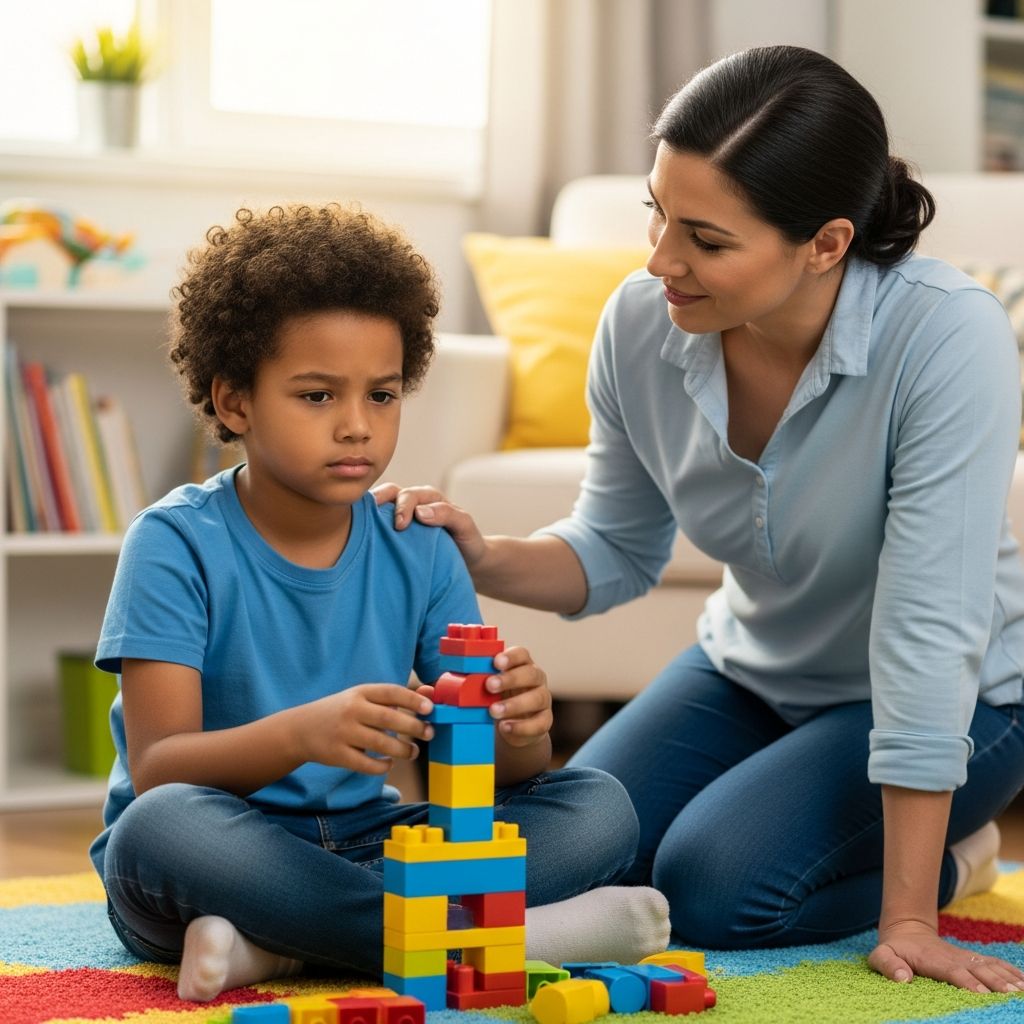
When Minor Problems Feel Huge: Understanding Your 7-Year-Old’s Big Reactions
Many parents are surprised when a small disappointment sends their seven-year-old into tears, shouting, or dramatic declarations like “I’ll never do this again!” A broken pencil, losing a game, or making a simple mistake can suddenly feel like a catastrophe to your child. This does not mean your child is spoiled or destined to be fragile; it means their brain and emotional skills are still developing, and they need your guidance to learn how to cope.
This article explains why ordinary setbacks can trigger extreme reactions at this age and offers concrete, evidence-informed strategies to coach your child toward better emotional regulation and resilience.
What Is Happening Emotionally at Age Seven?
By seven, children are often more verbal and independent, but their ability to manage strong feelings is still a work in progress. Emotion regulation – the ability to understand and influence one’s own emotional responses – continues to develop through childhood and into early adulthood.
| Area of Development | What Often Shows Up at Age 7 | How It Affects Reactions to Setbacks |
|---|---|---|
| Cognitive skills | Better logical thinking, but still concrete and all-or-nothing at times | Small problems can feel like total failure; child may think in extremes |
| Social awareness | More aware of peers, comparisons, and being judged | Embarrassment and shame can intensify when they make mistakes |
| Self-concept | Beginning to form ideas like “I’m good at this” or “I’m bad at that” | One setback can feel like proof they are “not good enough” |
| Brain development | Emotion centers are active; brain systems for control and planning are still maturing | Feelings can surge faster than the brain can calm them down |
Because self-regulation skills are still developing, it is normal for children in early school years to need adult support to calm down and problem-solve after an upsetting event.
Why Small Disappointments Trigger Such Big Emotions
When your child collapses into sobs over a minor issue, it usually reflects a combination of factors, not just the immediate problem in front of them.
- All-or-nothing thinking: If a drawing does not look perfect, your child may conclude, “I’m terrible at art,” instead of “I made a mistake on this picture.”
- Perfectionism and high expectations: Many children around this age care deeply about doing things “right” and may interpret any error as failure.
- Accumulated stress: Fatigue, hunger, school demands, friendship issues, or sensory overload can lower their capacity to cope. A tiny setback may be the last straw.
- Sensitivity to fairness and rules: Seven-year-olds often love rules and fairness; losing a game or encountering an unexpected change can feel deeply unjust.
- Incomplete coping toolbox: Without practiced strategies to calm down, their only options may be crying, quitting, or exploding.
Seen in this light, overreactions are not misbehavior to punish but signals that a child needs help with understanding feelings, calming their body, and reframing the situation.
The Parent’s Role: Calm Coach, Not Judge
Children learn how to respond to emotions by watching how adults handle theirs. Research on social-emotional learning highlights the importance of adults modeling calm behavior and emotional labeling when working with children.
When your seven-year-old is overwhelmed, your job is not to convince them they shouldn’t feel what they feel; it is to be a steady, compassionate presence who helps them move from “I can’t handle this” to “I can survive this and figure out what to do next.”
Core principles to keep in mind
- Connection before correction: A child who feels understood is more open to problem-solving. Lead with empathy before advice or consequences.
- Feelings are allowed; harmful behavior is not: It is fine to be angry or disappointed; it is not fine to hit, insult, or destroy property. Separate the emotion from the behavior.
- Teach during calm, not crisis: The brain is more able to learn new skills once the child is settled and has regained a sense of safety.
- Repetition is required: Emotion regulation skills develop over many, many small coaching moments, not a single conversation.
A Step-by-Step Response When Your Child Melts Down
The next time your child has a big reaction to a minor setback, you can follow a simple progression: notice, label, support, and later, teach.
1. Notice and ground yourself first
- Take a slow breath and relax your shoulders.
- Remind yourself: “This is a skill-building moment, not an emergency.”
- Use a calm, low voice and minimal words at first; your tone matters more than the exact phrasing.
2. Acknowledge and name the feeling
Studies show that helping children identify and label emotions supports their ability to regulate those emotions over time.
- Describe what you see: “Your fists are tight and your face is red.”
- Link it to a feeling: “It looks like you’re really frustrated that the game ended.”
- Connect it to the event: “You worked hard, and then you lost. That’s disappointing.”
Naming feelings does not make them bigger; it gives your child language to understand what is happening inside.
3. Offer physical and emotional safety
- Stay nearby and, if welcomed, offer a hug or gentle touch. Physical closeness can help children calm more quickly.
- Reduce stimulation: turn down noise, move to a quieter space, or dim bright lights if possible.
- Use simple, reassuring phrases:
- “You’re safe. I’m right here with you.”
- “We can figure this out when your body is calmer.”
4. Guide them through calming strategies
Coping tools work best when they have been practiced during calm times and then gently prompted during distress.
- Breathing: Invite them to blow slow “dragon breaths” (in through the nose, out through the mouth) three to five times.
- Movement: Suggest slow stretching, shaking out their hands, or pressing palms together to release tension.
- Grounding: Use a simple 5-4-3-2-1 game: name 5 things you see, 4 you can touch, 3 you can hear, 2 you can smell, 1 you can taste.
- Comfort objects: Some children calm more easily with a favorite toy, blanket, or weighted pillow.
5. Problem-solve together once they are calm
After the emotional storm passes, your child’s brain is better able to think clearly and learn from the experience.
- Ask open questions:
- “What part felt the hardest?”
- “What do you wish had happened instead?”
- “What could we try next time?”
- Brainstorm a few ideas and gently guide your child toward realistic, respectful solutions.
- Highlight even small examples of resilience: “You were really upset, and you still tried again once you were calm.”
Building Everyday Skills So Setbacks Feel Smaller
Responding well in the moment is important, but children also need regular practice with emotional and cognitive skills that make disappointments feel less overwhelming over time.
Teach a simple feelings vocabulary
When children can accurately name what they feel, they are better able to ask for what they need and engage in coping strategies.
- Use everyday conversations to point out emotions in stories, movies, and real life.
- Create or print an emotion chart with faces and labels like “happy,” “sad,” “angry,” “worried,” “proud,” and “disappointed.”
- Model self-talk: “I’m feeling irritated because we’re running late. I’m going to take a breath so I don’t snap at anyone.”
Reframe mistakes and losses as learning
Children around this age are old enough to begin understanding that ability grows with effort – a concept often called a “growth mindset.” When adults emphasize learning rather than perfection, children are more likely to persist after setbacks.
- Replace “You’re so smart” with “You worked hard on that puzzle.”
- After mistakes, ask, “What did you learn?” or “What would you do differently next time?”
- Share your own minor mistakes and what you learned from them to normalize imperfection.
Strengthen routines and predictability
Predictable routines help reduce overall stress and make it easier for children to cope with unexpected disappointments.
- Maintain consistent times for meals, homework, free play, and bedtime whenever possible.
- Prepare your child for changes in advance: “Today we’re going to the store after school instead of the park.”
- Use visual schedules or simple checklists so they can see what is coming.
Encourage age-appropriate choice and control
Feeling powerless can intensify emotional reactions. Offering meaningful choices within boundaries gives your child a healthy sense of control.
- Let them choose between two acceptable options: “Do you want to start with reading or math homework?”
- Invite their input before transitions: “You can slide down the slide two more times or three more times, then we’re heading home. You decide.”
- Involve them in simple problem-solving: “We only have one red marker. How can we share it fairly?”
Use play and creativity to practice coping
Children often rehearse and process emotional experiences through play.
- Role-play scenarios with toys: a character loses a race or breaks something, and you act out different coping responses.
- Invite your child to draw how they felt during a recent disappointment, then talk about the picture.
- Create a “calm corner” with pillows, books, drawing materials, and simple sensory tools where they can go when overwhelmed.
What to Avoid: Common Pitfalls That Make Reactions Worse
Even well-meaning responses can unintentionally fuel bigger outbursts or shame.
- Minimizing their feelings: Phrases like “It’s not a big deal” or “You’re overreacting” tell your child you do not take their inner world seriously.
- Shaming or name-calling: Labels such as “dramatic,” “baby,” or “too sensitive” can damage self-esteem and make them less likely to open up.
- Fixing everything instantly: Rushing in to solve every problem robs children of the chance to practice resilience and problem-solving.
- Lecturing during the meltdown: In the heat of big feelings, long explanations do not sink in and can increase frustration.
- Inconsistent limits: If hitting, throwing, or screaming sometimes brings rewards (like more screen time or special treats), the behavior may increase.
When to Seek Additional Support
All children have intense moments, and some are naturally more sensitive or reactive. However, it may be wise to consult a pediatrician, school counselor, or mental health professional if:
- Meltdowns are extremely frequent and intense and do not improve with consistent support over time.
- Your child harms themselves, others, or property during episodes.
- They seem persistently sad, anxious, or withdrawn in addition to overreacting to setbacks.
- Outbursts significantly disrupt school, friendships, or family life.
Professionals can help rule out learning, developmental, or emotional conditions and collaborate with you on tailored strategies. Early support can reduce long-term difficulties and improve well-being.
Frequently Asked Questions (FAQs)
Is it normal for a seven-year-old to cry over losing games or making mistakes?
Yes. At this age, children are still developing emotional regulation and may interpret small losses as major failures. With empathy and coaching, most children gradually learn to handle these situations more calmly.
Should I prevent my child from experiencing disappointment to avoid meltdowns?
No. Shielding a child from all disappointment can actually weaken resilience. It is more helpful to allow manageable setbacks while you support them in understanding feelings, calming their body, and problem-solving.
How can I tell the difference between sensitivity and a more serious problem?
Sensitivity alone is not a disorder. Consider seeking professional guidance if your child’s reactions are extremely intense, last a long time, occur very frequently, or significantly interfere with daily life at home or school, despite consistent, supportive parenting strategies.
What should I say in the moment instead of “Calm down”?
Try brief, validating statements such as, “You’re really upset and I’m here,” or “This is hard. Let’s breathe together.” Once their body is calmer, you can move into problem-solving language like, “What could we try now?”
How long does it take for kids to learn better coping skills?
Emotion regulation develops over years, not days. With repeated experiences of being understood, guided through calming strategies, and encouraged to try again after setbacks, most children show gradual improvement across the early school years and beyond.
References
- Thompson, R. A. Emotion Regulation: A Theme in Search of Definition. — Monographs of the Society for Research in Child Development. 1994-01-01. https://doi.org/10.1111/j.1540-5834.1994.tb01276.x
- Teaching Kids Emotional Regulation: 5 Strategies for Your Program. — Kids Included Together (KIT). 2022-05-10. https://www.kit.org/teaching-kids-emotional-regulation/
- Helping Children Calm Down: 3–8 Years. — Raising Children Network (Australian Government). 2021-06-25. https://raisingchildren.net.au/preschoolers/behaviour/behaviour-management-tips-tools/helping-children-calm-down-3-8-years
- 50 Self-Regulation Activities to Empower Your Child to Calm. — Connected Families. 2020-03-15. https://connectedfamilies.org/equipping-kids-calm-self-regulation/
- 7-Year-Old Emotional Development: Understanding, Supporting & Nurturing Growth. — Starglow Media. 2023-08-01. https://www.starglowmedia.com/blog/7-year-old-emotional-development
- An Age-by-Age Guide to Helping Kids Manage Emotions. — The Gottman Institute. 2019-09-17. https://www.gottman.com/blog/age-age-guide-helping-kids-manage-emotions/