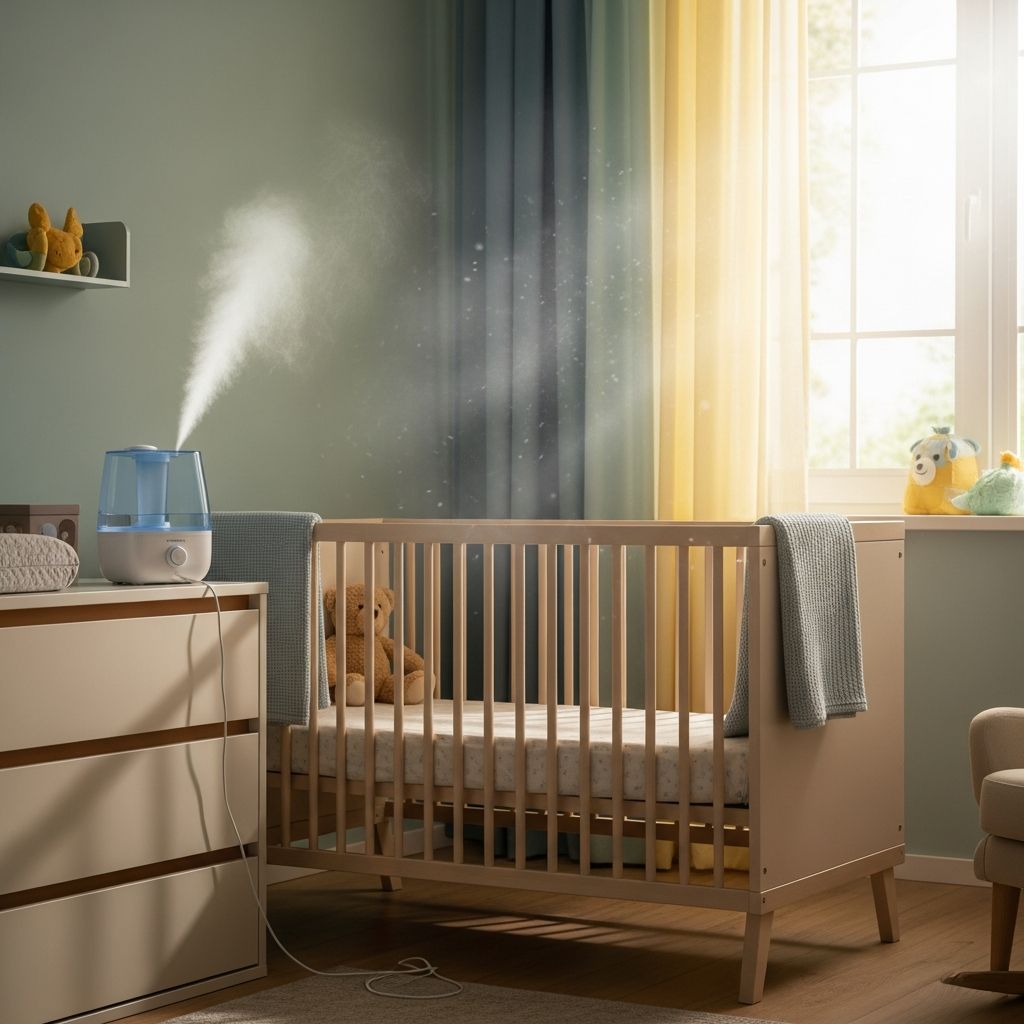
Positioning a humidifier correctly in a newborn’s room is essential to maximize benefits like easing congestion and dry skin while minimizing risks such as mold exposure or spills. Experts recommend placing cool-mist models at least 3 to 6 feet from the crib on a stable, elevated surface.
Why Humidity Matters in the Nursery
Maintaining proper indoor humidity levels supports newborn respiratory health, prevents cracked skin, and reduces static that can irritate delicate systems. Ideal range is 30% to 50%, as levels below 30% dry out nasal passages, increasing infection susceptibility, while above 50% promotes dust mites and mold.
Newborns breathe faster than adults—about 40-60 breaths per minute—and have underdeveloped immune defenses, making clean, moist air crucial during winter or in arid climates. A hygrometer helps track levels accurately, allowing adjustments to avoid over-humidification.
Choosing the Right Humidifier Type for Babies
Cool-mist humidifiers are the preferred choice for nurseries due to their burn-free operation. Unlike warm-mist vaporizers, they eliminate scalding risks from hot steam, which can cause severe injuries if tipped.
| Type | Pros | Cons | Best For Newborns? |
|---|---|---|---|
| Cool-Mist Ultrasonic | Quiet, energy-efficient | May disperse minerals/bacteria if unclean | Yes, with distilled water and filters |
| Cool-Mist Evaporative | Filters particles naturally | Requires wick replacement | Highly recommended |
| Warm-Mist | Kills some bacteria via heat | Burn hazard, condensation | Avoid |
Evaporative models use a fan to blow air over a moist wick, naturally humidifying without aerosolizing contaminants, making them a balanced option.
Recommended Distance from Crib and Bedding
- Minimum 3 feet: Keeps direct mist off baby, reducing wet bedding or overexposure to potential contaminants.
- Ideal 3-6 feet: Allows even humidity distribution without concentrating particles near breathing zone.
- Elevate 2+ feet high: On a dresser or shelf out of reach prevents tipping by mobile infants.
Avoid placing near vents, windows, or furniture edges to prevent uneven moisture or accidental knocks. Keep room door open for air circulation and monitor for white dust indicating mineral release—stop use immediately if seen.
Daily Cleaning and Maintenance Protocols
Humidifiers become breeding grounds for bacteria and mold in stagnant water, dispersing them via mist into baby’s lungs, potentially causing infections like bronchiolitis or allergies.
- Daily: Unplug, empty water, rinse tank with soap and water, scrub with brush, air-dry completely.
- Weekly: Soak parts in 10% white vinegar or bleach solution (1 tsp bleach per pint water), rinse thoroughly.
- Monthly: Descale with vinegar if hard water used; replace filters/wicks per manufacturer.
- Always use distilled or demineralized water to eliminate minerals that form inhalable dust.
Never add essential oils, Vicks, or medications unless pediatrician-approved, as they can irritate airways.
Preventing Common Health Risks
Bacterial and Mold Proliferation
Moist tanks foster Pseudomonas and Aeromonas bacteria, leading to pneumonia or wheezing in vulnerable newborns. Regular disinfection destroys 99% of germs.
Over-Humidification Dangers
Excess moisture above 50% encourages mite growth and wall mold, exacerbating eczema or asthma risks. Hygrometer-equipped units auto-shutoff for safety.
Electrical and Spill Hazards
Water near plugs risks shocks or fires; use GFCI outlets and unplug before refilling. Secure cords away from cribs to deter pulls.
Enhancing Nursery Air Quality Holistically
Beyond humidifiers, vacuum with HEPA filters weekly, wash bedding in hot water, and ensure ventilation. Combine with nasal aspirators for congestion relief without over-reliance on devices.
For cold seasons, pair with a room thermometer to maintain 68-72°F, optimal for sleep and humidity retention.
Frequently Asked Questions
Can I use tap water in a baby humidifier?
No, opt for distilled water to avoid minerals that create breathable dust and promote bacterial growth.
How often should I clean a humidifier for my newborn?
Daily rinsing and full disinfection every 1-3 days; never leave standing water overnight.
Is a warm-mist humidifier safe near my baby?
Avoid them due to scalding steam risks; cool-mist is safer for unsupervised use.
What humidity level is best for a baby’s room?
30-50%; use a hygrometer to stay in range and prevent mold or dryness.
Where exactly should I place the humidifier?
3-6 feet from crib, elevated on stable surface, away from bedding and outlets.
Expert Insights from Pediatric Guidelines
Pediatricians emphasize maintenance as key: “Humidifiers help but demand rigorous cleaning to avoid turning benefits into hazards,” per Children’s Hospital advice. Consult your doctor before introducing one, especially if baby has respiratory issues.
References
- 4 Major Risks of Using a Cool Mist Humidifier for a Newborn — Omega Pediatrics. 2023. https://www.omegapediatrics.com/newborn-risks-using-cool-mist-humidifier/
- What to Know About Safe Humidifier Vaporizer Use for Babies — WebMD. 2024-01-15. https://www.webmd.com/parenting/baby/what-to-know-about-safe-humidifier-vaporizer-use-for-babies
- How Close Should a Humidifier Be To a Baby? — Medical Monks. 2023. https://medicalmonks.com/os-resources/how-close-should-a-humidifier-be-to-a-baby/
- Are Humidifiers Safe for Newborns? A Guide to Baby Safety — Lively Living. 2024. https://livelyliving.com.au/blogs/blog/are-humidifiers-safe-for-newborns-a-guide-to-baby-safety
- Humidifier Safety — Children’s Hospital Colorado. 2023. https://www.childrenscolorado.org/just-ask-childrens/articles/danger-of-humidifiers/