Every parent knows the rush of emotion that comes with seeing their child on a stage, but watching your child perform something that came from your own heart takes that feeling to an entirely different level.
The Surreal Magic of a Familiar Melody
Imagine sitting in a crowded school auditorium, fluorescent lights buzzing quietly overhead, as rows of children shuffle onto a makeshift stage. You are ready for the usual seasonal standards, maybe a familiar carol or two. Then the first notes of a song you wrote begin to play, and your child steps forward, eyes bright, and sings it with all the earnestness in the world.
For a parent who works in music or storytelling, a moment like this is both ordinary and extraordinary. Ordinary, because it’s the same school recital everyone else is attending. Extraordinary, because the soundtrack of the event is part of your own life’s work, now being reinterpreted through your child’s voice.
Why Parents Get Overwhelmed at School Performances
Parents often walk into school concerts thinking they will simply clap politely and take a few photos. What actually happens is usually much more intense. A song, a line of dialogue, or a shy wave from the stage can suddenly unlock years of memories and worries, from late-night feedings to first steps to the quiet question of, “Am I doing this parenting thing right?”
- Seeing a child perform represents a visible step toward independence.
- Performances crystallize time, turning a fleeting stage moment into a milestone.
- The public nature of the stage amplifies parental pride and vulnerability.
When the performance features something deeply personal to the parent—like a song they helped bring into the world—that emotional volume knob gets turned all the way up.
From Living Room Sing-Alongs to Cultural Touchstones
Modern families often bond over movies, shows, and soundtracks that become part of the household’s shared language. Animated films and musical stories, in particular, tend to stick around long after the credits roll. Children belt their favorite songs in the car, in the shower, and in the quiet moments before bed.
For some families, those soundtracks are simply beloved entertainment. For others—such as families of artists, composers, or performers—they are also professional milestones. When a parent’s work becomes part of a global cultural phenomenon, it inevitably filters back into the family’s daily life in surprising ways.
When Your Work Becomes Your Child’s Playlist
There is a subtle but profound difference between having your child listen to a song you like and having them listen to a song you created. In the first case, you are sharing taste; in the second, you are sharing authorship. For a songwriter parent, hearing a child sing along to their work can feel like a bridge between professional identity and family life.
- The child interacts with the parent’s creativity on their own terms.
- The parent experiences their work anew, filtered through the intimacy of family.
- The song stops being just a product and becomes part of the family story.
At a school concert, where classmates and teachers are involved, that personal bridge suddenly becomes communal. The song that might have begun at a piano or a messy desk now echoes in a gym full of folding chairs and proud relatives.
Layers of Emotion Behind a Simple Tear
From the outside, a teary parent in a school auditorium looks like a cliché. On the inside, there may be dozens of competing feelings colliding at once. Awe at seeing a confident child, gratitude that the song has traveled so far, and a kind of disbelief that a private creative journey has led to this very public, deeply personal moment.
There is also an element of role reversal. A parent who once soothed a toddler with lullabies now watches that same child stand tall and sing in front of strangers. The parent who used to be the one performing or creating becomes the audience, and that shift can feel both humbling and exhilarating.
Children as Carriers of Creative Legacies
In families where storytelling, music, or performance are part of daily life, children often absorb those influences long before anyone calls them “talented.” They grow up watching rehearsals, hearing drafts, or noticing how a song goes from an idea to something the whole world can hear.
This doesn’t mean children are required to follow in their parents’ footsteps. It does mean they may develop a kind of creative fluency: improvising silly lyrics, mimicking rhythms, or inventing characters. Whether or not they become professional artists, they carry that imaginative language with them.
How Popular Stories Help Kids Find Their Voice
Movies like Moana resonate with children because they center on themes that feel huge even to a young audience: identity, bravery, and the desire to explore beyond the boundaries set for them. When kids sing these songs, they are not just repeating catchy tunes; they are rehearsing those themes in miniature.
When the lyric talks about longing, curiosity, or persistence, children may not fully unpack the meaning, but they internalize the emotional arc. Over time, this gives them a vocabulary—musical and emotional—for understanding their own growth.
Emotional Lessons Hidden in Disney Ballads
Many modern animated films have songs that do more than entertain. They function as compact stories about facing fear, honoring family, or stepping into one’s own power. For parents, this can be a gift: the chance to talk with kids about big topics in a gentle, melodic way.
- A soaring chorus can open a conversation about courage.
- A wistful verse can invite children to describe their own dreams.
- Duets can spark teamwork and empathy between siblings.
When a parent happened to write one of those songs, there is a special satisfaction in seeing it not only win awards but also genuinely help children articulate their feelings.
Practical Ways to Nurture Kids’ Love of Music
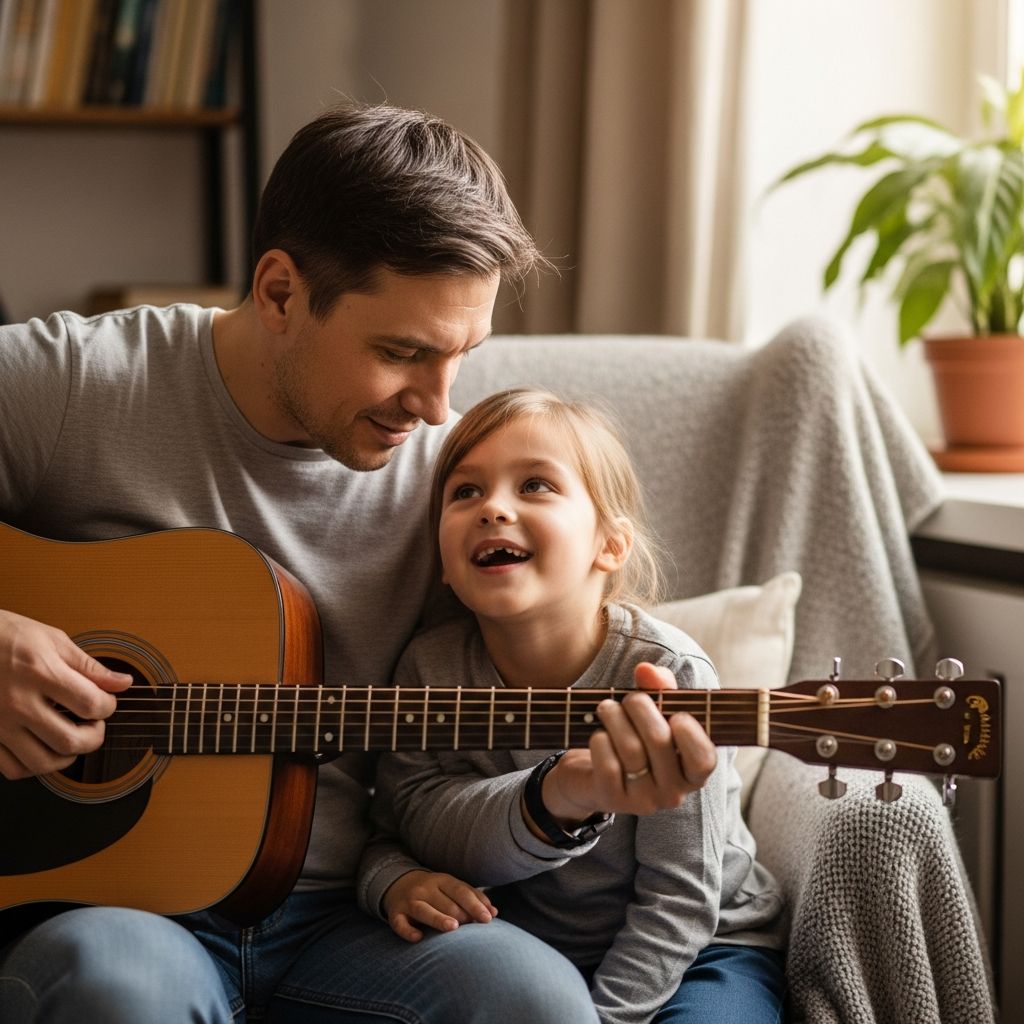
Parents do not need to be award-winning composers to make music a meaningful part of their family life. Small, consistent habits can turn any household into a place where creativity is normal and encouraged.
- Play a variety of genres at home so children hear different rhythms and cultures.
- Sing together in everyday moments: during chores, bath time, or car rides.
- Leave simple instruments around—like shakers, small keyboards, or ukuleles.
- Celebrate effort rather than perfection when kids perform for the family.
- Talk about lyrics and ask what kids think a song means.
These habits send a clear message: music is not just something to consume. It is something to participate in.
Supporting a Child Before and After Performances
For many children, performing in front of others is both exciting and terrifying. Parents can play a crucial role in making the experience feel safe and empowering. The goal is not to remove all nerves but to help children interpret those nerves as energy rather than danger.
- Practice at home with a friendly audience of family members or stuffed animals.
- Normalize jitters by sharing stories of your own nervous moments.
- Focus praise on bravery and preparation, not only on the “perfect” performance.
- Ask your child how they felt afterward before offering your own impressions.
When children see that their parents value the process and the courage it took to get on stage, they are more likely to value those things in themselves.
How Parents Can Share Their Own Creative Work
Parents who are creators—writers, musicians, animators, designers—sometimes hesitate to bring their professional work home. They worry about overshadowing their child’s interests or making the family orbit around their career. But when shared thoughtfully, a parent’s creative work can inspire rather than dominate.
- Explain your projects in age-appropriate language, emphasizing the joy of making things.
- Invite kids into low-pressure parts of your process, such as brainstorming or doodling ideas.
- Ask for their input: a favorite color for a character’s costume, or a silly lyric to try.
- Make sure the conversation goes both ways by showing real interest in their creations too.
When a child later encounters that work in a public setting—like a movie theater or a school concert—it feels less like distant “content” and more like a family project whispered onto a big stage.
Pop Culture as a Family Bonding Tool
Shared pop culture moments can knit families together across busy schedules and generational differences. A single movie may become the soundtrack of a school year. A line from a song can turn into an in-joke that resurfaces years later at graduations or weddings.
When parents and kids genuinely love the same stories, they gain a common reference point. They can say, “Remember when that character doubted herself and did it anyway?” and everyone in the room immediately understands the emotional shorthand.
Why Stories About the Ocean Hit So Deep
Many children’s stories set on the ocean revolve around the tension between safety and exploration. The shore represents home and tradition; the sea represents possibility and risk. When kids sing songs tied to vast horizons and distant islands, they are rehearsing that tension in a safe, imaginative way.
For parents, watching their child sing about charting a new course can be both thrilling and unsettling. It reminds them that, one day, the little voice on the school stage will set out on real adventures—college, careers, relationships—far beyond the auditorium walls.
From Solo Dreams to Family Traditions
Creative careers often begin as solitary dreams: a kid scribbling lyrics or practicing chords in a bedroom. Over time, those dreams can evolve into professional achievements that touch millions of people. Yet, for many artists, the most meaningful audience remains the small one at home.
When a child performs a song that a parent helped bring into the world, it completes a kind of emotional circuit. What began as an internal spark becomes a shared experience, then a public story, and finally circles back as a moment of family tradition—captured on a shaky phone video and revisited for years to come.
Emotions Parents Commonly Feel at These Moments
| Emotion | How It Shows Up | What It Often Means |
|---|---|---|
| Pride | Big smiles, enthusiastic clapping, endless retelling of the story. | Recognition that the child is growing, learning, and taking risks. |
| Nostalgia | Tears during familiar lines, remembering earlier stages of childhood. | A sense of how quickly time is passing and how far the child has come. |
| Surreal Awe | Disbelief that a personal song or story is now echoing from a school stage. | Realization that private creative work has become part of public life. |
| Vulnerability | Emotional overwhelm, needing a moment to compose oneself. | Awareness that both parent and child are exposed and brave in different ways. |
Frequently Asked Questions
How can I help my child feel confident singing in public?
Start small and make home a safe rehearsal space. Let your child perform for you in low-pressure settings, praise their effort, and model calm breathing or simple warm-ups so the stage feels like an extension of play rather than a test.
What if I get too emotional during my child’s performance?
It is perfectly normal to cry or feel overwhelmed. If you are worried about distracting your child, sit a bit farther back, take deep breaths, and remember that your visible emotion is often interpreted as love and support, not embarrassment.
Do I need to be musical to raise musical kids?
No formal training is required. Curiosity is more important than virtuosity: play recordings, clap rhythms together, and show genuine enthusiasm when your child experiments with sound or movement.
How do I keep music fun instead of stressful?
Balance structure with play. If your child takes lessons, make room for silly improvisation and off-the-cuff performances at home, and avoid turning every practice session into a critique.
What if my child loves a song I am tired of hearing?
Repetition is part of how children learn and process big feelings. You can set gentle limits when needed—like choosing certain “music times” each day—while still honoring the emotional significance that song may hold for them.
A New Way to Hear the Same Song
For parents, especially those whose creative work has entered the cultural mainstream, hearing a familiar song come from their child’s voice can feel like listening to their own story told back to them in a new dialect. The melody is the same, but the meaning deepens each time the child sings it with a little more confidence.
Whether the song was written at your kitchen table or by strangers in a studio thousands of miles away, the moment your child steps onstage and sings it becomes yours too. In that instant, the boundaries between art, family, and memories blur—and the stage lights reveal not just a performance, but a shared journey.