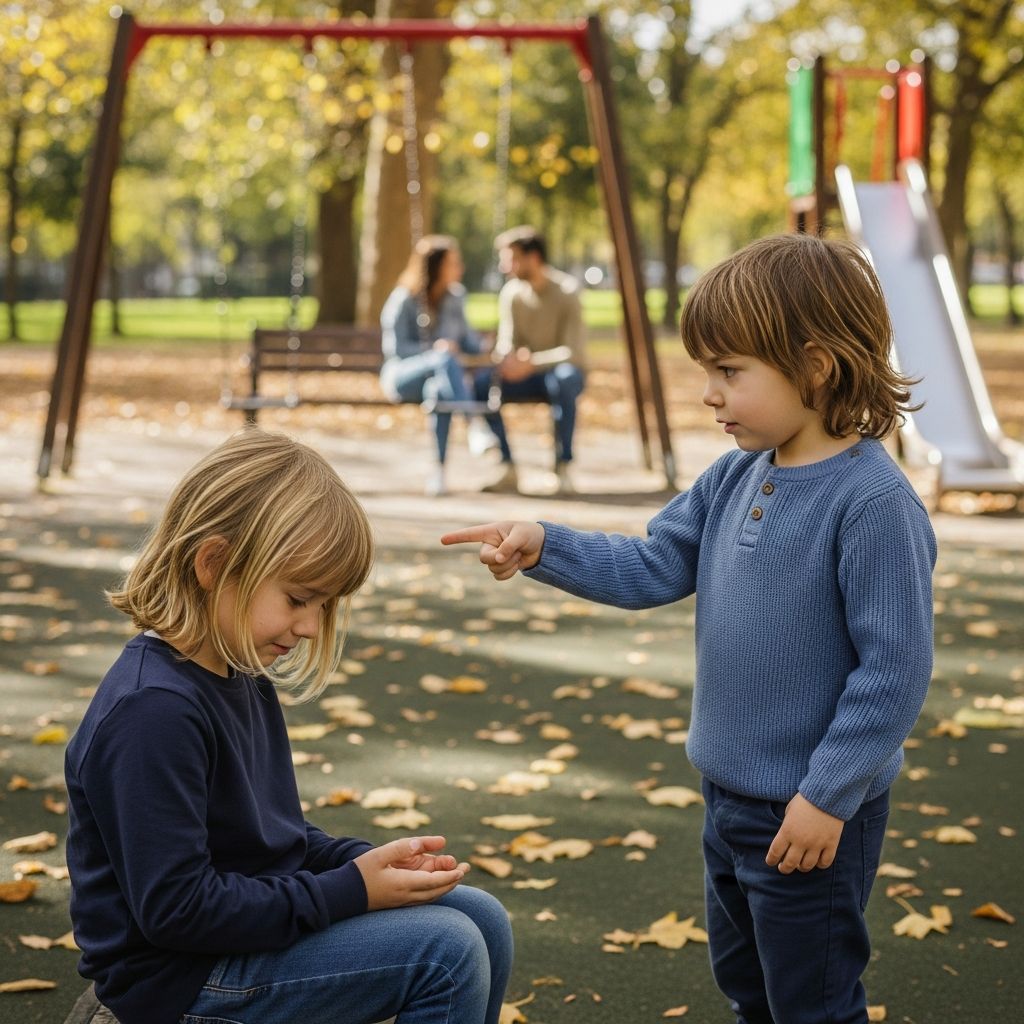
Few parenting situations feel as confusing as realizing that your best friend’s child is repeatedly unkind to your own child. You want to protect your kid, but you also care deeply about the friendship and the history you share. This guide helps you navigate that tension with empathy, clarity, and practical strategies.
Understanding What’s Really Happening
Before reacting, it helps to step back and understand the dynamics at play. Not every unpleasant moment between kids is bullying, and not every conflict means your friendship is doomed.
- Distinguish normal conflict from a pattern. Occasional disagreements are normal; a repeated pattern of targeting, exclusion, or hostility is a different issue.
- Notice your child’s behavior before and after visits. A child who becomes withdrawn, anxious, or resistant to seeing this family may be telling you something important through their behavior.
- Consider age and development. Younger children often lack impulse control and social skills; older children may be more aware of the power dynamics and social status involved.
Red Flags You Shouldn’t Ignore
It is important to pay attention to specific behaviors rather than vague impressions. Clear signs help you justify decisions and set boundaries with confidence.
- Consistent name-calling, mocking, or belittling comments toward your child.
- Repeated exclusion, such as telling others not to play with your child or always forming secret clubs.
- Taking or breaking your child’s belongings and showing no remorse.
- Blaming your child for conflicts regardless of circumstances.
- Your child expressing dread, fear, or stomachaches before planned get-togethers.
Any one of these can be a concern; a cluster of them over time is a clear signal that something needs to change.
Your First Priority: Your Child’s Emotional Safety
No friendship, history, or social circle is more important than your child’s sense of safety and self-worth. Your child is watching how you respond and learning what kind of treatment they should accept from others.
- Validate your child’s feelings. Listen without minimizing. Phrases like “That sounds really hurtful” or “Thank you for telling me” help your child feel seen.
- Avoid blaming your child. You can teach social skills and resilience without implying that your child caused someone else’s meanness.
- Reassure them of your protection. Make it clear that you take this seriously and will make decisions with their well-being in mind.
Helping Your Child Respond in the Moment
While adults manage the big-picture boundaries, children still need tools for handling tough interactions in real time. Teaching specific responses boosts your child’s confidence and reduces feelings of helplessness.
- Practice simple, assertive phrases. Examples include: “Please stop,” “That’s not okay,” or “I don’t like that.” Short phrases are easier to remember under stress.
- Role-play at home. Take turns pretending to be the other child so your child can practice tone of voice, posture, and eye contact.
- Teach exit strategies. Show your child it is always acceptable to walk away, find a trusted adult, or move to a different activity.
Managing Your Own Emotions Before You Act
Watching someone be unkind to your child can trigger intense anger, sadness, and even grief. Those feelings are valid, but reacting impulsively can escalate the situation unnecessarily.
- Pause before contacting your friend. Take hours or even a day to cool down so you can speak calmly instead of venting.
- Process with a neutral person. Talk to a partner, therapist, or another trusted friend who isn’t connected to the situation.
- Clarify your goals. Do you want to reduce contact? Ask for a specific change? Simply share what happened? Knowing this shapes the conversation.
Deciding When to Step In During Playdates
Parents often struggle with when to intervene and when to let kids work it out. When your child is being consistently targeted, though, it is better to err on the side of stepping in.
| Situation | Recommended Response |
|---|---|
| Minor disagreement over a toy, both kids upset but not targeted | Observe, coach gently from the side, let them practice problem-solving |
| One child repeatedly insulting or mocking the other | Intervene calmly, label the behavior as unkind, and redirect or separate |
| Your child is crying, frozen, or clearly overwhelmed | Step in immediately, comfort your child, and pause or end the playdate |
| Physical aggression (hitting, pushing, throwing objects) | Stop the behavior at once, separate children, and address safety with both families |
How to Talk to Your Best Friend
This is where many parents feel stuck: you cherish your friend, but you cannot ignore what is happening. A thoughtful, honest conversation gives your friendship the best chance to adapt and survive.
- Choose the right time and medium. A face-to-face conversation or video call is usually better than a rushed text thread.
- Lead with your care for the relationship. Start by acknowledging the value of the friendship and your wish to work through this together.
- Describe behaviors, not character. Talk about specific incidents and how they affected your child, rather than labeling their child as a bully or a bad kid.
Sample Conversation Starters
- “I wanted to share something that has been hard for us, because our friendship matters a lot to me.”
- “Lately, after playdates, my child has been really upset and says they feel left out. Could we talk about what’s going on and see how we can support them together?”
- “There have been a few moments where some comments seemed pretty hurtful. I know all kids have tough moments, but I’d love for us to be on the same page about how to handle it.”
Preparing for Different Reactions
Even caring, reasonable friends may feel defensive when they hear that their child has been unkind. Planning for multiple possible reactions helps you stay grounded.
- If your friend is receptive. They may ask questions, apologize, and want to brainstorm solutions. This is the best-case scenario and a sign the friendship can grow through this.
- If your friend is defensive. They may deny the incidents or blame your child. You can stay calm, re-state your observations, and gently hold your boundary.
- If your friend minimizes everything. You can still choose to change how often and in what contexts your children spend time together, even if your friend does not fully agree.
Resetting Boundaries Around Time Together
After you have acknowledged the problem, the next step is adjusting how and when the children interact. You can dial things down without ending your adult friendship overnight.
- Shorten or supervise playdates. Instead of long, unsupervised hangs, opt for shorter, structured activities where you can keep an eye on interactions.
- Meet without kids when possible. Coffee, walks, or adult-only dinners can nourish the friendship without putting your child in a difficult situation.
- Space out joint family time. Reduce the frequency of kid-heavy gatherings so your child has time to reset emotionally.
Supporting Your Child’s Social World Beyond This Friendship
When a relationship with a close family friend’s child becomes tense, it can help to widen your child’s social circle. This gives them more chances to feel included, respected, and valued.
- Encourage new activities. Clubs, sports, art classes, or community groups can connect your child with peers who share their interests.
- Host low-stress playdates. Invite one child at a time who is kind and easygoing, helping your child build positive experiences.
- Talk about what healthy friendship looks like. Highlight qualities such as kindness, fairness, and respect in stories, shows, or real-life examples.
When the Friendship Has to Change
Sometimes, despite your best efforts, your friend cannot or will not acknowledge the problem. In those cases, it may be necessary to accept a new shape for the relationship.
- Allow distance without drama. You do not have to stage a dramatic breakup. You can simply become less available for kid-centered plans.
- Protect your child’s narrative. Avoid trash-talking your friend or their child. Instead, frame the change as a choice to focus on relationships that feel better and safer.
- Grieve the shift. It is normal to feel sad or disappointed when a long-time friendship changes because of your children’s dynamics.
Caring for Yourself Through the Process
This kind of conflict can be emotionally draining. You are juggling loyalty to your child, love for your friend, and your own past with this family. Self-care is not selfish here; it is necessary.
- Seek your own support. Therapy, support groups, or online communities can offer validation and new ideas for handling complex parent friendships.
- Practice self-compassion. Remind yourself that there is no perfect script for this. You are learning as you go, just like every other parent.
- Revisit your values. Reflect on what you want to model in terms of boundaries, empathy, and courage. Let those values guide your choices.
Frequently Asked Questions
Is this bullying, or just kids being kids?
Bullying usually involves a repeated pattern of harmful behavior, a power imbalance, and intentional targeting. A single disagreement or hurtful comment may be typical kid conflict, but a long-term pattern of exclusion, insults, or intimidation deserves more serious attention. You do not need a label to decide that your child deserves protection and kindness.
Should I confront the child directly?
It is usually best to address ongoing patterns with the other parent rather than confronting their child alone. In a specific moment, you can calmly intervene to stop unkind behavior and restate expectations (for example, “We speak kindly to each other in this house”). For broader concerns, talk to your friend privately and collaboratively.
What if my own child sometimes fights back or is unkind too?
Complex conflicts rarely involve only one mistake. You can both protect your child and hold them accountable for their behavior. Talk honestly about any hurtful things they may have said or done, help them repair when appropriate, and still make it clear that they never have to tolerate ongoing cruelty from anyone.
Will setting boundaries ruin my friendship?
Healthy friendships can withstand uncomfortable conversations and boundary shifts. Setting limits may feel risky, but it also offers a chance for your friendship to deepen and become more honest. If the friendship cannot survive you protecting your child, that reveals something important about the relationship.
How do I explain changes in plans to my child?
Keep explanations age-appropriate and free of blame. You might say that you are choosing to spend more time with people who make everyone feel good and that friendships sometimes change as kids grow. Emphasize that their safety and happiness are your priority and that they did nothing wrong by telling you how they feel.
Key Takeaways for Parents
- Your child’s emotional safety comes before any adult friendship.
- You can balance empathy for your friend with firm boundaries.
- Concrete examples and calm communication make hard conversations more productive.
- Friendships may change, but modeling healthy limits teaches your child what respect looks like.
By approaching this painful situation with clarity, compassion, and courage, you show your child that their feelings matter—and that even in complicated relationships, they are never alone.