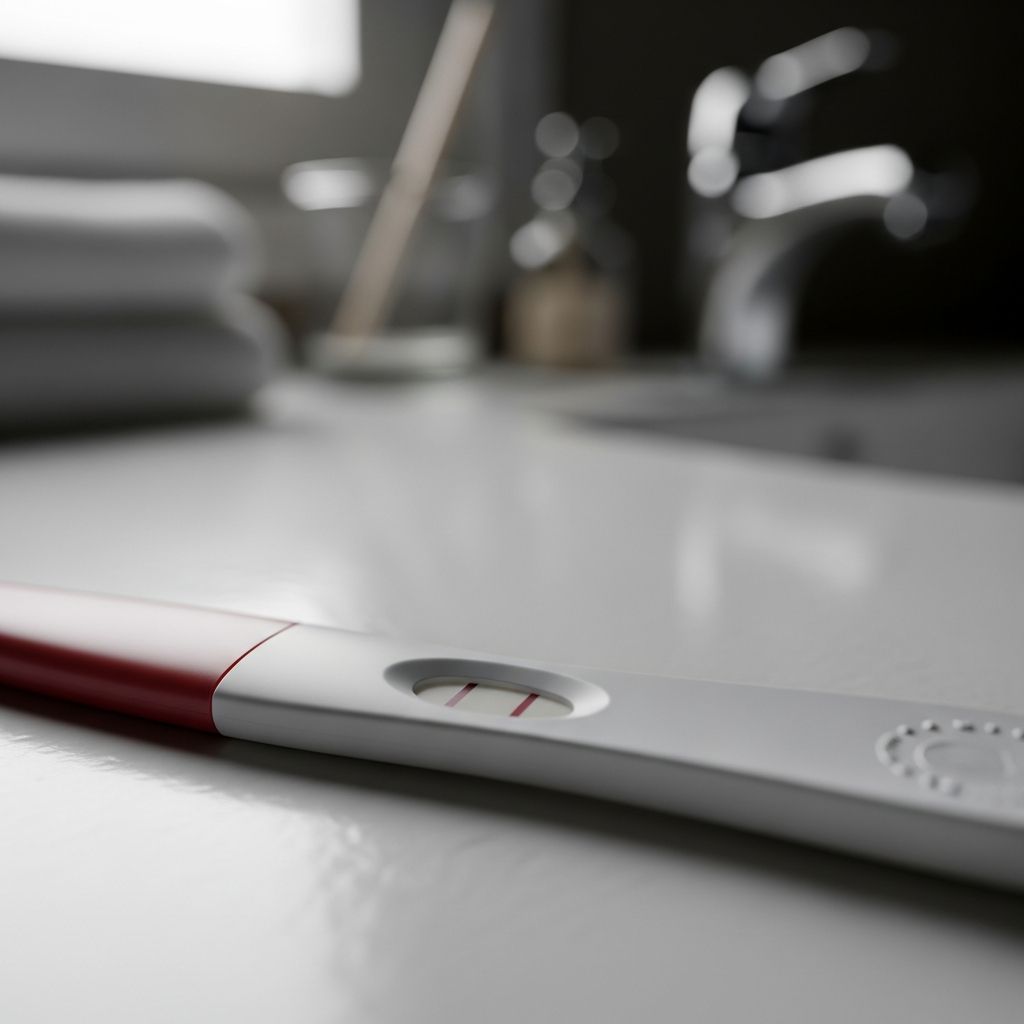
Home pregnancy tests offer convenience for those eager to confirm conception, but rushing into them before the right time often backfires. Testing too soon frequently yields misleading outcomes that amplify uncertainty rather than resolve it. This comprehensive guide delves into the science behind pregnancy detection, the pitfalls of premature testing, and strategies for achieving dependable results.
Understanding Pregnancy Hormone Dynamics
The cornerstone of all home pregnancy tests is human chorionic gonadotropin (hCG), a hormone produced post-implantation by the developing placenta. hCG levels begin low and roughly double every 48 hours in a viable pregnancy, but detection hinges on sufficient accumulation in urine.
Implantation itself varies widely, sometimes occurring up to 12 days after ovulation, meaning hCG might not be detectable until after a missed period for some women. Even highly sensitive tests struggle with this variability, as physiologic limits prevent perfect early detection.
Testing before hCG reaches detectable thresholds—typically 25 mIU/mL for standard kits—invites inaccuracy. Factors like diluted urine from excessive fluids or irregular cycles exacerbate this, underscoring why timing matters profoundly.
- False Negatives Dominate Early Attempts: When hCG is below assay sensitivity, tests read negative despite conception. Studies show early testers face nearly sixfold higher odds of an initial negative followed by positive, sowing doubt and prompting repeated tests.
- Evaporation Lines Mimic Positives: Leaving tests beyond recommended reading times allows urine evaporation, creating faint lines mistaken for positives, especially on sensitive strips.
- Expired or Mishandled Kits Fail: Outdated tests lose efficacy, while improper storage or usage (e.g., not using first morning urine) dilutes reliability.
These issues compound in real-world scenarios, where lay users may misinterpret subtle results without lab precision.
Emotional Toll of Inconclusive Results
Early negatives breed frustration for pregnancy planners, often leading to daily testing rituals that heighten stress. A large cohort study of over 6,500 women found 40% tested more than four days pre-period, correlating with elevated anxiety from volatile outcomes.
Conversely, fleeting positives can shatter hopes upon later negatives, particularly poignant for those facing infertility. Clinicians note this pattern disrupts emotional equilibrium, advising patience to safeguard mental well-being.
Unveiling Chemical Pregnancies
One stark downside of ultra-sensitive tests is spotlighting biochemical pregnancies—implantations that fail before clinical viability. These account for 60-70% of recognized early losses when detected promptly, yet many resolve unnoticed as delayed menses.
Early testers face nearly fourfold risk of positive-to-negative sequences signaling such events (adjusted risk ratio 3.80). While informative for recurrent cases, routine detection burdens most with grief over non-viable outcomes that nature typically conceals.
| Testing Timing | Accuracy Rate | Risk of Early Loss Detection | Anxiety Potential |
|---|---|---|---|
| >4 days before period | Low (due to low hCG) | High (3.8x) | Very High |
| Day of missed period | High (97-99% sensitive tests) | Moderate | Low |
| 1 week after missed period | Near 100% | Low | Minimal |
This table illustrates how delaying aligns benefits, minimizing distress while maximizing precision.
Technical Limitations of Home Kits
Not all tests match claims; preliminary evaluations reveal some fail at 50 mIU/mL, yielding false negatives near expected periods. FDA-vetted options perform better, but user error—rushing reads or ignoring instructions—persists.
Rare interferents like hCG-mimicking fertility drugs (e.g., Ovidrel) or malignancies can spur false positives, though uncommon. High hCG fragment concentrations in later pregnancy pose another pitfall for untested kits.
Optimal Strategies for Reliable Confirmation
- Target First Day of Missed Period: Most sensitive tests detect 97% of pregnancies here, balancing earliness with accuracy.
- Use Morning Urine: Concentrated hCG yields clearest results; avoid overhydration.
- Follow Instructions Precisely: Time readings exactly; discard after specified window to dodge evaporation artifacts.
- Confirm Doubles with Repeat: Positives warrant follow-up in 48 hours; persistent negatives post-miss suggest retest or consult.
- Track Cycles Accurately: Apps or basal thermometry pinpoint ovulation for precise expectations.
For irregular cycles, blood tests via providers offer quantitative hCG, detecting from 5 mIU/mL but reserved for clinical needs.
Navigating Irregular Cycles and Special Cases
Women with PCOS or perimenopause face ovulation delays, inflating false negatives even post-miss. Adolescents, prone to anovulation, risk similar misfires. Those on hCG-triggering fertility meds must wait 10-14 days post-injection to avoid positives.
High-risk histories (e.g., recurrent losses) may justify earlier monitoring, but under guidance to interpret nuances like slow hCG rises signaling ectopic risks.
Long-Term Implications for Family Planning
Beyond immediate results, habitual early testing patterns signal deeper anxieties addressable via counseling. PRESTO data underscores educating planners on hCG timelines to foster realistic expectations, reducing unnecessary distress.
Providers play key roles, recommending waits that curb over-testing while promoting preconception health—folic acid, lifestyle tweaks—for robust outcomes.
Frequently Asked Questions
When is the best time for a home pregnancy test?
The first day of your missed period offers optimal accuracy; wait longer if cycles vary.
Can medications cause false positives?
Yes, fertility drugs with hCG (e.g., Pregnyl) can; abstain 14 days post-dose.
What if I get a faint line?
Retest in 48 hours; it may indicate rising hCG, but evaporation possible—read timely.
Are all tests equally sensitive?
No; FDA-approved ones detect 25 mIU/mL reliably; verify claims.
Should I test daily while trying to conceive?
Avoid; it spikes anxiety without gain—limit to post-miss.
Empowering Informed Decisions
Armed with hCG science and risk awareness, prospective parents can sidestep early testing traps. Patience yields clarity, preserving joy in confirmation. Consult professionals for tailored advice, especially amid uncertainties.
References
- Early Pregnancy Testing: Risks and Benefits for Patients — OCAcademy. 2023. https://www.ocacademy.in/blogs/early-pregnancy-testing-risks-benefits-patients/
- Natural Limits of Pregnancy Testing in Relation to the Expected… — JAMA Network. 1999-11-24. https://jamanetwork.com/journals/jama/fullarticle/194261
- First Trimester Screening — American Pregnancy Association. Accessed 2026. https://americanpregnancy.org/prenatal-testing/first-trimester-screening/
- Pros and Cons of Home Pregnancy Tests — Banner Health. 2023. https://www.bannerhealth.com/healthcareblog/advise-me/pros-and-cons-of-pregnancy-tests
- Accuracy of Home Pregnancy Tests and New Developments — PMC (NCBI). 2014-07-11. https://pmc.ncbi.nlm.nih.gov/articles/PMC4119102/
- Pregnancy Test: When To Take, Types & Accuracy — Cleveland Clinic. Accessed 2026. https://my.clevelandclinic.org/health/diagnostics/9703-pregnancy-tests
- Home pregnancy tests: Can you trust the results? — Mayo Clinic. Accessed 2026. https://www.mayoclinic.org/healthy-lifestyle/getting-pregnant/in-depth/home-pregnancy-tests/art-20047940