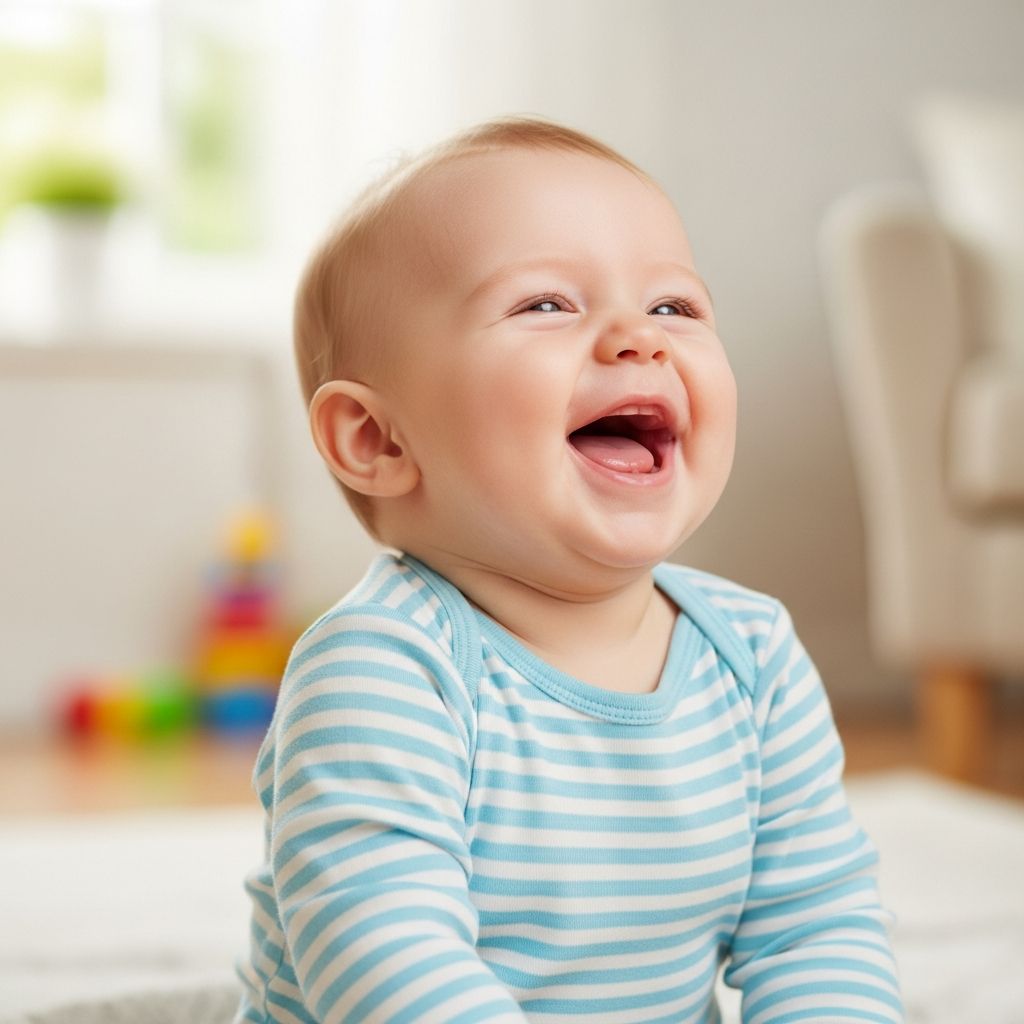
The Emergence of Laughter in Early Infancy
Laughter represents one of the most delightful and meaningful developmental achievements in a baby’s first year of life. Unlike reflexive responses such as the startle reflex or rooting reflex, genuine laughter emerges through a complex interplay of cognitive, emotional, and social development. This joyful expression signals that your infant is not merely responding to physical sensations but is beginning to engage with their environment in increasingly sophisticated ways.
The journey toward your baby’s first laugh begins long before those precious giggles emerge. In the earliest weeks, babies communicate through crying, cooing, and reflexive smiling—all precursors to the laughter that will eventually follow. Understanding this developmental trajectory helps parents recognize and appreciate each phase of their baby’s communicative growth.
The Timeline of Laughter Development
Initial Sounds and Social Smiling (Weeks 5-9)
Before babies laugh, they first learn to smile in response to social interaction. During the fifth to ninth weeks of life, infants begin displaying social smiles—genuine facial expressions that indicate recognition and pleasure in their caregiver’s presence. These early smiles represent a critical juncture in developmental progression, establishing the foundation for more complex emotional expressions.
The First Giggles (3 to 4 Months)
Around the three to four-month mark, most babies experience their first genuine giggles. These initial laughs may be subtle—quiet, high-pitched chuckles that sound quite different from the robust belly laughs that characterize older infants. Parents often describe these first giggles as brief and delicate, sometimes catching them off guard with their sweetness.
At this stage, babies typically laugh in response to physical stimulation such as tickles, funny faces, unexpected sounds, or playful interactions. The laughter itself represents a significant cognitive achievement, as it requires your baby to process sensory information, recognize something as amusing, and coordinate multiple muscle groups to produce the vocalization.
Escalation to Belly Laughs (5 to 6 Months)
Between five and six months of age, many babies transition from quiet giggles to more enthusiastic, full-bodied laughter. These belly laughs often emerge during moments of heightened excitement or amusement, such as when watching a pet perform an unexpected action or engaging in extended playful interactions with family members. The intensity and frequency of laughter typically increase during this period as babies become more responsive to stimuli.
Socially Responsive Laughter (7 to 9 Months)
As babies approach the second half of their first year, their laughter becomes increasingly tied to social games and interactive experiences. Classic games like peekaboo become particularly effective at generating laughter during this stage, as babies develop the cognitive capacity to anticipate outcomes and find humor in the predictable surprise element. This represents a significant leap in humor comprehension and social awareness.
The Complexity Behind Your Baby’s Laughter
More Than Just a Reflex
Laughter differs fundamentally from reflexive responses like smiling, which begins developing in utero. Genuine laughter requires sophisticated coordination between multiple developmental systems. Your baby must perceive something in their environment, process that information emotionally, and then execute the physical act of laughing. This multi-step process relies on advancing neurological development and increasing social awareness.
A Window Into Cognitive Development
The emergence and evolution of laughter patterns provides valuable insight into your baby’s broader cognitive development. Infants who laugh in response to unexpected events or social games demonstrate emerging understanding of cause-and-effect relationships and predictability. The progression from simple physical laughter to socially-motivated laughter reflects advancing brain development and emotional sophistication.
What Laughter Reveals About Development
Social Skill Development
Laughter functions as an early communication tool that helps babies explore social dynamics and connect with those around them. When your baby laughs, they learn that their emotional expression produces responses from caregivers. Over time, infants begin deliberately initiating laughter to elicit positive reactions from others, demonstrating growing awareness of how social interactions function. This emerging social reciprocity represents a foundation upon which future relationship skills are built.
Emotional Expression and Communication
Before babies can articulate their feelings through speech, laughter serves as a primary emotional communication tool. A giggle might signal contentment, while escalating laughter indicates heightened excitement or joy. This non-verbal communication method allows babies to express their internal emotional states and reinforce their ability to connect with others around shared positive experiences.
Humor Development
The type of stimuli that trigger laughter evolves as babies mature. Initially, babies laugh at novel or unexpected events and physical sensations. As they develop, the situations that generate laughter become more sophisticated. By twelve to eighteen months, toddlers may begin recognizing contradictions and unexpected situations as humorous, showing the early emergence of true humor appreciation distinct from simple surprise responses.
Encouraging Your Baby’s Laughter
Effective Techniques for Eliciting Giggles
Parents can actively encourage laughter development through various interactive strategies:
- Physical Play: Gentle tickling, bouncing, and peek-a-boo games reliably generate laughter, particularly after the four-month mark when babies become more responsive to tactile stimulation.
- Facial Expressions: Making funny faces, unusual mouth movements, and exaggerated expressions capture babies’ attention and often produce giggles.
- Vocal Play: Producing unexpected sounds, raspberries, and silly vocalizations create novel auditory experiences that babies find amusing.
- Social Games: Structured interactive games build anticipation and provide the surprise element that triggers laughter, particularly as babies mature.
- Observational Humor: As babies grow older, allowing them to observe humorous situations—such as a pet doing something silly—provides opportunities for laughter.
Timing and Responsiveness
The most effective approach to encouraging laughter involves tuning into your baby’s developmental stage and individual preferences. Not all babies find the same activities amusing, and individual temperament significantly influences laughter frequency and responsiveness. Some infants naturally gravitate toward more boisterous laughter while others may find quieter, gentler interactions more appealing. The key lies in observing your baby’s responses and adjusting your engagement accordingly.
When Laughter Seems Delayed
Understanding Individual Variation
All babies develop according to their own unique timelines. While developmental guidelines suggest most babies begin giggling around three to four months, some infants may laugh earlier or considerably later. Variation within the normal range is entirely typical and does not necessarily indicate any concern.
Babies who have not yet laughed by four months may be focused on other developmental priorities such as gaining head control, rolling over, or reaching for objects. Additionally, individual temperament plays a significant role—some babies naturally possess more reserved personalities and may laugh less frequently than their peers despite developing typically in all other respects.
When Professional Guidance Is Appropriate
If your baby approaches six months without laughing, particularly if you also notice delays in other communication milestones, consulting with your pediatrician is advisable. Lack of laughter combined with limited smiling, minimal babbling, or reduced responsiveness to sounds may warrant developmental evaluation.
In some cases, hearing difficulties can impact laughter development, as babies must perceive sounds to fully engage with the social games and vocal play that typically trigger laughter. Your pediatrician can help assess whether any underlying factors might be influencing your baby’s laughter development.
Developmental Milestones Following Laughter
Once your baby establishes regular laughter patterns, you can anticipate progression toward additional communication and physical milestones:
| Age Range | Emerging Milestones |
|---|---|
| 4-6 months | Vocalizing vowel sounds, responding to facial expressions, following objects with eyes |
| 6-10 months | Babbling with repetitive sounds, beginning to sit independently, early crawling |
| 7-9 months | Responding to their name, recognizing familiar people, raising arms to be picked up |
| 9-12 months | More complex babbling, understanding simple words, increased social responsiveness |
Laughter itself facilitates these subsequent developments by encouraging continued verbal experimentation and social engagement. Each instance of shared laughter provides your baby with reinforcement that communication and connection with others generates positive outcomes, motivating further engagement.
The Broader Significance of Infant Laughter
Building Parent-Child Connection
Beyond its developmental importance, infant laughter creates powerful bonding moments between parent and child. The joy and amusement that mutual laughter generates strengthens emotional connections and builds secure attachment relationships. When babies laugh in response to their parent’s efforts to amuse them, it creates a positive feedback loop that encourages continued interaction and deepens relational bonds.
Modeling Emotional Expression
The frequency and characteristics of your baby’s laughter are partially influenced by the laughter patterns they observe in their caregivers. Babies who regularly witness adults laughing and expressing joy develop greater comfort with emotional expression and are more likely to develop robust laughter patterns themselves. In essence, parental modeling of genuine joy and amusement helps shape your baby’s approach to emotional communication.
Frequently Asked Questions
Is it concerning if my baby hasn’t laughed by four months?
Not necessarily. While many babies laugh around three to four months, significant individual variation is normal. However, if your baby shows no laughter signs by six months and displays delays in other areas like smiling or babbling, discussion with your pediatrician is recommended.
What’s the difference between a giggle and a belly laugh?
Giggles are typically quieter, high-pitched chuckles that represent early laughter attempts, often appearing around three to four months. Belly laughs emerge around five to six months and involve more intense, full-bodied laughter with greater volume and enthusiasm.
Can I encourage my baby to laugh more?
Yes. Engaging in tickle games, making funny faces, producing unusual sounds, and playing interactive games like peek-a-boo effectively encourage laughter. However, respecting your baby’s individual temperament and preferences is important, as some babies naturally laugh more frequently than others.
Does laughter indicate healthy development?
Laughter is a positive developmental sign indicating advancing social, emotional, and cognitive abilities. However, the absence of frequent laughter alone doesn’t necessarily indicate a problem if other developmental milestones are being met. Temperament varies widely among infants.
When do babies understand what they’re laughing at?
Early laughter (3-4 months) occurs in response to physical sensations or surprises without true humor understanding. Around twelve to eighteen months, toddlers begin recognizing contradictions and unexpected situations as genuinely humorous, showing emerging humor comprehension.
References
- When Do Babies Start Laughing? A Guide to Your Baby’s First Giggles — Smart Sleep Coach. Accessed January 2026. https://www.smartsleepcoach.com/blog/development/when-do-babies-start-laughing
- When do babies laugh for the first time? — Huckleberry. Accessed January 2026. https://huckleberrycare.com/blog/when-do-babies-laugh-for-the-first-time
- When to Expect Baby’s First Laugh — Happiest Baby. Accessed January 2026. https://www.happiestbaby.com/blogs/baby/when-do-babies-laugh
- When will my baby laugh and how can I encourage it — Lovevery Blog. Accessed January 2026. https://blog.lovevery.com/skills-stages/laughing/
- Baby Giggles Aren’t Just Adorable. They’re Serious Development! — Alze in Pediatrics. Accessed January 2026. https://alzeinpeds.com/baby-giggles-arent-just-adorable-theyre-serious-development/
- Laughing Matters: Infant Humor in the Context of Parental Affect — PubMed Central, National Institutes of Health. 2015. https://pmc.ncbi.nlm.nih.gov/articles/PMC4424150/