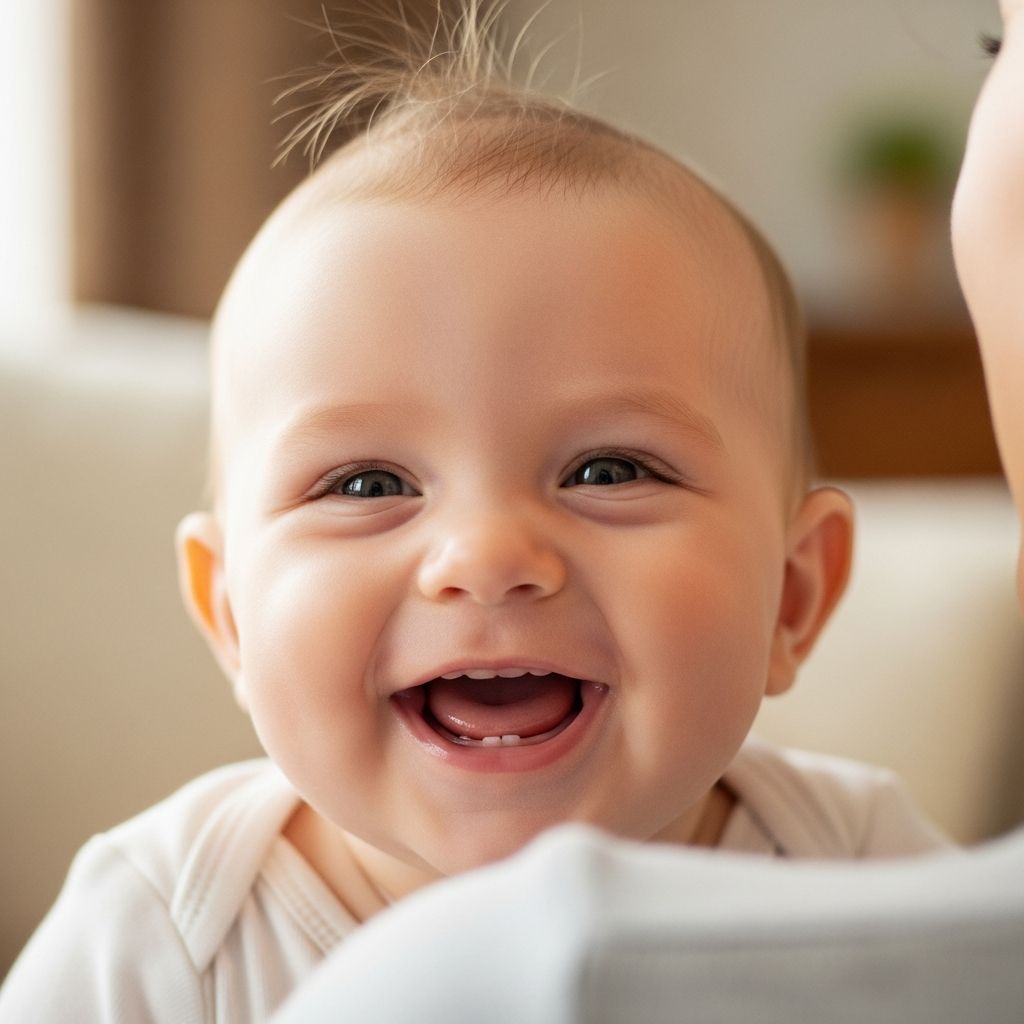
Babies’ first laughs mark a joyful milestone in early development, typically emerging between 3 and 6 months as they respond to playful interactions and social cues. These giggles not only delight parents but also signal important progress in emotional, social, and cognitive growth.
The Journey from Smiles to Laughter
Infant laughter doesn’t appear overnight; it builds on earlier expressions like reflexive smiles. Newborns display fleeting smile-like expressions during sleep or feeding, driven by innate reflexes rather than conscious response. By 6-8 weeks, social smiling kicks in, where babies grin in reaction to familiar faces or voices, laying the groundwork for more complex vocalizations.
Around 2-3 months, cooing and excited body movements accompany these smiles, showing heightened engagement with caregivers. The leap to true laughter happens at 3-4 months for many, often as short bursts triggered by gentle surprises. By 4-6 months, expect fuller chuckles and squeals, aligning with CDC milestones where laughter becomes a reliable response to stimulation.
Key Developmental Stages of Infant Laughter
Laughter evolves through distinct phases, each tied to neurological maturation and social learning. Understanding these helps parents appreciate normal variations and know when to celebrate progress.
- 0-2 Months: Reflexive Expressions – Facial twitches mimic smiles but stem from basic muscle development, not interaction.
- 6-12 Weeks: Social Smiling – Intentional grins with eye contact and coos indicate recognition of loved ones.
- 3-4 Months: Initial Giggles – First vocal laughs emerge, often from tickles or peekaboo.
- 5-6 Months: Consistent Chuckles – Longer laughs respond to predictable games, reflecting improved anticipation.
- 7-9 Months: Advanced Humor – Babies giggle at surprises like toy drops or exaggerated sneezes, showing cognitive grasp of novelty.
- 12+ Months: Reciprocal Play – Toddlers laugh to elicit responses, linking joy to language and social reciprocity.
This progression underscores laughter as a prosocial tool, helping babies signal happiness and build attachments.
Factors Shaping When Your Baby Laughs
Not all babies giggle on the exact same schedule, with normal ranges spanning 12 weeks to 6 months. Temperament plays a role—some infants are more reserved, prioritizing observation over expression. Sensory sensitivities can delay responses if stimuli feel overwhelming.
Premature babies often follow adjusted-age timelines, while cultural interaction styles influence timing. Temporary lulls occur during teething, growth spurts, or routine changes, but laughter rebounds as comfort returns. Selective giggling—more with certain people—demonstrates secure bonding and familiarity.
| Factor | Impact on Laughter | Typical Timeline Adjustment |
|---|---|---|
| Temperament | Observant babies may laugh later | Up to 1-2 months delay |
| Prematurity | Use adjusted age | Matches full-term peers |
| Teething/Growth | Temporary pause | Resumes post-discomfort |
| Social Exposure | More play = earlier laughs | Advances by weeks |
Proven Ways to Elicit Those Precious Giggles
Encouraging laughter fosters bonding and development. Start simple, respecting your baby’s cues to avoid overstimulation.
Physical Play for Early Laughs
- Gentle tickling on tummy, feet, or chin—sensitive areas spark instinctive joy.
- Lifting high or bouncing rhythmically mimics thrilling motions.
- Raspberry blows on skin combine touch and sound surprises.
Facial and Vocal Fun
- Exaggerated faces: wide eyes, puffed cheeks, or tongue out.
- Voice variations—squeaky highs, deep lows, or whispers.
- Mirror play: watch reactions to shared silly expressions.
Interactive Games by Age
Tailor activities to developmental readiness for maximum engagement.
- 3-4 Months: Basic peekaboo with hands or cloth.
- 5-6 Months: Pop-up toys or sudden reveals.
- 7-9 Months: Chase games like \”I’m gonna get you!\” or repeated drops.
- 9-12 Months: Absurd acts, like wearing baby’s sock on hand.
Consistency builds anticipation, turning one-off giggles into full-bellied roars.
The Science Behind Baby Laughter
Laughter in infants combines vocalization with social smiling, rooted in brain areas for emotion and reward. It releases endorphins, reinforcing positive interactions and attachment. Frequent shared laughs enhance language skills, as joyful vocal play precedes words.
Studies from the American Academy of Pediatrics note most achieve social laughs by 4 months, supporting emotional regulation. Beyond cuteness, giggles indicate healthy sensory processing and motor control.
When to Consult a Professional
While variations are normal, track overall milestones. If no laughter by 6-7 months alongside absent smiles, coos, or raspberries, discuss with a pediatrician. Isolated delays rarely signal issues, but holistic checks ensure comprehensive development. Early intervention, if needed, leverages brain plasticity effectively.
Building Lasting Joy Through Play
As babies grow, laughter evolves into humor appreciation around incongruities, like mismatched objects. By 12-18 months, they initiate silliness, balancing toys precariously or mimicking adults. Incorporate daily play routines to sustain this trajectory, boosting resilience and social skills long-term.
Parents’ enthusiasm amplifies effects—your genuine delight mirrors back, teaching emotional expression. Diverse stimuli, from sibling antics to pet movements, enrich experiences.
Frequently Asked Questions
At what age do most babies laugh?
Most babies produce their first laughs between 3-4 months, though full laughter solidifies by 6 months.
Why hasn’t my 5-month-old laughed yet?
Temperament, sensory factors, or temporary discomfort like teething can delay it; monitor other milestones and consult if concerned beyond 7 months.
Is selective laughing normal?
Yes, babies often giggle more with familiar caregivers or playful siblings, reflecting healthy social bonds.
How can I make my baby laugh more?
Use gentle tickles, funny faces, peekaboo, and voice changes; repeat favorites to build anticipation.
Does baby laughter aid development?
Absolutely—it strengthens emotional ties, supports language, and signals neurological health.
References
- When Do Babies Start Laughing? Your Complete Guide — Mamazing. 2023. https://www.mamazing.com/blogs/parenting-tips/when-do-babies-start-laughing-guide
- Make’em Laugh: When Does a Baby Start Laughing? — Annabella Pump. 2023. https://www.annabella-pump.com/blogs/milk-our-knowledge/make-em-laugh-when-does-a-baby-start-laughing
- When Do Infants Start to Laugh? Milestones Explained — AExplorers. 2023. https://www.aexplorers.com/when-do-infants-start-to-laugh/
- When will my baby laugh and how can I encourage it — Lovevery Blog. 2023. https://blog.lovevery.com/skills-stages/laughing/
- Baby Giggles Aren’t Just Adorable. They’re Serious Development! — Alzein Pediatrics. 2023. https://alzeinpeds.com/baby-giggles-arent-just-adorable-theyre-serious-development/