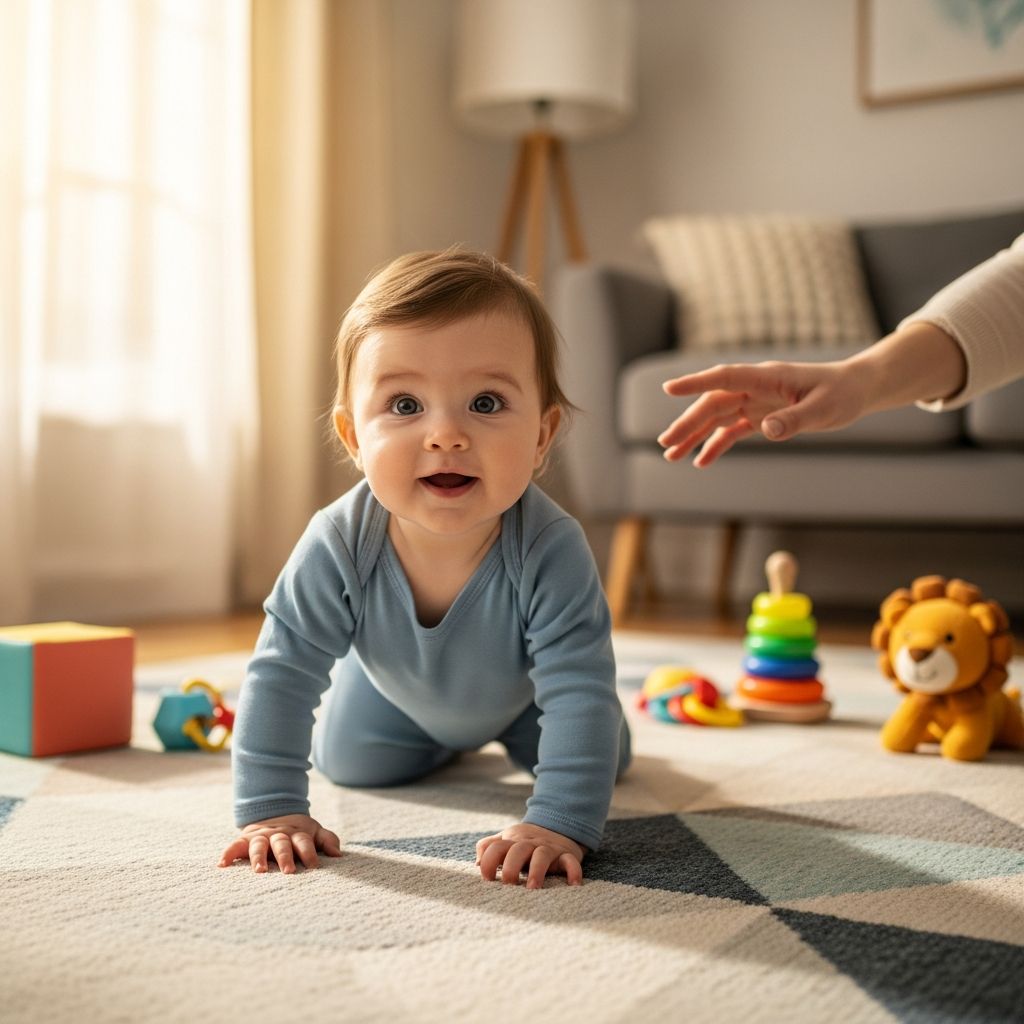
Babies typically begin crawling between 6 and 12 months of age, with many achieving this milestone around 7 to 10 months, though variations are normal and some skip it entirely.
Understanding the Typical Timeline for Crawling
Crawling represents a pivotal shift in infant mobility, allowing babies to explore their surroundings independently. Research indicates that about 50% of babies start crawling by 8 months, but the range spans from as early as 6 months to after 11 months. For preterm infants, developmental timelines are often assessed using adjusted age to account for early delivery.
This milestone isn’t uniform; factors like muscle strength, coordination, and individual temperament influence timing. Importantly, skipping crawling does not indicate developmental delays, as many babies transition directly to walking via other locomotion methods.
Pre-Crawling Milestones: Building the Foundation
Before true crawling emerges, babies progress through observable pre-crawling phases that strengthen necessary muscles. These steps lay the groundwork for coordinated movement.
- Tummy Time (0-3 Months): Essential from the first week, this builds neck, shoulder, and core strength as babies lift their heads.
- Rolling Over (2-5 Months): Mastering rolls from back to tummy and vice versa enhances overall body control.
- Pushing Up (4-6 Months): Babies prop on arms during tummy time, developing upper body endurance.
- Pivoting and Rocking (5-7 Months): Circular belly movements and rocking on hands-and-knees prepare for propulsion.
These stages foster the head control, balance, and arm strength critical for crawling.
Diverse Crawling Styles: What to Expect
No two babies crawl alike; various styles reflect unique strengths and preferences. Recognizing them reassures parents that deviations from the ‘classic’ form are typical.
| Style | Description | Typical Age Range |
|---|---|---|
| Classic Crawl | Alternating opposite arm and leg on hands and knees | 7-10 months |
| Commando/Army Crawl | Belly-down, pulling forward with arms | 5-8.5 months |
| Bear Crawl | Hands and feet with straight limbs | 8-12 months |
| Crab Crawl | Sideways or backward using hands, one knee bent | Variable |
| Scoot | Sitting and using arms to propel bottom across floor | 8-10 months |
These variations all promote cross-body coordination, balance, and spatial awareness, key for future walking.
Practical Strategies to Support Crawling Development
Parents play a vital role in facilitating crawling through simple, engaging activities. Focus on creating opportunities rather than forcing progress.
Maximize Tummy Time Safely
Start with 3-5 minutes several times daily, increasing as tolerated. Use high-contrast toys, mirrors, or your face to captivate attention. Research links consistent tummy time to earlier crawling. Always supervise on a firm, flat surface.
Create an Inviting Practice Environment
Clear a safe, open floor space free of hazards. Place enticing toys just out of reach to motivate reaching and movement. Bare legs on low-pile carpet improve traction for scooting.
Interactive Play Techniques
- Crawl alongside your baby to model the motion and make it fun.
- Use rolls of towels under chest during tummy time for support.
- Encourage rocking by gently nudging or singing rhythmically.
- Practice transitions like belly-to-sit to build versatility.
Avoid Common Pitfalls
Limit time in swings, seats, or carriers that restrict movement. Excessive support devices can delay independent muscle use. Prioritize floor play for natural progression.
Health Benefits of Crawling for Long-Term Development
Crawling enhances bilateral integration, where brain hemispheres communicate via cross-body motions, supporting cognitive and sensory processing. It boosts shoulder stability, hip strength, and hand-eye coordination, reducing future injury risks during walking.
Studies show crawlers often exhibit improved posture and athletic coordination later. Even non-crawlers gain from pre-stages like tummy time, per CDC milestones emphasizing motor skills by 9 months.
Monitoring Progress: When to Seek Guidance
Most babies meet crawling windows without issue, but track alongside other milestones: by 9 months, expect head lifting, sitting independently, and object manipulation. Consult a pediatrician if no pre-crawling signs by 7 months or asymmetry in movement persists.
Well-child visits allow professionals to assess holistically. Early intervention, if needed, addresses rare concerns like muscle tone issues.
Frequently Asked Questions (FAQs)
What if my baby skips crawling?
Perfectly normal; many proceed to walking via scooting or cruising. No evidence links skipping to later problems if other milestones are met.
How much tummy time is enough?
Aim for 15-30 minutes total daily by 3-4 months, split into sessions. Consistency matters more than duration.
Can I help my baby crawl faster?
Gentle encouragement via play aids natural development; avoid pulling legs or arms, which risks injury.
Are different crawling styles a concern?
No, all effective styles build essential skills. Bear or commando crawls are common alternatives.
When does crawling lead to walking?
On average, 4 months later, but ranges from days to 8+ months.
Safety Essentials for Crawling Explorers
As mobility surges, baby-proof rigorously: secure furniture, block stairs, remove small objects. Use non-slip mats and gate hazards. This phase sparks curiosity, demanding vigilant supervision.
Expand play areas gradually to match growing confidence, always prioritizing soft landings.
References
- When do babies start crawling: 6 tips to encourage crawling — Huckleberry Care. 2023. https://huckleberrycare.com/blog/when-your-baby-starts-crawling
- The 7 Stages of Crawling Every Parent Should Know — KinActive Kids. 2023. https://kinactivekids.com/stages-of-crawling-milestones/
- Crawling: When will my baby start and how to help — Lovevery Blog. 2023. https://blog.lovevery.com/skills-stages/crawling/
- When do babies crawl, and how does it develop? (illustrated) — Parenting Science. 2023. https://parentingscience.com/when-do-babies-crawl/
- 7 Stages of Crawling: Your Baby’s Mobility — Pampers UK. 2023. https://www.pampers.co.uk/baby/crawling/article/different-styles-of-crawling
- When Do Babies Start Crawling? — Lurie Children’s. 2024-01-16. https://www.luriechildrens.org/en/blog/when-do-babies-start-crawling/
- Steps Toward Crawling — ZERO TO THREE. 2023. https://www.zerotothree.org/resource/steps-toward-crawling/
- CDC’s Developmental Milestones — Centers for Disease Control and Prevention (CDC). 2025. https://www.cdc.gov/act-early/milestones/index.html