Watching a baby learn to sit up is one of the most exciting milestones of the first year. It marks a big leap in independence and opens up a whole new world of play, exploration, and interaction.
This guide explains when babies usually sit up, the stages they move through, how to encourage sitting safely, what to avoid, and when it may be wise to talk to your pediatrician.
Typical Ages for Sitting Up
Every baby develops on a personal timeline, but there are common age ranges for sitting skills. Think in terms of windows rather than hard deadlines.
- 3–4 months: Baby holds head up steadily when supported in a sitting position.
- 4–6 months: Baby sits with support, such as a caregiver’s hands or a firm pillow behind the back.
- 5–7 months: Baby can sit briefly when placed in a sitting position, often leaning forward on hands for balance.
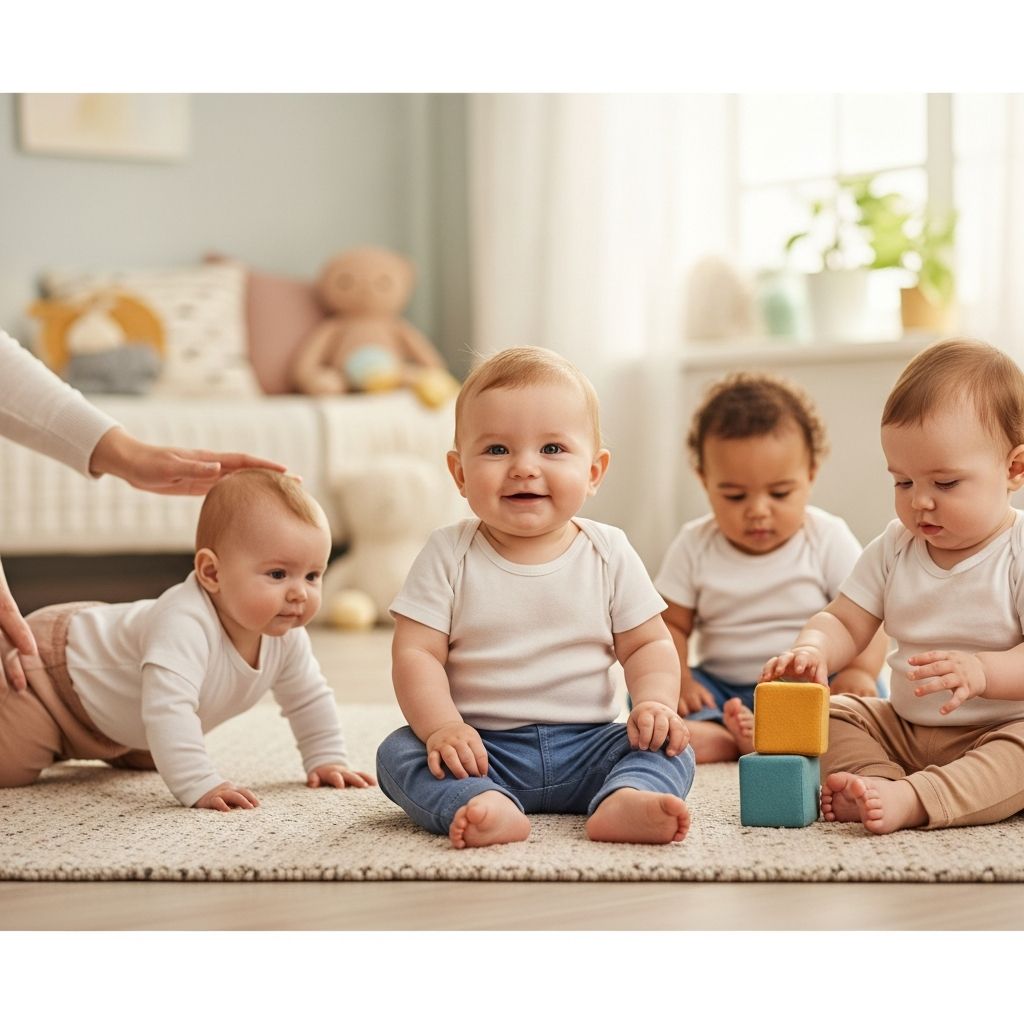
- 6–9 months: Baby sits independently without using hands for longer stretches and can play with toys while sitting.
- 7–10 months: Baby starts moving from lying down into sitting and back again on their own.
Some babies master these skills earlier or later than others. A difference of a few weeks is usually normal if the baby is otherwise healthy and meeting other milestones.
How Sitting Skills Develop Over Time
Sitting is not a single event but a progression of small, connected skills. Understanding the sequence helps parents know what to expect and how to offer the right kind of support.
Stage 1: Head and Neck Control
Before a baby can sit, strong head and neck control must come first. In the early weeks, babies rely on caregivers to support the head, but this changes quickly.
- 0–2 months: Baby briefly lifts head during tummy time.
- 2–3 months: Head bobbing decreases when held upright at your shoulder.
- By about 4 months: Baby holds head steady when supported in sitting or upright positions.
Plenty of supervised tummy time helps strengthen neck and upper back muscles, creating the foundation for sitting.
Stage 2: Supported Sitting
Once head control improves, babies are ready for short periods of supported sitting. In this stage, the goal is experience, not independence.
- Place baby on your lap or on the floor with you behind for support.
- Use your hands high on the chest at first, then gradually lower as baby gains strength.
- Keep sessions short; a few minutes at a time is enough in the beginning.
Supported sitting lets babies experience a new view of the world while they practice using core muscles.
Stage 3: Leaning on Hands (Tripod Sitting)
Next, babies may sit with their legs spread, torso leaning forward, and hands on the floor or a toy for balance. This “tripod” position is a normal transition.
- Often appears around 5–6 months, though timing varies.
- Baby may topple easily; stay close and provide light support if needed.
- Short, frequent practice sessions help build strength and confidence.
This stage allows babies to test balance while still having their arms available for support.
Stage 4: Independent Sitting When Placed
After enough practice, babies can sit on their own for longer stretches when an adult places them in a sitting position.
- Commonly emerges between 6–8 months.
- Baby’s back appears straighter and less rounded.
- Baby can reach for toys, turn to look around, and maintain balance more easily.
Even at this stage, sudden movements or reaching too far may cause a fall, so supervision and a soft play surface are important.
Stage 5: Moving Into and Out of Sitting
The final stage of sitting is when a baby can get into and out of the position independently. This is a major step toward crawling and walking.
- Often appears between 7–10 months, but the range is wide.
- Baby may roll, push up on arms, and pivot to bring one leg forward into sitting.
- Being able to move out of sitting safely reduces falls and frustration.
At this point, sitting becomes part of active play and exploration instead of a separate skill.
Age and Skill Milestones Table
| Approximate Age Range | Typical Sitting-Related Skills |
|---|---|
| 0–3 months | Lifts head briefly during tummy time; needs full support in upright positions. |
| 3–4 months | Holds head steadier when held upright; enjoys supported sitting on a lap. |
| 4–6 months | Sits with firm support at trunk or hips; may show early leaning-forward sitting. |
| 5–7 months | Sits briefly when placed; often props on hands in a tripod position. |
| 6–9 months | Sits independently for longer stretches; plays with toys while sitting. |
| 7–10 months | Transitions into and out of sitting; uses sitting as a base for crawling and reaching. |
How to Encourage Safe Sitting
Parents often want to know exactly what they can do to help a baby sit up. The good news is that everyday play and simple positioning go a long way.
Offer Plenty of Tummy Time
Tummy time strengthens the neck, shoulders, back, and core muscles that are essential for sitting. Starting from birth, aim for multiple short sessions each day.
- Begin with just a few minutes at a time and gradually increase.
- Use a rolled towel or small pillow under the chest if baby dislikes tummy time on a flat surface.
- Get down at baby’s eye level, talk, and play to make it more enjoyable.
Use Your Body for Support
Caregivers are the best “equipment” for early sitting practice. Your lap and arms provide flexible, responsive support.
- Sit on the floor with legs in a “V” and place baby between your thighs.
- Adjust hand placement from higher on the chest to lower on the hips as balance improves.
- Offer interesting toys at chest level to encourage baby to look up and forward.
Create a Safe Practice Space
Environment matters. A safe, cushioned area allows babies to experiment with movement without serious risk of injury.
- Use a firm play mat or carpet rather than a soft bed or couch.
- Surround baby with pillows to cushion any tips or tumbles.
- Keep hard or sharp objects well away from the play zone.
What to Avoid When Teaching Sitting
Some common practices can interfere with natural development or pose safety concerns. Paying attention to these helps protect babies as they learn.
- Avoid prolonged use of baby seats or devices. Short, supervised use can be fine, but relying on equipment rather than floor play can limit opportunities to develop core strength.
- Do not prop a very young baby in sitting too early. If a baby slumps heavily or cannot hold the head steady, wait and focus on tummy time and supported upright holding instead.
- Never leave a baby sitting unattended on a couch, bed, or high surface. Even babies who seem steady can topple suddenly.
The goal is to support, not to force. Letting a baby progress at a natural pace usually leads to better balance and confidence.
Signs Your Baby Is Getting Stronger
Parents sometimes worry they are not seeing progress, but small changes can be easy to miss day to day. Look for these subtle signs of building strength and control.
- Baby starts to lean less heavily into your hands when supported.
- Head remains steady when turning to look at sounds or faces.
- Baby reaches for toys while in supported sitting without completely losing balance.
- During tummy time, baby pushes up higher on arms and may pivot or roll.
These changes indicate that muscles are strengthening and coordination is improving, even if independent sitting is not quite there yet.
When to Talk to Your Pediatrician
Development is highly individual, but there are situations where a check-in with a healthcare provider can be helpful. Trusting parental instincts is important.
- By around 4 months: Baby still cannot hold head steady when supported upright.
- By around 7–8 months: Baby shows very little interest in sitting, even with support.
- Anytime: Baby seems unusually floppy or stiff, uses only one side of the body, or loses skills that were previously gained.
Bringing up concerns early allows providers to assess whether further evaluation or early intervention services may be beneficial.
Frequently Asked Questions About Baby Sitting
Is it okay to sit my baby up at 3 months?
Most 3-month-old babies are not ready to sit upright without substantial support. At this age, the focus should be on tummy time, gentle supported upright holding, and allowing the head and neck to strengthen naturally.
Should I use pillows to help my baby sit?
Pillows can be useful when used thoughtfully and for short periods. Place them behind and around the baby on the floor, never on an elevated surface, and stay within arm’s reach to prevent tipping hazards.
What if my baby skips the tripod sitting stage?
Not all babies move through each stage in the same way. Some appear to go straight from supported sitting to more stable independent sitting. As long as a baby uses both sides of the body and continues to gain skills, skipping specific positions is usually not a concern.
Can my baby sit in a high chair before sitting independently?
A high chair with good trunk and head support can sometimes be used before a baby sits fully independently, mainly for short, supervised feeding times. The chair should allow a slightly reclined or well-supported posture, and usage should be limited in duration.
Does early sitting mean my baby will walk early?
Not necessarily. Some babies sit early and walk later, while others follow the opposite pattern. Each gross motor skill draws on overlapping but distinct muscles and coordination, and the timing of one milestone does not reliably predict another.
Key Takeaways for Parents
Learning to sit is a gradual, multi-step process that usually unfolds between 3 and 10 months. Supporting head control, providing safe opportunities for practice, and avoiding overuse of equipment all help babies develop strong, confident sitting skills.
- Use tummy time, lap sitting, and floor play as your main tools.
- Watch for increasing control and interest rather than fixating on exact ages.
- Reach out to your pediatrician any time a milestone feels significantly delayed or your instincts say something is off.
With patience, encouragement, and a safe environment, most babies discover sitting at their own pace—and quickly move on to crawling, cruising, and walking before parents are ready.