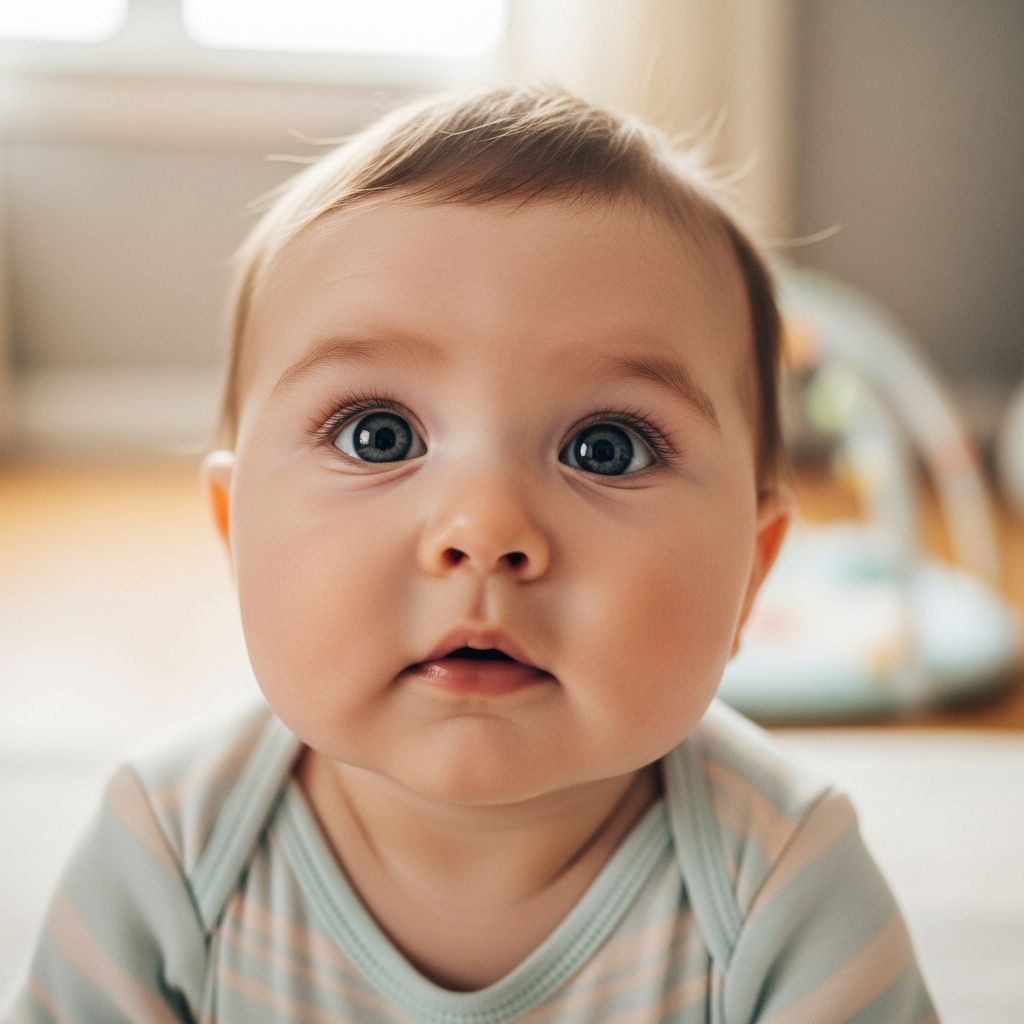
Babies typically begin showing signs of recognizing their name between 4 and 9 months, with consistent responses emerging around 9 to 12 months.
Understanding the Foundations of Name Recognition
Before babies can link a specific sound to themselves, they build essential precursor skills. From birth, infants tune into sounds in their environment, gradually distinguishing familiar voices from background noise. By 2 to 4 months, most babies localize sounds, turning toward loud noises like a door slam or a dog’s bark, which lays the groundwork for more targeted responses.
This progression ties into broader cognitive and auditory development. Motor skills, such as head control, enable physical reactions, while repeated exposure to language helps parse individual words. Parental voices, rich with emotion and repetition, become anchors, making the baby’s own name stand out amid daily chatter.
Timeline of Name Recognition Milestones
Infant development follows a spectrum, but patterns emerge from research and clinical observations. Here’s a breakdown of when most babies hit key markers:
- 4 to 6 Months: Initial cues appear, like brief head turns or heightened alertness to their name amid other words. Neuroimaging shows distinct brain activity for own names by 6-7 months.
- 6 to 9 Months: Responses grow more reliable; babies may smile, make eye contact, or pause play when called. At 9-month checkups, pediatricians expect a quick head turn.
- 9 to 12 Months: Consistent recognition solidifies—babies look directly, babble back, or even crawl toward the speaker. Last names may take until 2-4 years due to less frequent use.
- 12 to 18 Months: Full behavioral responses, like approaching when called or smiling eagerly.
Variations are normal; some babies respond earlier, others later, as long as overall social engagement progresses.
Key Signs Your Baby Knows Their Name
Spotting name recognition brings excitement, but look for deliberate patterns over random reactions. Common indicators include:
- Turning the head or body toward the voice calling their name.
- Locking eyes and smiling upon hearing it.
- Pausing current activity, like toy play, to attend.
- Babbling or cooing in response, especially in older infants.
- Emotional cues, such as leg kicking or joyful expressions.
These behaviors show not just auditory processing but social connection—your baby links the word to you and themselves.
Why Name Recognition Matters for Development
This milestone extends beyond a cute reaction; it fuels broader growth. Recognizing their name boosts attention, joint focus, and following simple directions, all critical for motor skills and learning. It enhances receptive language—the ability to understand words before speaking—setting the stage for vocabulary explosions around 18-24 months.
Socially, it strengthens bonds. Babies who reliably respond engage more in interactions, fostering communication skills vital for playgroups or preschool. Early command following, like “Emma, come here,” builds on this foundation. Delays might signal needs for support, making tracking essential.
| Age Range | Expected Response | Related Skills |
|---|---|---|
| 4-6 Months | Alertness, occasional turn | Sound localization |
| 7-9 Months | Smile, eye contact | Social smiling, babbling |
| 9-12 Months | Consistent head turn, pause | Joint attention |
| 12+ Months | Approach, verbal reply | Following directions |
Factors Influencing How Quickly Babies Learn Their Name
Not all babies hit milestones identically. Social interaction accelerates learning—positive associations with names via smiles and play reinforce neural pathways. Frequent parental use during routines embeds the word deeply.
Environmental factors play roles too. Multilingual homes might slightly delay first-name parsing but enrich overall language. Hearing differences or limited stimulation can slow progress. Temperament matters: outgoing babies experiment with responses sooner.
Practical Strategies to Encourage Name Recognition
Repetition is the cornerstone—say your baby’s name often in varied tones during feeds, changes, and play. Integrate it into daily life for natural reinforcement.
- Games: Peek-a-boo with “Where’s [Name]? Found you!” or mirror time to connect face, voice, and name.
- Songs and Books: Adapt nursery rhymes (“[Name] had a little lamb”) or use personalized stories.
- Routines: Announce activities: “[Name], time for bath!” to pair name with actions.
- Group Settings: In daycare, name songs during circle time build familiarity.
Test gently: Call from across the room during quiet play. Reward responses with praise to motivate.
When Name Recognition Might Be Delayed
By 12 months, consistent non-response warrants a pediatrician chat. It could stem from typical variation, hearing issues, or autism spectrum flags—early screening helps. Track alongside milestones like babbling or gesturing. Most delays resolve with stimulation, but intervention ensures optimal paths.
Avoid misconceptions: A one-off turn isn’t confirmation; consistency counts. General voice response isn’t name-specific yet.
From Recognition to Saying Their Name
Babies grasp names receptively months before producing them. Attempts start around 18 months, amid language bursts reaching 100+ words by 24 months. Full pronunciation by 3 years, writing by 5. Patience supports this evolution.
Frequently Asked Questions
Is it normal if my 10-month-old doesn’t always respond to their name?
Yes, development varies. Ensure overall social skills advance; consult a doctor if no progress by 12 months.
How often should I say my baby’s name?
As much as naturally fits—daily repetition across interactions builds strong associations without overwhelming.
Does nickname use confuse babies?
Nicknames aid early bonding; transition to full name reinforces the core word over time.
Can screen time help with name learning?
Limited; prioritize live interactions for best social cues and engagement.
What if my baby responds to others’ names first?
Common in multi-child homes—own-name preference sharpens with consistent use.
References
- Infants’ Recognition of the Sound Patterns of Their Own Names — PMC/NCBI. 2014-08-20. https://pmc.ncbi.nlm.nih.gov/articles/PMC4140581/
- When Do Babies Recognize Their Name? — The Bump. 2023-10-01. https://www.thebump.com/a/when-do-babies-recognize-their-name
- When Should a Child Respond to Their Own Name? — MOOGCO Baby. 2024-05-15. https://moogcobaby.com/blogs/moogco-baby-journal/when-should-a-child-respond-to-their-own-name
- When Do Babies Start Recognizing Their Names? — Laughing Monitos. 2024-02-12. https://www.laughingmonitos.com/blog/when-do-babies-start-recognizing-their-names
- The Power of a Name: How Your Baby Knowing Their Name Fuels Motor Development — Motor Skills Matter. 2024-07-08. https://www.motorskillsmatter.com/the-power-of-a-name-how-your-baby-knowing-their-name-fuels-motor-development-and-why-it-matters-more-than-you-think/