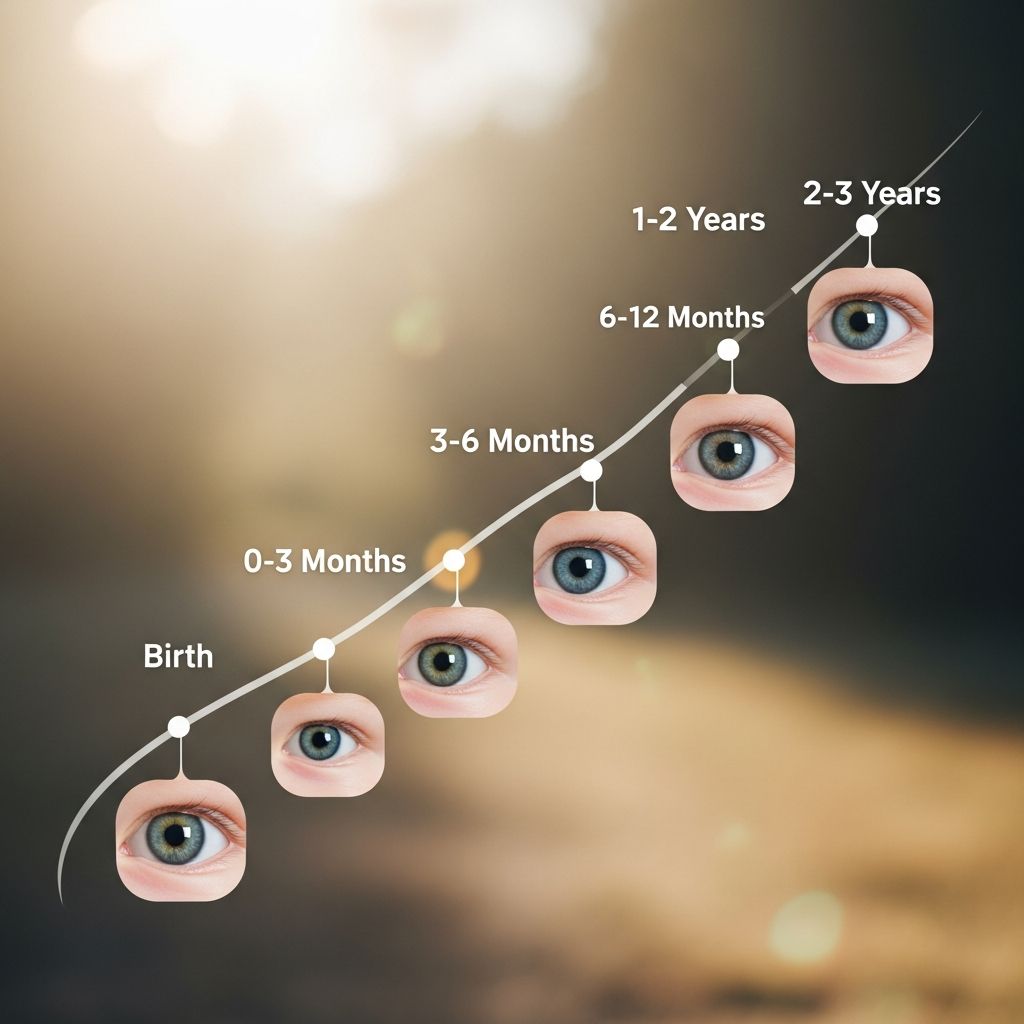
Newborn babies frequently emerge with striking blue or gray eyes that captivate parents, but these initial shades rarely persist. Eye color typically begins shifting within the first few months as melanin pigment accumulates in the iris, influenced by light exposure and genetics, with most changes stabilizing by age one, though subtle shifts can continue up to three years.
The Science Behind Newborn Eye Appearance
At birth, a baby’s iris—the colored ring encircling the pupil—contains minimal melanin, the natural pigment dictating eye, skin, and hair tones. This scarcity stems from the dark uterine environment, limiting light-triggered melanocyte activity, specialized cells responsible for pigment production. Consequently, irises appear lighter, often blue or slate-gray, scattering shorter blue light wavelengths akin to sky hues.
Post-birth light exposure activates melanocytes, prompting melanin synthesis. Low production yields blue eyes; moderate levels produce green or hazel; high amounts result in brown, the dominant global shade. This gradual process mirrors skin and hair darkening in many infants.
Key Milestones in Eye Color Development
Eye transformation unfolds predictably yet variably:
- Birth to 3 months: Eyes maintain blue-gray tones as melanin buildup commences slowly.
- 3 to 6 months: Noticeable deepening occurs; lighter shades may darken toward green, hazel, or brown.
- 6 to 12 months: Primary changes peak, with most babies revealing their enduring color.
- 1 to 3 years: Minor adjustments possible, especially in hazel or green eyes, as melanocytes finalize output.
These stages align with visual maturation; by six months, infants track objects smoothly across visual fields, coinciding with pigment shifts.
Genetic Factors Shaping Final Eye Shades
Eye color inheritance involves multiple genes, primarily OCA2 and HERC2 on chromosome 15, regulating melanin quantity and distribution. Brown dominance arises from high melanin; blue from low. Parental combinations predict outcomes probabilistically:
| Parental Eyes | Possible Baby Outcomes | Probability Notes |
|---|---|---|
| Both brown | Brown (75-99%), blue/green/hazel (1-25%) | Recessive traits possible if carriers. |
| Brown + blue | Brown (50%), blue (50%) | Simplified; multi-gene influence. |
| Both blue | Blue (99%+) | No dominant brown alleles. |
| Green/hazel mixes | Variable greens, browns, blues | Hazel often shifts latest. |
Advanced models consider up to 16 genes, explaining unpredictable results like blue-eyed parents birthing brown-eyed children.
Environmental Influences on Pigment Production
Beyond genes, light exposure accelerates melanin deposition. Outdoor time enhances this, potentially darkening eyes faster. Nutrition supports melanocyte health; deficiencies in vitamins A, C, or E might subtly delay changes, though evidence remains preliminary. No direct links exist to diet-induced color alterations post-infancy.
Rare Variations: Heterochromia and Other Traits
Heterochromia, where eyes differ in color—complete (one blue, one brown) or sectoral (patches within one iris)—affects under 1% of people. Genetic mosaicism, mutations, or post-birth injury/illness causes it. Most cases benign and congenital; consult pediatricians for sudden onset, signaling potential issues like tumors or inflammation.
Amber or gray eyes, rarer still, reflect unique melanin scattering or lipochrome presence.
Myths and Realities of Predicting Eye Color
- Myth: All white babies born blue-eyed. Reality: Darker-skinned infants often born brown-eyed due to elevated baseline melanin.
- Myth: Eye color sets at six months. Reality: Full stabilization by one year typical, up to three years possible.
- Myth: Sunlight permanently alters color. Reality: Influences development timing, not final genetics.
Monitoring Vision Alongside Color Shifts
Eye color evolves parallel to visual milestones:
- Birth: Detects light/shapes 8-12 inches away.
- 2 months: Tracks moving objects side-to-side.
- 6 months: Depth perception emerges; cover-uncover test assesses alignment.
- 12 months: Colors distinguished clearly.
Watch for red flags: persistent crossing, light sensitivity, or pupil irregularities prompting ophthalmologist visits.
Practical Tips for New Parents
Document changes monthly via photos under consistent lighting. Avoid myths like feeding specific foods for desired colors. Celebrate uniqueness; discuss family traits to educate siblings. If concerned, routine well-child checks include vision screens.
Frequently Asked Questions
Can a baby’s eye color change after age one?
Yes, subtle shifts in green or hazel eyes may occur up to age three as melanocyte production completes.
Do all babies start with blue eyes?
No, those with higher melanin at birth, often from diverse ethnicities, may have brown or dark eyes immediately.
Is heterochromia harmful?
Usually benign and genetic; medical evaluation needed if acquired later.
How does light exposure affect eye color?
It stimulates melanocytes, hastening pigment development post-birth.
Can I predict my baby’s eye color accurately?
Genetics offer probabilities, but multi-gene interactions make certainty impossible before changes manifest.
Long-Term Eye Health Considerations
Beyond infancy, UV protection preserves iris integrity. Annual vision checks from preschool detect refractive errors early. Family history of glaucoma or color blindness warrants monitoring, though unrelated to pigment shifts.
Understanding this journey fosters patience, turning eye color evolution into cherished family lore.
References
- Pediatric Eye Development and Newborn Vision — American Academy of Pediatrics (healthychildren.org). 2023-05-15. https://www.healthychildren.org/English/ages-stages/baby/Pages/Newborn-Eye-Color.aspx
- When Do Babies’ Eyes Change Color? — Cleveland Clinic Health Essentials. 2024-02-20. https://health.clevelandclinic.org/when-do-babies-eyes-change-color
- Baby Eye Color Changes: Timeline and Genetics — Pampers Baby Development. 2023-11-10. https://www.pampers.com/en-us/baby/development/article/when-do-babies-eyes-change-color
- Genetics of Iris Pigmentation and Eye Color — National Institutes of Health (PubMed). 2022-07-01. https://pubmed.ncbi.nlm.nih.gov/34687252/
- Melanocyte Activity in Neonatal Irises — American Academy of Ophthalmology. 2024-01-08. https://www.aao.org/eye-health/tips-prevention/baby-eyes-change-color