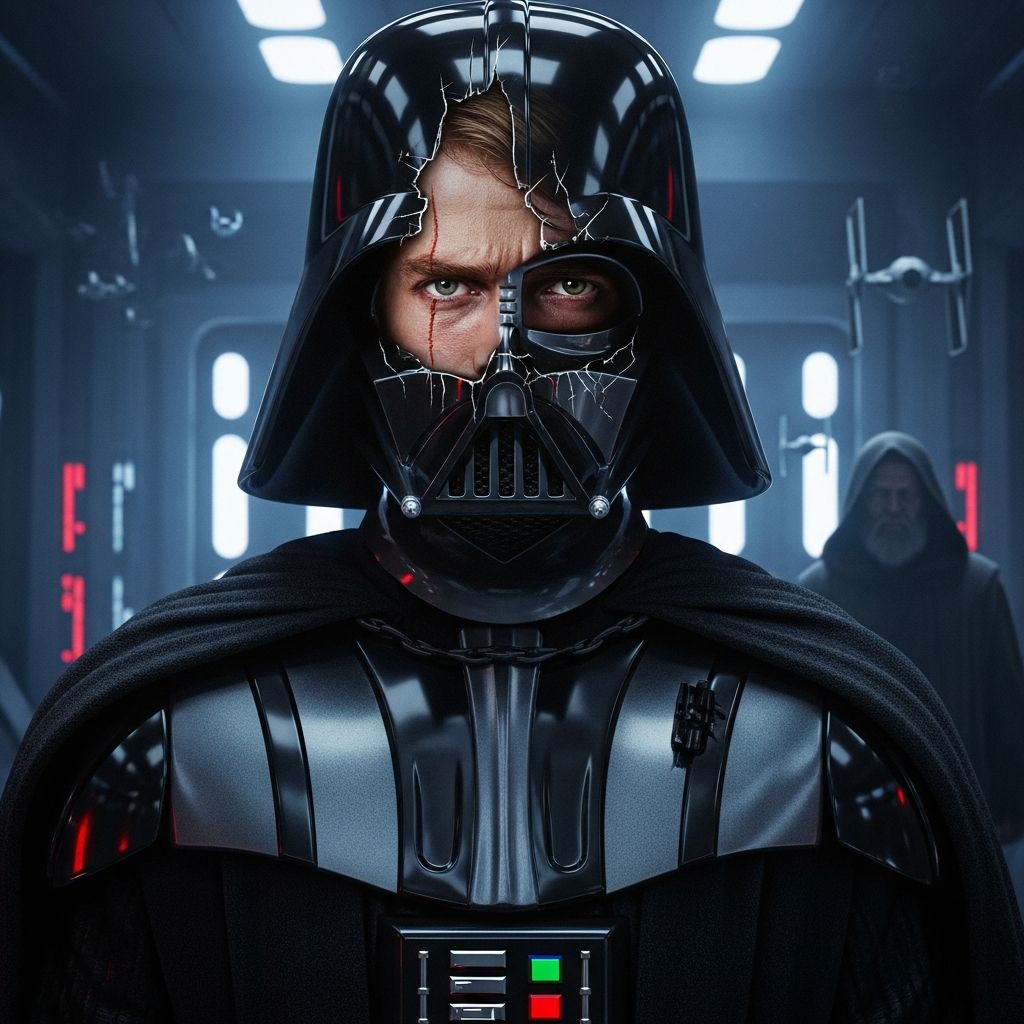
Darth Vader is one of cinema’s most iconic villains, but for many early Star Wars fans, the man behind the mask—Anakin Skywalker—simply did not exist as a character for years. The gradual unveiling of Anakin reshaped not only the saga’s story but also how generations of viewers experienced the Skywalker family drama.
The Many “First Appearances” of Anakin
Answering when Anakin Skywalker first appeared depends on what counts as an appearance: a spoken name, a physical presence, or a fully developed backstory. For original-trilogy audiences, the man called Anakin stepped onto the screen late in the story, long after Darth Vader had already terrified the galaxy.
- Anakin as myth: a name and idea mentioned around Vader and Luke.
- Anakin in the flesh: the unmasked figure seen at the end of the original trilogy.
- Anakin as protagonist: the child and young man whose life story anchors the prequel trilogy.
This layered rollout means that what one fan calls Anakin’s “first appearance” might be entirely different from another’s answer, especially when comparing those who started with the original trilogy to fans who began with the prequels.
Vader Before Anakin: The Era of the Mask
When Star Wars first arrived in theaters in 1977, audiences met Darth Vader as a towering enforcer of evil, with no clear hint that he was once a Jedi named Anakin Skywalker. He functioned as an archetypal villain: masked, mechanical, and seemingly beyond redemption.
- No backstory beyond a former pupil of Obi-Wan Kenobi.
- No visible humanity behind the armor.
- Luke’s father described as a different person, a heroic Jedi who died in the past.
Throughout the first film, the emotional anchor is Luke rather than Vader, and the idea of a separate, noble father sets up a traditional heroic lineage well before the saga reveals that the father and the villain are one and the same.
From Twist to Identity: When Anakin Became the Father
The revelation that Vader is Luke’s father redefined the entire trilogy, turning the conflict from a simple battle between good and evil into a generational tragedy. By the time this truth is confirmed within the story, the name Anakin becomes more than a footnote; it becomes the emotional hinge of Luke’s journey.
Later scenes with mentors explaining that Anakin “ceased to be” and Darth Vader took his place offer a retroactive frame: the saga is no longer just about Luke’s rise, but about the fall and possible redemption of his father. This interpretation prepared audiences for Anakin’s eventual appearance in person, not as a stranger but as the man whose choices have haunted Luke for multiple films.
Seeing the Man Under the Helmet
The moment Vader’s helmet is removed and Anakin’s scarred face is revealed marks the first time audiences meet him as an individual on screen. The character shifts instantly from an anonymous force of evil to a frail, vulnerable father who wants to look at his son one last time.
- Physical vulnerability replaces intimidating silhouette.
- Soft-spoken lines contrast with the mechanical voice that defined Vader.
- The story reframes Vader’s arc as a delayed return to Anakin’s true self.
This short encounter is enough to recast the entire story: Vader’s earlier cruelty now reads as the tragic detour of a man who once had the potential to be a great Jedi, turning his final act into a personal, rather than purely cosmic, victory.
How Home Releases Quietly Rewrote Anakin
As the original trilogy was reissued and revised, subtle changes altered how Anakin’s presence threaded through the films. Updated versions of certain scenes added direct mentions of Anakin’s name, which made his identity feel more integrated across the trilogy for later audiences.
Digital alterations also changed who appeared as Anakin’s spirit, replacing the original actor with the performer who later played the character in the prequels. For viewers who only knew the newer versions, Anakin’s image now flowed more smoothly across the prequel and original trilogies, even though early fans had experienced a very different ending.
Table: How Different Generations Met Anakin
This table highlights how the sequence of discovery differs depending on whether a fan started with the original trilogy or the prequels.
| Generation | First Image of Anakin | When Father Reveal Lands | Core Emotional Arc |
|---|---|---|---|
| Original-trilogy-first viewers | Unmasked, older man beneath Vader’s helmet near the end of the story. | Mid-saga, arriving as a shocking twist about Luke’s parentage. | Villain-to-father redemption: Vader’s fall matters because Luke chooses to believe there is good left in him. |
| Prequel-first viewers | Young slave and Jedi prodigy on Tatooine, long before the black armor. | More of a tragic confirmation, since viewers already know the boy will become Vader. | Innocence-to-fall tragedy: Anakin’s destiny overshadows every hopeful moment of his youth. |
| Mixed or modern streaming viewers | Depends on viewing order; algorithms and recommendations often interleave eras. | Can feel less like a twist and more like a familiar story beat. | A tapestry of family history where the surprise is secondary to watching fate unfold. |
Prequels: Turning a Name Into a Life Story
Years after the original trilogy, the prequels transformed Anakin from a late-breaking revelation into the central character of the saga’s first chronology. Viewers saw him as a child, a student, a friend, and a husband, long before he ever became the armored Sith Lord.
This new material added details about his childhood as a slave, his early bond with his mentor, and his deep attachment to those he loves. Those additions made his eventual fall to the dark side feel less like a twist and more like a tragic inevitability built out of fear, loss, and manipulation.
From Monster to Tragic Hero
Seeing Anakin’s full journey encourages audiences to revisit earlier films with fresh eyes: the ruthless enforcer of an empire becomes a man who once tried to protect the people he cared about. His violence and ruthlessness do not become excusable, but they gain an emotional context that shifts the tone of his redemption.
- His fear of losing loved ones reframes his choices, particularly his alliance with a manipulative mentor.
- His rivalry and friendship with his former teacher inform every clash between them later on.
- His final sacrifice to save his son resonates as an echo of the caring person he once was.
Instead of a villain suddenly acting out of character in his final minutes, Anakin appears as someone whose best and worst qualities have always been tightly intertwined.
Why Anakin Feels Different Depending on Viewing Order
The emotional rhythm of Anakin’s story is deeply affected by whether viewers learn he is Vader early or late in their Star Wars journey. Those who meet Vader first experience the father reveal as a shock; those who meet Anakin first watch that shock coming from a distance, which lends the story a more tragic tone.
- Surprise-driven experience: Original-trilogy-first viewers feel the narrative pivot around a single revelation.
- Fate-driven experience: Prequel-first viewers pay more attention to the small choices leading toward an ending they already know.
- Context-heavy experience: Modern viewers with access to the entire saga often see Anakin as the spine of a multi-generation family tale.
In each case, the same scenes shift meaning, with the helmet removal and final moments playing as either a revelation, a culmination, or a confirmation of a destiny long telegraphed.
Parenthood, Legacy, and the Skywalker Name
Once Anakin is visible on screen, the Star Wars saga becomes not only a conflict between sides of the Force but also a story about how children interpret—and survive—the legacies of their parents. The Skywalker name transforms from a heroic label into a burden filled with both hope and catastrophe.
Luke’s optimistic belief that there is still good in his father clashes with the warnings of his mentors, who see Anakin as gone beyond saving. The tension between those perspectives echoes real-world questions about whether people defined by past harm can meaningfully change, and what role family plays in that decision.
Key Takeaways for Fans Revisiting Anakin
Rewatching the saga with Anakin in mind reveals small details that might be easy to miss on a first viewing, especially if the films were seen out of chronological order. Paying attention to how each character talks about Anakin, even before he appears, turns the background chatter into a slow-building portrait of a man audiences have not yet met.
- Listen to the ways mentors justify what happened to Anakin; their explanations color Luke’s choices.
- Notice how often fear of loss drives Anakin’s decisions once his earlier life is known.
- Compare the brief unmasking scene with the younger version’s personality to trace what traits survived the transformation into Vader.
These small, character-driven details deepen the sense that Anakin is not inserted late into the story, but rather has always been quietly present, waiting for his moment to step out from behind the mask.
Frequently Asked Questions
Is Anakin Skywalker or Darth Vader the “real” person?
Within the story, Anakin is the original identity, and Darth Vader is the name he takes when he embraces the dark side and serves the Galactic Empire. Later films and scenes emphasize that Anakin still exists beneath the armor, even when he insists that he has left that name behind.
Why did later releases change how Anakin appears?
Updated versions of the original trilogy introduced small changes to better align Anakin’s appearance and references with the prequel films. These adjustments were meant to make the saga feel like a single, continuous story, especially for new viewers encountering all six episodes together.
Does starting with the prequels ruin the father twist?
Beginning with the prequels removes the surprise of the revelation, but it replaces that shock with a slower, more tragic awareness of where Anakin is headed. Many fans find that knowing his fate from the start adds emotional weight to scenes that might otherwise play as straightforward adventure.
Why does Anakin’s redemption still matter after everything he does?
The saga does not erase the harm Anakin causes; instead, it treats his final choice as an act of personal transformation that ends a long reign of terror. The story invites viewers to wrestle with the tension between accountability for past actions and the possibility of a final, meaningful change.
Is Anakin the main character of Star Wars?
In a strict narrative sense, different trilogies highlight different protagonists, but Anakin’s journey from hopeful child to fallen knight to redeemed father connects the major eras of the saga. Measured that way, his life forms the backbone of the overarching story, even when he is not the character in the spotlight.
Across releases, revisions, and new films, Anakin Skywalker’s first appearance keeps shifting depending on where a viewer begins. Yet in every version of the saga, the same truth emerges: the man inside the armor is the key to understanding why Star Wars remains, at its core, a story about family, failure, and the possibility of redemption.